7 Days in Sydney: A Complete First-Week Itinerary
Seven days is the sweet spot for Sydney: enough time for the harbour icons, the beaches, one proper day trip and a second one if you move fast. This itinerary sequences the week so you are not criss-crossing the city, and it folds in the transport, season and booking decisions that actually shape how the week feels.
Short answer
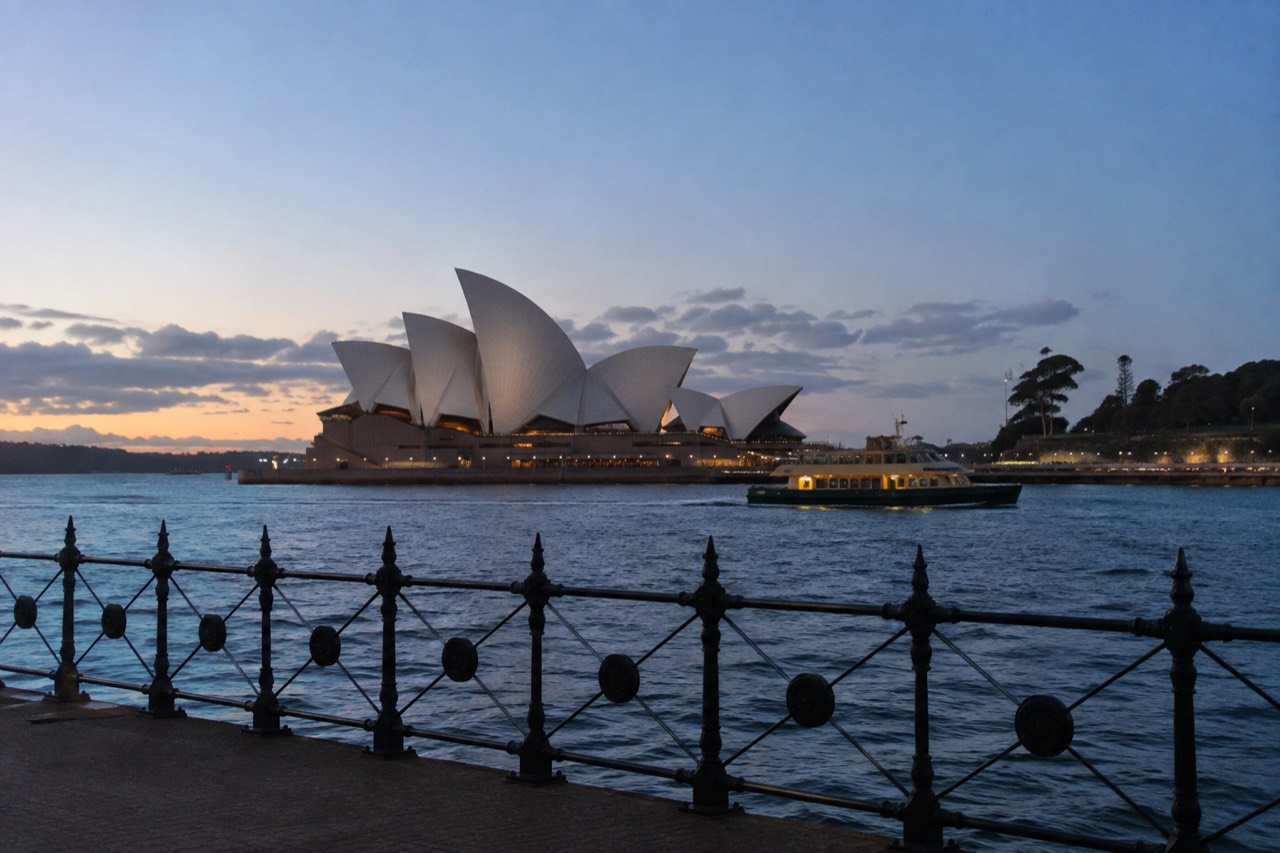
Seven days is enough for Sydney's harbour icons, its Eastern and Northern beaches, one full Blue Mountains day trip and a second day trip to the Hunter Valley or Royal National Park. Plan on four days in the city itself, two days out of it, and one flexible day for weather. A weekly Opal cap of $50 covers most of the getting around.
Seven days is the itinerary length Sydney is actually built for. Shorter trips force a choice between the harbour and the beaches; longer ones push you into repeating neighbourhoods. A week lets you work through the harbour icons at a human pace, spend a full day on the coast, get out to the Blue Mountains, and still keep a spare day for the weather, which in this city is more variable than most visitors expect.
This page lays out a day-by-day plan, then covers the four decisions that shape any Sydney week: how you split the days, how you move between them, what the season does to the plan, and what genuinely needs booking ahead. The land you are walking is that of the Gadigal people of the Eora Nation, and several of the experiences below, including the Aboriginal cultural cruise on the harbour, engage with that living culture directly.
Is 7 Days the Right Amount of Time for Sydney?
Seven days is the ideal first-visit length for Sydney. It is enough to see the Opera House, the Harbour Bridge, The Rocks, Bondi and Manly without rushing, and to add one or two full day trips to the Blue Mountains or the Hunter Valley. Five days covers the city alone comfortably; a full week is what lets you leave it and come back. Fewer than five and the day trips fall off the list.
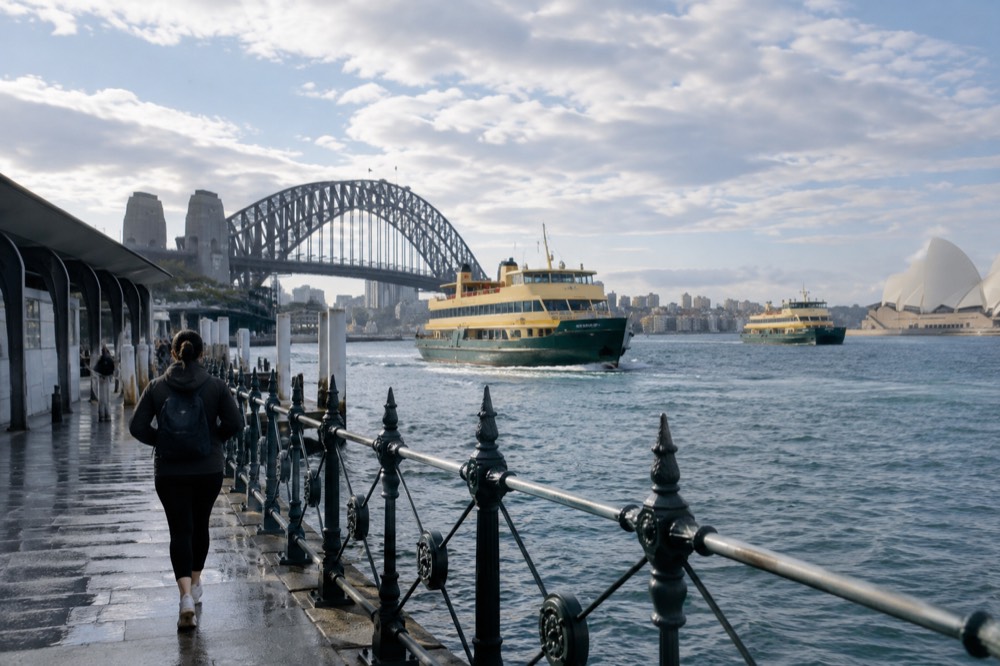
The honest framing is that Sydney rewards depth over breadth. The harbour alone, Circular Quay to The Rocks to the Royal Botanic Garden Sydney, can absorb a full day without a single wasted hour, and entry to the garden is free. The Eastern Beaches coastal walk between Bondi and Coogee is another half-day commitment that first-time visitors routinely underestimate.
A week also buys you resilience. Sydney's rainfall is spread across the year, averaging 99.5 rain days annually, and June, often assumed to be a dry winter month, is actually the city's wettest at 133.1 mm on average. A seven-day trip can absorb one rained-out beach day. A four-day trip cannot, and that is the practical argument for the full week.
What Does a Smart 7 Days in Sydney Itinerary Look Like?
The sequence that works is: harbour and city core first, beaches second, Blue Mountains third, a second day trip fourth, and a flexible final day. Days one and two stay inside the city, days three and four work the coast, day five goes to the Blue Mountains, day six goes to the Hunter Valley or the Royal National Park, and day seven is the buffer. Grouping by geography, not by attraction, saves hours of backtracking.
Here is the week at a glance.
| Day | Base | Focus | Anchor stops |
|---|---|---|---|
| 1 | City | Harbour icons | Opera House tour, Circular Quay, Royal Botanic Garden Sydney |
| 2 | City | History and views | The Rocks, Harbour Bridge walk, Pylon Lookout, Darling Harbour |
| 3 | East | Beaches | Bondi, coastal walk to Bronte, ocean pools |
| 4 | North | Harbour north side | Manly ferry, Shelly Beach, Taronga Zoo |
| 5 | West | Blue Mountains | Katoomba, Three Sisters, Scenic World |
| 6 | Varies | Second day trip | Hunter Valley, Royal National Park or Jervis Bay |
| 7 | City | Buffer and favourites | Whatever the weather stole, plus Newtown or Surry Hills |
Day one belongs to the harbour. Start at Circular Quay, take a guided tour of the Sydney Opera House in the morning, then walk the Opera House to Botanic Garden foreshore in the afternoon. The garden is free to enter and open from 7am to sunset, so closing time moves with the seasons. An afternoon harbour cruise from Circular Quay turns the same geography into a viewing platform, and the sightseeing cruise runs morning and afternoon departures.
Day two stays in the same corner. The Rocks is Sydney's oldest neighbourhood and a guided walking tour of it takes about 90 minutes, which leaves the afternoon for the Harbour Bridge. Walking across the bridge deck is free; the Pylon Lookout is the paid, cheaper alternative to a full climb, and a BridgeClimb is the premium option if it is on your list.
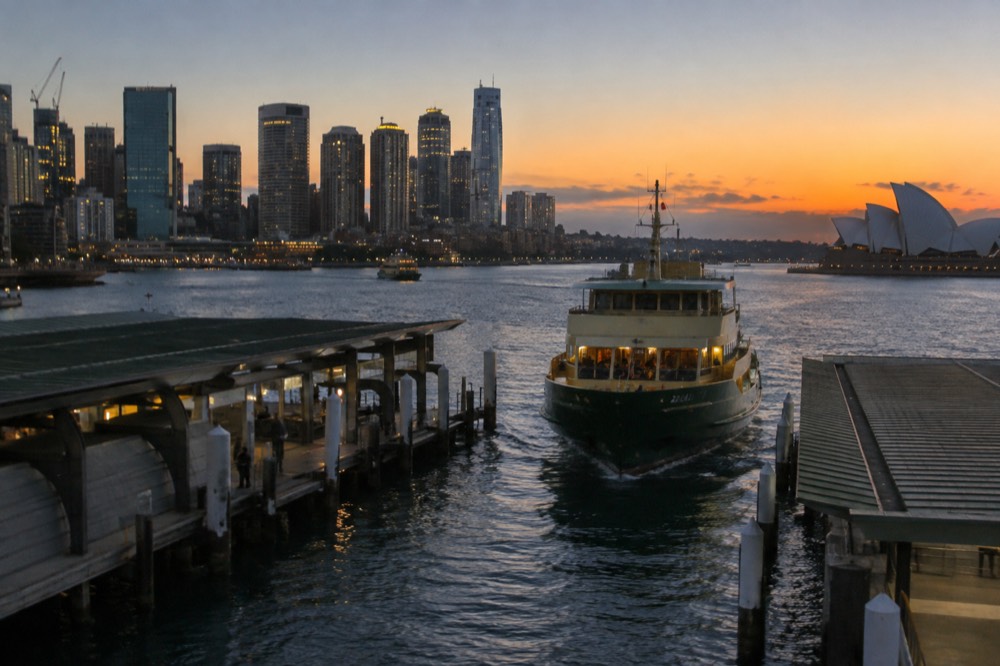
Days three and four are the coast. Bondi on day three, with the coastal walk south to Bronte or all the way to Coogee, and Manly on day four, reached by the F1 ferry from Circular Quay, which is itself one of the best-value harbour cruises in the city at $9.20 one way. Taronga Zoo sits on the same north shore arc, and its ferry-plus-entry ticket bundles the crossing with admission.
Day five is the Blue Mountains, covered in full below. Day six is your second day trip, and the honest advice is to pick one rather than attempt two. Day seven is deliberately unassigned: it is the day you spend re-doing whatever the weather took, or exploring Newtown and Surry Hills if the week went smoothly.
How Do You Split the Week Between Harbour, Beaches and Neighbourhoods?
Split the week roughly 40 percent harbour and city, 30 percent beaches and coast, 30 percent day trips. In practice that is two full days around Circular Quay and The Rocks, two days split between the Eastern Beaches and Manly, and two days out of the city. The inner-west and eastern neighbourhoods fill the gaps on the buffer day rather than getting their own full days.
The harbour cluster deserves its two days because the stops are dense but slow. The Opera House tour alone takes about an hour, and the official guided walking tour with entry included is the version most first-time visitors choose. A paragraph of practical honesty: the Opera House does not publish fixed tour prices, they are dynamic by date and session, so treat any figure you see as a snapshot rather than a set price.
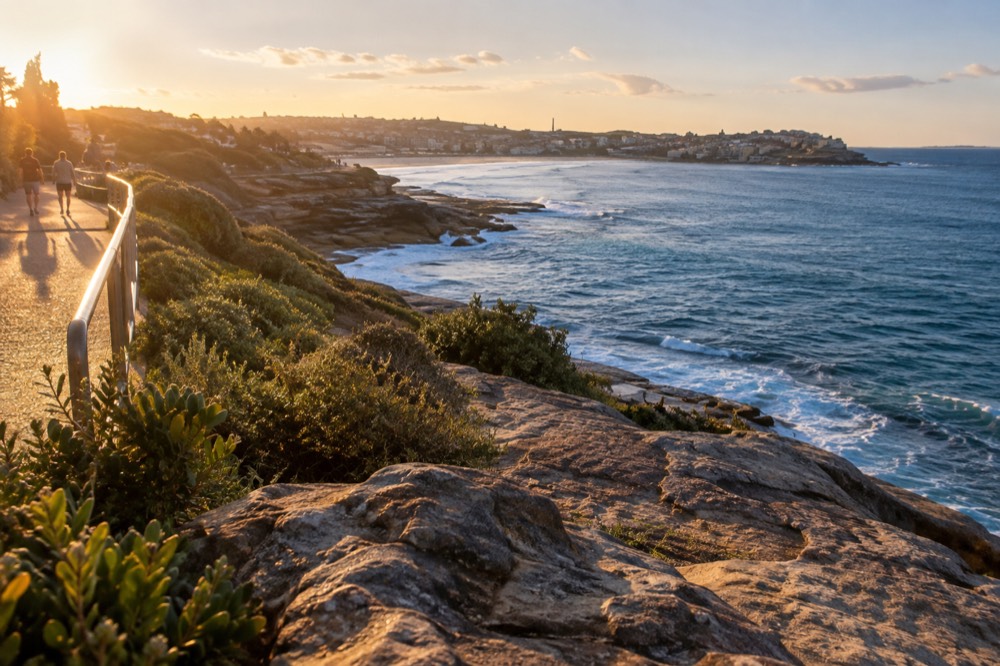
The coastal days split naturally east and north. The east is Bondi, Bronte, Tamarama and Coogee, strung together by a walking track that takes most of a morning at a sightseeing pace. The north is Manly and Shelly Beach, quieter and reached by the ferry every visitor should take at least once. The Bondi and Manly pages here cover both in depth, including where to swim between the flags.
The neighbourhoods, Newtown, Surry Hills, Paddington, Glebe, are evening and buffer-day material rather than itinerary anchors. That is not a dismissal of them; it is a recognition that a first week is built around geography that cannot be moved, and the neighbourhoods can be.
How Do You Get Around Sydney During the Week?
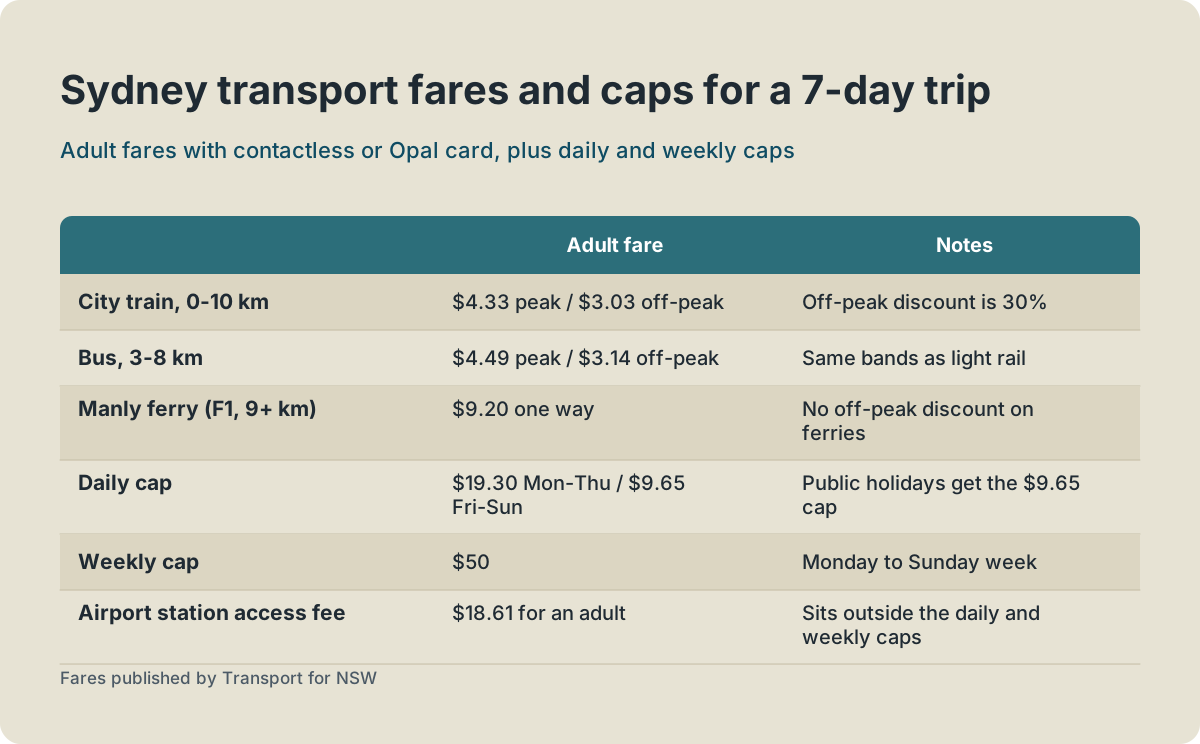
You do not need a car for any of the city days, and you should not hire one until the day trips. Tap a contactless card or an Opal card on every train, metro, bus, light rail and public ferry; the two charge identical adult fares and share the same caps. The daily cap is $19.30 Monday to Thursday and $9.65 Friday to Sunday, with a $50 weekly cap, so a full week of city transport costs no more than $50.
The fare structure is distance-based, and the numbers worth knowing are simple ones.
| Trip | Typical adult fare | Notes |
|---|---|---|
| City train, 0-10 km | $4.33 peak / $3.03 off-peak | Off-peak discount is 30% |
| Bus, 3-8 km | $4.49 peak / $3.14 off-peak | Same bands as light rail |
| Manly ferry (F1, 9+ km) | $9.20 one way | No off-peak discount on ferries |
| Daily cap | $19.30 Mon-Thu / $9.65 Fri-Sun | Public holidays get the $9.65 cap |
| Weekly cap | $50 | Monday to Sunday week |
The Transport for NSW fares page publishes the full distance-band tables. Two traps matter for a week-long visitor. First, the private Manly Fast Ferry accepts Opal cards but runs on OpalPay, so the caps and transfer discounts do not apply; the public F1 ferry does. Second, the airport station access fee, $18.61 for an adult, sits outside both the daily and weekly caps and is charged on top of the train fare at both airport stations.
One quirk worth exploiting: public holidays carry the $9.65 cap rather than the weekday cap, so a holiday Monday is the cheapest day to travel widely. The full NSW public holiday list is published by the state government, and the Bank Holiday in early August, which looks like a public holiday on many lists, applies only to banks; shops, attractions and transport run normally.
What Does the Weather Do to a 7-Day Plan?
Sydney's seasons are inverted from the northern hemisphere, so December to February is summer and June to August is winter. The counterintuitive fact is that June is Sydney's wettest month, averaging 133.1 mm, while August is its clearest, averaging 13.4 clear days, more than any summer month. February, peak tourist season, is statistically the cloudiest month of the year. Plan the coast for your clearest forecast window, not for a fixed day number.
The Bureau of Meteorology's long-term normals for Sydney, from a 162-year record, tell the real story.
| Month | Mean max °C | Mean min °C | Mean rainfall mm | Mean clear days |
|---|---|---|---|---|
| January | 26.0 | 18.8 | 101.2 | 6.8 |
| February | 25.8 | 18.9 | 119.3 | 5.3 |
| June | 17.0 | 9.3 | 133.1 | 9.1 |
| August | 17.9 | 9.0 | 80.2 | 13.4 |
| October | 22.2 | 13.6 | 76.7 | 8.1 |
| December | 25.3 | 17.6 | 77.1 | 6.6 |
The full table sits on the Bureau of Meteorology climate averages page. What it means for the itinerary is simple: keep the coastal walk and the beach days movable. If day three is forecast rain, swap it with the Blue Mountains day, which is at least partly indoor-and-sheltered at Scenic World, and take the coast when the sky clears.
Two seasonal notes carry real weight. The UV index in Sydney reaches extreme levels of 11 or more in summer and still passes the protection threshold of 3 in winter, so sun protection is a year-round habit here, not a beach-day one. And whale watching runs only from May to November, with the southern migration, when mothers and calves pass closer to shore, from August to November; a week outside that window should not budget for it.
Which Day Trips Fit Into a 7-Day Sydney Trip?
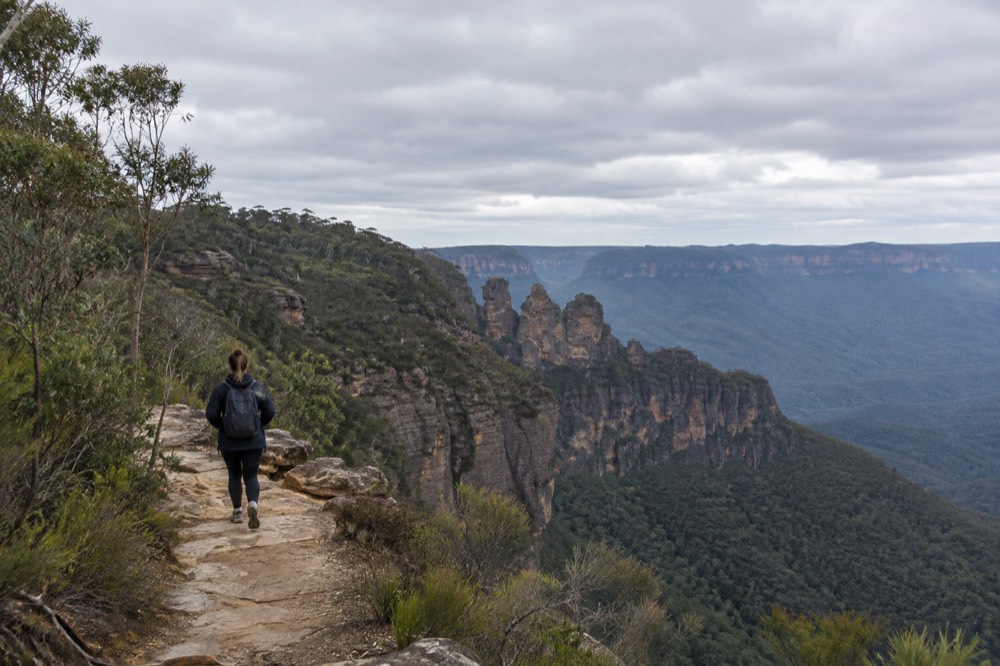
Two day trips fit comfortably: the Blue Mountains on day five and one of the Hunter Valley, the Royal National Park or Jervis Bay on day six. The Blue Mountains is the non-negotiable one, a roughly 10-hour round trip from the city with the Three Sisters, Scenic World and bushwalks. The second trip depends on your interests: wine, native bushland or a white-sand beach. Do not attempt three day trips in a seven-day week.
The Blue Mountains works as a guided day or as a train trip. The train from Central to Katoomba takes about two hours, and the national park itself charges no entry fee except in the Glenbrook area, $8 per vehicle per day, which most visitors never reach on a Katoomba-focused itinerary. The Blue Mountains day trip guide here covers the full decision, including the track and road closures that have run through late 2026, such as the Jenolan Karst Conservation Reserve closure to 31 December 2026.
A guided all-inclusive small-group day trip bundles the transport, the lookouts and a local guide, which suits a week where you would rather not decipher the Katoomba bus network on day five. The premium all-inclusive option runs about 10 hours door to door.
The second day trip is a genuine choice. The Hunter Valley is Australia's oldest wine region and a full 11-hour day with a two-course lunch on the premium tours. The Royal National Park, the world's second-oldest national park, charges $12 per vehicle per day and is reachable by train plus a short walk or ferry connection. Jervis Bay, with its dolphins, kangaroos and white sand at Hyams Beach, is a 12-hour day and the most ambitious of the three. If whales are in season, a whale-watching cruise from the harbour is a half-day alternative that does not need a full day trip slot; the whale watching guide has the season detail.
What Should You Book in Advance for a Week in Sydney?
Book three things before you arrive: your Blue Mountains day trip, any BridgeClimb, and a dinner or tour with a fixed small capacity such as the Opera House tour-and-dine experience. Everything else, zoo tickets, aquarium entry, harbour cruises, can be bought a day or two ahead. The one category that genuinely sells out is small-group day trips on weekends and public holidays, and BridgeClimb sessions at twilight.
The pattern across the roster is that capacity-limited experiences need lead time and everything else does not. Taronga Zoo is a useful example of the booking logic: entry is cheaper online than at the gate, $51.30 versus $57.00 for an adult, so booking ahead is a saving rather than a necessity, and the zoo is open 365 days a year. The Taronga Zoo guide covers the ferry-plus-entry bundles.
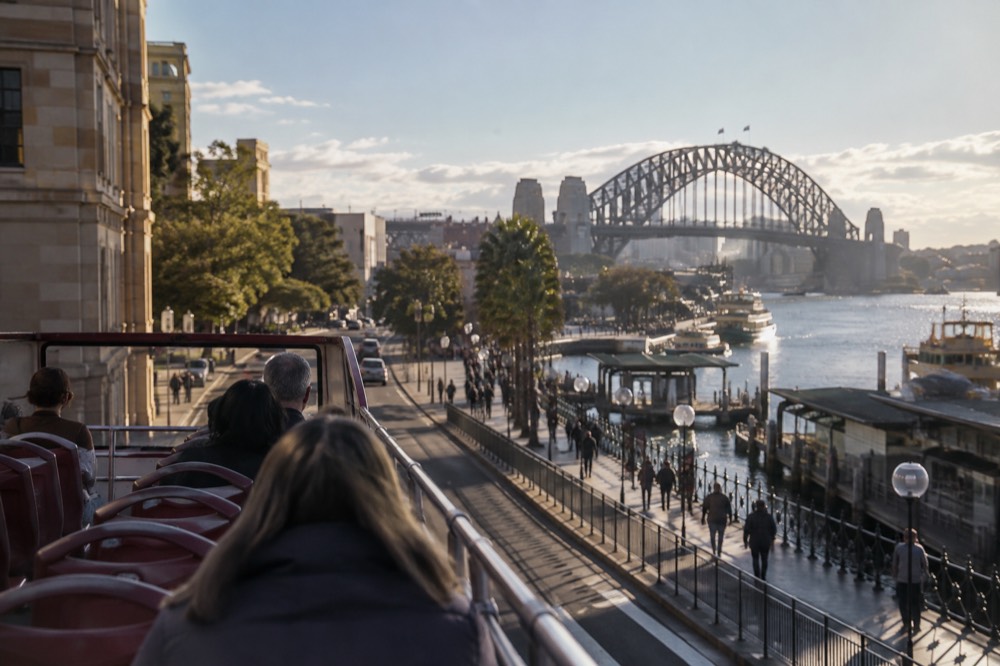
For the city days, a hop-on hop-off bus ticket linking the city and Bondi is the single purchase that most reduces a week's planning load, since it covers the two loops a first visit actually uses. The Sydney sightseeing buses guide compares it against the public transport alternative honestly; on a tight budget, the Opal-capped network wins, but the bus stops at the attractions rather than the commuter stops.
Attraction passes reward a specific kind of week. The four-attraction combo covering SEA LIFE Sydney Aquarium, Sydney Tower Eye, WILD LIFE Sydney Zoo and Madame Tussauds only pays off if all four are genuinely on your list; the Sydney attraction passes compared page runs the numbers against buying individually. For a week built around the harbour and the coast rather than the indoor attractions, individual tickets usually win.
How Much Does 7 Days in Sydney Cost?
Accommodation is the dominant cost of a Sydney week, then food, then activities, and transport is the small line, capped at $50 for the week on Opal. A mid-range week for two, excluding flights, is driven almost entirely by accommodation season and by how many premium experiences, a BridgeClimb, a wine tour, a tall-ship dinner cruise, you stack into it. Set your budget around those two decisions first and the rest of the week falls into place.
The planning ranges below are honest mid-points, not operator promises.
| Category | Range or price | Notes |
|---|---|---|
| Transport (Opal) | up to $50 per week | Hard weekly cap, all public modes |
| Taronga Zoo entry | $51.30 online | Gate price $57.00 |
| Main museum galleries | free | Art Gallery of NSW and Australian Museum general entry |
| Royal Botanic Garden | free | Open 7am to sunset |
| Blue Mountains day trip | from US$190 | Guided all-inclusive option |
| Hunter Valley premium tour | from US$218 | 11 hours, two-course lunch |
Two structural facts soften the budget. Sydney's two biggest public galleries, the Art Gallery of New South Wales and the Australian Museum, both charge nothing for general entry, and the gallery stays open until 10pm on Wednesdays, which is an underused free evening. The Royal Botanic Garden is also free. A rainy day in Sydney can be filled with genuinely first-rate attractions at zero admission cost, which is not true of many comparable cities.
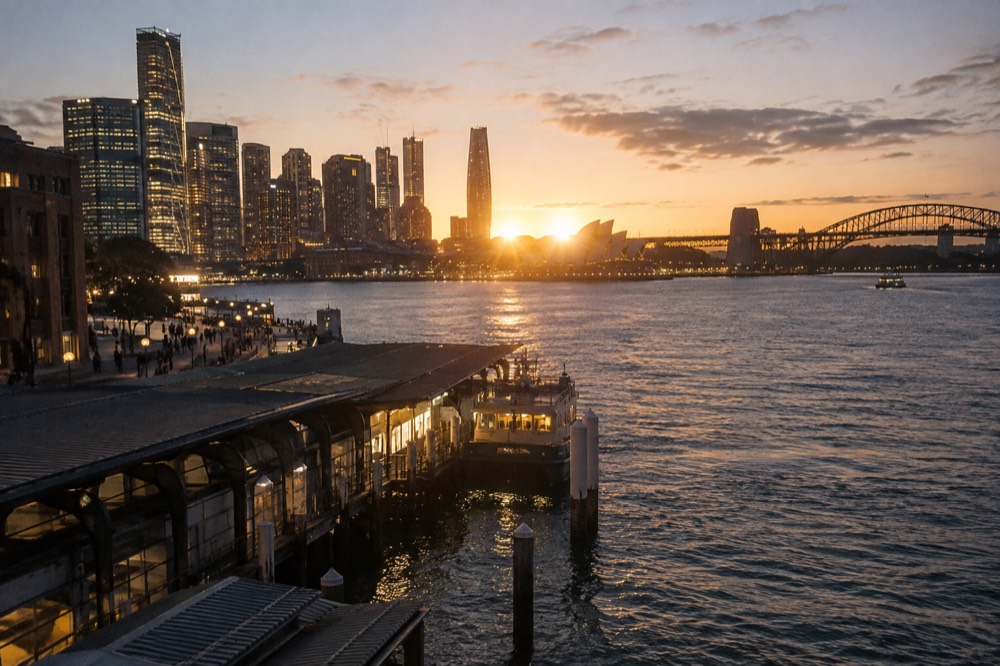
The premium experiences are where a week's budget can stretch the most. A BridgeClimb at night, a luxury sailing lunch cruise, a helicopter flight over the harbour: each is a one-off that can define a day. The advice from this desk is to pick one or two rather than all of them, and to spend the difference on the things the city gives away, the ferry rides, the coastal walk, the evening light on the harbour from Mrs Macquarie's Chair.
Where Should You Stay for a 7-Day Sydney Trip?
Stay around the city core, Circular Quay, The Rocks, Darling Harbour or the CBD, for a first seven days. That position puts you on the ferry, train and bus network's hub, which matters more in Sydney than in most cities because the harbour is both the attraction and the transport corridor. Potts Point and Surry Hills are the value alternatives a short train ride from the centre.
The geography argument is simple: every day in this itinerary either starts at Circular Quay or is reached through it. The F1 ferry to Manly, the F2 to Taronga Zoo and the trains west to the Blue Mountains all converge within a few hundred metres of each other. A hotel anywhere on that hub removes the one daily friction that compounds over a week. The where to stay in Sydney guide covers the neighbourhood trade-offs in detail.
For a week rather than a weekend, an apartment-style stay in Potts Point or Darlinghurst often beats a hotel on total cost once you factor in breakfasts. Both sit on the Eastern Suburbs train line, two stops from the centre, and both are evening neighbourhoods in their own right, which matters on the buffer day when the itinerary relaxes.
Common Questions About 7 Days in Sydney
Is 7 days in Sydney too long?
No. Four days covers the city core and the beaches, but the Blue Mountains and a second day trip each need a full day, and a buffer day for weather makes seven the comfortable total. Sydney is also a city where the free experiences, the ferry rides, the coastal walk, the Botanic Garden, reward unhurried time rather than a compressed visit.
Can you do the Blue Mountains as a day trip within a 7-day itinerary?
Yes, and it is the standard pattern. The train from Central to Katoomba takes about two hours each way, and guided all-inclusive day trips run about 10 hours door to door. There is no national park entry fee in the Katoomba area; the $8 vehicle fee applies only at Glenbrook. Check live National Parks alerts before you go, as several tracks and roads have had closures through late 2026.
Do you need a car for 7 days in Sydney?
No for the city days and the Blue Mountains by train, and only optionally for the second day trip. The Opal network covers trains, metro, buses, light rail and public ferries with a $50 weekly cap. A [hire car](https://discovercars.tpk.ro/FvKIyzXW) earns its cost only if your second day trip is the Hunter Valley or Royal National Park and you want flexibility; the airport access fee and city parking make a car a liability in the city itself.
What is the best month for a 7-day Sydney trip?
October and November combine warm mean maximums of 22.2 and 23.7 degrees Celsius with lower rainfall than the summer months and fewer crowds than December and January. August is statistically the clearest month of the year at 13.4 mean clear days, though cool at a 17.9 degree mean maximum. February, despite being peak summer, is the cloudiest month on the long-run record.
How many days do you need in Sydney versus the Blue Mountains?
Five in the city and one or two out of it. The Blue Mountains deserves one full day from a Katoomba base; two if you want bushwalking rather than lookouts. A seven-day trip splits naturally as four city days, one coastal day, one Blue Mountains day and one flexible day, which is the structure this itinerary follows.
Is Sydney walkable enough to skip tours for a week?
Partly. The city core, Circular Quay to The Rocks to the Botanic Garden, is fully walkable, as is the Bondi to Coogee coastal track. But the harbour is the attraction, and the ferries are both transport and sightseeing, so a week without any cruise or ferry loop misses the city's defining view. Guided tours earn their cost on The Rocks history and the Opera House interior, which public access does not cover.
For everything the week does not fit, the Sydney Travel Guide hub carries the full set of neighbourhood, attraction and day-trip pages. Seven days is enough to leave Sydney with the harbour, the coast and the mountains all accounted for, which is more than most cities can offer in a week at all.