Whale Watching in Sydney: Season, Best Spots and Cruise Guide
Every year between May and November, an estimated 40,000-plus humpback whales migrate along the NSW coast and pass right past Sydney's headlands. Here is when to go, where to stand, and which cruise to book.
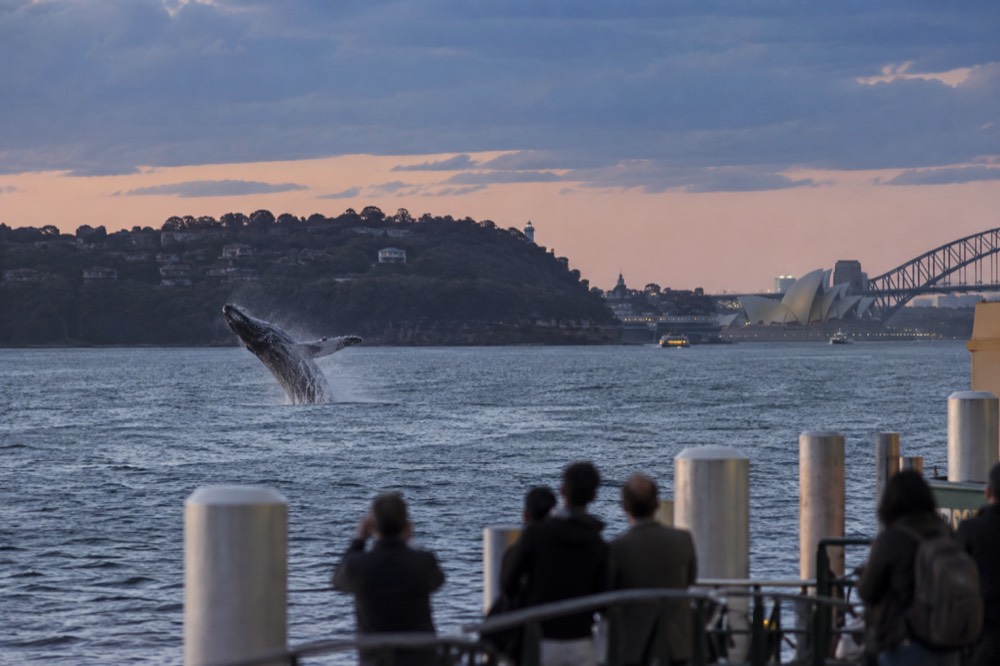
Short answer
Whale watching in Sydney runs from May to November, with the peak in late June and July when northbound humpbacks pass closest to the season's biggest numbers. You can watch free from headlands in Sydney Harbour National Park and Royal National Park, or take a cruise from Darling Harbour or Circular Quay lasting two to four hours.
Every winter, the NSW coast becomes a whale highway. An estimated 40,000-plus humpbacks, a population figure cited by NSW National Parks, migrate along this coastline each year between May and November, and Sydney sits directly on the route. You do not need a boat, a tour or even much of a plan: on a clear winter's day a whale can surface off North Head while you are holding a coffee. But knowing which month, which headland and which cruise turns a lucky sighting into a reliable one.
This guide covers the season, the migration calendar, the free shore lookouts inside Sydney's national parks, and the three whale watching cruises that operate from the city. If you want the short version, jump to the cruise comparison further down, or start with the season itself.
When Is Whale Watching Season in Sydney?
Whale watching season in Sydney runs from May to November, when humpback whales migrate along the NSW coast between their Antarctic feeding grounds and Queensland breeding grounds. The peak is late June through July, when northbound whales pass in the greatest numbers. The southern migration, August to November, brings mothers and calves closer to shore.
NSW National Parks publishes the migration facts plainly: the northern migration, whales heading north to breed, runs roughly May to July, and the southern migration, whales returning with calves, runs roughly August to November. The calves are born in warm northern waters over the southern winter, and the return journey hugs the coastline more closely, which is why spring watchers often get the closest sightings of the whole year.
The timing matters more than most visitors realise. Sydney's winter, June to August, is when the big numbers pass, and it happens to be a good time to be outdoors here. August is Sydney's clearest month on the long-run Bureau of Meteorology record, with 13.4 mean clear days, more than any other month. February, the middle of the tourist summer, is the cloudiest. Peak whale season and peak viewing weather overlap almost perfectly, which is one of the better-kept secrets of visiting Sydney in winter.
| Period | Migration | What you see | Viewing notes |
|---|---|---|---|
| May | Northern migration begins | First adults heading north | Numbers low, sightings possible but sparse |
| June | Northern migration builds | Steady stream of adults | Late June is the start of peak |
| July | Peak of northern migration | Highest numbers passing | Best month for sheer volume |
| August | Transition, southern migration begins | Adults, then mothers with calves | Sydney's clearest skies of the year |
| September | Southern migration | Mothers and calves close to shore | Calves often surface beside the boat |
| October | Southern migration continues | Mothers and calves, tail slapping | Warm spring days, calm mornings |
| November | Season tapers off | Stragglers heading south | Last weeks of the season |
Where Can You Watch Whales from the Shore in Sydney?
The best free whale watching spots in Sydney are the headlands of Sydney Harbour National Park and Royal National Park, especially North Head, South Head, Cape Solander in Kamay Botany Bay National Park and the Royal National Park coast. Whales pass within a few hundred metres of these headlands during the season.
NSW National Parks names land-based vantage points inside Sydney Harbour National Park and Royal National Park specifically, and both parks sit on the migration corridor. North Head at Manly looks straight out at the open ocean lanes the whales use. South Head, above Watsons Bay, gives you the entrance to Sydney Harbour itself, and whales occasionally detour past the heads. Cape Solander, in Kamay Botany Bay National Park near Kurnell, has a dedicated whale watching platform that volunteer spotters use during the census, and it is one of the closest points to the passing pods anywhere in the city.
Further south, the cliffs of the Royal National Park, from Bundeena toward Garie and beyond, put you high above the whales with nothing between you and the migration route but ocean. The park costs $12 per vehicle per day to enter, though arriving on foot or by train avoids the fee entirely, and the coastal track walking route doubles as one of the finest whale watching walks in the state. Our guide to the Royal National Park walks and coast covers the access points in detail.
Bring binoculars if you have them, but you often do not need them. A breaching humpback is visible to the naked eye from kilometres away, and the blow of a surfacing whale, a tall white plume, is the telltale first sign. Scan the horizon, wait for the plume, then watch that patch of water.
| Shore lookout | Park | Why it works | Access |
|---|---|---|---|
| North Head | Sydney Harbour NP | Faces the open ocean migration lane | Short walk from Manly, ferry then bus |
| South Head | Sydney Harbour NP | Watches the harbour entrance | Walk from Watsons Bay ferry wharf |
| Cape Solander | Kamay Botany Bay NP | Dedicated viewing platform, closest to pods | Car, or train to Cronulla then bus |
| Bundeena cliffs | Royal National Park | High clifftops over the migration route | Ferry from Cronulla or car, $12 per vehicle |
| Bondi to Coogee walk | Coastal path | Occasional offshore sightings on the walk | Public transport to Bondi |
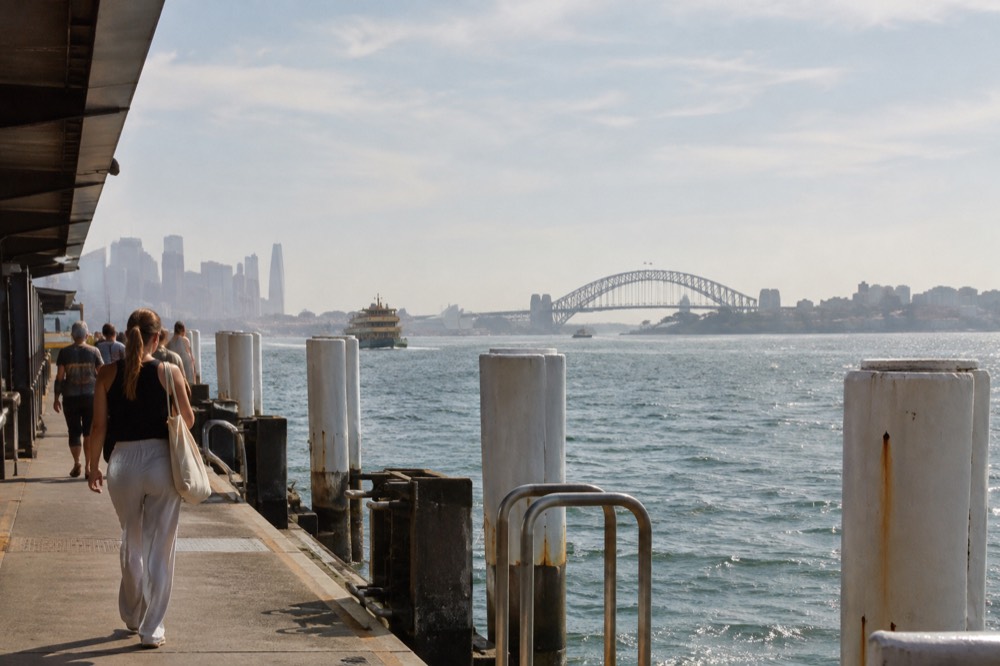
The whale facts and watching guidelines published by NSW National Parks ask shore watchers and boats alike to keep distance and let the whales set the terms of the encounter. Drones, jet skis and approaching craft are regulated, and the guidelines are worth reading before you go.
Which Whale Watching Cruise Should You Book in Sydney?
The best whale watching cruise in Sydney for most visitors is the 2 hour 45 minute Whale Watching Adventure Cruise from Darling Harbour, which is the most-reviewed whale cruise operating from the city. If you want a meal included, the 4-hour cruise with breakfast or lunch suits families, and the 2-hour extreme speed boat suits thrill-seekers who want a fast, small-group run out to the pods.
All three cruises are strictly seasonal, running May to November only, and none can guarantee a sighting, though the peak weeks make a sighting very likely. The adventure cruise is the workhorse option: a large comfortable vessel, a naturalist commentary, and a route that heads straight out of the harbour to where the spotters have seen surface activity that morning. It is the one we would point a first-time visitor to, and the one most itineraries in our Sydney harbour cruises guide pair with a shore day.
The band above includes the whale cruise plus two alternatives travellers commonly weigh it against: the all-inclusive Blue Mountains day trip, which is the other marquee winter day tour from Sydney, and the Opera House tour, for anyone building a city day around a morning on the water. If whales are the reason you are here, though, the whale cruise is the pick.
The meal-included cruise runs four hours and suits anyone who wants the longer, gentler day on the water, particularly with children. Breakfast and lunch departures both exist, and the extra time on the water matters in the shoulder months of May and November when pods are sparser and finding them takes patience.
The extreme speed boat is a different animal entirely. Two hours, a small rigid vessel, and a run out to the whales at pace, which is half the fun and half the reason its reviews run so strongly. It suits confident swimmers and sturdy stomachs, and it is not the choice for small children or anyone with a back problem. Wear the provided gear, and take the crew's motion advice seriously.
Between the big comfortable boat and the small fast one sits a simple question: how much do you want the sea itself to be part of the story? For most first-time visitors the answer is the larger vessel, which is why the adventure cruise is the one this guide recommends as the default, with the speed boat as the upgrade for travellers who want the ride to matter as much as the whales.
How Much Does Whale Watching in Sydney Cost?
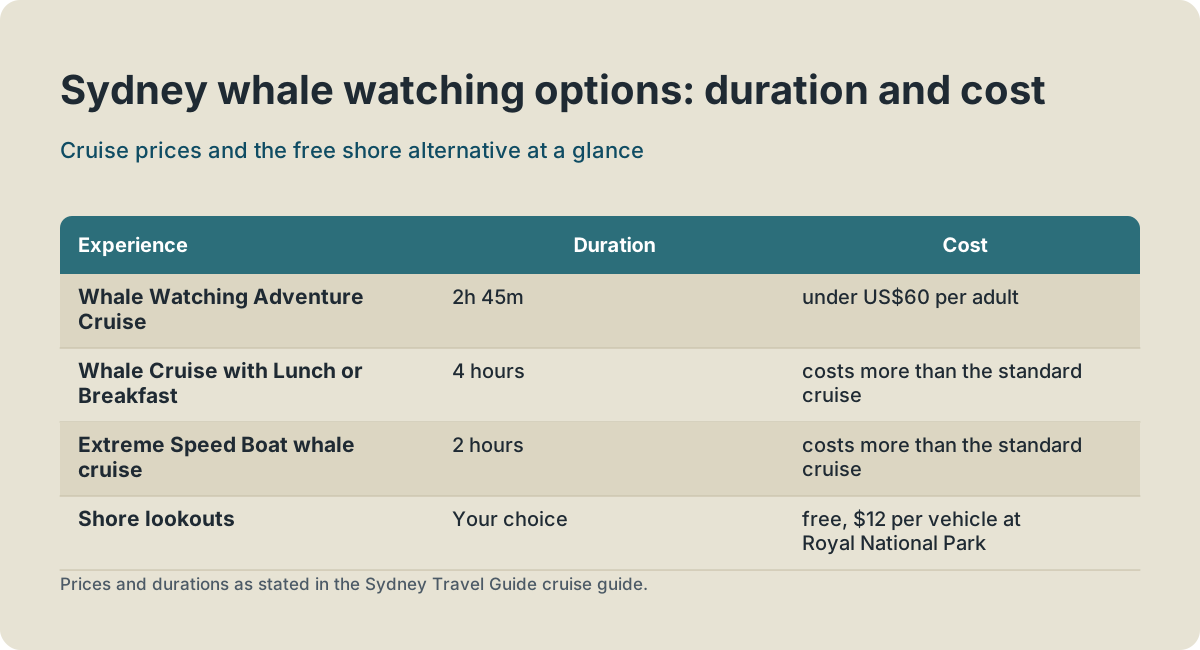
A whale watching cruise in Sydney starts at under US$60 per adult for the standard adventure cruise, with the meal-included cruise and the small speed boat both costing more. Watching from the shore is free, and the only cost at the national park lookouts is the $12 per vehicle daily entry fee at Royal National Park, which train and ferry travellers avoid entirely.
The cheapest reliable whale experience in Sydney costs nothing: a headland, a pair of eyes and the right week. The cruises charge for what the shore cannot give you, which is proximity. A boat operating under the national parks watching guidelines can position near a pod, cut its engines, and let the whales decide whether to approach, and in the southern migration calves are famously curious.
Price differences between the cruises mostly track three things: vessel size, trip length and what is included. The adventure cruise is the shortest-priced because it is a big-boat, high-capacity run. The meal cruise adds catering and an extra hour and a quarter on the water. The speed boat is small-capacity, which pushes the per-seat price up but puts six or eight guests rather than sixty beside a whale. Live prices for all three sit on the operator's listings and move with demand through the season, so the figures above are entry points, not quotes.
| Experience | Duration | Style | Best for |
|---|---|---|---|
| Whale Watching Adventure Cruise | 2h 45m | Large vessel, commentary | First-timers, most visitors |
| Whale Cruise with Lunch or Breakfast | 4 hours | Meal included, slower pace | Families, longer day out |
| Extreme Speed Boat whale cruise | 2 hours | Small fast boat | Thrill-seekers, adults |
| Shore lookouts (free) | Your choice | Headland viewing | Budget travellers, photographers |
What Will You Actually See on a Sydney Whale Cruise?
You will mostly see humpback whales, which account for the overwhelming majority of Sydney sightings, with the chance of southern right whales, minke whales and, rarely, orcas or blue whales. Typical surface behaviour includes blows, fluke-up dives, pectoral slapping and full breaches, with breaching most common in rougher conditions.
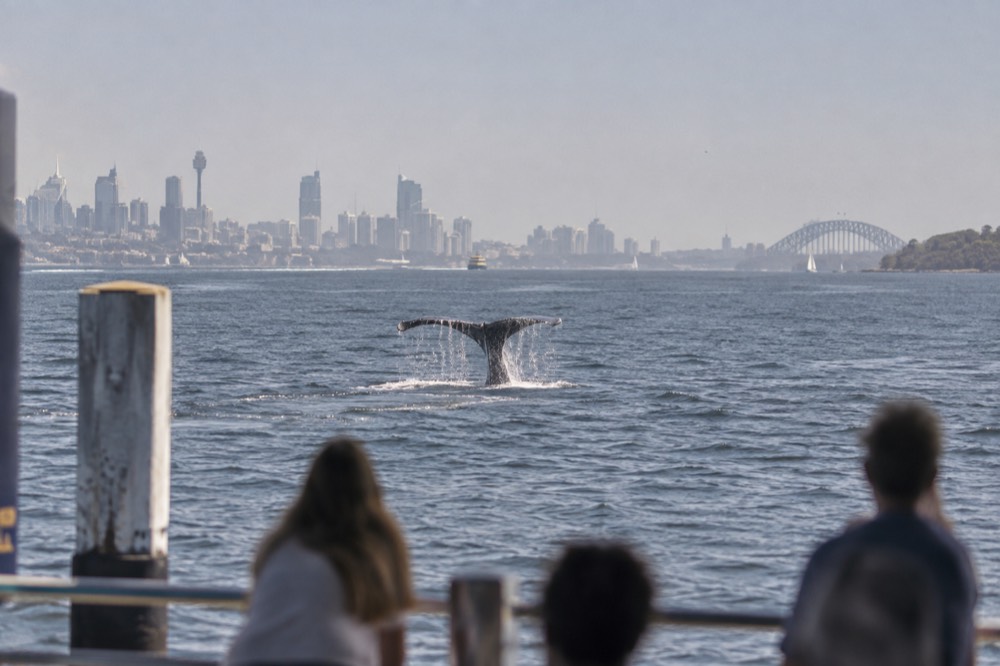
Humpbacks are the show. They are the acrobats of the large whales, and a full breach, a 30-tonne animal clearing the water, is the sighting every boat hunts for. More commonly you will follow a pod by its blow, watch the arch of the back before a dive, and see the tail flukes lift as the whale sounds. Pectoral fin slapping and tail lobbing are regular behaviours, and mothers resting with calves in the southern migration often lie near the surface for long stretches.
The other species are genuine but occasional. Southern right whales pass Sydney in small numbers and, unlike humpbacks, often come into very shallow sheltered bays to rest, which produces the rare spectacle of a whale just off a city beach. Minke whales are quick and elusive. Dolphins, meanwhile, are near-guaranteed: the common and bottlenose dolphins that live in Sydney's coastal waters join boats regularly, and many cruises treat a dolphin escort as the warm-up act. Seals haul out on the harbour's rocky ledges, and seabirds including albatross and gannets follow the feeding activity.
No operator can promise a whale on any given departure. The honest framing, which every listing here carries, is that in peak weeks sightings are very likely and in shoulder weeks they are a matter of search time and luck. Some operators offer a free return trip if a cruise sees no whales; check the live listing for the current policy before you book rather than assuming it.
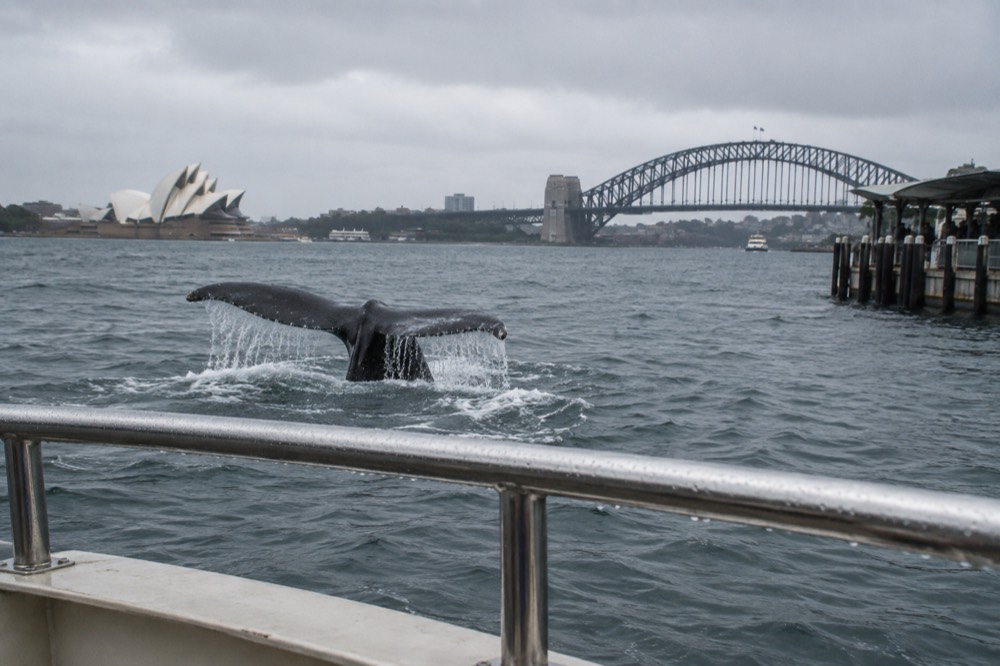
What Is the Best Month to Go Whale Watching in Sydney?
The best month for whale watching in Sydney is July, the peak of the northern migration, when the greatest number of humpbacks pass the city. September and October are the best months for close sightings, when the southern migration brings mothers and calves within a few hundred metres of headlands and boats.
If you want numbers, go in July. If you want proximity and calm, go in September or October. The two halves of the season reward different travellers, and the choice comes down to what kind of sighting you want.
July is volume season. The northern migration is at its fullest, pods pass in a steady stream, and a boat that finds one group often finds three. The trade-off is weather: July is winter, the water is at its coldest, and the sea state can be lumpy. The whales are also mid-journey and mid-mission, so they pass without lingering.
September and October are quality season. The southern migration carries the new calves south, and mother-calf pairs travel slowly, close to the coast, resting in shallow water. Calves are curious and playful, and a boat sitting still with engines off is sometimes approached rather than merely observed. Spring days are also the calmest of the season, which matters enormously on a small boat.
| Month | Numbers | Weather | Sighting quality |
|---|---|---|---|
| June | Building | Cool, often clear | Good, improving late in month |
| July | Peak | Cold, sea can be rough | Highest volume of whales |
| August | High | Clearest skies of the year | Adults, early mothers and calves |
| September | Good | Mild, calmer seas | Close mother-calf encounters |
| October | Good | Warm, calm mornings | Playful calves, best all-round month |
| November | Tapering | Warm | Last chance, fewer whales |
What Should You Bring on a Whale Watching Cruise?
Bring warm layered clothing including a waterproof outer layer, a hat, sunglasses, sunscreen, sea sickness tablets taken before boarding, and a fully charged camera or phone. Even in spring, the wind chill on an open deck on moving water makes it feel several degrees colder than the shore, and spray is constant on the smaller boats.
The clothing advice surprises visitors from the northern hemisphere every season. A Sydney September day can be 20 °C on land and feel like 10 °C on a boat doing 20 knots into a headwind. Layers are the answer: a fleece or mid-layer under a windproof jacket, long trousers, and closed shoes with grip, because wet decks are slippery. The big cruise vessels have enclosed cabins, so the adventure cruise is forgiving, but the speed boat is fully exposed and the operator's gear list is worth reading.
Seasickness deserves respect. The harbour itself is almost always calm, but the open ocean outside the heads is where the whales are, and a two-metre swell is normal in winter. Take a standard motion sickness tablet an hour before boarding, stay on deck looking at the horizon rather than below deck, and book the larger vessel if you know you are prone. The meal cruise's slower pace also helps.
Sun protection matters even in midwinter. Sydney's UV index exceeds the protection threshold of 3 for most of the year, and glare off the water adds to it, so sunscreen and sunglasses apply in July as much as in January. If you want photographs, a phone is genuinely fine: whales surface close enough that zoom barely matters, and the best shots are usually of the blow and the fluke, which you get by watching and waiting rather than by having a long lens.
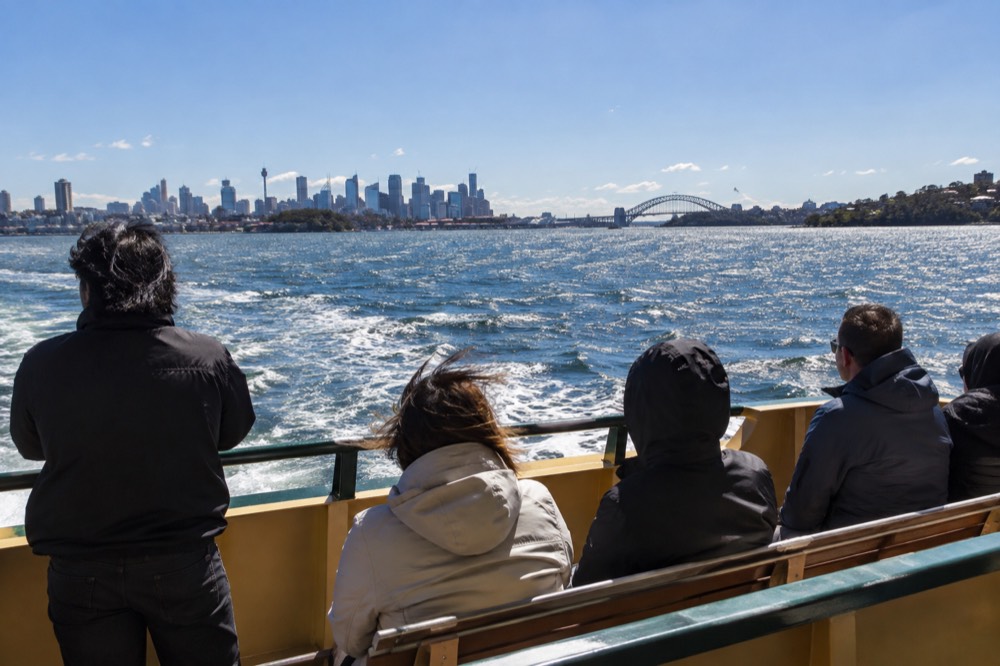
Can You Combine Whale Watching with Other Sydney Plans?
Yes, and winter is the best time to do it. Whale watching pairs naturally with a Manly ferry morning, a North Head walk, a Watsons Bay lunch or a Blue Mountains day trip on a different day, and Sydney's winter events calendar, anchored by Vivid Sydney in late May to mid-June, overlaps the start of the season.
The simplest combination costs almost nothing. Take the ferry to Manly, walk up to North Head through Sydney Harbour National Park, watch the ocean lanes for an hour, then come back for lunch in Manly. The ferry itself is one of the great harbour trips, and our Manly ferry guide covers the route and fares, including the $9.20 one-way Opal fare and the caps that can make a heavy sightseeing day cheap.
If you are staying in the city without a car, the whale cruise plus an afternoon on foot works well: most morning departures return by early afternoon, leaving time for the Opera House tour, the Royal Botanic Garden, which is free to enter, or the Art Gallery of New South Wales, open late on Wednesdays. The winter light on the harbour is excellent, and the galleries are warm.
The Blue Mountains deserves its own full day, and winter is its best season: clear air, low crowds and a chance of the misty valley views the region is famous for. Do not try to combine a whale cruise and the mountains on the same day; both are half-day-plus experiences. Our Blue Mountains day trip guide covers the train option, the tours and the fact that the national park itself charges no entry fee outside Glenbrook.
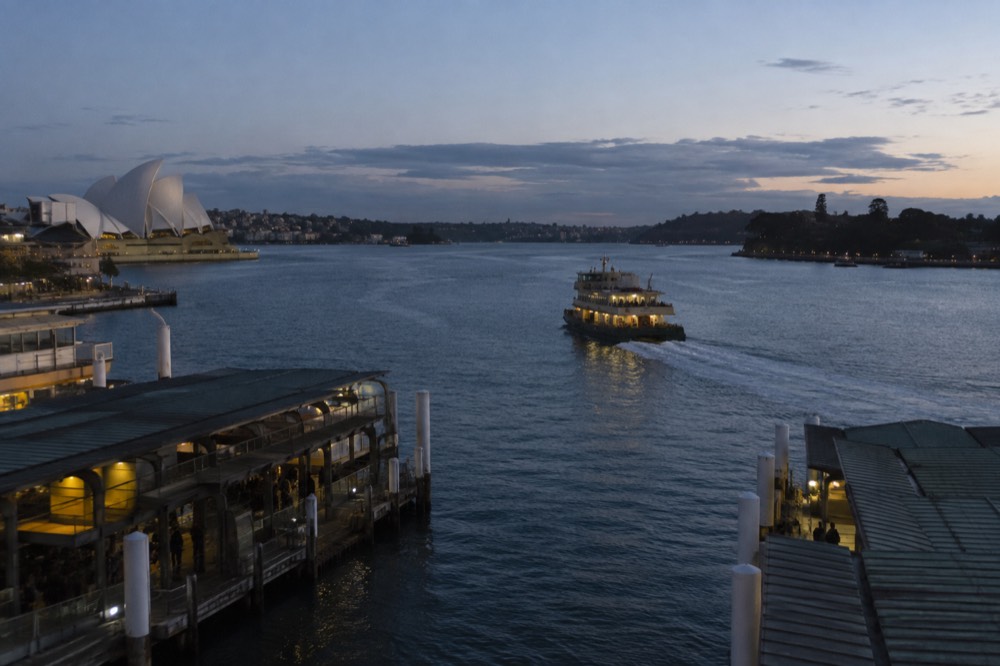
For photographers, whale season is a gift. The low winter sun gives long golden hours over the ocean, and the shore lookouts double as landscape locations. Our best lookouts in Sydney guide lists several that double as whale vantage points in season.
Is Whale Watching in Sydney Worth It?
Yes, if you visit between May and November, especially late June to October. Sydney is one of very few major cities in the world where humpback whales pass within sight of the central business district, and a cruise from the city centre reaches open-ocean whale grounds in under an hour. Outside the season, it is simply not available, and no operator should be selling you a winter expectation in February.
The honest comparison is with the famous whale towns, Hervey Bay and Eden, where whale tourism is the whole economy. Sydney cannot match Hervey Bay's calm whale nursery waters, but it does not need to: it is the only place where a world-class city and a whale migration corridor overlap this closely. You can see the Opera House and a humpback on the same morning. That combination is rare anywhere on earth.
The season is also the one time of year this site's winter coverage becomes the peak-season coverage. Sydney in winter is mild, with a mean daily maximum of 17 °C in June and 17.9 °C in August, clearer skies than February, and far fewer crowds at every major sight. Whale season is the single best reason to visit Sydney in the months the northern hemisphere assumes are off-limits.
Whether from a clifftop or a boat, the migration is the most dramatic wildlife event that happens within sight of this city, and it runs for seven months of the year. Pick your month, check the weather, and bring more layers than you think you need. The team at Sydney Travel Guide rates the late June to October window as one of the best times to be in Sydney, full stop.
Common Questions About Whale Watching in Sydney
When is whale watching season in Sydney?
May to November. The northern migration, whales heading north to breed, runs roughly May to July with the peak in late June and July. The southern migration, mothers returning with calves, runs roughly August to November and brings the closest sightings.
Can you see whales from Sydney's beaches and headlands?
Yes. North Head, South Head, Cape Solander and the Royal National Park cliffs all sit on the migration corridor, and whales regularly pass within a few hundred metres of them in season. Binoculars help, but a breaching whale is visible to the naked eye.
Is a whale sighting guaranteed on a Sydney cruise?
No. No operator can guarantee a sighting on any single departure, though in peak weeks, late June to July, sightings are very likely. Some operators offer a free return trip when a cruise spots no whales; check the live listing for the current policy.
What kind of whales pass Sydney?
Mostly humpback whales, which make up the overwhelming majority of sightings. Southern right whales, minke whales and, rarely, orcas also pass. Dolphins are near-guaranteed on any cruise.
Do you get seasick on a whale watching cruise?
Many people do not, but the open ocean outside Sydney Heads can carry a two-metre swell in winter. Take a motion sickness tablet an hour before boarding, stay on deck looking at the horizon, and choose the larger vessel if you are prone to seasickness.
How close do the whales come to the boat?
Boats follow NSW National Parks watching guidelines and keep a set distance, with engines cut near pods so the whales choose whether to approach. In the southern migration, curious calves sometimes come close to a stationary boat on their own.