The Rocks, Sydney: Convict History, Harbour Views and the Oldest Pubs in Australia
The Rocks is where Sydney began: a grid of sandstone lanes at the foot of the Harbour Bridge that went from convict slum to the city's most atmospheric quarter. Here is what to actually do there, how to get there, and how long to give it.
Short answer
The Rocks is Sydney's oldest neighbourhood, sitting directly west of Circular Quay beneath the Harbour Bridge. Give it half a day: wander the sandstone lanes and harbour foreshore, take a guided walking tour, visit the weekend markets, and finish in one of Australia's oldest pubs. Entry to the area costs nothing; tours run from US$24.34.
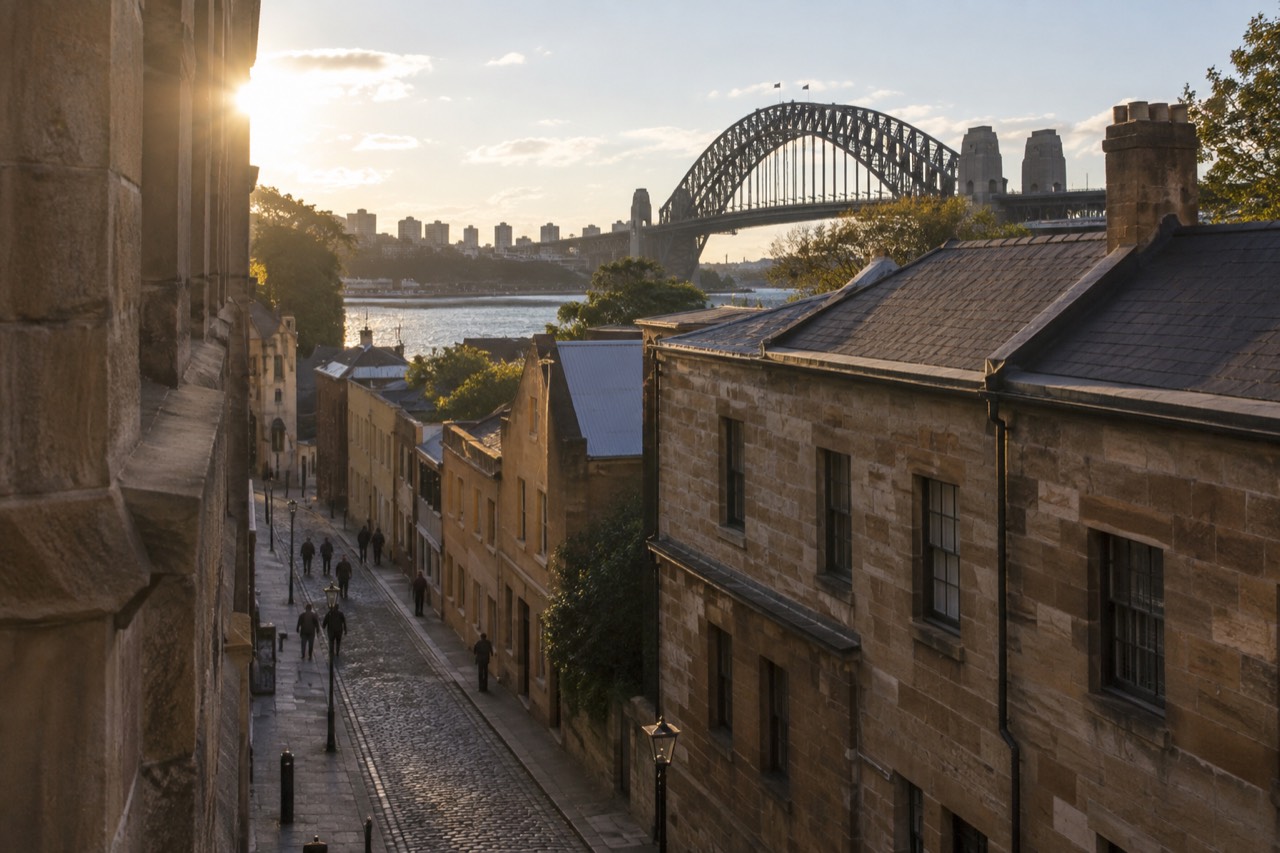
Sydney's oldest neighbourhood occupies barely a dozen blocks, wedged between the harbour and the ridge that the city centre now climbs. The Rocks is where the colonial settlement first put down roots, where convicts built their own cramped cottages on sandstone, and where, decades later, residents and union green bans stopped the whole quarter from being demolished for high-rise. What survived is a rare thing: an intact nineteenth-century streetscape at the foot of the Sydney Harbour Bridge, ten minutes' flat walk from Circular Quay.
This guide covers what The Rocks actually offers a visitor today, how to reach it, what the food and pub scene is really like, and how to decide between the tours that operate here. Everything priced below comes from the live listings, and every transport figure comes from Transport for NSW's published fares.
What Is the Rocks and Why Is It Famous?
The Rocks is Sydney's oldest residential area, the place where the first colonial settlement spread west from the cove in the earliest years of the colony. It is famous for its surviving sandstone buildings, convict-era lanes, some of the oldest continuously licensed pubs in Australia, and its position directly beneath the southern approach to the Sydney Harbour Bridge. It takes its name from the sandstone outcrops that defined its steep streets.
The quarter's fame rests on a survival story. Through the middle of the twentieth century, The Rocks was slated for wholesale redevelopment, and much of it had already been resumed by the government. Residents, unions and heritage campaigners pushed back, and the demolition stopped. The lanes and terraces that remained were restored instead of replaced, which is why a visitor today walks past working pubs, galleries and markets inside buildings that predate almost everything else in the city.
Geography does a lot of the work too. The neighbourhood sits on a sandstone slope falling to Circular Quay, so nearly every east-west street ends in a postcard view of the Opera House across the water. The Harbour Bridge rises directly overhead at its western edge, close enough that you can stand in a convict-era courtyard and look straight up at the deck. Few historic quarters anywhere sit inside a view corridor this good.
For a first-time visitor, the practical appeal is simpler: The Rocks is walkable, free to wander, and dense. You can cover the whole area on foot in a couple of hours, yet it holds museums, markets, a weekend craft scene, a cluster of significant heritage buildings and a pub culture that runs from lunch through late evening.
What Are the Best Things to Do in the Rocks?
The best things to do in The Rocks are wandering the heritage lanes between Circular Quay and the Harbour Bridge, joining a guided walking tour of the convict-era streets, browsing the weekend markets, climbing up to Observatory Hill for the free harbour panorama, and ending the day in one of the historic sandstone pubs. A first visit deserves at least half a day, and an evening adds a ghost tour through the same lanes after dark.
Start with the streets themselves, because they cost nothing. Playfair Street, Argyle Street and the Argyle Cut, a passage hacked through the sandstone ridge by convict labour, give you the quarter's character in a single loop. The Argyle Cut alone is worth stopping for: the rock faces on either side show the chisel marks of the gangs who excavated it by hand. From there the loop climbs to Observatory Hill, a park on the ridge with one of the best free views in the city, looking over the harbour toward the bridge and, on clear days, out to the Blue Mountains on the horizon.
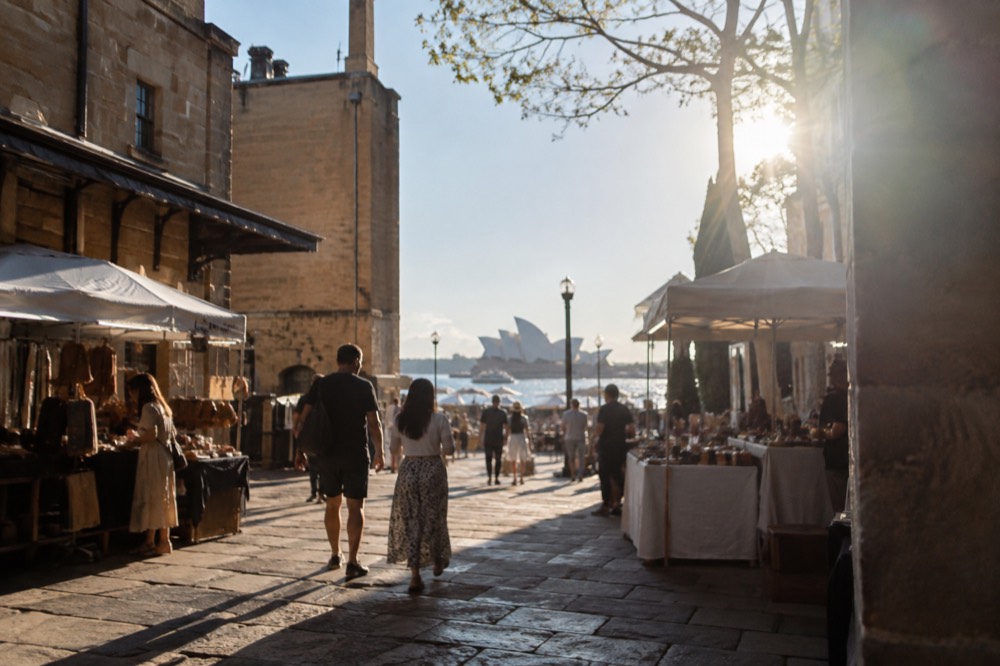
The weekend markets fill the squares with craft, food and jewellery stalls, and they are the main reason the area feels different on a Saturday than on a Tuesday. Market days also bring out the buskers and the crowds, so if you want the lanes quiet and photogenic, come on a weekday morning instead. There is no entry fee for any of it.
Two guided products dominate the daytime touring scene here, and they suit different travellers:
The Rocks guided walking tour is the standard choice: a ninety-minute walk covering the convict cottages, the Argyle Cut, the plague-era history and the green ban story, led by a guide who knows which doorway hides what. It runs roughly ninety minutes, which leaves the rest of the day free. Check availability if a daytime slot suits your plans.
For a deeper cultural angle, the Aboriginal cultural cruise with Clark Island tour leaves from nearby Circular Quay and connects the colonial quarter to the far older story of the Gadigal people of the Eora Nation, whose land this harbour country has always been. It pairs well with a morning in The Rocks, and the two-hour format fits easily around lunch.
The evening belongs to the ghost tour. The Rocks haunted ghost tour runs the same lanes you walked at midday, but after dark and with the quarter's dark history, hangings, plague and unsolved deaths, laid out in full. It is a two-hour walk and it is the most atmospheric way to see the sandstone lanes, when the day crowds are gone and the pubs are lit.
Beyond tours, the practical checklist for a first visit looks like this:
| Activity | Type | Time to allow | Booking needed |
|---|---|---|---|
| Wander Argyle Cut and Playfair Street | Free walk | 1 hour | No |
| Observatory Hill lookout | Free parkland | 30-45 minutes | No |
| Weekend markets | Free entry | 45-60 minutes | No |
| Guided walking tour | Paid tour | 1 hour 30 minutes | Yes, sessions are ticketed |
| Ghost tour | Paid tour | 2 hours | Yes, evening sessions only |
| Historic pub visit | Food and drink | 1-2 hours | Walk-ins usually fine |
If you are pairing The Rocks with a bridge experience, note that the southern pier of the Harbour Bridge sits at the neighbourhood's western edge. The Pylon Lookout is the budget-friendly way up, and the full climb options are covered in our BridgeClimb guide. Both are close enough to reach on foot from the Argyle Cut within minutes.
Is the Rocks Worth Visiting for Pubs and Food?
Yes, the pub scene alone justifies an evening here. The Rocks holds some of the oldest continuously licensed pubs in Australia, operating inside sandstone buildings from the colonial era, plus a compact food scene ranging from market snacks to fine dining in heritage rooms. It is the best place in Sydney to eat and drink inside buildings that are themselves the attraction, and most pubs welcome walk-ins.
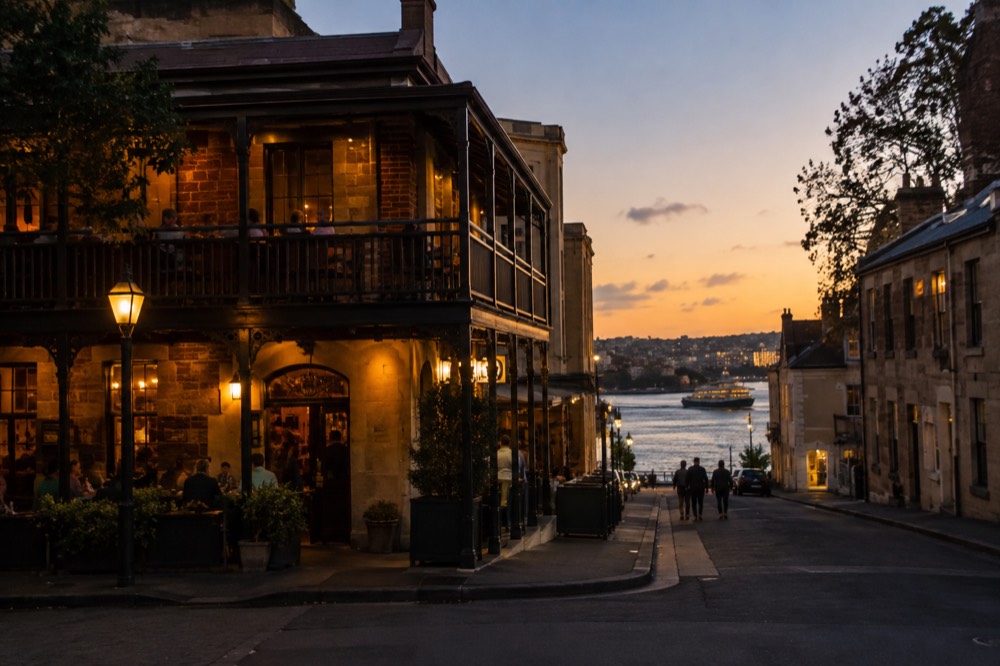
The pubs are the headline. Several of the quarter's hotels have held liquor licences since the colonial period, and drinking in them means low timber ceilings, sandstone walls and, in one famous case, a cellar of old rum bottles recovered from beneath the floorboards. Because the buildings are heritage-listed, none of them feel renovated into blandness; the interiors are worn in the way visitors hope for and rarely find elsewhere. Prices are city-centre prices, so budget accordingly, and the weekend evenings get loud and busy from early evening.
The food scene is broader than the pubs suggest. Weekend market stalls cover the cheap end, and the laneways hold cafes, bakeries and small restaurants that do a steady weekday trade from the office crowd. At the top end, a handful of heritage rooms serve modern Australian menus with harbour views. You will not eat cheaply here by Sydney standards, but you will eat in rooms with more history per square metre than anywhere else in the city.
For travellers who want the pub culture explained rather than merely sampled, the Rocks pub walking tour visits a series of historic hotels with a guide covering the stories behind each one. It runs about two and a half hours and is a social way to spend an evening, since the group drinks its way through the quarter's oldest rooms with the history attached.
One honest caveat: The Rocks is a tourist precinct, and the pubs and restaurants closest to Circular Quay reflect that. Walk one or two streets uphill, away from the water, and the venues get quieter and more local. The gradient does the sorting for you; the higher you climb, the fewer camera straps you see.
If an evening ghost tour is the one thing you know you want to do here, it is worth locking in before you travel. Evening sessions are small-group runs through narrow lanes, and the weekend ones fill first.
What Is the History of the Rocks?
The Rocks began as the first settlement's overflow, where convicts and their families built rough cottages on the sandstone slope west of the cove. It spent the colonial era as a working-class port quarter with a rough reputation, survived a bubonic plague scare and government resumptions, and was saved from demolition by resident campaigns and union green bans. That is why the sandstone lanes still stand at all, and why the quarter is protected today.
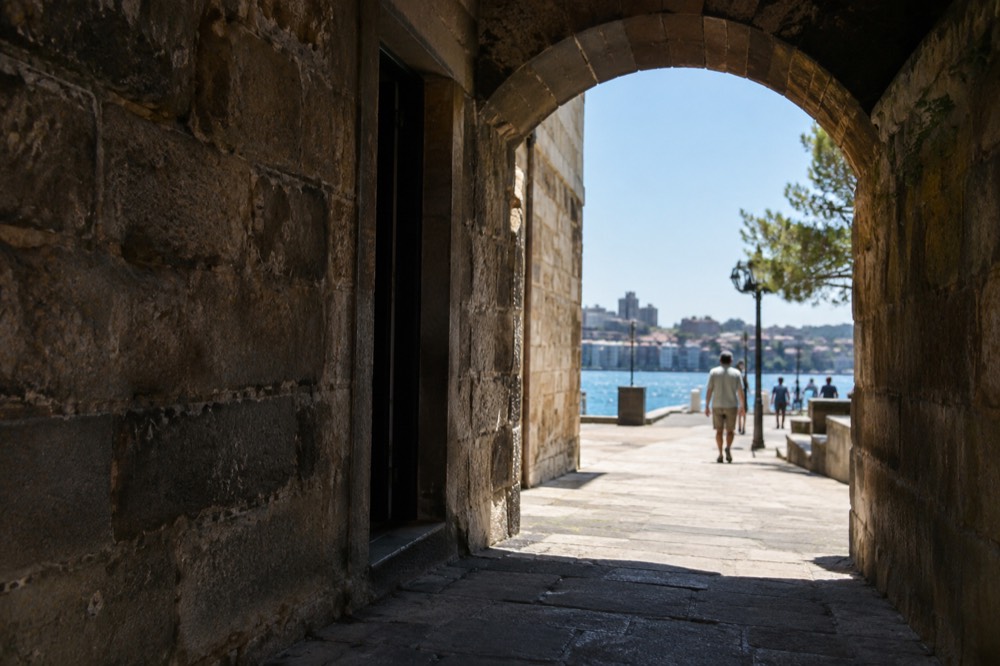
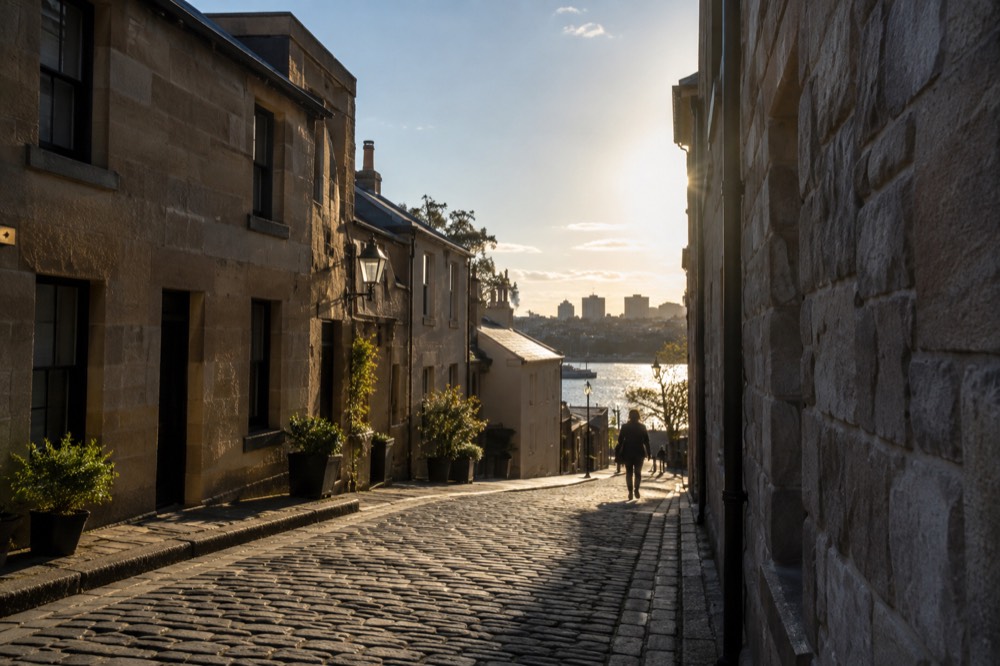
The early decades were hard ones. The colonial government assigned land here to convicts who had finished their sentences, and they built the cottages that give the quarter its name and its fabric. The population that gathered on the slope included sailors, whalers, labourers and their families, and the area's reputation for grog, brawling and squalor followed it through the nineteenth century. The lanes you walk now, narrow and stepped, preserve that original working-harbour layout.
The turn of the twentieth century nearly finished the place. A bubonic plague outbreak triggered mass government resumption of the buildings, and much of the quarter was rebuilt or cleared under public health powers. What followed was a long decline into dereliction, then, after the Second World War, a plan to raze the lot and replace it with modern towers. The demolition had actually begun when residents and the union movement intervened with the green ban campaigns, refusing to work on the demolitions. The buildings came back instead, and the quarter was restored into the heritage precinct it is now.
The story most tours tell well is exactly this arc, from slum to demolition site to the most protected neighbourhood in the city. The Sydney walking tours overview compares the guided options across the city if you want more than the Rocks-focused versions.
How Do You Get to the Rocks?
The easiest way to reach The Rocks is by train to Circular Quay, which sits at the neighbourhood's eastern edge, followed by a short flat walk. Ferry is the most scenic option, arriving at Circular Quay wharves with the quarter directly ahead. Buses serve the city centre a few blocks south, and walking from the CBD takes under ten minutes. Driving is the one option to avoid: parking here is scarce and expensive.
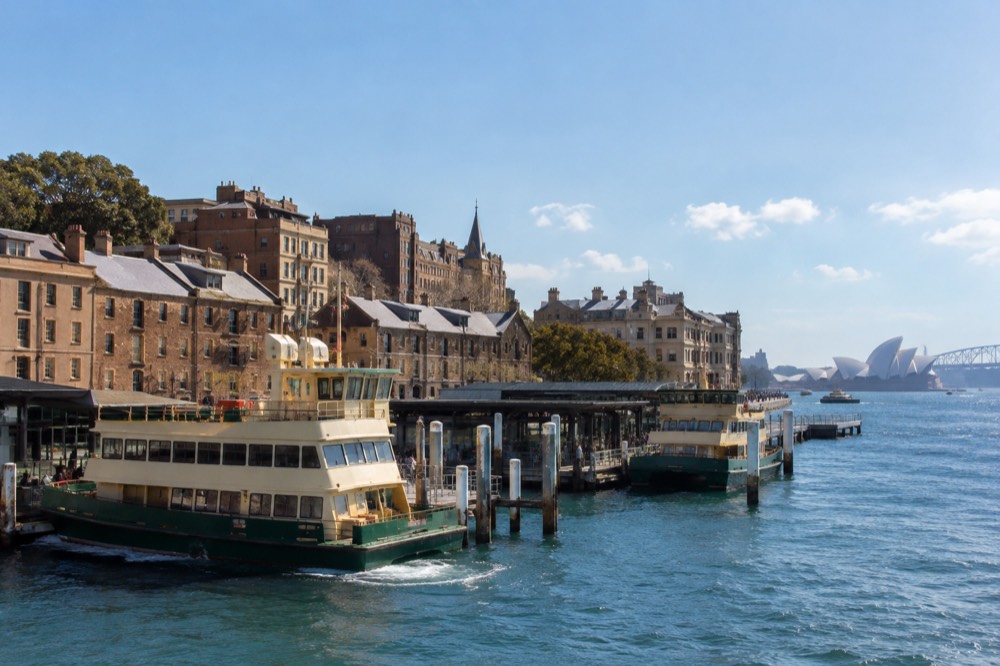
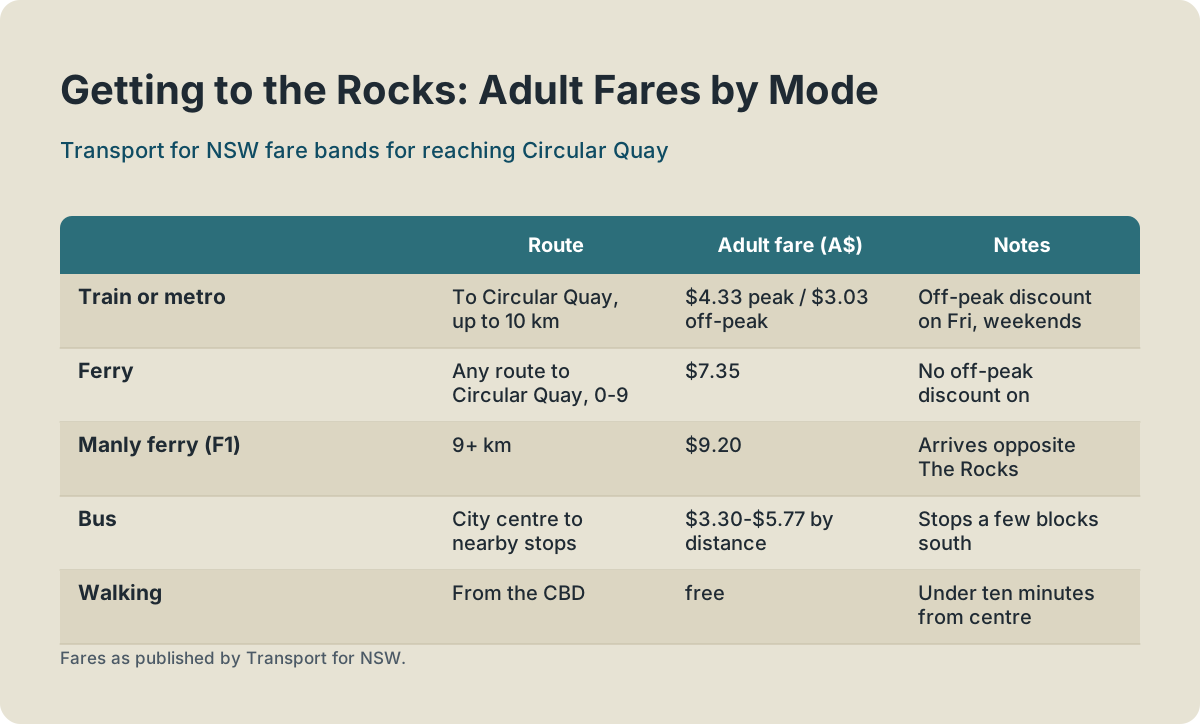
Circular Quay station is the practical gateway. From there the whole quarter unfolds uphill and westward, and nothing in it is more than a few minutes' walk. Transport for NSW publishes the fare bands, and the relevant ones for a visitor staying in the city centre are small: a train trip of up to 10 kilometres costs $4.33 at peak time or $3.03 off-peak, and the off-peak discount applies on Fridays, weekends and public holidays. Tap the same contactless card or device on and off; it is charged identically to an Adult Opal card and earns the same caps, as Transport for NSW explains.
| Mode | Route | Adult fare (A$) | Notes |
|---|---|---|---|
| Train or metro | To Circular Quay, up to 10 km | $4.33 peak / $3.03 off-peak | Off-peak discount on Fri, weekends, public holidays |
| Ferry | Any Sydney Ferries route to Circular Quay, 0-9 km | $7.35 | No off-peak discount on ferries |
| Ferry | Manly ferry (F1), 9+ km | $9.20 | The scenic approach, arriving opposite The Rocks |
| Bus | City centre to nearby stops | $3.30-$5.77 by distance | Stops sit a few blocks south of the quarter |
| Walking | From the CBD | free | Under ten minutes from the city centre |
The ferry deserves a special mention as an arrival method. The Manly ferry guide covers the crossing in detail, but the short version is that arriving by water gives you the Opera House, the bridge and the harbour skyline in one sweep before you step ashore with The Rocks directly in front of you. If you are coming from the northern side of the harbour anyway, this is the way to do it.
Driving is the one genuinely bad option. The quarter's streets are narrow, partly one-way and heavily pedestrianised on market weekends, and the paid car parks around Circular Quay fill early and charge city-centre rates. The getting around Sydney guide covers the broader transport picture if your itinerary needs it.
When Is the Best Time to Visit the Rocks?
The best time to visit The Rocks is a weekday morning, when the lanes are quiet and the light is good for photographs, or a Saturday for the markets at their fullest. Evenings suit the pub scene and the ghost tours. Weather-wise, Sydney's clearest skies fall in August, on long-run averages, and February is statistically its cloudiest month, so the shoulder and winter months are underrated for a walking precinct like this one.
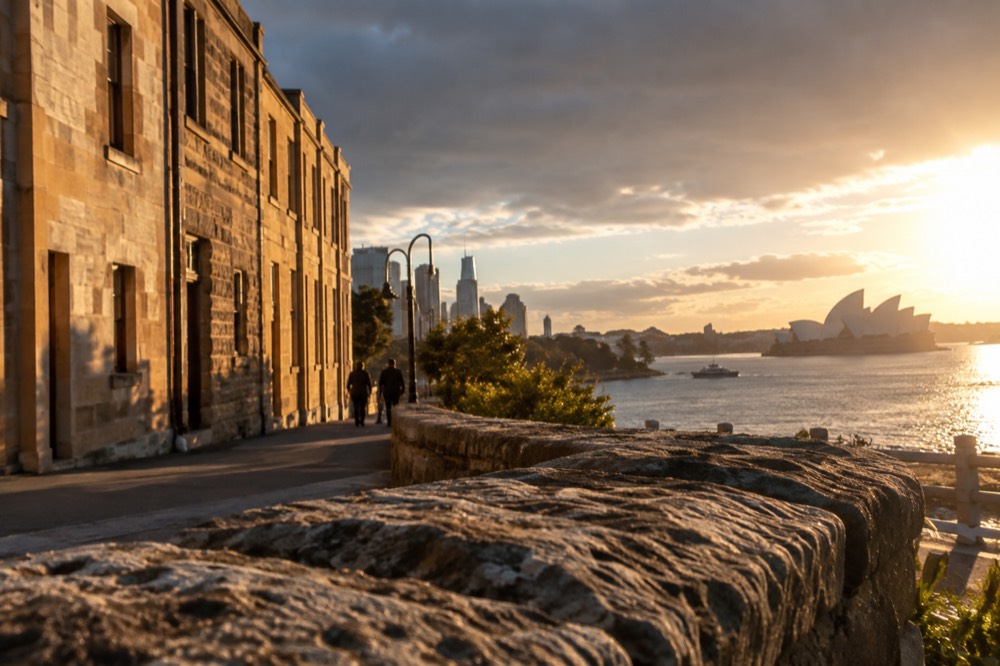
The crowd logic is simple. Weekends bring the markets, the buskers and the biggest foot traffic, especially on Saturdays. Weekday mornings give you the same sandstone with almost nobody in it, and the cafes open early enough for a coffee before the walk. Cruise ship days swell the numbers at Circular Quay regardless of the day of the week, and the cruise ship day guide helps you predict those.
The weather logic is less obvious and more interesting. Bureau of Meteorology long-run averages for Sydney show that August is the city's clearest month, with 13.4 mean clear days, while February, the heart of the tourist summer, is its cloudiest at 5.3. June is actually the wettest month of the year, at 133.1 mm on average, wetter than any summer month. What that means for The Rocks specifically is that the winter and shoulder months, May through September, offer the most reliable clear skies for a quarter whose whole appeal is outdoor walking, provided you bring a layer for the evenings.
Summer has its own counterweight: daylight saving pushes sunset past 8pm from October to early April, which lengthens the golden-hour window on the harbour-facing streets, and the pub verandahs come into their own. There is no bad season here, only different trade-offs between crowds, light and temperature.
| Time slot | Atmosphere | Best for |
|---|---|---|
| Weekday early morning | Quiet, photogenic | Photographs, unhurried laneway walk |
| Weekday afternoon | Steady but not packed | Cafes, galleries, Observatory Hill |
| Saturday | Markets in full swing, busy | Market browsing, people-watching |
| Sunday | Busy but calmer than Saturday | Markets, long pub lunch |
| Evening, any day | Pubs lit, lanes quiet | Pub scene, ghost tour, dinner |
How Long Should You Spend in the Rocks, and What Is Nearby?
Half a day covers The Rocks well: two hours for the lanes, Argyle Cut and Observatory Hill, plus time for a market browse or a guided tour. Add an evening if you want the pubs or the ghost tour, since those are the experiences that need darkness. The neighbourhood also sits inside easy walking distance of Circular Quay, the Opera House and the Harbour Bridge, so it slots naturally into a first day in Sydney.
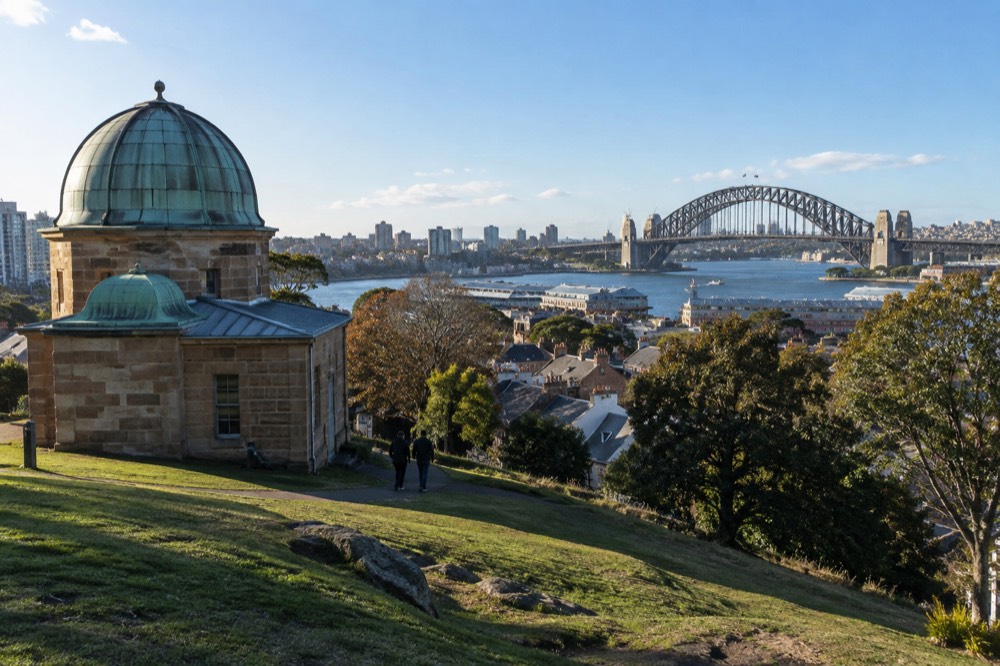
The half-day version works like this: start at Circular Quay in the morning, walk the foreshore west into the quarter, loop up through the Argyle Cut and Playfair Street, climb to Observatory Hill for the panorama, then descend back into the lanes for lunch. That is a solid morning on foot with a coffee stop or two. Add the guided walking tour and you have a full day without leaving the neighbourhood.
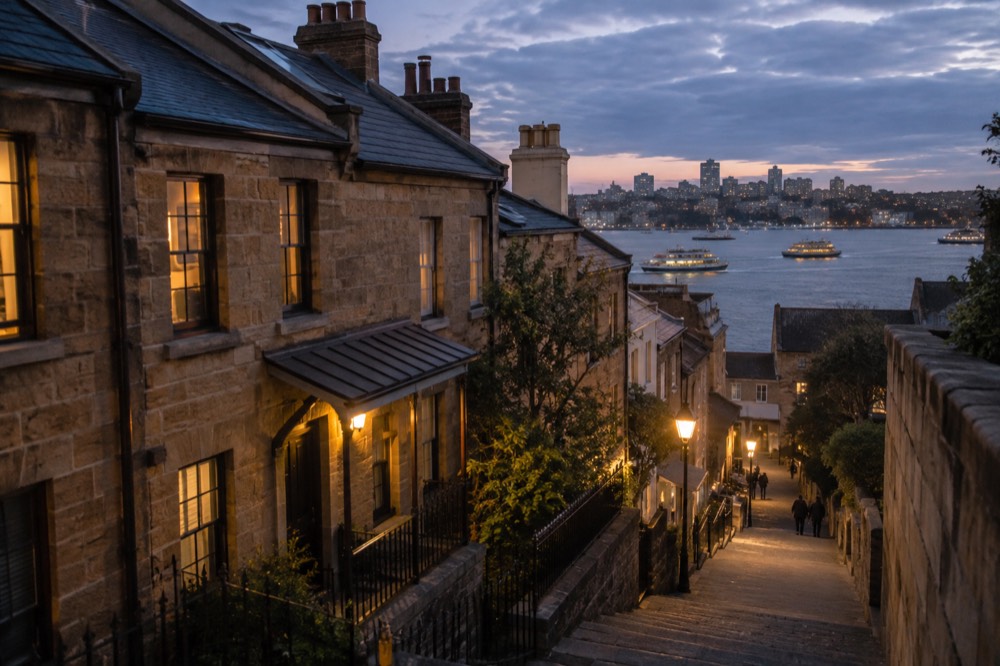
The evening extension is the one worth planning rather than improvising. The ghost tour runs after dark, the pub scene builds through the evening, and the harbour-side walk back toward Circular Quay is at its best under lights. If you are staying in the city centre, there is no transport to arrange at all; the whole evening happens within a few hundred metres of a train station.
Nearby, everything worth pairing sits on foot. The Sydney Opera House is across the cove, reached by the foreshore promenade past the Quay. The Harbour Bridge begins at the quarter's western edge, and the bridge's pedestrian walkway continues north toward Kirribilli and the North Shore's harbour suburbs. The Royal Botanic Garden Sydney, free to enter and open daily from 7am to sunset, begins a short walk east of the Quay, and the Australian Museum, also free for general entry, sits a little further up the hill toward the city centre, as its own visit page confirms. A first-day itinerary that chains The Rocks, the Quay, the Opera House and the bridge walk is the standard Sydney opening move, and this neighbourhood is the natural base for it.
For more on fitting the quarter into a longer stay, the one day in Sydney and weekend itinerary guides do the sequencing, and this site's Sydney Travel Guide home page orients the whole city if you are still sketching the trip.
Common Questions About the Rocks
Is The Rocks worth visiting?
Yes. It is Sydney's oldest neighbourhood, it is free to wander, and it holds the city's best concentration of historic pubs, heritage lanes and harbour views. Half a day is enough to see it properly, and an evening adds the ghost tour and pub scene.
How do I get to The Rocks?
Take a train to Circular Quay and walk west, or arrive by ferry to the Circular Quay wharves with the quarter directly ahead. A train trip of up to 10 kilometres costs $4.33 at peak time or $3.03 off-peak. Avoid driving; parking is scarce and expensive.
Is The Rocks expensive?
Wandering it is free, and the markets are free to browse. Pubs and restaurants charge city-centre prices, and the guided tours are paid experiences. It is not a budget precinct, but it is not gated either.
What are the best things to do in The Rocks at night?
The pub scene inside the heritage hotels, dinner in the laneways, and the two-hour ghost tour through the convict-era streets. The harbour foreshore walk back to Circular Quay is also excellent under lights.
When are The Rocks markets on?
The markets run on weekends, with Saturday the biggest day for stalls, food and buskers. Weekday mornings are the opposite experience: quiet lanes and easy photographs. Check the current market schedule before you plan around it.
Can you walk from The Rocks to the Sydney Opera House?
Yes, easily. The foreshore promenade from Circular Quay connects the two in a flat, scenic walk of roughly fifteen minutes, passing the ferry wharves with the Opera House in view the whole way.