Circular Quay: Sydney's Transport Hub and Harbourside Showpiece
Circular Quay is where Sydney's ferries, trains and buses converge on the harbour, and where the Opera House, the Harbour Bridge and The Rocks sit within a ten minute walk of each other.
Short answer
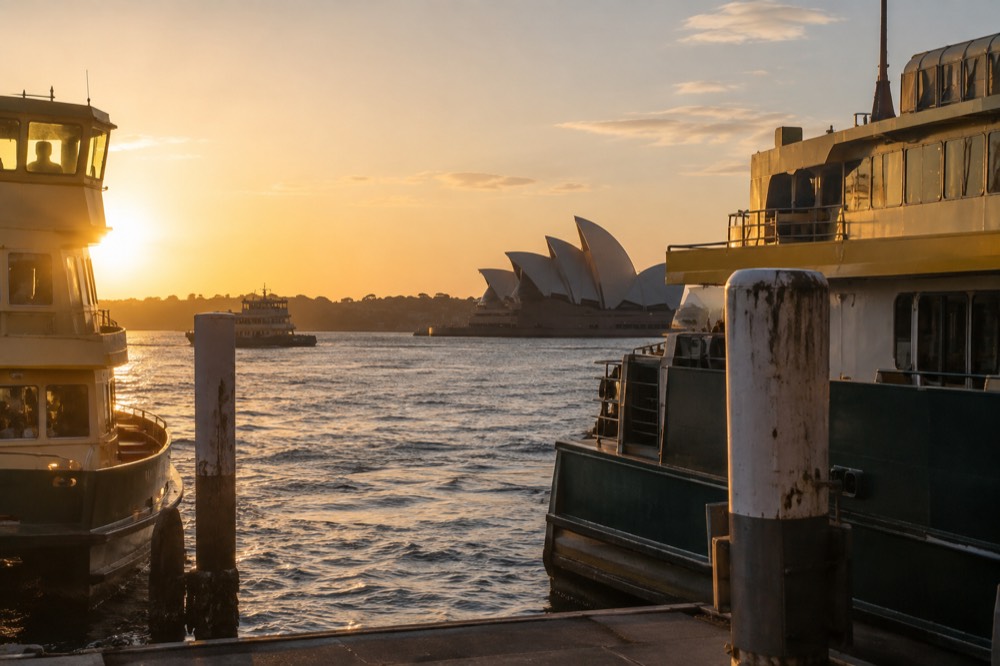
Circular Quay is Sydney's main ferry terminal and transport interchange, sitting directly between the Sydney Opera House and The Rocks. The Manly ferry costs $9.20 one way with an Opal card or contactless payment, the Taronga Zoo ferry is a shorter hop, and the Royal Botanic Garden is free to enter a short walk away. Most visitors spend between two hours and half a day here, depending on whether they add a ferry ride or a walking tour.
What Is Circular Quay, and Why Does Almost Every Sydney Visit Start Here?
Circular Quay is the working ferry terminal at the head of Sydney Cove, the spot where the First Fleet landed and where the modern city still meets its harbour. It is simultaneously a transport interchange for trains, buses and ferries, and a promenade that links the Sydney Opera House on one side with The Rocks and the Harbour Bridge on the other. Almost every visitor passes through it, usually more than once, because the cheapest sightseeing in Sydney is a ferry ride that departs from it.
Sydney Cove is the reason the city exists where it does. The deep water and sheltered cove made it the natural landing place, and the quay was later carved into the semi-circular shape that gives the area its name. What was once a working wharf complex is now the busiest passenger ferry hub in Australia, with commuter services, tourist cruises and water taxis all sharing the same wharves numbered 2 through 6.
The geography is unusually generous. Stand anywhere on the promenade and the Opera House sails are to your left, the Harbour Bridge coathanger arch is to your right, and the ferries shuttle across the frame in between. On a clear afternoon there are few man-made views in the world that compete with it, and unlike most such views, the best vantage point costs nothing.
The Quay also works as an orientation lesson. Once you can find it, you can find everything else: The Rocks is the historic sandstone quarter immediately west, the Royal Botanic Garden wraps around the headland to the east, and the Sydney CBD rises directly behind. This is the page to read before you plan your first day; our one day in Sydney itinerary starts here for exactly that reason.
What Is There to Actually See and Do Around Circular Quay?
The core loop takes about an hour on foot: the promenade itself, the Opera House forecourt, Customs House, the Museum of Contemporary Art and the eastern edge of The Rocks. Add a ferry ride across the harbour and the visit doubles in length without much cost, since the Manly ferry is $9.20 one way and doubles as a harbour cruise. The main decision is whether you go inside the Opera House on a guided tour or save it for the view from outside.
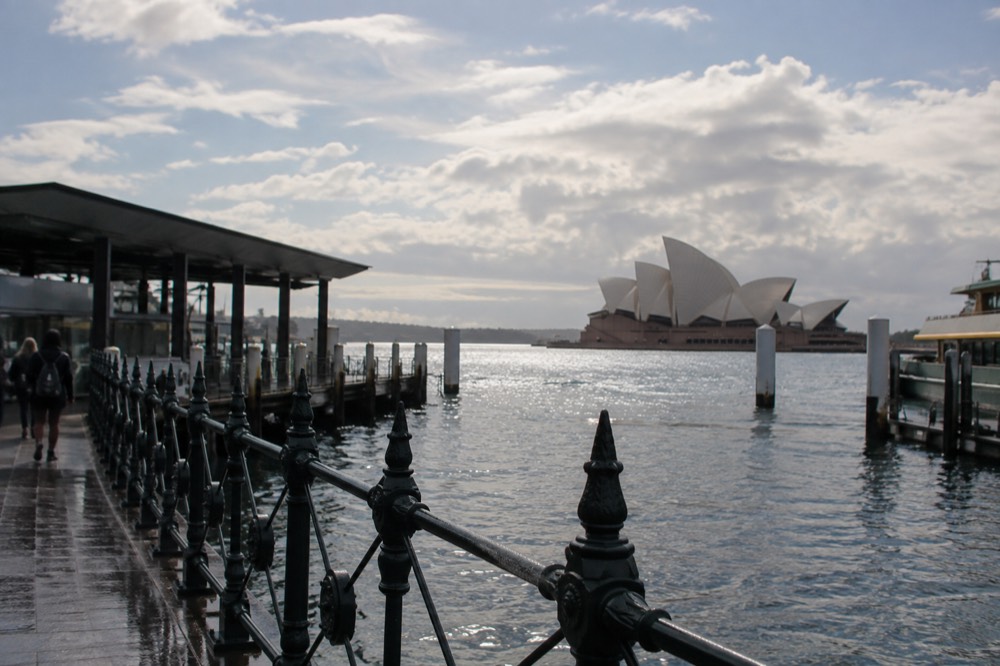
The Opera House forecourt is free and open to walk through at any hour. The building sits on Bennelong Point, a five minute stroll along the promenade from the wharves, and the western boardwalk is where nearly every postcard photo of the sails is taken from. If you want to go inside, guided tours run roughly 9am to 5pm daily and last about an hour, with prices varying by date and session on the operator's live listing. The Sydney Opera House guide covers what each tour includes and how they differ.
Customs House, at the top of the promenade, is worth ten minutes for the free ground-floor exhibits and the remarkable scale model of the city under the glass floor at the front. The Museum of Contemporary Art Australia sits on the western side, also free to enter, with a small but well-positioned rooftop cafe overlooking the water.
On the inland side, the Quay feeds directly into Circular Quay station and the beginning of George Street, where the light rail runs south through the city. You can walk the whole stretch to Darling Harbour in about 25 minutes if you want to skip the fare.
Three of the most reliable ways to spend a half day from the Quay, all bookable with live pricing:
The zoo-and-ferry package is the one most families land on, because the ferry crossing is genuinely part of the attraction and the ticket covers both. The Opera House tour suits visitors who want the interior story rather than another photo, and the Blue Mountains day trip departs from a nearby hotel pickup, not the wharf itself, but most people base themselves around the Quay on the morning of it.
How Do You Get to Circular Quay, and Which Transport Passes Through It?
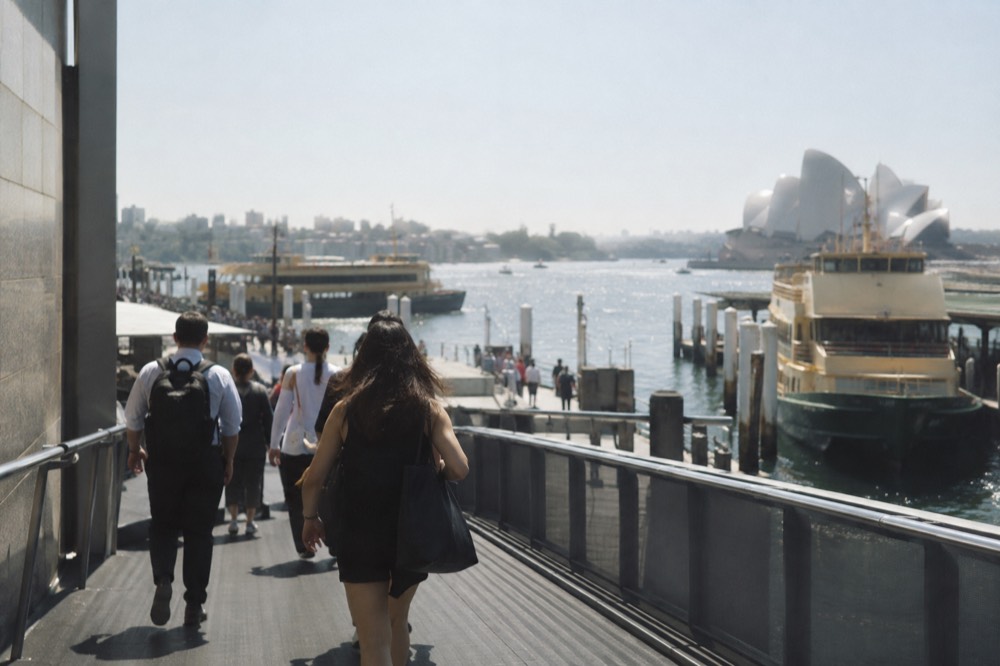
Circular Quay is a train, bus, ferry and light rail interchange, and it is walkable from most of the eastern CBD in under 15 minutes. Trains on the T2, T3 and T8 lines stop at Circular Quay station directly behind the promenade, ferries dock at wharves 2 to 6, and the light rail runs from the stop on George Street. A contactless credit card or phone is charged exactly the same as an Adult Opal card, so most visitors never need to buy a card at all.
The station sits one level above the wharves, so the transfer between train and ferry is a ramp and a short walk, one of the easiest in the city. The light rail stop is on George Street at the top of the promenade, with L2 and L3 services running south-east towards Randwick and Kingsford through Surry Hills. Buses terminate along the waterfront on Alfred Street.
Fares are distance-based and capped. An adult train trip of 0 to 10 km costs $4.33 peak or $3.03 off-peak, with a 30 percent off-peak discount applying on Fridays, weekends, public holidays and outside peak times. Daily caps are $19.30 Monday to Thursday and $9.65 on Fridays, weekends and public holidays, with a $50 weekly cap, and those caps apply across every mode including ferries. The full fare tables are published by Transport for NSW.
| Transport | Where it stops | Typical adult fare | Notes |
|---|---|---|---|
| Train (T2, T3, T8) | Circular Quay station, above the wharves | $4.33 peak / $3.03 off-peak (0-10 km) | Easiest train-to-ferry transfer in the city |
| Light rail (L2, L3) | George Street stop, top of promenade | $3.30-$5.77 by distance | Runs towards Surry Hills, Randwick, Kingsford |
| Ferry (F1-F5) | Wharves 2-6 | $7.35 (0-9 km) / $9.20 (9+ km) | No off-peak discount on ferries |
| Bus | Alfred Street, waterfront | $3.30-$5.77 by distance | Many routes terminate here |
| On foot | Promenade | free | 10 minutes from the northern CBD |
One trap worth knowing: the privately operated fast ferry to Manly accepts Opal cards but charges different fares, and the Opal caps and transfer discounts do not apply on it. The public F1 ferry is the one that earns full Opal benefits. Our Opal card guide for visitors breaks down the caps in more detail.
If you are arriving on a cruise ship, the overseas passenger terminal is at the adjacent cove, a five minute walk west along the waterfront. The Sydney cruise ship day guide covers how to use the Quay as your base for a single day ashore.
Which Ferries Leave from Circular Quay, and What Do They Cost?
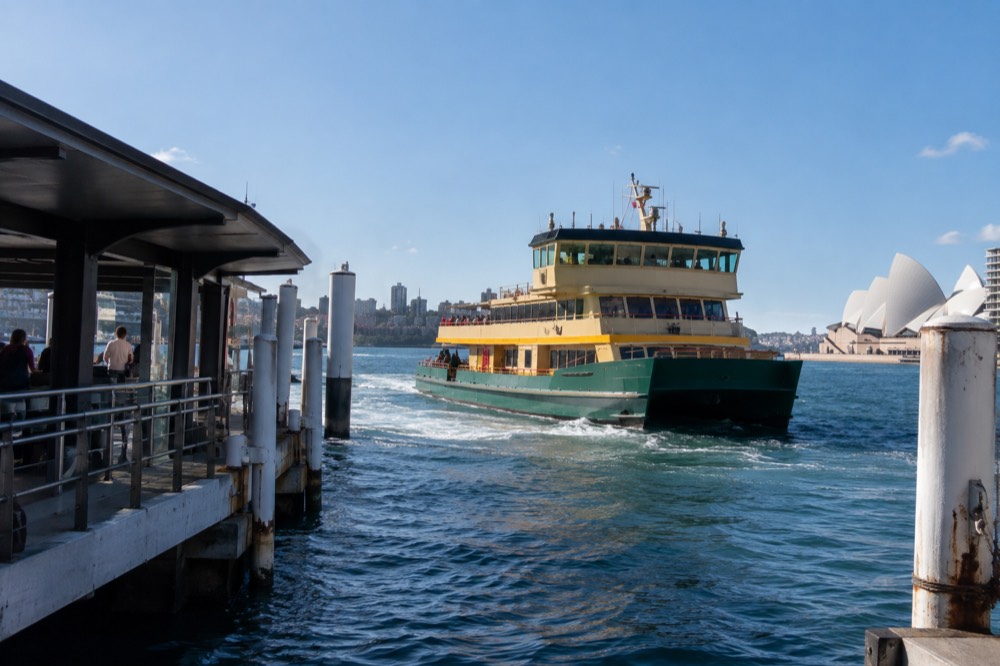
The public Sydney Ferries network runs routes F1 to F10 from the Quay's numbered wharves, and an adult ferry fare is $7.35 for trips under 9 km or $9.20 for longer ones, charged to an Opal card or contactless card with the same daily caps as trains. The F1 Manly ferry is the famous 30 minute crossing, the F2 serves Taronga Zoo, and the F3 runs up the Parramatta River.
Ferries get no off-peak discount, so a Sunday ferry ride is capped at $9.65 for the whole day.
The F1 to Manly is the route most visitors want. It crosses the full width of the harbour in about 30 minutes, passing the Opera House, Fort Denison and the Heads, and it costs $9.20 one way, which is less than most purpose-built harbour cruises charge for the same water. Our Manly ferry guide covers timetables and which side of the vessel to sit on.
The F2 to Taronga Zoo is a shorter hop across to the North Shore, roughly 12 minutes, and it is the route the zoo-and-ferry package uses. The zoo entrance sits on the Mosman hillside above the wharf, and the ferry approach from the water is the best first view of it.
| Route | Destination | Wharf | Adult fare | Crossing time |
|---|---|---|---|---|
| F1 | Manly | 3 | $9.20 | about 30 minutes |
| F2 | Taronga Zoo | 2 | $7.35 | about 12 minutes |
| F3 | Parramatta River (westbound) | 5 | $7.35-$9.20 | varies by stop |
| F4 | Cross-harbour (Watsons Bay area) | 4 | $7.35 | about 20 minutes |
| F5 | Neutral Bay / Mosman | 4 | $7.35 | about 10 minutes |
Ferry frequencies vary by route and by day of the week, so check the live timetable in the Opal Travel app or the Transport for NSW trip planner rather than relying on printed times. The F1 runs at least half-hourly through the day, while the smaller cross-harbour routes run less often and finish earlier in the evening. The Sydney ferries guide has the full route-by-route breakdown.
Where Are the Best Views of the Opera House and Harbour Bridge from Circular Quay?
The best free views are from the western end of the promenade, where the Opera House, the ferries and the Harbour Bridge line up in a single frame, and from the Overseas Passenger Terminal building at the north-west corner. For the classic postcard angle of the sails, walk to the Opera House's western boardwalk, a short level stroll from the wharves.
For the bridge, cross north to Kirribilli via the walkway on the eastern side of the bridge, which takes about 20 minutes from the Quay.
The promenade itself is level, paved and busy, and the view changes character every few hundred metres. Near the station the bridge dominates; near the Opera House end the sails take over; from the passenger terminal you get both at once with the ferries crossing between them. Late afternoon, when the sun drops behind the bridge, is when the western-facing shots work best.
Inside the Opera House, guided tours reach the concert halls and rehearsal spaces, and the standard tour runs about an hour with sessions roughly 9am to 5pm daily. Pricing is dynamic and booking-only, so treat the live listing as the source of the current figure rather than any printed price. The official tours page at sydneyoperahouse.com lists what each option includes.
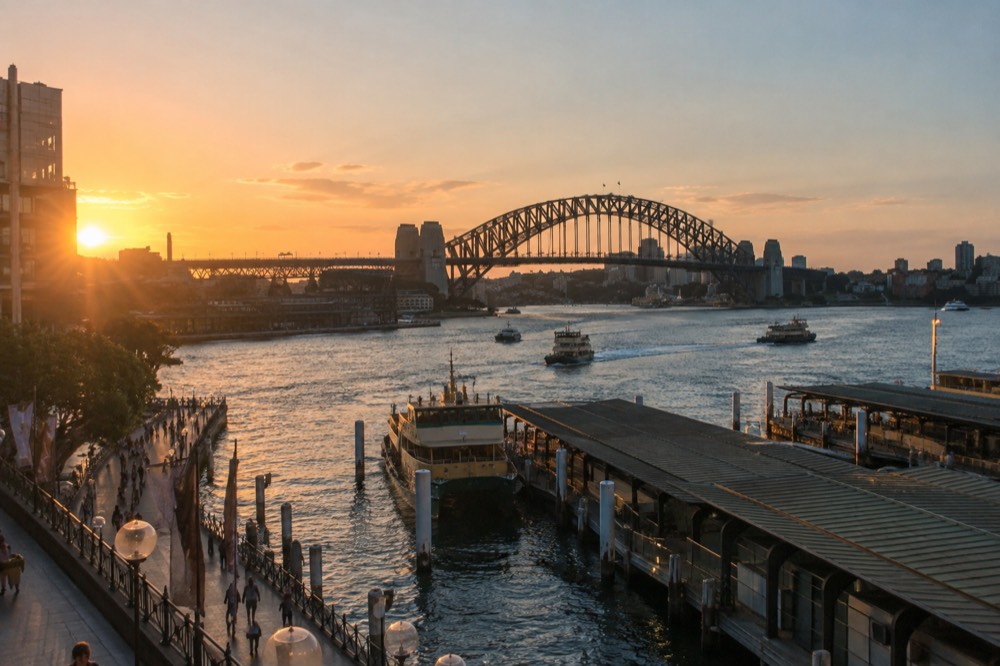
If you would rather climb over the bridge than photograph it, the BridgeClimb base is at the southern end, a 15 minute walk west along the foreshore through The Rocks. The BridgeClimb guide covers the climb options and fitness requirements, and the pylon lookout is the far cheaper way to get up onto the structure.
What Is the History of Circular Quay and the Rocks?
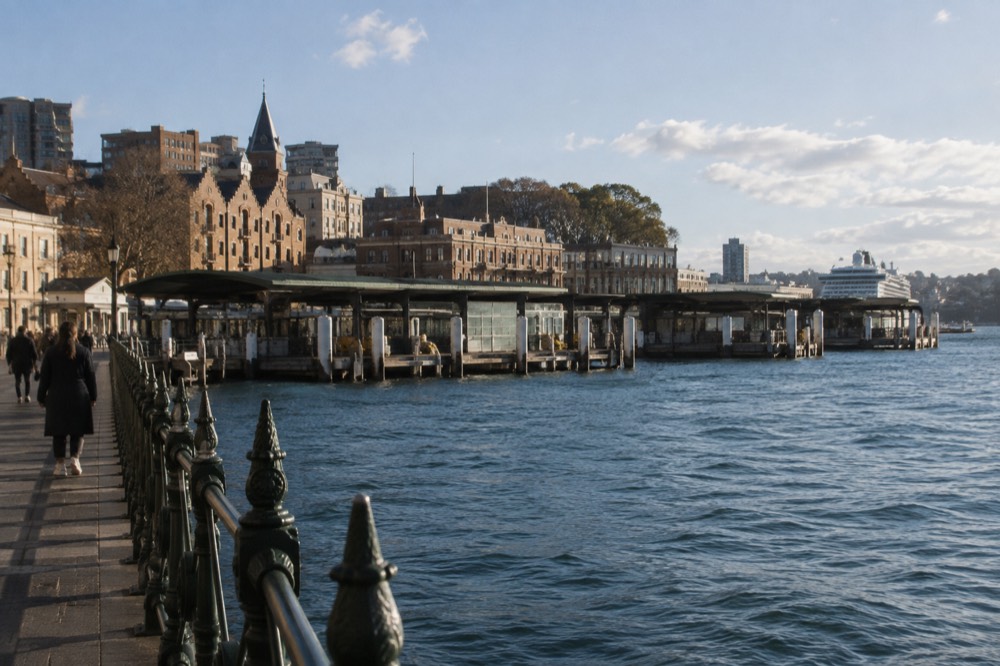
Circular Quay occupies Sydney Cove, the site of the original First Fleet landing, and the surrounding streets of The Rocks are the oldest surviving European settlement in Australia. The quay was built in stages through the nineteenth century as wool and shipping wharves, and the semi-circular shape cut into the cove gave the place its name. The Rocks grew as a maritime workers' district and was saved from demolition in the late twentieth century, which is why the sandstone lanes survive next to the modern towers behind them.
The First Fleet arrived in Sydney Cove in the summer of the colony's founding year and the settlement clung to the water's edge for its first decades. The Rocks, the rocky peninsula immediately west of the cove, became home to sailors, wharfies and their families, and in later colonial decades it had a rough reputation that subsequent generations converted into heritage value. The union green bans of the late twentieth century, a builders' labourers' refusal to demolish the area, preserved the fabric you now walk through.
Today The Rocks runs a weekend market, a cluster of historic pubs and the guided walking tours that leave from near the quay. Cadmans Cottage, one of the oldest surviving buildings in the city, sits at the water's edge. For the fuller story, see the dedicated The Rocks guide.
Where Should You Eat Around Circular Quay?
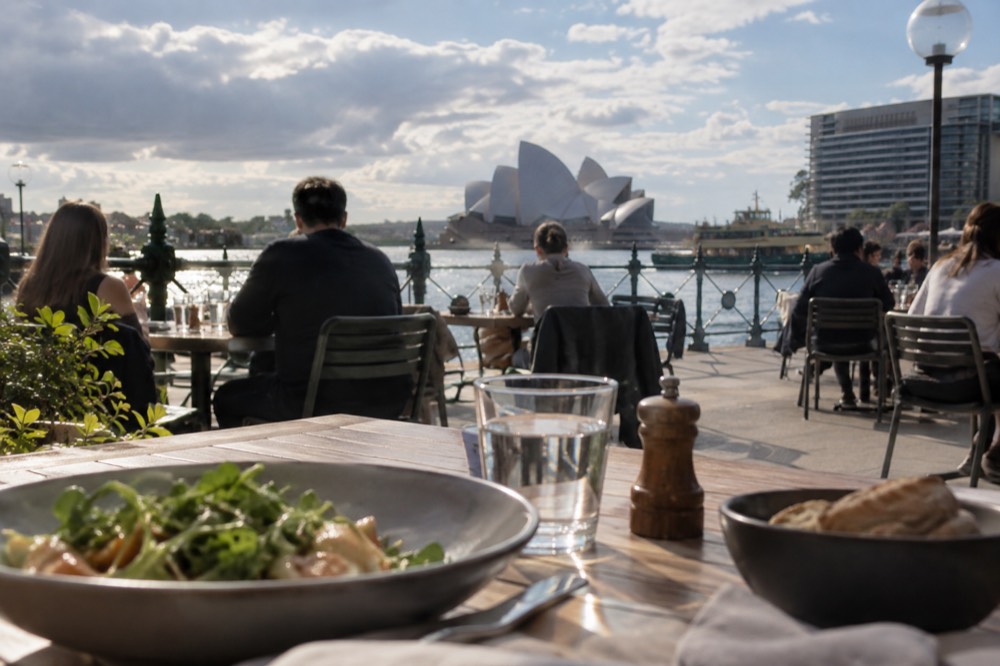
The reliable food around Circular Quay splits three ways: the historic pubs of The Rocks for a sit-down meal, the food halls and quicker options on the inland side for speed, and the waterfront restaurants along the promenade for the view premium. Expect to pay tourist-area prices on the promenade itself, since every seat faces the harbour. The nearby Sydney Fish Market, now at its new Blackwattle Bay site, is the better value seafood play, and a ferry or light rail ride away.
The Rocks pub circuit is the most distinctive of the three. Several of the pubs date from the earliest colonial decades, with sandstone cellars and courtyards, and a couple run their own pub walking tours territory. Food quality varies more than atmosphere does, so treat the pub as the experience and the menu as secondary.
On the inland side, the blocks around the station and up George Street hold the usual range of quick options, and the Sydney brunch spots worth queuing for are mostly a short walk away in Surry Hills or the CBD rather than at the water itself. If you are eating with the view, book ahead for the waterfront rooms, because walk-in tables facing the harbour go early on weekends.
Can You Start a Blue Mountains Day Trip from Around Circular Quay?
Yes, comfortably. The all-inclusive Blue Mountains day trips pick up from central city hotels, and the Circular Quay area sits inside every operator's pickup zone, so most people simply walk to their nearest hotel lobby in the morning. The tours run about 10 hours door to door and cover the Three Sisters lookouts, Scenic World and a wildlife stop, returning to the city in the early evening. The train alternative departs from Central station, not the Quay, so a guided tour saves you a transfer.
The guided option suits first-time visitors because the mountains involve a lot of small decisions: which lookouts, which walking tracks, which order. The all-inclusive tour handles all of that, with a local guide and entry costs bundled into the one price. The Blue Mountains day trip guide compares the guided and self-guided approaches in full, including the train route and what you give up by going alone.
One planning note that surprises people: Blue Mountains National Park charges no entry fee except in the Glenbrook area, so the park itself is free. What you pay for is Scenic World, a separate private operator, or the guided tour that bundles it. Track and road closures in the mountains do change through the year, so check the National Parks alerts before a self-guided trip.
How Much Time Do You Need at Circular Quay?
Most visitors need two to three hours to walk the promenade, the Opera House forecourt and the eastern edge of The Rocks without hurrying. Add a ferry crossing, the Manly round trip or the Taronga Zoo ferry, and it becomes a half day. Add an Opera House tour plus The Rocks in full and it fills a whole day, at which point the Quay is functioning as your base rather than a destination. It is the rare Sydney precinct where the honest answer is "as long as your feet and ferry budget allow", because every added hour buys something different rather than more of the same.
| Plan | Time needed | What it covers | Extra cost |
|---|---|---|---|
| The loop | 2-3 hours | Promenade, Opera House forecourt, Customs House, MCA, edge of The Rocks | free |
| Loop plus a ferry | half day | The loop plus a return Manly or Taronga crossing | standard ferry fares apply |
| Full day | 8 hours | Loop, Opera House tour, The Rocks in full, lunch, a ferry crossing | tour and meal costs apply |
| Cruise ship day | 5-6 hours | Loop, one ferry crossing, The Rocks highlights | free apart from fares |
The Quay is at its best early and late. The morning commuter rush thins by about 9am, the tourist crowds peak through the middle of the day, and the light softens after 4pm. In winter, note that June is Sydney's wettest month on the long-run averages, while August has the most clear days of any month, which is worth weighing if you are choosing when to come. The best time to visit Sydney guide has the month-by-month detail.
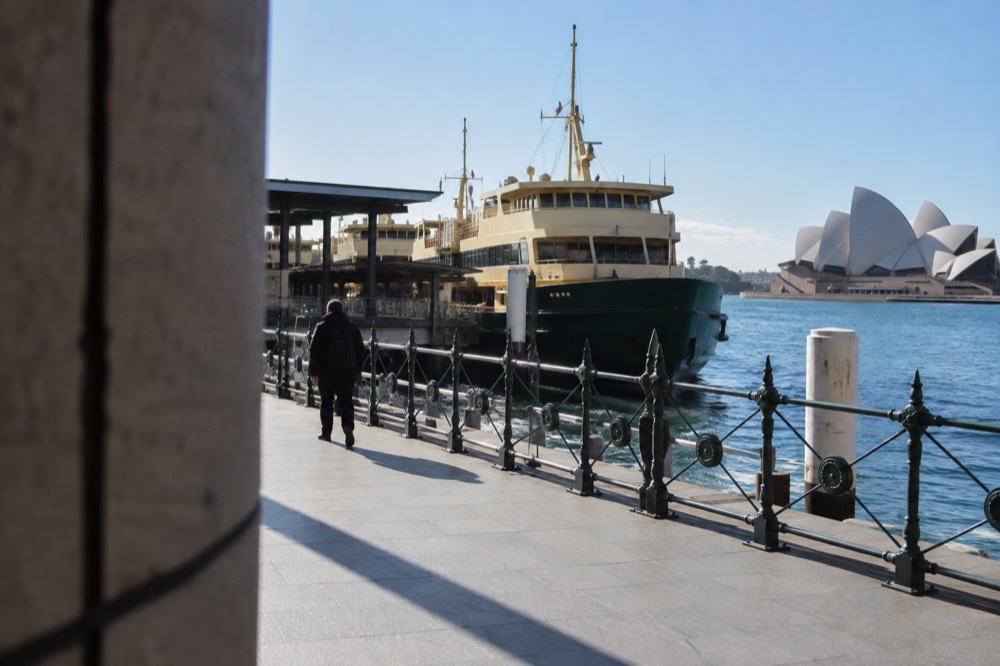
However long you stay, the Quay rewards arriving by water and leaving on foot. The ferry in, the promenade loop, and then a walk west into The Rocks or east into the Royal Botanic Garden, whose entry is free, is the sequence that turns a transport interchange into the best free hour in the city. This site, Sydney Travel Guide, covers each of those pieces in its own guide if you want to go deeper on any single part.
Before you finalise your plans, here are the three most reliable ways to spend time around the Quay:
Common Questions About Circular Quay
Is Circular Quay worth visiting?
Yes, and it is nearly unavoidable in any case. The promenade links the Sydney Opera House, The Rocks and the Harbour Bridge within a ten minute walk, the ferry departures are the cheapest harbour cruising in the city, and the view from the waterfront costs nothing. Even visitors with no interest in transport interchanges pass through it on the way to somewhere else.
How do I get to Circular Quay from Sydney Airport?
Take the T8 airport line train to Central, then change to a T2, T3 or T8 city circle service to Circular Quay station. The airport train carries a station access fee of $18.61 on top of the base fare, which sits outside the normal daily caps, so the train is convenient but not the cheapest option. The 400 bus to a train connection avoids the access fee entirely.
Can you walk from Circular Quay to the Sydney Opera House?
Yes, it is an easy level walk along the promenade and through the forecourt, roughly five to eight minutes. The path is paved and step-free the whole way, and the Opera House western boardwalk continues around the building for the classic bridge-and-sails photo angle.
Can you walk from Circular Quay to the Harbour Bridge?
Yes, the bridge's southern approach is about 15 minutes west along the foreshore through The Rocks. You can walk across the bridge itself on the free pedestrian walkway, and the full crossing to Kirribilli takes about 20 to 30 minutes each way, with the best Opera House views from the eastern side.
Which ferry should I take from Circular Quay?
The F1 Manly ferry is the famous 30 minute harbour crossing and the one most worth riding purely for the view. The F2 Taronga Zoo ferry is shorter at about 12 minutes and pairs well with a zoo visit. Both charge standard Opal or contactless fares, $9.20 for Manly and $7.35 for Taronga, and both earn the daily caps.
Is Circular Quay the same as Sydney Cove?
Essentially yes. Circular Quay is the built ferry terminal and promenade constructed inside Sydney Cove, the natural cove where the First Fleet landed. The names are used interchangeably by most locals, though Sydney Cove technically refers to the whole inlet and the Quay to the wharf precinct along its shore.