Blue Mountains Day Trip from Sydney: Costs, Trains and What to See
The Blue Mountains sit on Sydney's western doorstep, and the long-run climate record says the best skies of the year arrive in August, not summer. Here is how to plan the day: train or tour, what it costs, and what to see before the light goes.
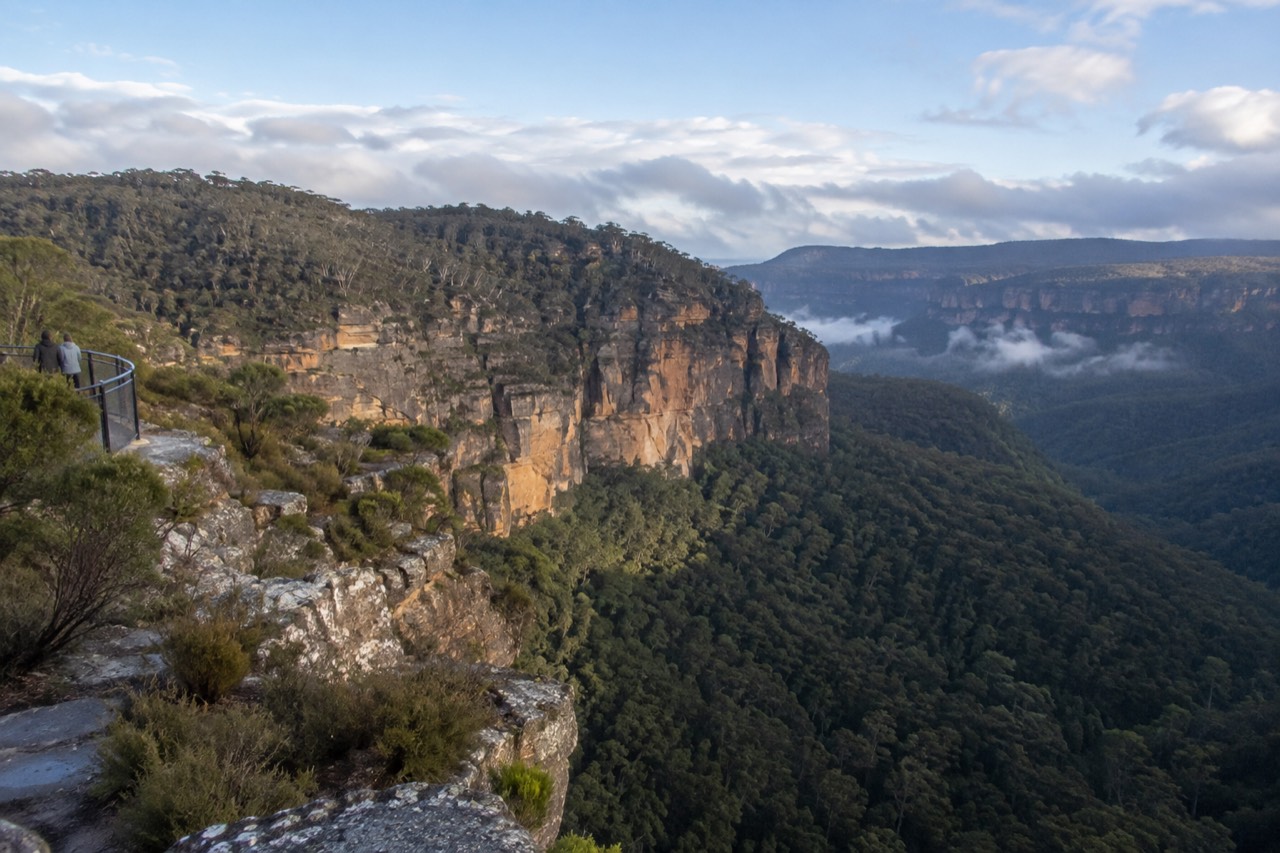
Short answer
Yes, the Blue Mountains work well as a day trip from Sydney. Katoomba sits in the 65+ km Opal fare band, entry to the national park is free outside Glenbrook, and a guided all-inclusive day tour runs about 10 hours door to door. Most visitors cover Echo Point, Scenic World and one or two lookouts in a single day.
Blue Mountains Day Trip from Sydney: Costs, Trains and What to See
The Blue Mountains National Park charges most visitors nothing at the gate. That single fact surprises almost everyone who plans this trip, because the assumption online is that a headline national park an hour and a half from a major city must carry a headline entry fee. It does not, with one exception at Glenbrook on the eastern edge, and it changes the maths of the whole day. This Sydney Travel Guide page lays out the rest of that maths: what the train costs, what the tours include, which stops are worth the detour and which closures will bite you if you do not check the alerts first.
Can You Do Blue Mountains as a Day Trip from Sydney?
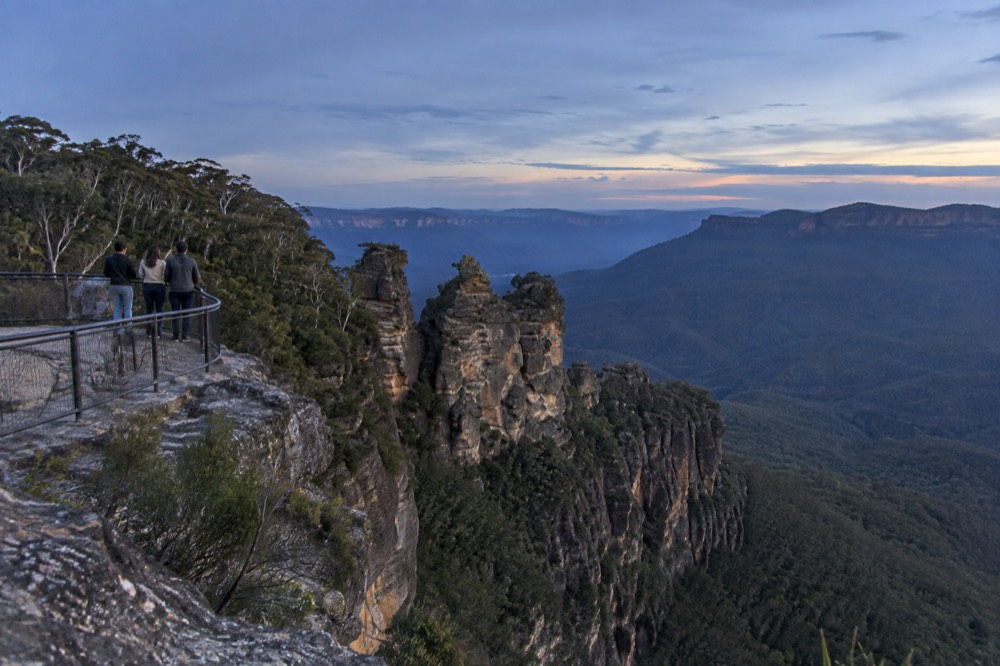
Yes, comfortably, and most first-time visitors do exactly that. Katoomba, the main tourist town, is a direct train ride from Central Station in the 65+ km Opal fare band, entry to the national park itself is free outside the Glenbrook area, and the signature sights, Echo Point, the Three Sisters and Scenic World, sit within a few kilometres of each other. A realistic day gives you two major stops plus a lookout, with the trade-off being depth: you will see the highlights, not the backcountry.
The honest framing is that one day buys you the postcard version of the Blue Mountains and a good taste of the valleys, but not the multi-day walks through the wilderness that locals rave about. If your interest is the view, the ridgeline lookouts and a ride on the Scenic World railways, a day trip delivers all of it. If your interest is canyon country, overnight camping or the longer descents into the Grose Valley, you are planning the wrong trip and should look at staying a night in Katoomba or Leura instead.
Timing matters more than most guides admit. The light on the Jamison Valley is at its best in the morning before the valley haze builds, and in the late afternoon when the sun drops behind the western escarpment and the cliffs go orange. A day trip that arrives at midday and leaves at 3pm sees the valley at its flattest and most ordinary. Leave early, even on a tour, and you get the version of the view that people remember.
The other constraint is seasonality. Winter days are short, and June averages just 5.5 hours of daily sunshine on the long-run record, so a June day trip compresses into a narrow window of good light. Summer gives you long evenings but February is statistically the cloudiest month of the year in Sydney. The sweet spot, according to the Bureau of Meteorology's long-term normals, is late winter into spring, covered in detail further down this page.
How Much Does a Blue Mountains Day Trip Cost?
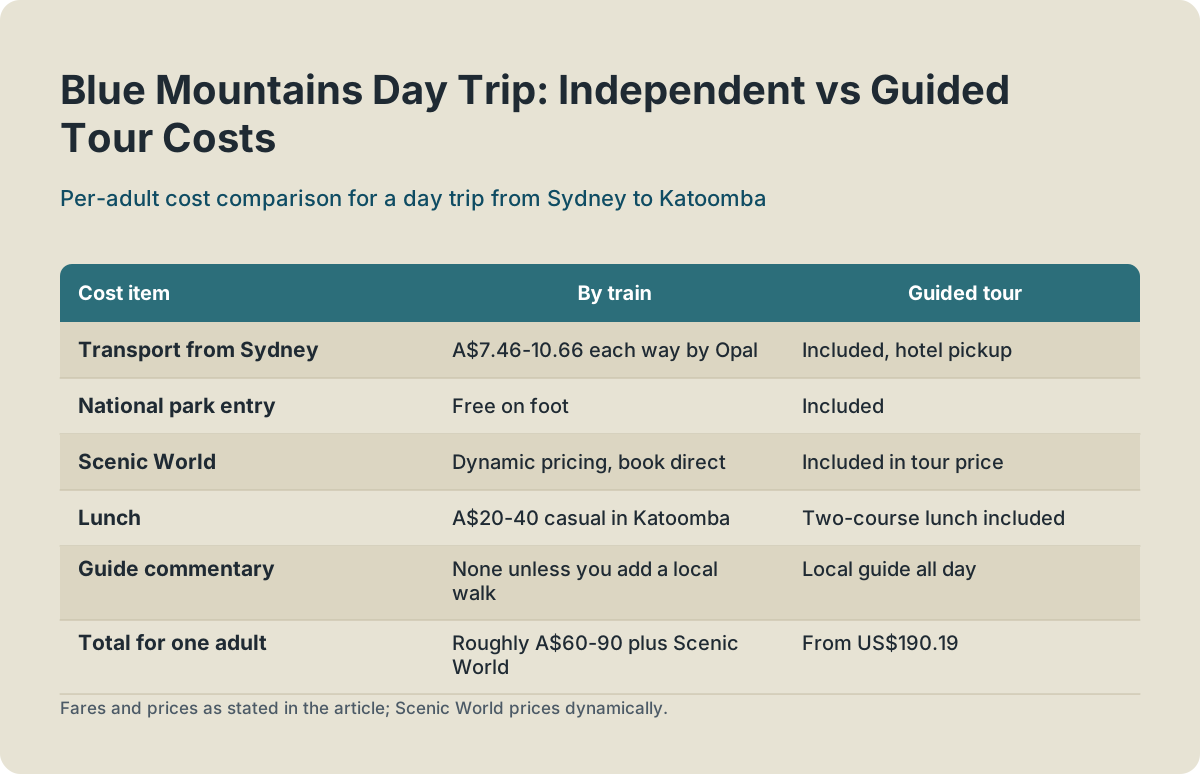
Doing it yourself by train costs roughly A$22 in return Opal fares per adult, off-peak, plus whatever you spend at Scenic World, which prices dynamically and publishes no fixed figure, plus lunch. An all-inclusive guided tour from Sydney bundles transport, Scenic World tickets and a two-course lunch into one price from US$190.19. The two approaches land within about US$50 of each other, so the real decision is whether you want to drive the logistics yourself or hand them over.
Breaking that down piece by piece, the train is the cheap spine of the independent day. Katoomba falls in the 65+ km distance band, which means an adult Opal fare of $10.66 peak or $7.46 off-peak each way, and the off-peak discount applies on Fridays, weekends, public holidays and outside peak times. Tap the same contactless card all day and the daily and weekly caps still protect you. The national park itself is free outside Glenbrook, where a vehicle day pass is A$8, so a train traveller pays no park fee at all.
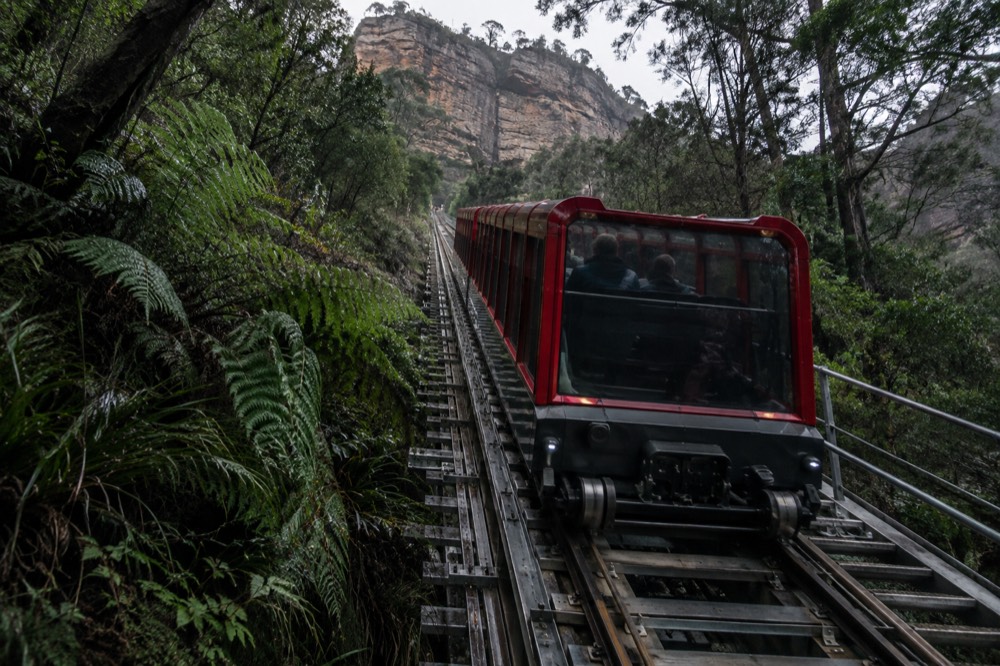
Scenic World is the wildcard. Its tickets are dynamically priced and it publishes no fixed public price list, so any figure you read in an older guide is wrong by now. The attraction bundles the Scenic Railway, the Skyway, the Cableway and the Walkway, and it is the one stop where a family of four can spend more in an hour than the train fare cost all day. Decide before you go whether it is in your budget, because the lookouts themselves, Echo Point, Govetts Leap, Sublime Point, cost nothing.
| Cost item | Independent by train | All-inclusive guided tour |
|---|---|---|
| Transport from Sydney | A$7.46-10.66 each way by Opal | Included, hotel pickup |
| National park entry | Free on foot | Included |
| Scenic World | Dynamic pricing, book direct | Included in tour price |
| Lunch | A$20-40 casual in Katoomba | Two-course lunch included |
| Guide commentary | None unless you add a local walk | Local guide all day |
| Total for one adult | Roughly A$60-90 plus Scenic World | From US$190.19 |
The tour column is not padding the comparison. The all-inclusive option genuinely absorbs the three biggest variable costs, transport, Scenic World and lunch, and it removes the single worst failure mode of the independent day, which is misjudging the last train back to Sydney and paying for a hotel you did not plan on.
Should You Book a Guided Tour or Go Independently?
Go independently if you want flexibility and a small budget, and book a tour if you want the day to actually run on schedule. The all-inclusive small-group tour from Sydney, from US$190.19, covers transport, Scenic World entry and lunch in about 10 hours, while the independent route gives you the same sights for less money but leaves you managing trains, bus connections and opening hours yourself. Families and short-stay visitors usually come out ahead on a tour.
The case for the tour is not luxury, it is arithmetic. Katoomba's sights are spread along the escarpment, the connecting buses run to their own timetable, and Scenic World queues eat midday hours in peak season. A tour compresses all of that decision-making into zero. The case against is simple too: you surrender the ability to linger at Govetts Leap when the valley fills with cloud, or to skip Scenic World entirely and walk the Prince Henry Cliff Track instead, which costs nothing and is, in many opinions, the better experience.
The strongest tour option on this route is the all-inclusive small-group day trip with a local guide, which runs about 10 hours and carries a two-course lunch, Scenic World entry and hotel-area pickup. It is also the most reviewed Blue Mountains product on this site's roster, which matters when you are choosing who drives you up a mountain range.
There is also a genuinely different tour format worth knowing about: the deluxe small-group version that pairs the mountains with Featherdale Wildlife Park, so you get kangaroos and koalas on the same day as the Three Sisters. It suits travellers who want the Australian-animal experience without a separate Sydney zoo day, and it runs about 10 hours as well. Weigh it against the all-inclusive above on the basis of animals versus depth in the mountains, because you trade time at the lookouts for time at the wildlife park.
How Do You Get to the Blue Mountains by Train?
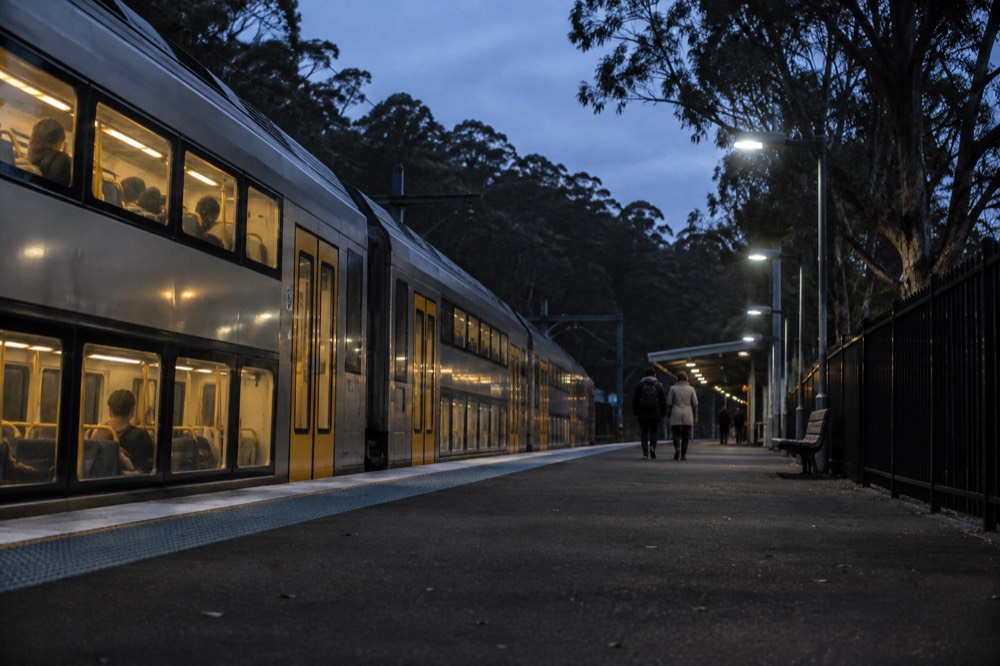
Trains to Katoomba run from Central Station on the Blue Mountains Line, and the adult Opal fare sits in the 65+ km band at $10.66 peak or $7.46 off-peak each way. Tap on with any contactless card or an Opal card and the daily caps apply, and the off-peak discount applies on Fridays, weekends, public holidays and outside weekday peak times. Once at Katoomba station, local buses and the town's own walking tracks connect you to Echo Point.
The train is the budget traveller's secret weapon here, and it is a genuinely pleasant ride rather than a compromise. You avoid the A$8 Glenbrook vehicle fee entirely because you are on foot, you avoid Sydney's weekend traffic on the Great Western Highway, and Katoomba station is a short walk from the town's cafes with regular buses down to Echo Point. The Blue Mountains train guide covers the timetable details, and the Opal card guide explains the caps if you are new to the system.
One trap deserves its own sentence. The privately operated fast ferry and some tourist services in Sydney use OpalPay, which accepts the card but charges different fares with no caps, and similar quirks exist across regional transport. On the Blue Mountains Line you are on the public network, so full Opal benefits apply, including the off-peak discount. Check the fare bands on the official Transport for NSW fares page before you travel, since fares are reset by an annual determination.
| Transport option | Cost per adult | Notes |
|---|---|---|
| Train, Central to Katoomba | $10.66 peak / $7.46 off-peak | 65+ km Opal band, full benefits |
| Contactless card | Same as adult Opal | Caps and discounts apply |
| Opal single trip ticket | Higher, no benefits | Backup option only |
| Car, via Glenbrook | A$8 vehicle day pass | Only charged in the Glenbrook area |
| Car, other park areas | Free | Katoomba, Blackheath, Wentworth Falls |
| Guided tour coach | Included in tour price | Hotel-area pickup in Sydney |
Driving is worth a brief word even for a train-focused reader, because the park fee structure is the interesting part. Vehicle entry is charged per vehicle, so a car full of four people splits A$8 or A$12 four ways, but at Glenbrook only. Arriving by train or on foot avoids fees at almost every Sydney-area park, a pattern that also holds at the Royal National Park and Ku-ring-gai Chase.
What Are the Must-see Stops: Echo Point, Scenic World and the Lookouts?
Echo Point and the Three Sisters are the single non-negotiable stop, free to visit and reachable by bus or on foot from Katoomba. Scenic World, with its Scenic Railway and Skyway, is the main paid attraction and prices dynamically, so book direct for current rates. If you have a third stop in you, Govetts Leap at Blackheath is the lookout locals rate above Echo Point, with a sheer drop into the Grose Valley and far smaller crowds.
Echo Point is the view everyone has seen in photographs, and it earns it. The Three Sisters sit immediately across the escarpment, the Jamison Valley drops away beneath you, and in the early morning the eucalypt haze that gives the mountains their name sits in layers across the valley floor. The viewing platforms are extensive and accessible, and the Katoomba and the Three Sisters guide covers the walking tracks that start from the same car park, including the Giant Stairway if your knees are up to it.
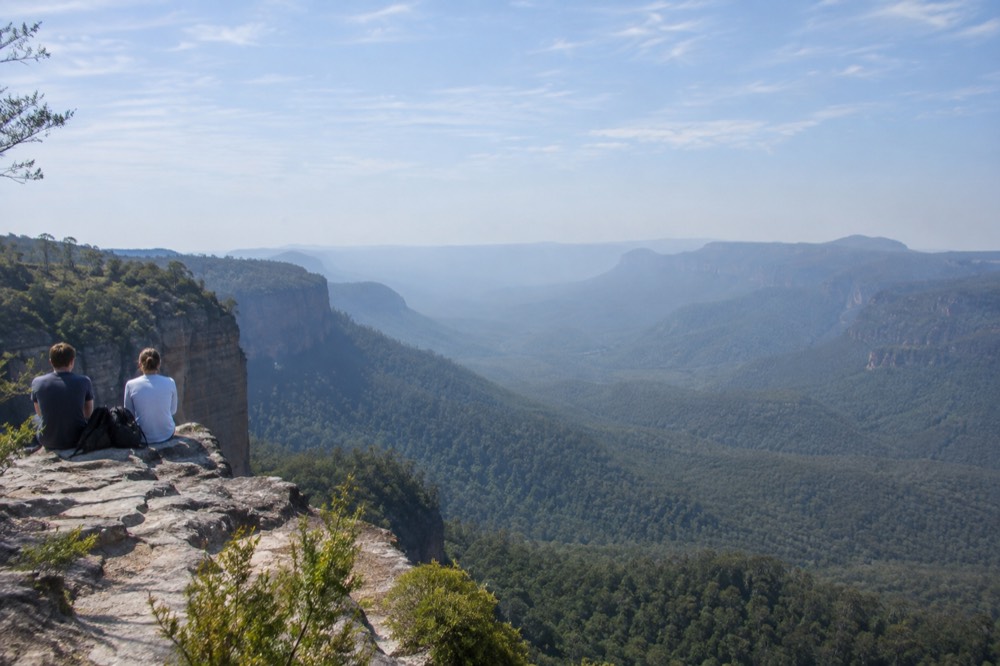
Scenic World divides opinion harder than any other stop. Its Scenic Railway is the steepest passenger funicular of its kind, the Skyway glides across the Jamison Valley, and the Cableway descends into temperate rainforest, all on one ticket. Critics call it a theme park in a national setting, and they are not entirely wrong, but for visitors with limited mobility, small children or a single day, it is the only practical way to get down into the valley and back without a serious walk. The Scenic World guide covers what each ride involves.
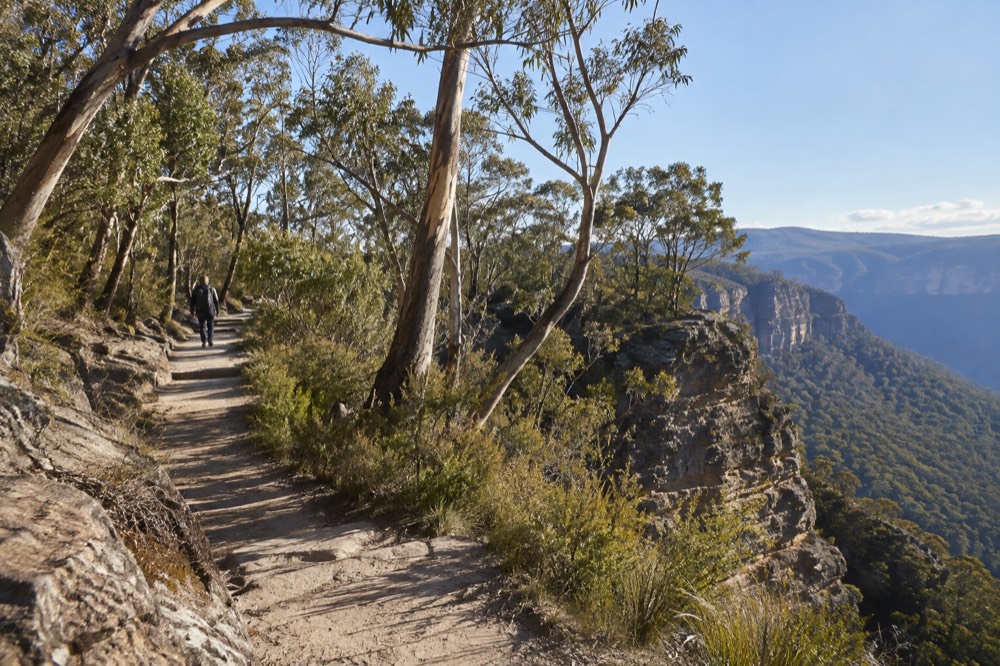
The free alternative deserves equal billing. The Prince Henry Cliff Track links Echo Point to several smaller lookouts along the escarpment, and the best lookouts around Sydney include several Blue Mountains entries that cost nothing and see a fraction of Echo Point's crowd. Wentworth Falls, a few stops up the line, gives you a waterfall and a picnic area on the same train ticket.
When Is the Best Time of Year to Visit the Blue Mountains?
Late winter and spring, roughly August to October, offer the most reliable conditions, and August is statistically Sydney's clearest month with 13.4 mean clear days on the long-run record. February, in the middle of summer, is the cloudiest month at 5.3 clear days, and June is the wettest with 133.1 mm of mean rainfall. Peak tourist season, in other words, is close to the worst weather window for actually seeing the valley.
This is the single most useful piece of planning data for this trip, and almost no guide publishes it. The Bureau of Meteorology's long-term normals for Sydney show a pattern that runs against every northern-hemisphere instinct: the skies are clearest in July and August, the middle of the local winter, and the cloudiest in February, the middle of the summer tourist peak. You can read the full table on the BOM climate averages page.
| Month | Mean max °C | Mean min °C | Mean rainfall mm | Mean clear days |
|---|---|---|---|---|
| Jan | 26.0 | 18.8 | 101.2 | 6.8 |
| Feb | 25.8 | 18.9 | 119.3 | 5.3 |
| Apr | 22.5 | 14.8 | 126.5 | 9.1 |
| Jun | 17.0 | 9.3 | 133.1 | 9.1 |
| Aug | 17.9 | 9.0 | 80.2 | 13.4 |
| Oct | 22.2 | 13.6 | 76.7 | 8.1 |
Two caveats keep this honest. First, these are long-term averages for the Sydney basin, not a forecast for your Saturday, and mountain weather is more volatile than the plains, with valley fog and low cloud appearing on days the city stays clear. Second, winter in the mountains is genuinely cold, with mean minimums around 8-9 °C and frost on the ridgelines, so the clear-sky months demand a jacket. The trade is worth it: a clear August morning at Govetts Leap, with the Grose Valley running blue to the horizon, is the best light this region offers.
What Closures and Alerts Should You Check Before You Go?
Check the NPWS alerts page for your specific stops the day before you travel, because several Blue Mountains tracks and roads are closed into late 2026. Jenolan Karst Conservation Reserve is shut until 31 December 2026, Mount Hay Road is closed to around mid-December for upgrades, and Blue Pool track and parts of Fern Bower are also out of action. None of these close Echo Point or Scenic World, but they will wreck a plan that assumes every trailhead is open.
The pattern to understand is that the National Parks and Wildlife Service closes tracks for maintenance, hazard reduction burns and storm damage on a rolling basis, and the big-name lookouts almost never close while the walking tracks often do. If your day trip is lookouts-only, you are largely immune. If you planned to walk, the Blue Mountains day trip planning guide on this site's guides track and the live NPWS alerts are both worth a look the evening before, and the official fee-collecting parks page confirms the current entry-fee picture.
Seasonal hazards matter too. The statutory bush fire danger period runs 1 October to 31 March across most of the state, and while the Blue Mountains towns themselves are not closed during it, total fire bans and park closures can be declared on high-risk days. In wet weather the reverse problem appears: sandstone steps become slick, and the cliff-edge sections of the Giant Stairway and the National Pass are unforgiving in rain. June, the wettest month on the long-run record, is exactly when this bites most.
Is the Blue Mountains Worth It Compared to Other Sydney Day Trips?
Yes, and it is the default best day trip from Sydney for first-time visitors, with one caveat: it is the most popular one, so you share it. Alternatives like the Hunter Valley for wine, Jervis Bay for beaches and wildlife, or the Royal National Park for coastal walking each beat it on a single dimension, but nothing else delivers a World Heritage landscape this dramatic on a train line this cheap. If you have one day out of the city, this is where most travellers should spend it.
The comparison is worth doing properly rather than by vibe. The Hunter Valley is a wine-and-lunch day with less walking and more tasting. Jervis Bay is a long day, about 12 hours on a tour, for white sand, dolphins and kangaroos. The Royal National Park is the budget option, a train and a coastal walk with the Bondi to Coogee coastal walk as its city cousin. The Blue Mountains is the only one of the four that feels like a different country rather than a nicer suburb, and the day trips from Sydney roundup ranks the full set.
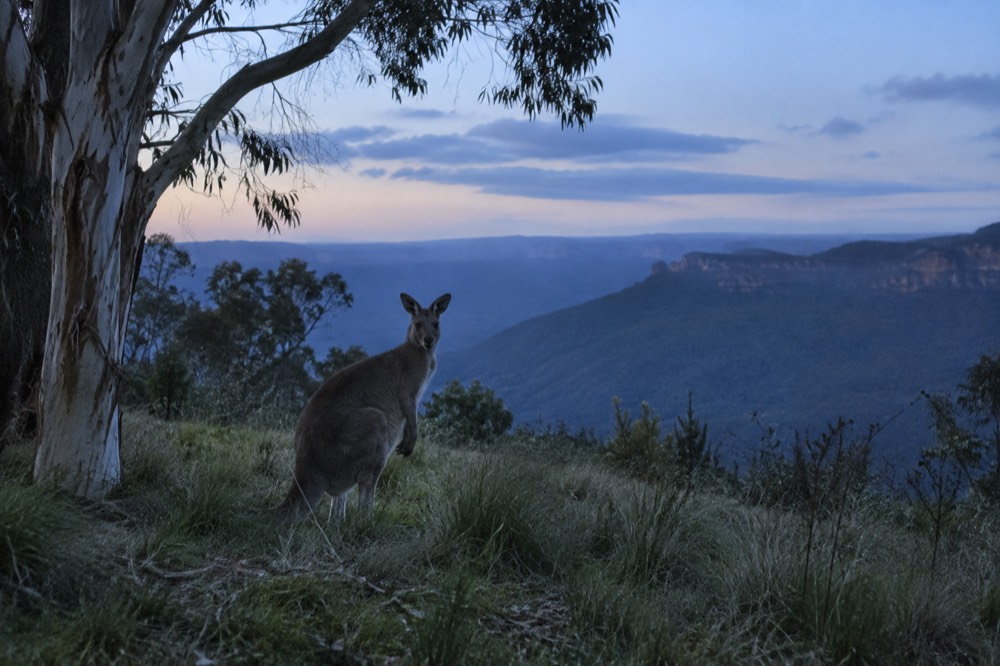
If wildlife rather than scenery is your priority, there is a strong alternative format: a dedicated wildlife day tour that spends its hours finding kangaroos and wombats in the wild rather than riding funiculars, running about 10 and a half hours all-inclusive. It trades the Three Sisters for actual wild animals, which for some travellers, especially those skipping the zoo, is the better trade. It is also one of the highest-rated products in this site's entire roster.
One practical note for anyone combining days: the Blue Mountains rewards an early start more than any other Sydney day trip, because valley haze builds through the morning and the afternoon light dies behind the western escarpment early. Whichever way you go, tour or train, book the earliest option you can tolerate. The Sydney weekend itinerary shows how to slot the mountains into a longer stay without burning your best weather day on it.
Common Questions About a Blue Mountains Day Trip from Sydney
Can you do Blue Mountains as a day trip from Sydney?
Yes. Katoomba is a direct train ride from Central in the 65+ km Opal fare band, national park entry is free outside Glenbrook, and the highlights, Echo Point, the Three Sisters and Scenic World, sit within a few kilometres of each other. Most visitors cover two major stops plus a lookout in one day.
How much does the train to Katoomba cost?
The adult Opal fare is $10.66 peak or $7.46 off-peak each way, in the 65+ km distance band. Contactless cards are charged the same as Opal with all caps and discounts, and the off-peak discount applies on Fridays, weekends, public holidays and outside weekday peak times.
Do you have to pay to enter Blue Mountains National Park?
No, except at Glenbrook, where vehicles pay A$8 per day. Katoomba, Blackheath, Wentworth Falls and the Three Sisters areas carry no entry fee, and arriving by train or on foot avoids vehicle fees entirely.
What is the best month to visit the Blue Mountains?
August to October. August is Sydney's clearest month on the long-run record with 13.4 mean clear days, while February, in the middle of summer, is the cloudiest at 5.3. June is the wettest month, with 133.1 mm of mean rainfall.
Is a tour better than the train?
A tour wins on convenience: the all-inclusive small-group option covers transport, Scenic World entry and a two-course lunch in about 10 hours, from US$190.19. The train wins on price and flexibility, at roughly A$22 return off-peak, but leaves you managing buses, queues and the last service back yourself.
Are the Jenolan Caves open?
No. Jenolan Karst Conservation Reserve is closed to 31 December 2026, so day trips that previously paired the caves with the mountains cannot currently include them. Check the NPWS alerts page before planning around any Blue Mountains track or road.