Sydney Events Calendar: What's on Every Month of the Year
Sydney runs on a yearly rhythm most visitors never see coming: lights in winter, a parade at the start of autumn, fireworks on the harbour, and whales passing the headlands from May to November. This calendar puts the whole cycle in one place, with the dates that are actually confirmed and the ones that are not.
Short answer
Sydney's event year peaks four times: New Year's Eve fireworks on the harbour, Sydney Festival in January, Mardi Gras in late February or early March, and Vivid Sydney from late May to mid-June. Vivid runs 28 May to 19 June 2027 and more than 80% of it is free. Whale season runs May to November, and June is statistically the city's wettest month.
Sydney's event calendar is unusual among big-city calendars, and the reason is the calendar itself. The city's biggest festival, Vivid Sydney, runs in late autumn and winter, the months most northern-hemisphere visitors assume are dead time. Its biggest single night, New Year's Eve, lands in the middle of summer. Its parade draws hundreds of thousands of people in what locals still call the tail of summer. Plan around the wrong season and you can miss the entire show.
This guide walks the Sydney year event by event, with confirmed dates where they exist, honest hedging where they do not, and the transport, booking and weather facts that decide whether an event is worth building a day around. The full seasonal picture, month by month, sits in our best time to visit Sydney guide.
What Are the Biggest Annual Events in Sydney?
Sydney's four headline events are New Year's Eve on the harbour, Sydney Festival across January, the Sydney Gay and Lesbian Mardi Gras parade in late February or early March, and Vivid Sydney from late May to mid-June. Vivid is the largest by attendance: 2.53 million visits were recorded in 2025, and more than 80% of the festival is free. Around them sit whale season from May to November, the Royal Easter Show in autumn and the spring horse racing carnival.
Each of the big four reshapes the city in a different way. New Year's Eve fills the foreshore, with up to 1 million people gathering around the harbour for the 9pm family fireworks and the midnight display. Sydney Festival takes over theatres and public spaces through January. Mardi Gras closes Oxford Street, Flinders Street and Anzac Parade for one parade night. Vivid turns the CBD, Circular Quay and The Rocks into a walking light gallery for 23 nights.
The practical pattern to notice: the biggest events cluster at the edges of the year rather than the middle. If you want a quiet, cheap trip, aim for the weeks between events; if you want the spectacle, book early, because hotel prices track the festival calendar as surely as the school holidays.
Here is the year at a glance:
| Month | Event | Status |
|---|---|---|
| January | Sydney Festival, Australia Day | Festival runs across January; Australia Day is 26 January |
| February | Mardi Gras Fair Day | Scheduled Sunday 14 February 2027 |
| Late Feb / early Mar | Mardi Gras parade | Saturday 6 March 2027 |
| March | Labour Day long weekend | Monday 5 October 2026, moved later in the year |
| April | Easter, school holidays | Easter weekend 3-6 April 2026 |
| May | Vivid Sydney opens, whale season begins | Vivid 2026 ran 22 May to 13 June |
| June | Vivid Sydney, King's Birthday long weekend | King's Birthday 8 June 2026 |
| July | Peak whale watching | Late June through July is peak |
| August | Whale season continues, clear skies | August is Sydney's clearest month on average |
| September | Spring begins, school holidays | Whale season continues |
| October | Labour Day, NRL and racing finals | Labour Day 5 October 2026 |
| November | Whales head south, summer events announced | Southern migration with calves |
| December | New Year's Eve | 9pm and midnight fireworks |
A note on what is deliberately missing: exact 2027 dates for the Royal Easter Show, Sculpture by the Sea, City2Surf and the full Sydney Festival program have not been published, so no guide should print them. Name the month, check the organiser close to the time.
What Is Vivid Sydney and When Does It Run?
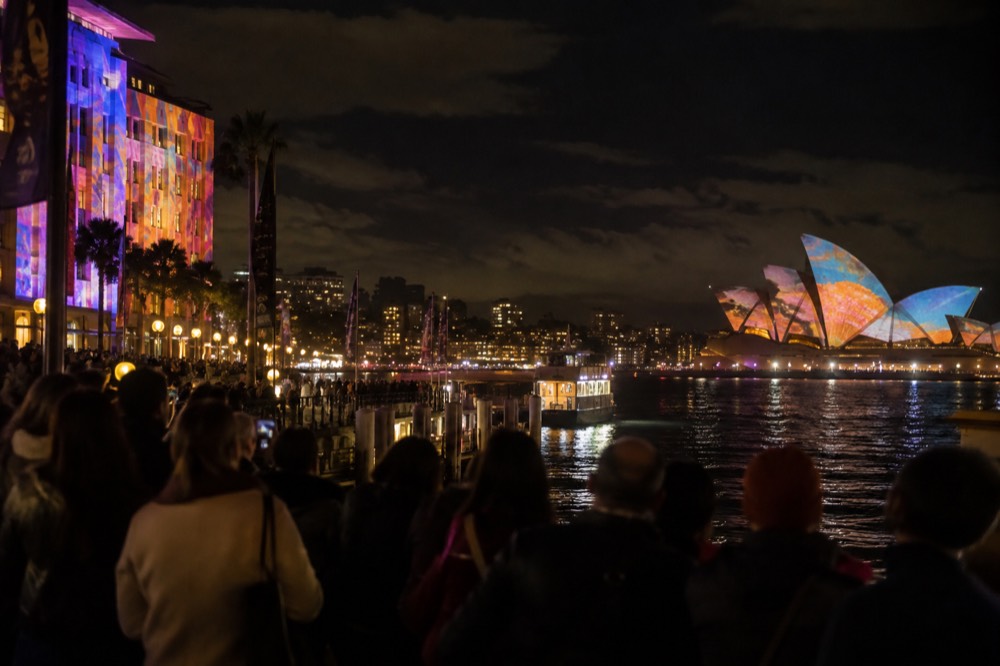
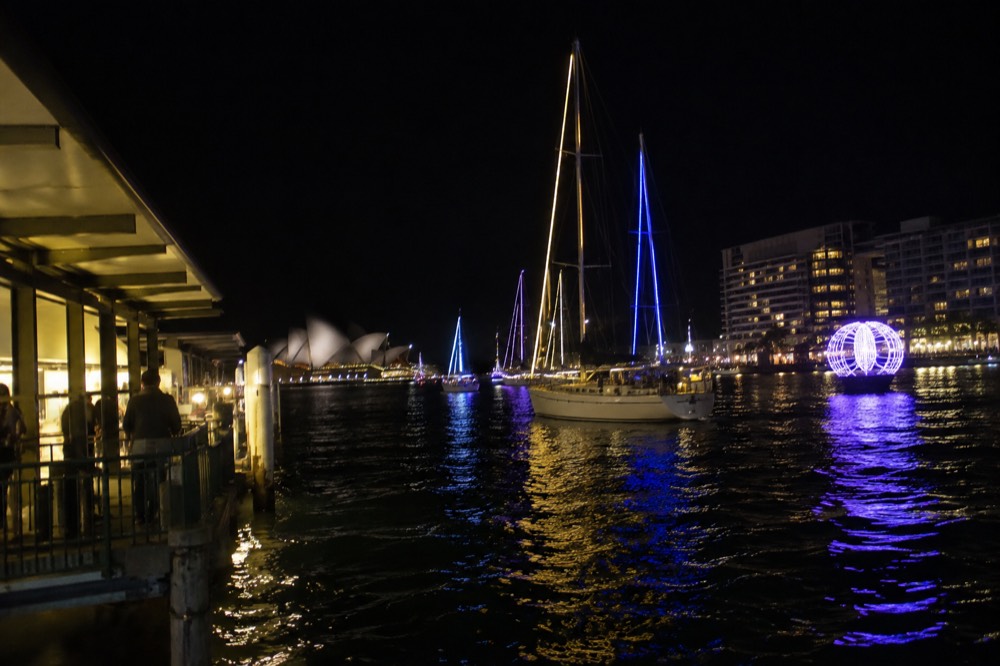
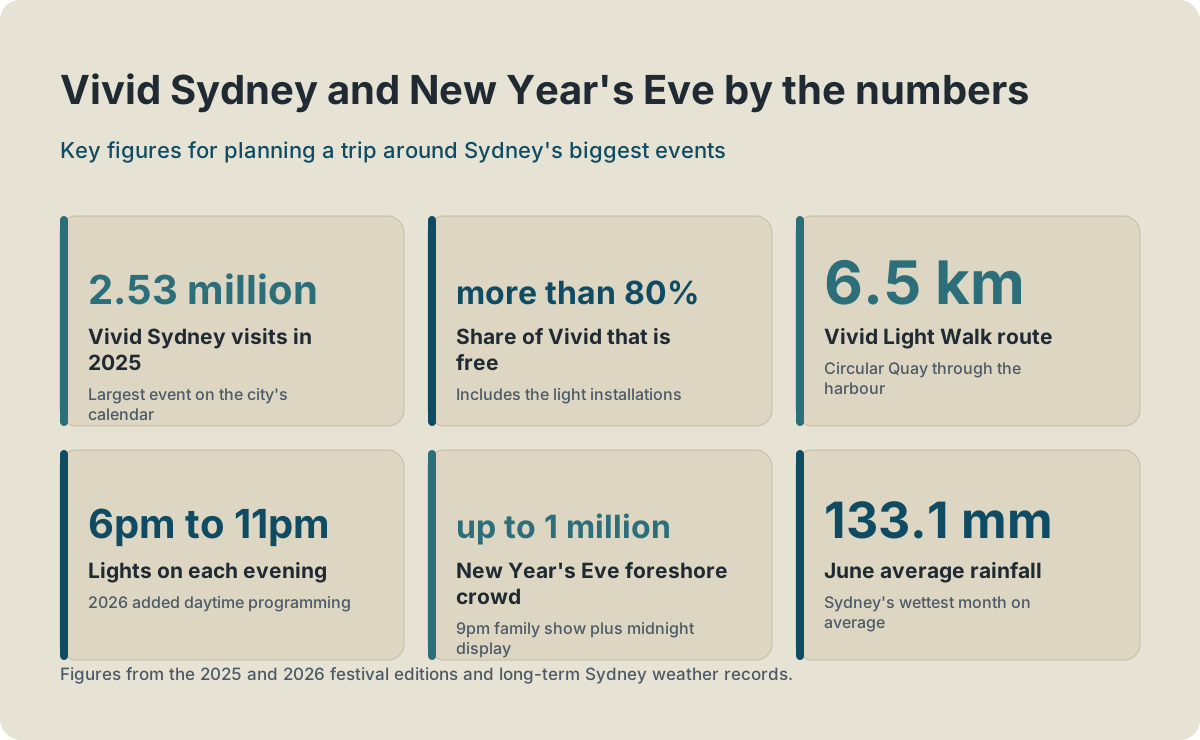
Vivid Sydney is a 23-night festival of light installations, music and ideas that runs from late May to mid-June, and it is the biggest event on the city's calendar. The 2026 edition ran 22 May to 13 June; the 2027 dates are confirmed as 28 May to 19 June. More than 80% of the festival is free, including the 6.5 km Vivid Light Walk, which strings dozens of installations around the harbour from Circular Quay through The Rocks.
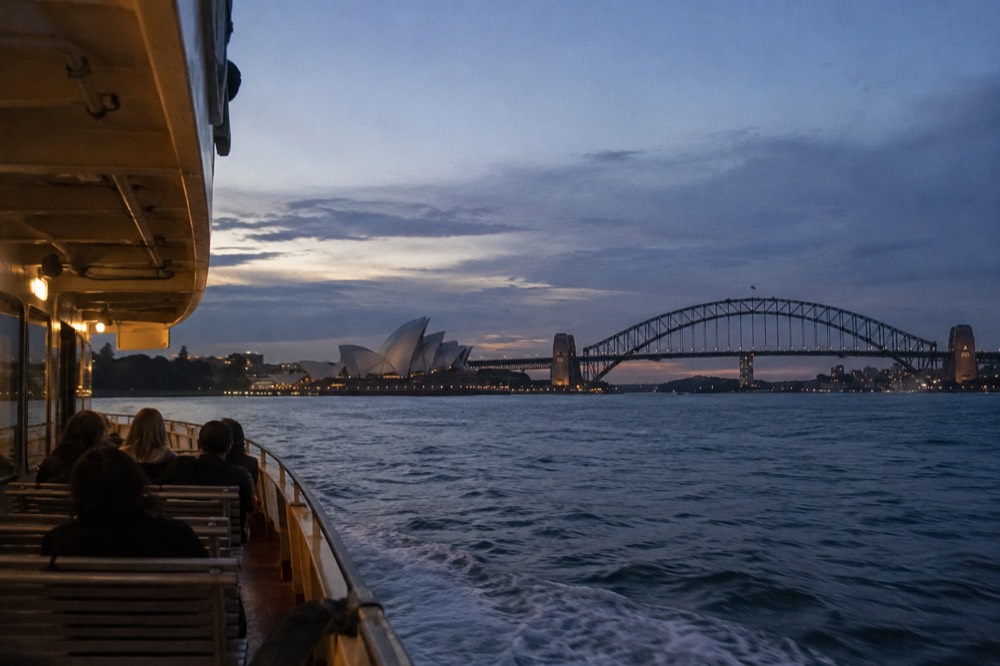
The lights switch on each evening, typically from 6pm to 11pm, and the festival's centre of gravity is the harbour: projections on the Sydney Opera House sails, installations along the Circular Quay promenade, and light works climbing the Harbour Bridge. In 2026, for the first time in recent editions, the program expanded into daytime as well, so the festival is no longer purely a night event.
The 2025 edition drew 2.53 million visits, which makes Vivid bigger than any single night of New Year's Eve spread across three weeks rather than one evening. That scale has consequences. Circular Quay and The Rocks are genuinely packed on weekend nights. Trains run late and extra services are added, but the station entrances at Circular Quay queue.
Two insider facts change a Vivid trip. First, the festival sits in the statistical start of winter, and June is Sydney's wettest month on average, 133.1 mm across the long record, wetter than any summer month. Pack for rain, not just for cold. Second, weeknights early in the festival are dramatically quieter than weekends or the closing nights, and the light walk is just as good on a Tuesday. The official program and dates are published at Vivid Sydney, and our full Vivid Sydney guide covers vantage points and the light walk in detail.
How Does Sydney Do New Year's Eve?
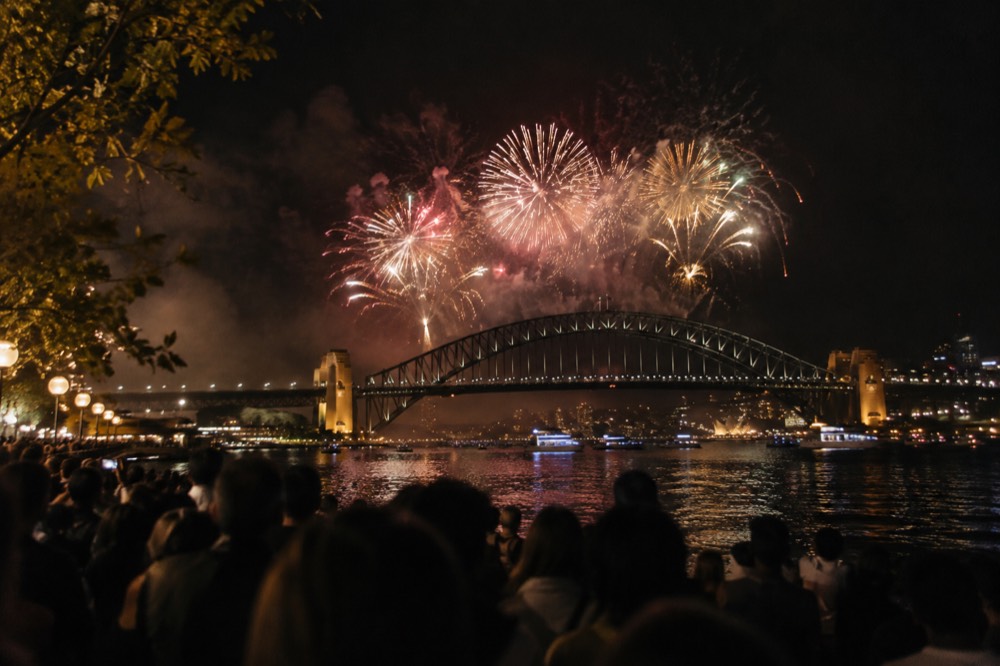
Sydney runs two fireworks displays: a 9pm family show called Calling Country and the famous midnight display over the Harbour Bridge and Opera House. Up to 1 million people gather around the foreshore, and most vantage points are free and unticketed, though they fill hours ahead. Birchgrove Park on the Balmain side holds around 5,000 people and opens at 8am; Circular Quay West holds around 16,000. Some premium sites are ticketed or require booking.
The strategy question is where to stand, and the honest answer is that the choice is between comfort and view. The official free vantage points, published each year with capacities and opening times, ring the harbour from Barangaroo and Pirrama Park in the west to Mrs Macquarie's Point and the Domain side in the east. The eastern points frame the bridge and Opera House together, which is the postcard; the western points face the display head-on.
Two things catch visitors out. First, the free sites reach capacity early, sometimes by mid-afternoon for the prime spots, and once a site is full it closes. Second, transport on the night is a mass movement exercise: extra services run late, but stations around the harbour queue for an hour or more after midnight. Transport for NSW publishes the event transport plan each December, and the current details live at transportnsw.info.
If standing in a crowd from mid-afternoon does not appeal, the alternative is to book an event that moves: harbour cruises run NYE charters, and restaurants and bars with water views do set menus. These sell out weeks ahead and are priced accordingly. Our Sydney New Year's Eve guide breaks down every vantage point, and the harbour cruise options are compared in our Sydney harbour cruises guide.
When Is the Sydney Mardi Gras Parade?
The Sydney Gay and Lesbian Mardi Gras parade is scheduled for Saturday 6 March 2027, running along Oxford Street, Flinders Street and Anzac Parade. The festival builds over roughly two to three weeks before it, with Fair Day, a large free community picnic, scheduled for Sunday 14 February 2027. The full 2027 festival program is confirmed closer to the event, so treat the parade date as fixed and everything around it as pending.
Mardi Gras is the city's biggest street event and one of the world's largest pride celebrations. The parade itself draws enormous crowds along the route, and the areas around Darlinghurst and Surry Hills turn into a street party that runs well past midnight. The party event that follows the parade is ticketed and sells out.
For a visitor, the planning facts are these. Oxford Street fills hours before the parade steps off, and the best viewing spots along the barriers go early. The surrounding suburbs, Surry Hills, Darlinghurst and Kings Cross, are where the festival's bars, shows and satellite events happen, so staying in that part of the inner city puts you inside the event rather than commuting to it. Our Sydney Mardi Gras guide covers the route and viewing in detail, and the official program lives at mardigras.org.au.
March is a good month to be in the city regardless: late summer warmth, mean maximum around 24.8 °C, and the crowds of January and February starting to thin.
What Events Fill Sydney's Summer?
Sydney's summer, December to February, is anchored by New Year's Eve, Sydney Festival in January, Australia Day on 26 January, and the start of the Mardi Gras festival in February. It is also peak beach season, and statistically the cloudiest time of year: February averages just 5.3 clear days, the fewest of any month, while August averages 13.4, the most. Peak season is not the sunniest season, which surprises most visitors.
Sydney Festival is the summer's cultural centrepiece. It runs across January with theatre, music, dance and large free outdoor events, often including giant installations in Hyde Park and the Domain. The festival's full program is published in November, and its headline free events draw families across the school holidays. The 2026 edition marked the festival's 50th anniversary; 2027 dates are not yet published, so plan on "January" and check the organiser. Other pages covering the same trip are gathered on Sydney Travel Guide.
Australia Day, 26 January, brings ferry races on the harbour, council events and fireworks, and it is a contested national day, so expect conversation as well as celebration. Through the whole season the beaches are the parallel program: Bondi, Manly and Coogee run their busiest months, and the coastal walk between Bondi and Coogee is at full colour. Our Sydney in summer guide covers the season, and the Bondi Beach and Manly pages cover the two headline beaches.
The counterintuitive planning fact: if clear skies are your priority, the long-run averages say to come in August, not February. The Bureau of Meteorology's normals for Observatory Hill, drawn from a 162-year record, put February as Sydney's cloudiest month and August as its clearest. Summer gives you warmth and festival energy; winter gives you light.
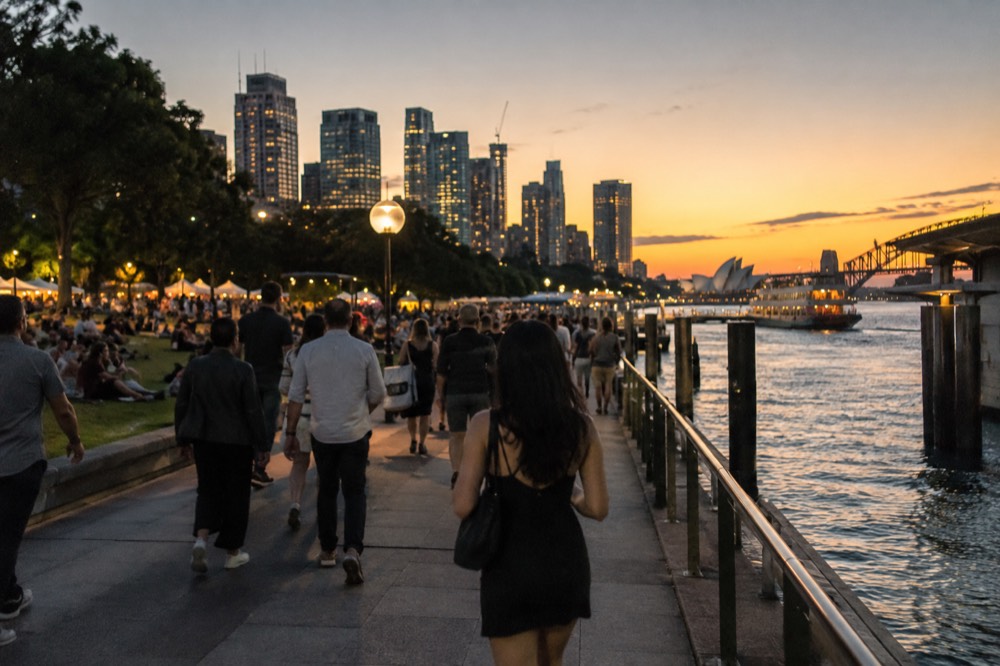
What Is on in Sydney in Autumn and Winter?
Autumn, March to May, brings the Mardi Gras parade, the Easter long weekend and school holidays, then the opening of whale season and Vivid Sydney in late May. Winter, June to August, is Vivid season plus peak whale watching, with the King's Birthday long weekend in June and the clearest skies of the year. June is the wettest month on average at 133.1 mm, but August averages 13.4 clear days, the most of any month.
The Easter period is the autumn's other big moment. The Easter weekend in 2026 ran 3 to 6 April, with Good Friday on 3 April, and the Royal Easter Show, a huge agricultural fair at Sydney Olympic Park, runs across the school holidays either side of it. Its 2027 dates are not yet published, so check the organiser before locking an itinerary. The show is the most family-oriented of the city's big events, and it pairs well with a ferry trip to Parramatta or a day at Cockatoo Island.
Winter is where Sydney confounds expectations. Vivid runs to mid-June, the whale migration peaks late June through July, and the skies are frequently, genuinely clear. Daytime temperatures average 16.4 °C in July, which is mild by most of the world's standards, and the city's indoor program, galleries, theatres and the Art Gallery of New South Wales, which stays open until 10pm on Wednesdays, carries the short days.
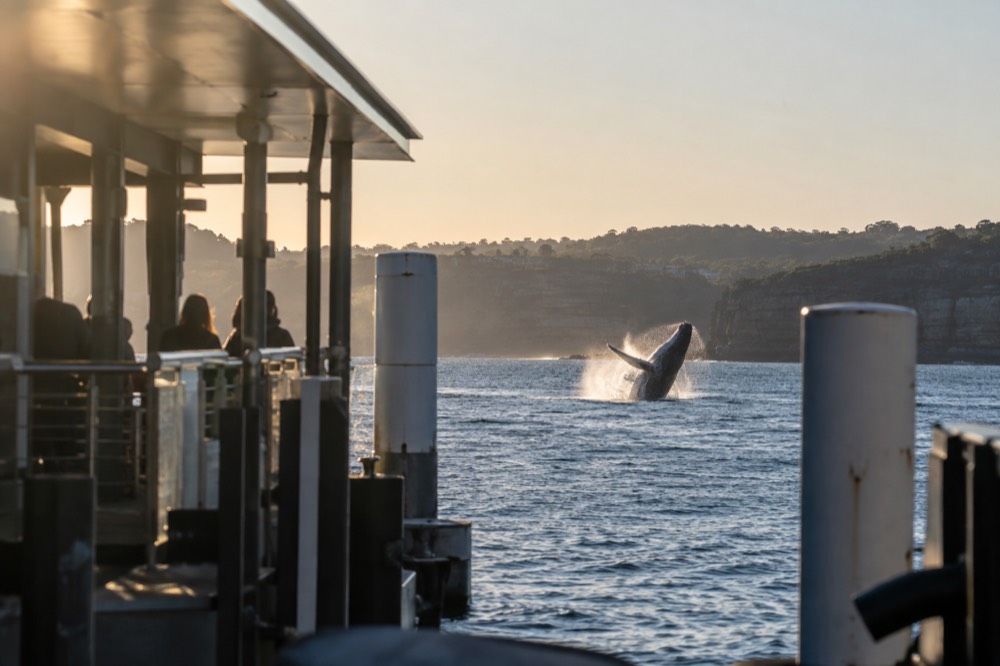
Can You See Whales from Sydney During an Event Trip?
Yes. Humpback whales migrate along the NSW coast from May to November, and Sydney sits directly on the route. The northern migration runs roughly May to July, the southern migration with calves runs roughly August to November, and the peak is late June through July. NSW National Parks estimates more than 40,000 humpbacks migrate along the coast each year. Land-based vantage points sit inside Sydney Harbour National Park and Royal National Park.
Whale watching is a seasonal event in the truest sense: outside the May to November window there is essentially nothing to see from a boat, and no tour should be presented as year-round. Inside the window, sightings are common but never guaranteed, and the sea conditions in mid-winter can be rough.
The land-based option is free and underrated. Headlands in Sydney Harbour National Park, and lookouts in Royal National Park to the south, are the official vantage points, and National Parks publishes migration facts and watching guidelines at nationalparks.nsw.gov.au. Our whale watching in Sydney guide covers the boat tours, the headlands and what the season actually looks like month by month.
A whale trip slots neatly around the winter events calendar: a morning on the water, an afternoon indoors, and Vivid's lights from 6pm. That is a full winter day in Sydney that most visitors never assemble.
Which Sydney Events Are Free and Which Need Tickets?
More of Sydney's event year is free than most visitors expect. Vivid Sydney is more than 80% free, including the entire light walk; New Year's Eve fireworks are free from public foreshore vantage points; Mardi Gras parade viewing is free; and the Royal Botanic Garden, the Australian Museum's general entry and the Art Gallery of New South Wales are all free year-round. The ticketed layer is smaller: Mardi Gras Party, Vivid's music and ideas program, NYE boat charters and premium vantage sites.
The pattern is consistent across the calendar: the spectacle is free, the comfort is paid. Standing on the foreshore for the midnight fireworks costs nothing; a chair on a boat with a drink costs plenty. Walking the Vivid light walk costs nothing; the festival's ticketed music shows and idea talks are separate.
| Event | Free component | Ticketed component |
|---|---|---|
| Vivid Sydney | Light walk, most installations | Music, ideas and food events |
| New Year's Eve | Fireworks from public vantage points | Boat charters, premium sites |
| Mardi Gras | Street parade, Fair Day | Parade after-party |
| Sydney Festival | Large outdoor program | Theatre and ticketed shows |
| Royal Easter Show | Grounds entry is ticketed | Showbags and rides cost extra |
| Whale watching | Headland lookouts | Boat tours |
One caution on the free layer: free does not mean uncrowded or unbookable. Some free NYE vantage points require pre-registration in some years, and free festival events can reach capacity. Always check the event's official page in the week before.
Which NSW Public Holidays Affect an Events Trip?
The dates that matter most to visitors in 2026 are Australia Day on Monday 26 January, Easter from Friday 3 April to Monday 6 April, Anzac Day on Saturday 25 April with an additional Monday 27 April, King's Birthday on Monday 8 June, and Labour Day on Monday 5 October. In 2027 the key dates are Australia Day on Tuesday 26 January, Easter 26 to 29 March, and King's Birthday on Monday 14 June. Public holidays get the cheaper weekend Opal daily cap, $9.65, on transport.
The full official list is published by the NSW Government at nsw.gov.au, and two details in it are worth knowing. First, the Bank Holiday on the first Monday in August is not a public holiday for most people: it applies to bank branches and certain financial institutions, so shops, attractions and transport run normally. Guides that list it as a general holiday are wrong. Second, when Christmas Day, Boxing Day, Anzac Day or New Year's Day falls on a weekend, an additional weekday public holiday is declared, which extends the festive period.
| Holiday | 2026 | 2027 |
|---|---|---|
| New Year's Day | Thursday 1 January | Friday 1 January |
| Australia Day | Monday 26 January | Tuesday 26 January |
| Good Friday to Easter Monday | 3-6 April | 26-29 March |
| Anzac Day | Saturday 25 April (extra Monday 27 April) | Sunday 25 April (extra Monday 26 April) |
| King's Birthday | Monday 8 June | Monday 14 June |
| Labour Day | Monday 5 October | Monday 4 October |
| Christmas Day | Friday 25 December | Saturday 25 December (extra Monday 27 December) |
Long weekends amplify every event: an Easter Vivid-adjacent trip, a King's Birthday weekend in the Blue Mountains, a Labour Day beach day. They also lift domestic travel and accommodation prices, so a long weekend is both the best and the most expensive time to be in town. Our Sydney public holidays and school holidays guide covers the school-term side.
How Far Ahead Should You Book Sydney Events?
Book NYE harbour charters and premium vantage points two to three months out, Vivid accommodation as soon as dates are announced, and Mardi Gras Party tickets the moment they release. For the free layer, no booking is needed at all, only timing: arrive early on the night. Whale tours are best booked a few weeks ahead for the July peak. The general rule is that anything on the water sells first, and the city's hotels track the festival calendar closely.
The booking pressure is not uniform. A January trip for Sydney Festival needs almost no advance planning beyond [accommodation](https://booking.tpk.ro/ndznHj9h), because the free outdoor program is open to all. A Vivid trip needs a hotel booked early, because 2.53 million visits spread over three weeks put real pressure on the CBD, but the light walk itself needs nothing. New Year's Eve is the one night where everything bookable sells out, and the weeks before Christmas are when the ticketed vantage sites and charters go.
For the tours that pair with events, availability moves with the same calendar. A food tour through the city's neighbourhoods, a harbour sightseeing cruise, or a night walk all run year-round but fill fastest when a festival is on. If your trip is anchored to a specific event, book the tour layer for that window early too.
One structural tip: midweek. Sydney's events are dramatically less crowded Tuesday to Thursday, and the city's transport caps, $9.65 a day Friday to Sunday and public holidays against $19.30 Monday to Thursday, make the weekend cheaper to move around but busier to stand in. The trade is yours to make.
What Is the Best Month to Visit Sydney for Events?
For the biggest spectacle, choose late May to mid-June for Vivid Sydney, or 31 December for the fireworks. For the best balance of event and weather, choose March: the Mardi Gras parade lands on 6 March 2027, the summer crowds thin, and the water is still warm. For clear skies and low prices, choose August, which averages 13.4 clear days, the most of any month, though it is outside the main festival season and whale season is the headline draw instead.
There is no single best month because the calendar and the climate pull in different directions. Summer gives the beach program and Sydney Festival but the cloudiest skies. Winter gives Vivid, whales and the clearest days but the shortest ones. The shoulder months, March and November, are the compromise picks: warm enough, quieter, and each carrying one signature event, Mardi Gras in March and the tail of whale season plus the summer program announcements in November.
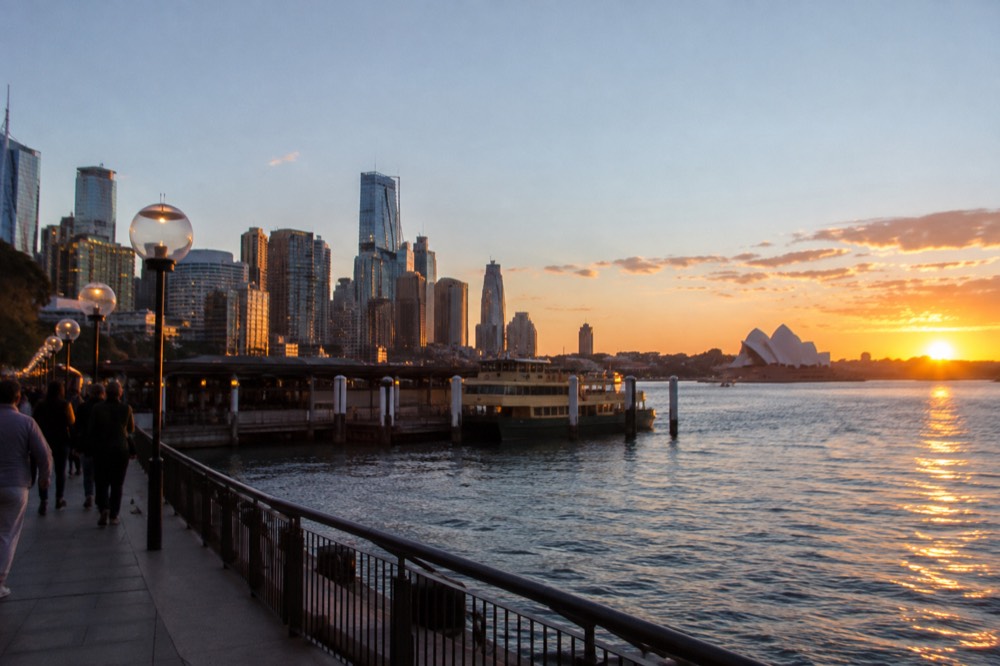
The month to be wary of is June, and only for weather: it is Sydney's wettest month on average, 133.1 mm, which sits right on top of Vivid's opening. That is not a reason to skip the festival, since the lights are weather-proof and the rain comes in bursts, but it is a reason to pack a proper jacket and to prefer indoor ticketed events as backups. The full climate picture, month by month, is in our Sydney weather month by month guide.
Common Questions About Sydney Events
What is the biggest event in Sydney?
Vivid Sydney, by total attendance: 2.53 million visits were recorded across the 2025 festival's 23 days. On a single night, New Year's Eve is the biggest, drawing up to 1 million people around the harbour foreshore for the 9pm and midnight fireworks.
What are the dates for Vivid Sydney 2027?
Vivid Sydney 2027 is scheduled for 28 May to 19 June 2027. The 2026 edition ran 22 May to 13 June. Lights typically run from 6pm to 11pm each night of the festival, and more than 80% of the program is free.
Is Sydney New Year's Eve free?
The fireworks are free to watch from public foreshore vantage points, and most sites need no ticket, though they fill hours before the 9pm display and close when full. Some premium vantage areas are ticketed or require booking, and harbour charters are the main paid option.
When is Mardi Gras in Sydney?
The 2027 Mardi Gras parade is scheduled for Saturday 6 March 2027 along Oxford Street, Flinders Street and Anzac Parade, with Fair Day on Sunday 14 February 2027. The full festival program is confirmed closer to the event.
What is on in Sydney in winter?
Vivid Sydney runs to mid-June, whale watching peaks late June through July, and August is on average the city's clearest month, with 13.4 mean clear days. The King's Birthday long weekend falls in June, and galleries and theatres carry the short days.
Are Sydney events crowded on weekends?
Yes, sharply. Vivid's light walk, NYE vantage points and Mardi Gras barriers are all far busier on Friday and Saturday nights. Weeknights early in a festival's run give the same program with a fraction of the crowd.
Whatever month you pick, check the event's own official page in the week before you travel: Sydney's festival details, vantage-point lists and transport plans are re-set each year, and the organiser's site is the only place the current version lives.