Best Time to Visit Sydney: A Month-by-Month Guide to Weather, Crowds and Prices
Sydney's best visiting window is less obvious than it looks. The long-run climate record says the city's clearest skies arrive in late winter, its wettest month is June, and February, the heart of peak season, is statistically its cloudiest. Here is how to match the month to the trip you actually want.
Short answer
The best time to visit Sydney is October to November or March to April: warm, mostly dry, and outside the peak-season crowds. The long-run record shows August is Sydney's clearest month (13.4 mean clear days) while February, peak season, is its cloudiest (5.3). June is the wettest month of all, wetter than any summer month.
Sydney gets sold as a year-round city, and in a narrow sense that is true: the annual mean maximum is 21.8 °C and it never gets genuinely cold by northern-hemisphere standards. But "year-round" hides the interesting part. The Bureau of Meteorology's long-run record for the Observatory Hill station, 162 years of observations, shows a city whose rainfall peaks in June, whose clearest skies arrive in August, and whose most popular visiting months are statistically its greyest. Most guides get this backwards because most guides are written from vibes, not from the table.
This page works the other way. Every figure here comes from the published climate record, from Transport for NSW fare data, or from the operators' own pages, and the goal is simple: help you pick the month that matches the trip you actually want, whether that is beach weather, cheap accommodation, whale watching, or a fireworks crowd of close to a million people.
So When Is the Best Time to Visit Sydney?
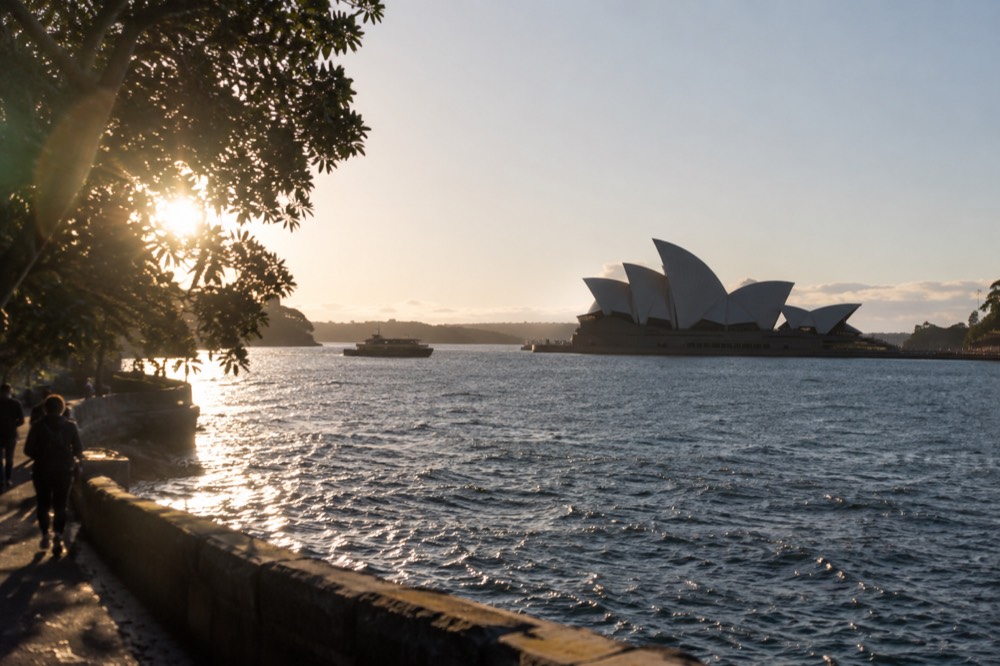
The best time to visit Sydney is October, November, March or early April. These shoulder months deliver mean daily maximums of 20 to 24 °C, rainfall below the annual average, and crowds well down on the December-February peak. October and November are warmer in the water and warmer on the sand; March and April carry the last of the summer warmth with noticeably emptier ferries and foreshores.
August is the surprise pick: the clearest skies of any month, 13.4 mean clear days, on a 17.9 °C average maximum.
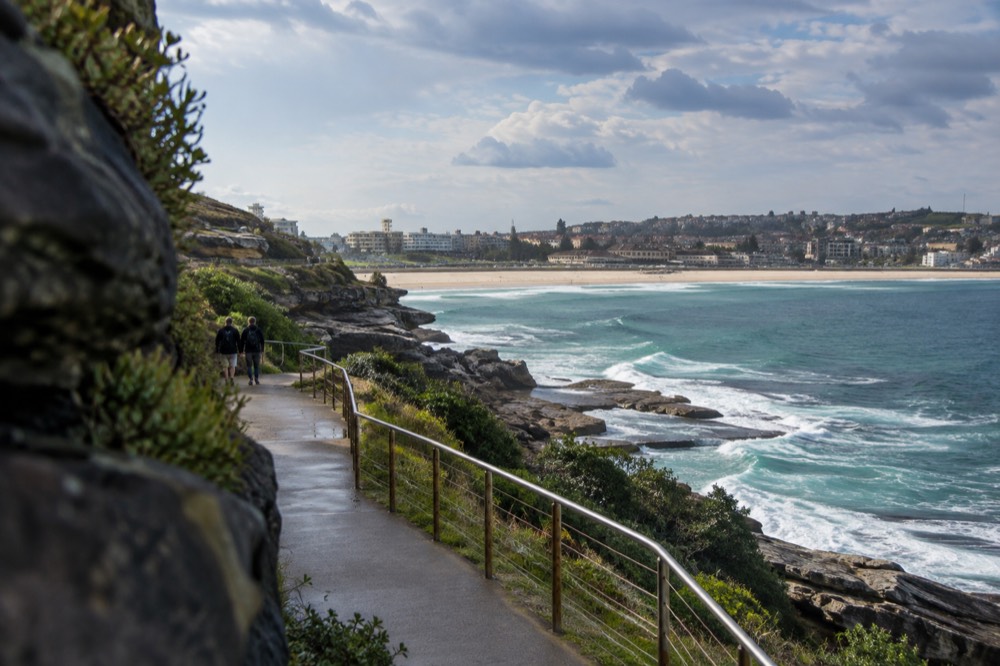
The shoulder-season case is not just about temperature. Sydney's peak season, December through February, coincides with school holidays, the country's biggest domestic travel period, and the cloudiest skies of the year. February averages just 5.3 clear days against August's 13.4. You will share the harbour with more people and see less sun doing it. March fixes most of that: the water is still at its warmest after a full summer of heating, the holiday crowds have gone home, and accommodation rates step down.
There is a second, quieter argument for the October-November window: it sits inside whale watching season, which runs May to November along the NSW coast, and it catches the city warming up fast, with mean maximums climbing from 20.1 °C in September to 23.7 °C in November. The surf is still cold from winter, but everything on land is at its best.
If your dates are locked to the southern summer, do not panic. Sydney in December and January is still a superb city; it is simply busier and greyer than the brochures suggest, and the sections below show you how to play it.
What Are Sydney's Seasons Actually Like?
Sydney's seasons are inverted against the northern hemisphere: December, January and February are summer; June, July and August are winter. Summer means mean maximums of 25 to 26 °C and high UV, often extreme at 11-plus. Winter means 16 to 18 °C days that feel mild by most world standards, with 8 to 9 °C nights. The counterintuitive part is rain: June, a winter month, is Sydney's wettest at 133.1 mm on average, wetter than any summer month, while August is its clearest.
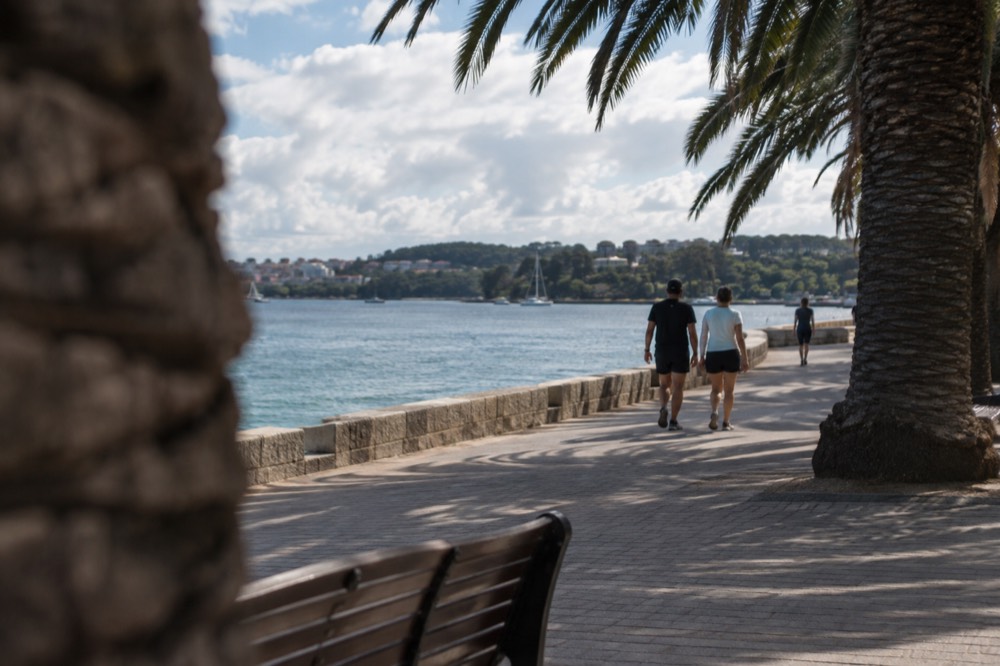
Summer (December to February) is when the postcard version of Sydney exists: patrolled beaches on long daylight-saving evenings, harbour crowds, outdoor everything. The mean maximum sits between 25.3 and 26.0 °C, and daylight saving keeps light in the sky past 8pm. The trade-offs are real: it is the busiest and most expensive quarter, February is the cloudiest month of the year, and the UV index regularly hits extreme levels, so sun protection is not optional.
Autumn (March to May) is the connoisseur's pick. Temperatures slide gently from 24.8 °C to 19.5 °C mean maximum, rainfall is moderate, and the March water temperature is the warmest of the year after a full summer of heating. April records 9.1 mean clear days, better than any summer month.
Winter (June to August) is Sydney's most misunderstood season. Yes, June is the wettest month. But July and August are dry by Sydney standards, August delivers the clearest skies of the year, and a 17.9 °C August day in bright sun is genuinely pleasant. Ocean pools, coastal walks and harbour cruises all keep running, and it is whale season at its peak.
Spring (September to November) is the best all-round bet. Rainfall falls to its annual lows, 68.1 mm in September, clear days climb, and by November the mean maximum is back to 23.7 °C with the year's highest mean daily sunshine, 7.8 hours.
| Season | Months | Mean max °C | Mean min °C | Rainfall (monthly avg) | Character |
|---|---|---|---|---|---|
| Summer | Dec-Feb | 25.3-26.0 | 17.6-18.9 | 77.1-119.3 mm | Peak crowds, extreme UV, cloudiest skies |
| Autumn | Mar-May | 19.5-24.8 | 11.6-17.6 | 117.4-131.6 mm | Warm water, thinning crowds, best balance |
| Winter | Jun-Aug | 16.4-17.9 | 8.1-9.3 | 80.2-133.1 mm | Wettest start, then the clearest skies of the year |
| Spring | Sep-Nov | 20.1-23.7 | 11.1-15.7 | 68.1-83.8 mm | Driest quarter, warming fast, whale season tail |
Whichever window you land on, the fixed-cost attractions are the same, and shoulder-season queues are the shortest. If you are building a trip around the indoor big-hitters, the aquarium, the tower, the zoo, a [multi-attraction pass](https://gocity.tpk.ro/rUvgw2vS) is the one purchase where timing matters least and queue-skipping matters most.
Which Month Should You Actually Pick?
Match the month to your priority. For beaches and swimming, pick December to March, accepting the crowds. For whales, pick late June or July, the migration peak. For the cheapest accommodation and clearest skies, pick August. For the best all-round weather with manageable crowds, pick October, November or March. For Vivid Sydney's lights, you must come between late May and mid June, and for New Year's Eve fireworks you must come on 31 December and book months ahead.
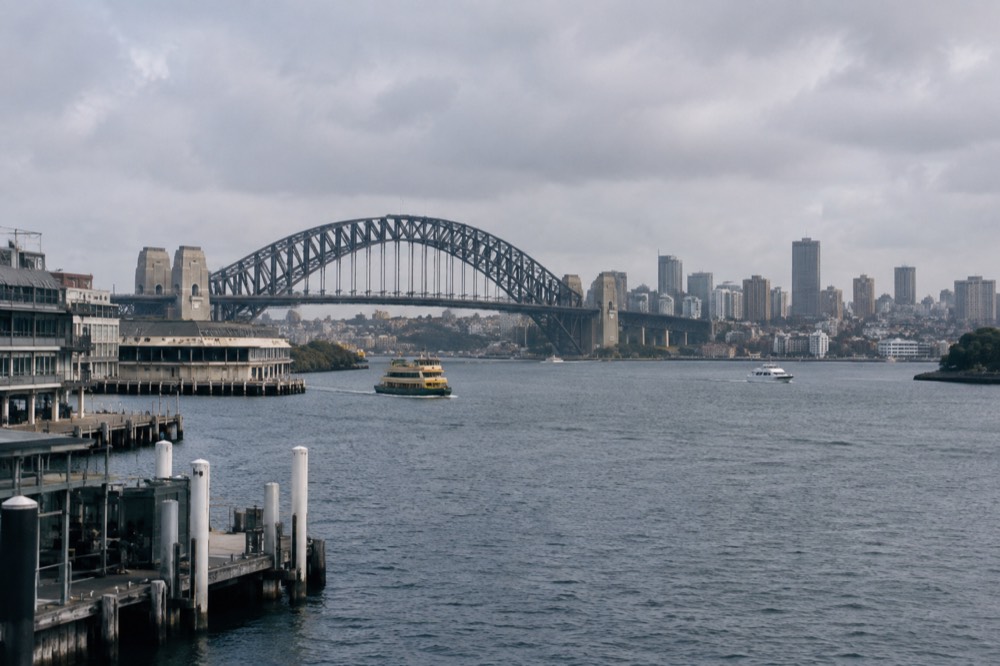
The month-by-month table below compresses the climate record into a decision tool. Each row uses the long-run averages from the Bureau of Meteorology's Observatory Hill station, so a "wet" month means wetter than Sydney's own average, not wet by world standards. Even June, the wettest, averages 8.8 rain days of 1 mm or more across the whole month.
| Month | Mean max / min °C | Mean rainfall | Clear days | Best for |
|---|---|---|---|---|
| Jan | 26.0 / 18.8 | 101.2 mm | 6.8 | Beach heat, school-holiday energy, highest crowds |
| Feb | 25.8 / 18.9 | 119.3 mm | 5.3 | Warmest water, Mardi Gras season, cloudiest skies |
| Mar | 24.8 / 17.6 | 131.6 mm | 7.1 | Warm water, thinning crowds, autumn's opening |
| Apr | 22.5 / 14.8 | 126.5 mm | 9.1 | Comfortable walking weather, Easter events |
| May | 19.5 / 11.6 | 117.4 mm | 9.5 | Vivid Sydney, whale season opening, low rates |
| Jun | 17.0 / 9.3 | 133.1 mm | 9.1 | Vivid finale, cheapest month, the wettest month |
| Jul | 16.4 / 8.1 | 96.3 mm | 12.0 | Whale peak, second-clearest skies, lowest prices |
| Aug | 17.9 / 9.0 | 80.2 mm | 13.4 | Clearest skies of the year, whale season |
| Sep | 20.1 / 11.1 | 68.1 mm | 10.9 | Driest month, spring warmth returning |
| Oct | 22.2 / 13.6 | 76.7 mm | 8.1 | Best all-round month, whale season tail |
| Nov | 23.7 / 15.7 | 83.8 mm | 6.0 | Most sunshine hours, warm and dry |
| Dec | 25.3 / 17.6 | 77.1 mm | 6.6 | Christmas crowds, NYE build-up, beach season open |
Two rows deserve a second look. June's 133.1 mm makes it the wettest month of the year, which surprises almost everyone, and August's 13.4 clear days make it the sunniest-skied month, which surprises everyone again. If you want the full breakdown of what each month delivers, the month-by-month weather guide carries the detail: Sydney weather month by month.
For a summer trip, the deeper planning detail lives in Sydney in summer, and for the December specifics, including the Christmas and New Year period, see Sydney in December.
When Is Sydney Cheapest to Visit?
June and July are Sydney's cheapest months: mid-winter, the wettest start to the year, and the low point for both airfares and hotel rates. August is nearly as cheap and considerably better weather-wise, with the clearest skies of any month. Whenever you come, transport is capped: Opal fares max out at $19.30 a day Monday to Thursday, $9.65 a day Friday to Sunday and public holidays, and $50 a week, so heavy sightseeing days cost the same as light ones.
The price story has three layers. The first is accommodation, which tracks the school-holiday calendar and the summer peak: December and January carry the highest rates, and the June-August window the lowest. The second is flights, which follow the same curve. The third, and the one most guides miss, is that Sydney's in-city costs barely move with the seasons, because the big attractions charge the same in July as in January.
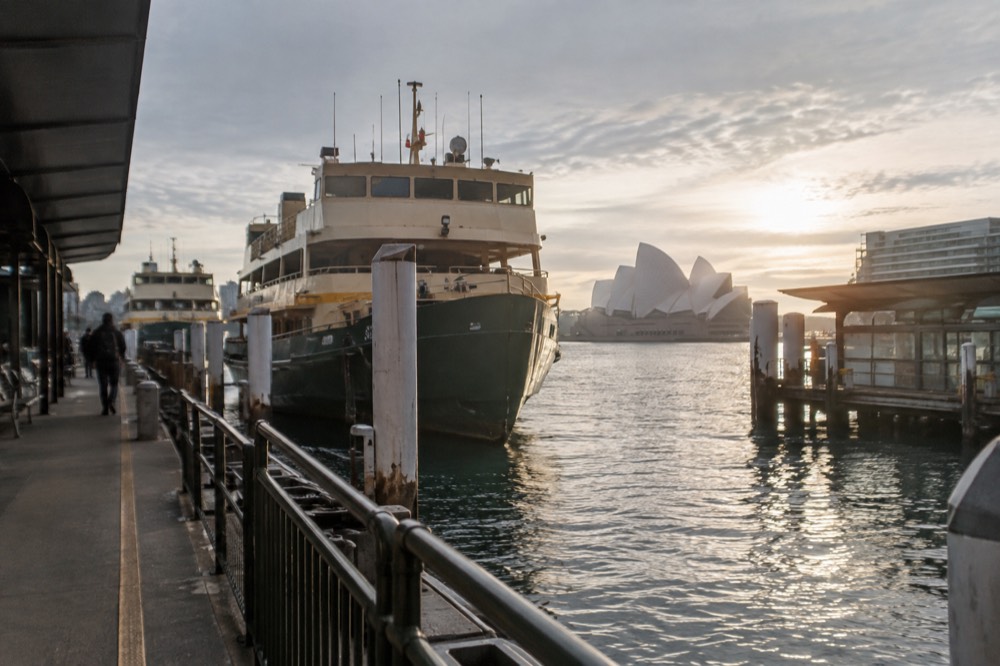
That third layer is where a winter trip quietly wins. Taronga Zoo's adult gate price is $57, or from $51.30 online, and those numbers are identical in every month; what changes is the queue. Sydney Tower Eye charges $39 adult on the day, from $29 in advance, year-round. The Royal Botanic Garden and the Australian Museum are free in general entry regardless of season. A winter visitor pays the same as a summer visitor and stands in half the line.
Transport costs are fixed by the fare year, not the tourist season. The adult daily caps are $19.30 Monday to Thursday and $9.65 on Friday, Saturday, Sunday and public holidays, with a $50 weekly cap, and a contactless credit card is charged exactly the same as an Opal card with every benefit attached. One warning that costs real money: the Sydney Airport station access fee, $18.61 for an adult on top of the train fare, sits outside both caps. The 400 bus from the airport carries no access fee at all. The full fare mechanics are in the Opal card guide for visitors, and the budget picture overall is in Sydney on a budget.
| Cost item | Peak (Dec-Jan) | Shoulder (Oct-Nov, Mar-Apr) | Winter (Jun-Aug) |
|---|---|---|---|
| Hotel rates | Highest | Moderate | Lowest |
| Airfares | Highest | Moderate | Lowest |
| Attraction entry prices | Same | Same | Same |
| Queue lengths | Longest | Moderate | Shortest |
| Opal daily cap | $19.30 / $9.65 | $19.30 / $9.65 | $19.30 / $9.65 |
| Whale watching | Not running | Season tail (Oct-Nov) | Peak season (May-Nov) |
When Is Sydney at Its Busiest?
Sydney is busiest from late December through January, the Australian school-holiday peak, and on 31 December itself, when up to a million people gather around the harbour foreshore for the New Year's Eve fireworks. The second spike is late May to mid June for Vivid Sydney, which drew 2.53 million visitors across the festival in 2025. Easter weekend and the October Labour Day long weekend also lift domestic crowds. The quietest weeks are late June and July, outside school holidays.
The December-January peak is driven by Australian school holidays, which run from mid-December to late January, and by the national habit of taking annual leave across that window. Add the harbour New Year's Eve crowd, up to a million people on the foreshore, and the two weeks around Christmas are the most in-demand of the year. Free vantage points like Birchgrove Park and Circular Quay West fill hours before the 9pm family fireworks, and the official vantage-point list resets each year, so check it rather than trusting a fixed list.
Vivid Sydney is the second crowd engine, and it is worth planning around rather than avoiding: more than 80% of the festival is free, including the 6.5 km Vivid Light Walk, and the 2026 edition ran 22 May to 13 June with daytime programming for the first time. The 2027 dates are already published, 28 May to 19 June. If lights are your reason to come, book accommodation early; the whole city's rates lift across that window. The full festival detail is in Vivid Sydney, and the fireworks logistics in Sydney New Year's Eve.
The counter-crowd months are the ones the domestic market ignores: late June and July, outside school holidays, when the whale watchers have the harbour almost to themselves and the museums run at winter capacity.
What Weather Surprises Does the Sydney Record Hold?
Three facts from the long-run record contradict every assumption visitors bring. June is Sydney's wettest month at 133.1 mm, wetter than any summer month. August is its clearest at 13.4 mean clear days, while February, peak season, is its cloudiest at 5.3. And Sydney rains on about 99.5 days a year, roughly one day in 3.7, so no month is a washout. These are 162-year averages from the Bureau of Meteorology's Observatory Hill station, not forecasts.
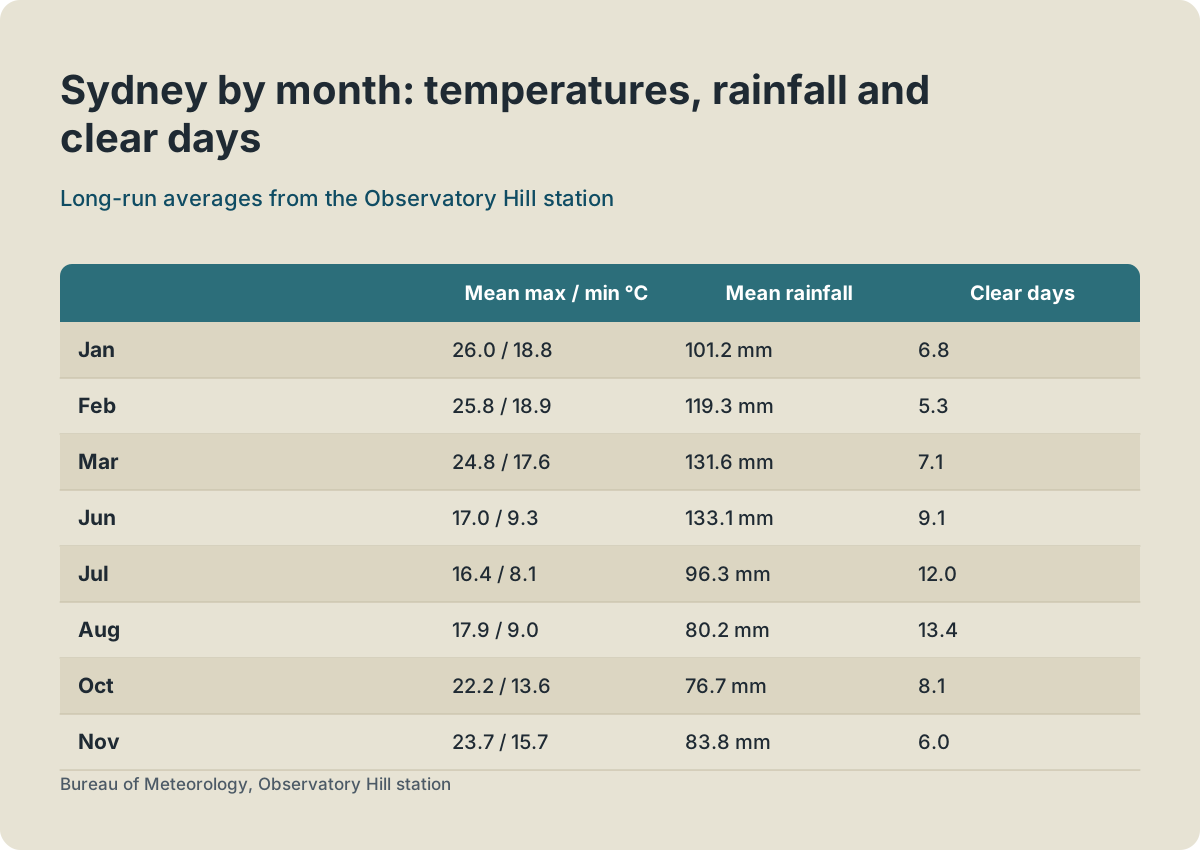
The June rainfall figure is the single most useful thing on this page. Visitors assume the southern winter is dry and the tropical-style summer is wet; the record says the opposite. Sydney's rainfall peaks in autumn and early winter, with March, April and June all among the wettest months on the record, and bottoms out in spring, with September at 68.1 mm. The full monthly table, with temperatures, rain days and sunshine hours, is published by the Bureau of Meteorology's climate averages for Sydney.
The clear-days finding reframes winter entirely. July records 12.0 mean clear days and August 13.4, the two best months on the record, against 5.3 in February and 6.0 in November. Winter skies in Sydney are clearer than summer skies; the days are simply shorter, with June down to 5.5 mean daily sunshine hours against November's 7.8. If your priority is crisp blue-sky walking weather rather than beach heat, August is not a compromise, it is the optimum.
The rain-days figure is the reassurance. At 99.5 days of 1 mm or more per year, Sydney rains about one day in four, spread fairly evenly: no month averages fewer than 7.1 rain days and none more than 9.9. A wet month here means showers, not monsoon.
Which Events Are Worth Planning a Trip Around?
Four events justify building a trip around them: Vivid Sydney, late May to mid June, free in its light-walk core; Sydney New Year's Eve, with the 9pm family fireworks and the midnight display drawing up to a million people; the Gay and Lesbian Mardi Gras parade, scheduled for Saturday 6 March 2027 on Oxford Street; and whale season, May to November, peaking late June through July. Sydney Festival runs across January and the Royal Easter Show lands in the autumn school holidays.
Vivid Sydney is the strongest of these as a reason to travel. The light installations, the free part of the festival, transform the harbour foreshore from Circular Quay through The Rocks and into Darling Harbour for 23 nights, and the 2025 edition drew 2.53 million visits. The trade-off is accommodation pricing: the whole city fills. New Year's Eve is the other bucket-list item, and it rewards planning: the free vantage points have published capacities and close when full, with Birchgrove Park opening at 8am for a 9pm display.
Mardi Gras turns Oxford Street into the biggest parade in the country's calendar, with Fair Day scheduled for 14 February 2027 ahead of the 6 March parade. Whale season is the quiet achiever: an estimated 40,000-plus humpbacks migrate along the NSW coast each year, northbound roughly May to July and returning with calves August to November, and the land-based vantage points inside Sydney Harbour National Park cost nothing. The NSW National Parks whale migration guide is the official reference for the season and the behaviour behind it.
| Event | Usual window | Cost core | Crowd impact |
|---|---|---|---|
| Vivid Sydney | Late May to mid June | Over 80% free, light walk free | City-wide, book accommodation early |
| New Year's Eve | 31 December | Free vantage points, some ticketed | Up to 1 million on the foreshore |
| Mardi Gras | Feb to early Mar | Parade free to watch | Oxford Street and inner-city surge |
| Sydney Festival | January | Mix of free and ticketed | Moderate, CBD-focused |
| Whale season | May to November | Free from headlands, paid cruises | Low, concentrated on boats |
| Royal Easter Show | Easter school holidays | Ticketed | Western Sydney, Olympic Park |
For the whale season specifically, including which cruises run and what a sighting guarantee actually covers, see whale watching in Sydney. For the broader calendar, Sydney events calendar tracks the year.
Can You Swim in Sydney Outside Summer?
Yes, with limits. Bondi, Bronte, Tamarama, Coogee and Manly are patrolled year-round by council lifeguards, and Dee Why joined them from around May 2026, so winter swimming at those beaches is a lifeguarded activity, between the red and yellow flags. Most other beaches patrol only from late September to late April. The water is coldest from July to September and warmest from February to April. Stay out for up to 1 day after heavy rain at ocean beaches, up to 3 days at harbour sites.
The patrol map is the part most visitors get wrong. The assumption is that nothing is patrolled outside summer; in fact six Sydney beaches run professional lifeguards all year, with Waverley's three, Bondi, Bronte and Tamarama, patrolled 6am to 7pm in the high season and 7am to 5:30pm in the low season, hours the council describes as the longest in Australia. Volunteer surf lifesavers in red and yellow supplement the council lifeguards in blue on weekends and public holidays through summer.
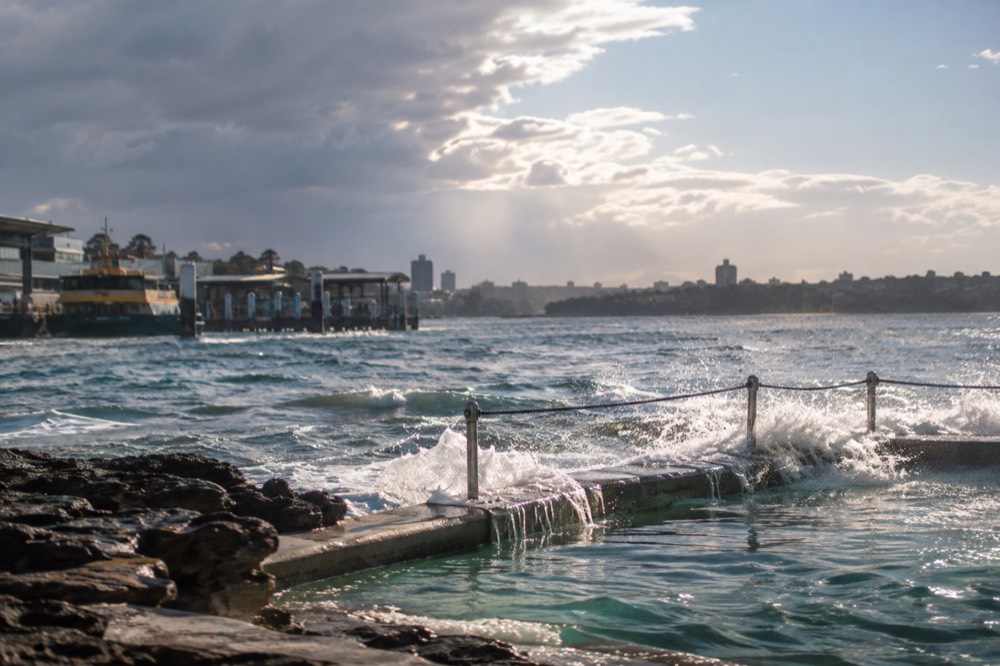
The water-temperature reality is that no official monthly sea-temperature normal is published for Sydney, so any precise month-by-month sea table you see elsewhere is invented. What can be said honestly: the ocean is warmest in late summer and early autumn after months of heating, and coldest in late winter and early spring. If swimming matters to your trip, that argues for February to April over October to November, even though the air weather is better in spring.
Rip currents are the number one hazard on this coast, and the official advice from Surf Life Saving's Beachsafe program is unambiguous: swim between the red and yellow flags at a patrolled beach. If caught in a rip, stay calm, conserve energy, raise an arm and call for help, float with the current, which may return you to a sandbank, or swim parallel to the beach toward breaking waves. Every coastal drowning in the most recent national report occurred outside the flags, outside patrol times, or at an unpatrolled beach. The ocean pools, Bronte's free council pool, Bondi Icebergs with its club fees, Wylie's at Coogee, are the safer alternative in any season, though they still close in big swell. The full safety picture is in best beaches in Sydney, and the winter-swimming question is answered in detail in can you swim at Sydney beaches in winter.
Common Questions About the Best Time to Visit Sydney
What is the best month to visit Sydney?
October and November are the best single months: mean maximums of 22.2 to 23.7 °C, the year's lowest rainfall, rising sunshine hours, and crowds well below the December-February peak. March is the equal pick if you want the warmest water, since the ocean is at its best after a full summer of heating. August is the choice for clear skies, with 13.4 mean clear days, the most of any month.
What is the cheapest month to visit Sydney?
June and July. Mid-winter sits at the bottom of the hotel and airfare curve, and June is the wettest month, which is exactly why it is cheap. August is nearly as cheap and much brighter, with the clearest skies of the year, making it the smarter budget pick of the three winter months.
Is Sydney worth visiting in winter?
Yes. Winter days average 16.4 to 17.9 °C, July and August are among the driest and clearest months of the year, whale season is at its peak, and the year-round patrolled beaches at Bondi, Bronte, Tamarama, Coogee, Manly and Dee Why keep swimming on the menu for the brave. Bring a layer for the 8 to 9 °C nights.
Is summer a bad time to visit Sydney?
No, but it is the most oversold. December to February brings the biggest crowds, the highest prices and, counterintuitively, the cloudiest skies: February averages just 5.3 clear days. The UV index regularly reaches extreme levels of 11-plus. Summer is the right choice for beach-first trips and the New Year's Eve fireworks, and the wrong one for a quiet, cheap visit.
When is whale watching season in Sydney?
May to November, along the whole NSW coast. Humpbacks head north roughly May to July, and return south with calves roughly August to November, often closer to shore. The peak is late June through July. An estimated 40,000-plus humpbacks migrate along the NSW coast each year, and no sighting is ever guaranteed on any cruise.
Does it rain a lot in Sydney?
Sydney averages 1,211.1 mm of rain a year, spread over about 99.5 days of 1 mm or more, roughly one day in four. No month averages more than 9.9 rain days. The surprise is when it falls: June, at 133.1 mm, is the wettest month, wetter than any summer month, while spring is the driest quarter.
The short version: Sydney rewards visitors who ignore the postcard reflex. The crowd-free months are the cheap months, the cheap months include the clearest skies on the record, and the peak season is busier and greyer than anyone selling it admits. Pick October or November for the best all-round trip, March or April for warm water without the crowds, August for blue skies and whales, and December only if the fireworks or the beach are the whole point. Whenever you land, the planning desk at Sydney Travel Guide has the neighbourhood, transport and itinerary detail to fill the days.