Can You Swim at Sydney Beaches in Winter?
Yes, you can swim at Sydney beaches in winter, and locals do. Here is what the water and air are actually like, which beaches stay patrolled, and how to stay safe.
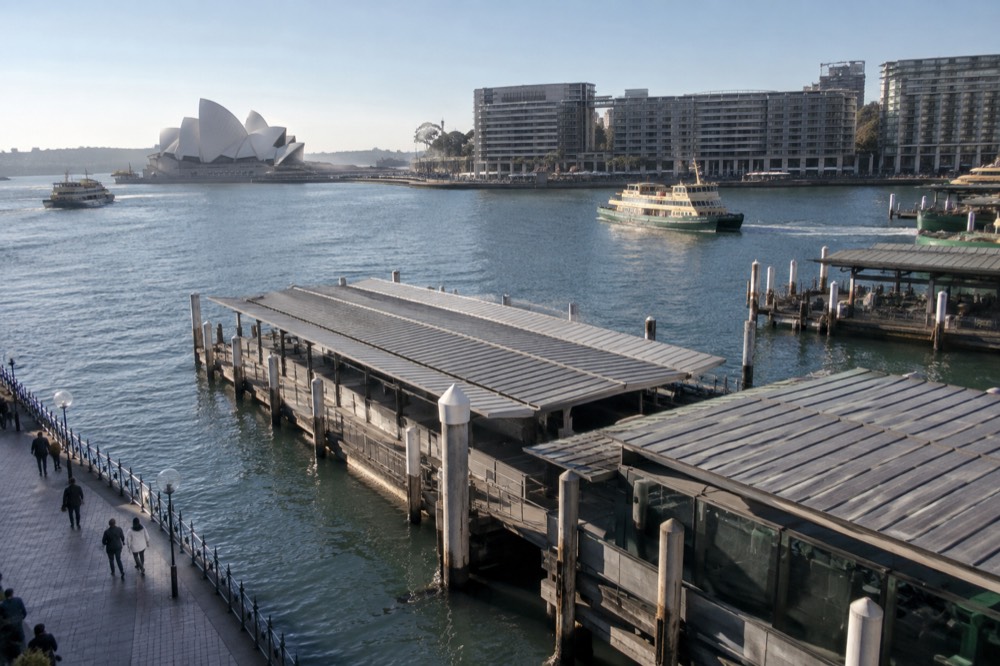
Sydney's winter is the season that surprises almost everyone who has not lived through it. June, July and August bring mean daily maximums of 17.0, 16.4 and 17.9 degrees Celsius, and August is statistically the city's clearest month of the entire year, with 13.4 mean clear days. The surf does not close for the season, and neither do the lifeguards at the city's biggest beaches. Swimming in winter here is a real, ordinary activity, not a stunt, and this page lays out exactly what the water is like, which beaches stay patrolled, and how to do it safely.
Can You Swim at Sydney Beaches in Winter?
Yes, you can swim at Sydney beaches in winter, and plenty of locals do. Bondi, Bronte, Tamarama, Coogee and Manly all keep professional council lifeguard patrols through June, July and August, with patrol hours of roughly 7am to 5:30pm in the low season. The water is cold, typically described by winter swimmers as bracing rather than dangerous, so a shorter swim, a wetsuit and swimming between the red and yellow flags are the sensible settings.
The people you will see in the water at Bondi on a July morning are mostly regulars, many of them in wetsuits or neoprene caps, some of them members of the winter swimming clubs that have operated on this coast for generations. Ocean pools are the other big winter option: Bronte Ocean Pool and the North Bondi Children's Pool are free, council-maintained and open daily except cleaning days, and Bondi Icebergs is the famous club-run 50-metre pool above the surf. If sitting in 16-degree water is not your idea of a holiday, the pools, the coastal walks and the harbour still give you the whole coastline without the cold.
One thing worth knowing before you plan around it: Sydney's winter is not its greyest season. The Bureau of Meteorology's long-run averages for Observatory Hill show August with the most clear days of any month, 13.4, ahead of even January at 6.8. February, in the middle of summer, is the cloudiest. A winter beach day in Sydney is often brighter than a summer one, it is simply colder and the days are shorter.
How Cold Is the Water and the Air at Sydney Beaches in Winter?
Winter air temperatures in Sydney average a maximum of 17.0 degrees in June, 16.4 in July and 17.9 in August, with overnight minimums of 9.3, 8.1 and 9.0 degrees. The Bureau of Meteorology publishes no official monthly sea-surface temperature normal for Sydney, so no reliable month-by-month water temperature table exists, but winter ocean water on this coast is commonly cold enough that wetsuits are standard among regular swimmers.
The air side of the equation is well documented. The Bureau of Meteorology's climate averages for Sydney, drawn from a 162-year record at Observatory Hill, give the full winter picture, and it is a milder one than most visitors expect.
| Month | Mean max °C | Mean min °C | Mean rainfall mm | Mean rain days ≥1mm | Mean clear days |
|---|---|---|---|---|---|
| June | 17.0 | 9.3 | 133.1 | 8.8 | 9.1 |
| July | 16.4 | 8.1 | 96.3 | 7.4 | 12.0 |
| August | 17.9 | 9.0 | 80.2 | 7.1 | 13.4 |
Two facts in that table are worth dwelling on. June is Sydney's wettest month of the entire year at 133.1 mm on average, wetter than any summer month, so early winter is the rainier end of the season and August the drier, brighter end. And clear days climb through the season, from 9.1 in June to 13.4 in August, the highest of any month. If you are picking one winter month for beach time, August is the statistically best bet: warmest of the three, driest of the three, clearest of all twelve.
The water is a different story and an honest page has to be careful here. There is no official monthly sea-temperature normal published for Sydney by the Bureau of Meteorology, Manly Hydraulics Laboratory or IMOS, so any precise month-by-month water temperature table you see on a travel site is invented. What can be said plainly: the ocean off Sydney in winter is cold, cold enough that unheated pool swimmers from tropical climates will find it a shock, and cold enough that wetsuits and swim caps are the norm among the winter clubs. Cold-water swimming also carries real physiological risks, so shorter immersions, entering gradually and warming up properly afterwards are the standard advice.
If the ocean sounds like too much, the harbour and the city's swim culture offer alternatives, and a lot of winter visitors end up on the water rather than in it. The sunrise kayak tour below is the sheltered-water version of a winter swim.
Which Sydney Beaches Are Patrolled in Winter?
Bondi, Bronte, Tamarama, Coogee and Manly all have professional council lifeguard patrols year-round, including the full winter. In the Waverley council area, which covers Bondi, Bronte and Tamarama, low-season patrols run 7am to 5:30pm daily from May to September. Dee Why, on the Northern Beaches, moved to year-round patrol from around May 2026. Most other Sydney beaches drop their patrols at the end of April.
This is the single most useful winter swimming fact, and it is the one most guides get wrong by omission. The beaches that keep lifeguards through winter are the ones where a winter swim is a routine, supervised activity, and the beaches that do not are the ones where swimming from May to September means entering the water with no rescue service nearby.
| Beach | Winter patrol | Who patrols |
|---|---|---|
| Bondi | Year-round, 7am-5:30pm May-Sep | Council professional lifeguards |
| Bronte | Year-round, 7am-5:30pm May-Sep | Council professional lifeguards |
| Tamarama | Year-round, 7am-5:30pm May-Sep | Council professional lifeguards |
| Coogee | Year-round, council lifeguards daily | Council professionals, volunteers in summer |
| Manly | Year-round, council lifeguards | Council professional lifeguards |
| Dee Why | Year-round from around May 2026 | Council professional lifeguards |
| Most other Sydney beaches | Seasonal, roughly late September to April | Lifeguards plus volunteer lifesavers |
Waverley Council describes its patrol hours, 6am to 7pm in the high season and 7am to 5:30pm in the low, as the longest in Australia, and the professional lifeguards in blue are council employees, distinct from the red-and-yellow volunteer surf lifesavers who supplement patrols on weekends and public holidays through summer. The Northern Beaches Council has published the detail that Dee Why joined the year-round list in 2026, which quietly changed the answer to this question: the year-round list is now six beaches, not five.
The rule that follows from all of this is simple. In winter, swim at a beach that is on the year-round list, between the red and yellow flags, inside patrol hours. An unpatrolled beach in winter is not a quieter version of a patrolled one, it is a beach with no rescue service at all, in the season when fewer people are around to notice if something goes wrong.
What Are the Safest Winter Swimming Options If the Surf Is Too Cold?
Ocean pools are the standout winter option: Bronte Ocean Pool and the North Bondi Children's Pool are free, council-maintained and open daily except weekly cleaning days, while Bondi Icebergs is the famous club-managed 50-metre pool. Ocean pools are far more sheltered than the surf, though they can still close in big swell. For anyone who wants the coastline without the cold, the coastal walks and harbour activities carry the whole winter experience.
Ocean pools sit inside the rock shelf, which means no rips, no waves breaking on your head and a defined, contained place to swim. That makes them the natural winter choice for swimmers who want the ocean water without the ocean's full force. The free-versus-paid distinction matters here: Bronte and North Bondi's children's pool are council-run and free, while Bondi Icebergs is a separate club with its own access arrangements, and it is the one you have almost certainly seen in photographs, the pool perched above the surf at the south end of Bondi. Other pools along the coast include Clovelly, Wylie's at Coogee and Mahon.
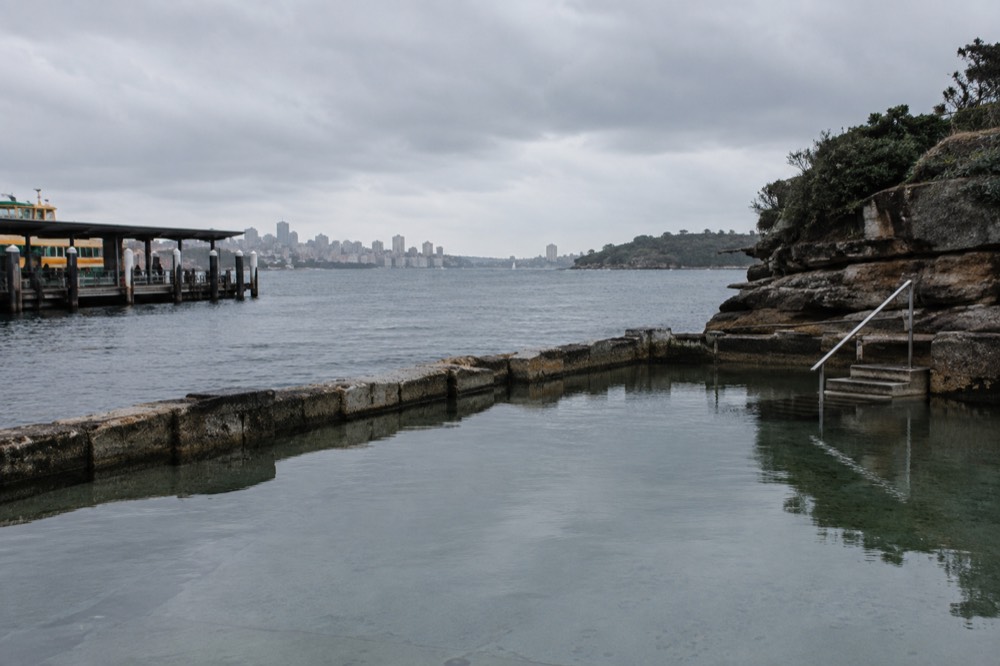
The harbour is the other winter answer. It is calmer than the ocean, the water is the same temperature but the experience is gentler, and a lot of what makes Sydney's winter coastline special happens on it rather than in it. The sunrise kayak tour is the strongest example: it puts you on the harbour's sheltered water at first light, in the hour when the winter sky is at its clearest, without asking you to get cold in the way a winter surf swim does.
Between the two, plenty of winter visitors end up doing the coastal walk instead of the swim. The Bondi to Coogee walk takes in Bronte's pool, Tamarama, the cemeteries and the whole cliff line, and it is a genuinely better walk in winter: cooler for the climbs, statistically clearer skies, and far fewer people on the path. Our guide to the Bondi to Coogee coastal walk covers it in full, and the best beaches in Sydney page ranks the swimming options if you are deciding where to base yourself.
Is It Safe to Swim at Sydney Beaches in Winter?
Yes, with the same conditions that apply all year: swim at a patrolled beach, between the red and yellow flags, during patrol hours. Rip currents do not take winter off, and Surf Life Saving Australia's National Coastal Safety Report 2025 recorded 154 coastal drowning deaths nationally, every one of them outside the flags, outside patrol times or at an unpatrolled location. Winter adds cold-water shock and smaller crowds to the existing risks.
The rip advice does not change with the season. The official guidance from Beachsafe, Surf Life Saving Australia's public safety site, is to stay calm and conserve energy if caught in a rip, raise an arm and call for help, float with the current which may return you to a sandbank, or swim parallel to the beach or toward breaking waves. The prevention framing is STOP, LOOK, PLAN: check for rips, look for other dangers, plan how to stay safe. None of that is winter-specific, but in winter there are fewer swimmers around to raise the alarm for you and fewer lifesavers on beaches outside the year-round list, so the flags matter more, not less.
Water quality is the second winter consideration, and it has an official answer. NSW's Beachwatch program grades swim sites from Very Good to Very Poor, and the official advice after rain is to stay out of the water while it is raining and for up to one day after heavy rain at ocean beaches, or up to three days at harbour and estuarine swim sites. June being Sydney's wettest month on average makes this a genuinely relevant winter rule: check the live grades at Beachwatch before you swim, especially in the first weeks of winter.
Cold adds a third layer. Entering cold water gradually rather than diving in, keeping the swim shorter than you would in summer, and warming up properly afterwards are the standard precautions for any cold-water swim. A wetsuit changes the experience completely, and the winter clubs' own habit of swimming in groups is worth copying even for a casual dip. For the broader safety picture, including nightlife and general precautions, our is Sydney safe for tourists guide covers the city as a whole.
Common Questions About Swimming at Sydney Beaches in Winter
Can you swim at Sydney beaches in winter?
Yes. Bondi, Bronte, Tamarama, Coogee, Manly and, since 2026, Dee Why keep professional lifeguard patrols year-round, with low-season hours of roughly 7am to 5:30pm in Waverley. The water is cold and wetsuits are common, but winter swimming is a normal, supervised activity at those beaches.
How cold is Sydney's ocean in winter?
Cold enough that regular winter swimmers wear wetsuits and neoprene caps. There is no official monthly sea-surface temperature normal published for Sydney, so treat any precise month-by-month water temperature table on a travel site as unreliable. The air side is well documented: winter daily maximums average 16.4 to 17.9 degrees Celsius.
Are Sydney beaches patrolled in winter?
The big ones are. Bondi, Bronte, Tamarama, Coogee and Manly have council professional lifeguards year-round, and Dee Why joined them from around May 2026. Most other Sydney beaches finish their patrols around the end of April and restart in late September.
Is it safe to swim in the ocean in winter in Sydney?
Yes, if you swim between the red and yellow flags at a year-round patrolled beach during patrol hours. Rips do not take the winter off, and every coastal drowning in Surf Life Saving Australia's 2025 national report occurred outside the flags, outside patrol times or at unpatrolled locations. Cold water adds shock risk, so enter gradually and keep swims short.
What should I do instead if the surf is too cold?
Swim at an ocean pool such as Bronte Ocean Pool or the free North Bondi Children's Pool, walk the Bondi to Coogee coastal path, or get on the harbour. A sunrise kayak tour or a harbour cruise gives you the winter water without the winter swim.
For everything else about the city in the cooler months, including what stays open and what is worth booking, our Sydney in winter guide is the full companion to this page, and the planning basics live on Sydney Travel Guide.