Sydney Eastern Suburbs: Beaches, Neighbourhoods and Local Know-How
The eastern suburbs are where Sydney goes to swim, surf, eat and show off, and they hold some of the most misleading weather statistics in the country. Here is how to work the east out.
Short answer
Sydney's eastern suburbs run from Woolloomooloo through Paddington, Darlinghurst and Surry Hills to the ocean beaches of Bondi, Tamarama, Bronte and Coogee. They are reachable by bus from the city centre in under 30 minutes, and the three main beaches are patrolled by professional lifeguards year-round, the only stretch of the city where that is true.
Sydney's eastern suburbs are the part of the city most visitors picture before they arrive: sandstone cliffs, ocean pools, surfers in the dawn light, and long rows of terrace houses a short bus ride from the central business district. The east is also where some of the city's most persistent myths live, including the idea that summer is its sunniest season. The Bureau of Meteorology's long-run record for Sydney says otherwise, with February, the middle of the peak tourist season, averaging just 5.3 clear days against August's 13.4.
This guide covers the neighbourhoods from Woolloomooloo through Darlinghurst, Surry Hills and Paddington out to the coast, then down the beach strip from Bondi to Coogee. It also covers the practical things most pages skip: what a bus actually costs, when the flags are up, and which ocean pools are free.
What Counts as Sydney's Eastern Suburbs?
The eastern suburbs are the council areas and neighbourhoods between the city centre and the Pacific Ocean, stretching from Woolloomooloo and Potts Point through Darlinghurst, Surry Hills and Paddington to the surf beaches at Bondi, Tamarama, Bronte and Coogee. Locals treat it as two zones: the inner east, which is terrace houses and restaurants, and the beach east, which is sand and salt. Most of it sits within 10 kilometres of the central business district.
The inner east is dense, historic and walkable. Darlinghurst and Surry Hills hold much of the city's best small-restaurant and bar scene, while Paddington is the terrace-house heartland, with the Saturday Paddington Markets on Oxford Street. Woolloomooloo, on the harbour side, is where the finger wharf and the naval base sit, and Potts Point above it is one of the most compact dining neighbourhoods in the city.
The beach east is a different animal. Bondi is the famous one, but Tamarama, Bronte and Coogee each have their own character, and the Bondi to Coogee coastal walk stitches all four together along the cliffs. Further south, Maroubra is the locals' beach, bigger and less photographed, and it belongs to the same stretch of coastline even if most itineraries stop at Coogee.
One boundary note that trips people up: Bondi Junction, the transport hub where the train line ends and most beach buses start, is firmly part of the eastern suburbs even though it is a shopping-mall commercial centre rather than a beach town. If you are staying anywhere in the east, Bondi Junction is likely to be part of your daily route.
Which Beach Should You Actually Visit in the East?
Bondi is the famous beach and the one most first-time visitors want, but Bronte and Coogee are better swimming beaches for families, with calmer conditions and free ocean pools. Tamarama is the smallest and most dangerous for inexperienced swimmers, with a permanent rip known to locals as the Glamour Trap. All four are patrolled by professional council lifeguards year-round, which is unusual for Sydney.
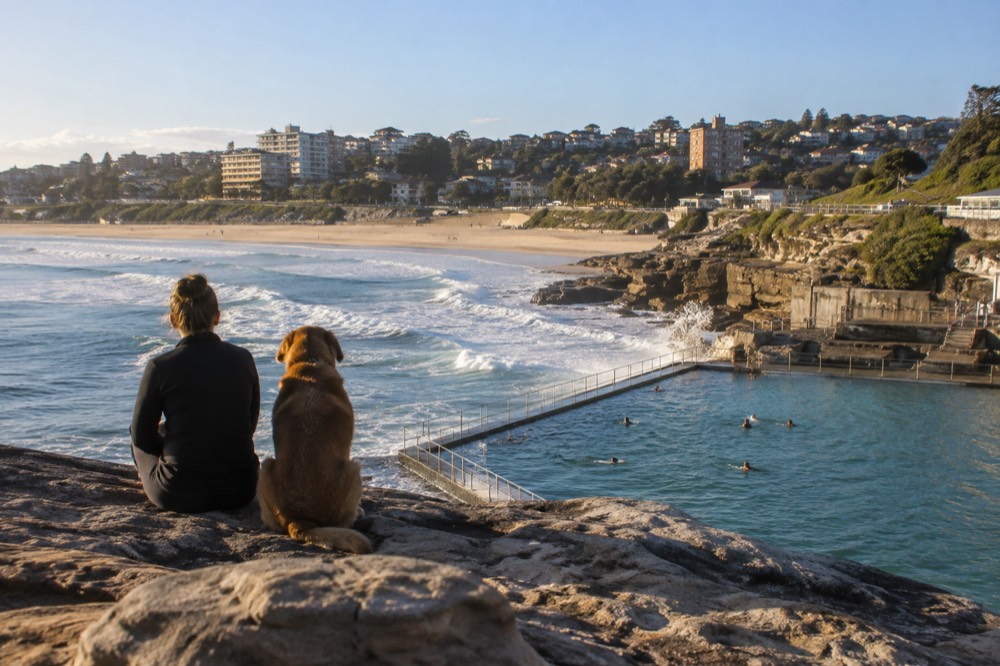
The honest comparison is not really about fame, it is about what you want to do in the water. Bondi's surf is real and its rips are real. Bronte has a protected corner near the pool and a big park behind it with barbecues and shade. Coogee has the gentlest entry of the three, plus Wylie's Baths, one of the most photogenic ocean pools in the country, on the headland at the southern end.
| Beach | Best for | Swim safety notes | Ocean pool |
|---|---|---|---|
| Bondi | People-watching, surf lessons, the coastal walk start | Strong rips; swim between the flags | Bondi Icebergs (paid, club-run) |
| Tamarama | Photographs, a quieter patch of sand | Small beach, powerful rip; experienced swimmers only | None |
| Bronte | Families, picnics, free swimming | Calmer corner near the pool | Bronte Ocean Pool (free) |
| Coogee | Gentle swimming, playgrounds, Wylie's Baths | Gentler surf; still swim between flags | Wylie's Baths and McIver's (entry fees apply) |
On the pool question: Waverley Council maintains two free ocean pools, Bronte Ocean Pool and the North Bondi Children's Pool, cleaned weekly and closed on cleaning days. Bondi Icebergs is a separate club-managed 50-metre pool and is not free, which surprises people who have seen it in a hundred photographs and assumed it was public. The distinction matters if you are budgeting a family day out.
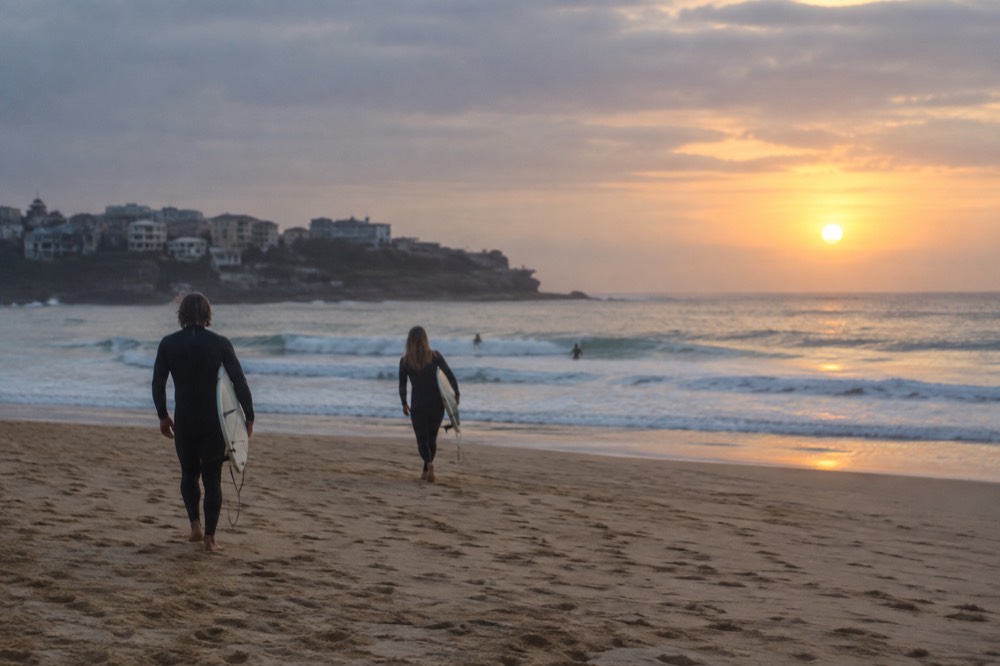
If you want to learn to surf rather than just watch, Bondi is where the lessons are, with two-hour sessions running daily for all levels. The beach's surf school scene is well established, boards and wetsuits are included in the standard lesson, and winter sessions run with thicker wetsuits, since the water is cold but the waves are often cleaner. Our surfing lessons guide breaks down what a first lesson actually covers.
For a fuller comparison of every swimmable stretch of sand in the city, including the harbour beaches and the Northern Beaches, see the best beaches in Sydney.
How Do You Get Around the Eastern Suburbs Without a Car?
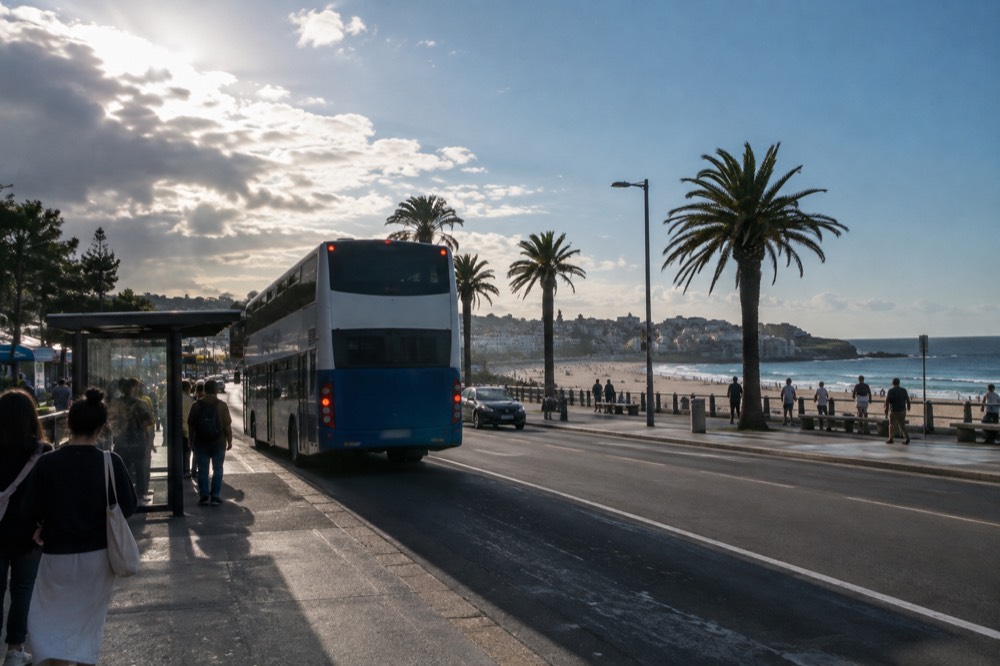
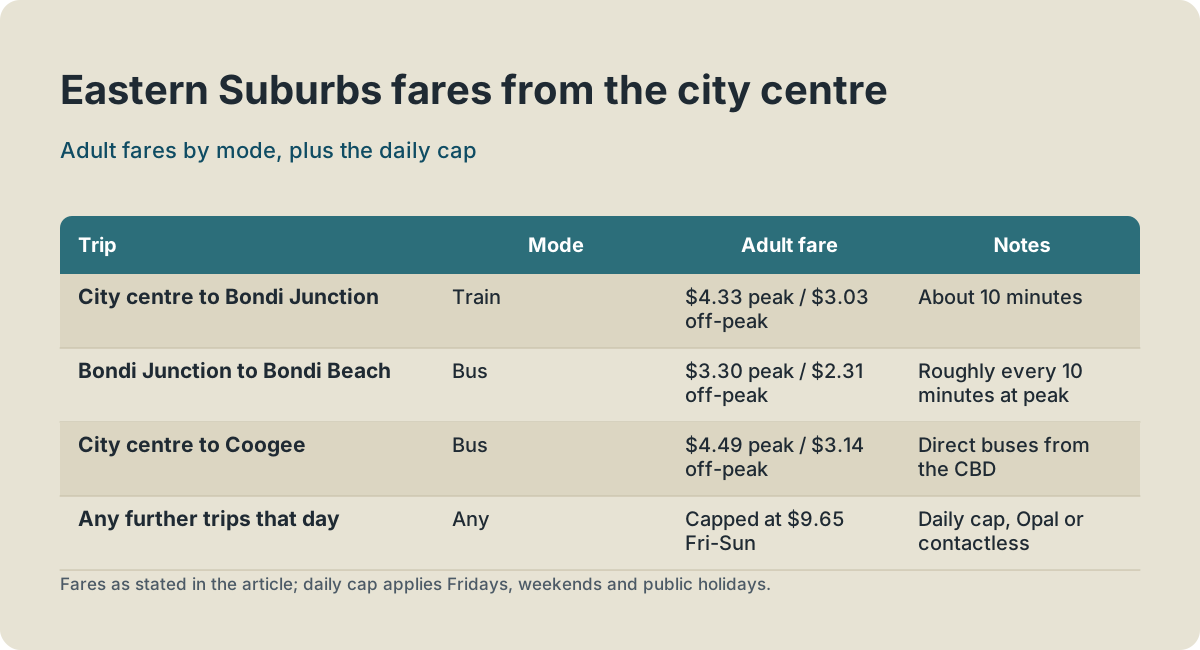
You do not need a car in the eastern suburbs, and in summer a car is often a liability, since beachside parking is scarce and expensive. Buses run from the city centre and Bondi Junction to every beach, a standard adult bus fare under 8 kilometres is $4.49 peak or $3.14 off-peak, and the daily Opal cap is $9.65 on Fridays, weekends and public holidays. The train to Bondi Junction takes about ten minutes from the CBD.
The transport pattern of the east is simple once you see it. The Eastern Suburbs railway line runs from the city to Bondi Junction, and from Bondi Junction the buses fan out to every beach: frequent express services to Bondi Beach, continuing routes down the peninsula to Watsons Bay, and a family of local routes covering Clovelly and Coogee. Coming from the airport, you change at Central or Town Hall and ride out from there.
| Trip | Mode | Approximate adult fare | Notes |
|---|---|---|---|
| City centre to Bondi Junction | Train | $4.33 peak / $3.03 off-peak | About 10 minutes |
| Bondi Junction to Bondi Beach | Bus | $3.30 peak / $2.31 off-peak | Frequent, roughly every 10 minutes at peak |
| City centre to Coogee | Bus | $4.49 peak / $3.14 off-peak | Direct buses from the CBD |
| Any further trips that day | Any | Capped at $9.65 Fri-Sun and public holidays | Daily cap, Opal or contactless |
Fares come from Transport for NSW's published fare tables, and they reset with each year's fare determination, so treat the figures as the current fare year rather than a permanent price. A contactless credit card or phone charges exactly the same as an adult Opal card and earns the same caps and off-peak discounts, so there is no need to buy a card for a short stay. The one trap worth knowing is tap-off: if you forget, you are charged the default maximum fare for that route. Our getting around Sydney guide covers the whole network, and the Opal card guide answers the common card questions.
Cyclists get a genuinely good option here: the coastal route from Bondi south is spectacular, and there are separated paths through Centennial Park. The park itself is flat, family-friendly and the safest place in the east to ride with children.
Where Do Locals Actually Eat and Drink in the East?
Locals eat inland of the beach. The serious restaurant and cafe scene in the eastern suburbs runs through Darlinghurst, Surry Hills and Potts Point, not along the Bondi foreshore, where much of the oceanfront trade is aimed at visitors. Bronte and Coogee have the best beach-adjacent food, and the Saturday and Sunday morning queues in Paddington and Surry Hills are for brunch, which the east takes as seriously as it takes swimming.
The pattern is worth stating plainly because it saves money and improves meals. Bondi's Campbell Parade has plenty of acceptable food, but the neighbourhoods one bus stop inland have the cooking people queue for. Surry Hills and Darlinghurst between them hold a dense band of small restaurants, natural-wine bars and bakeries, and our Sydney brunch guide maps the standouts street by street.
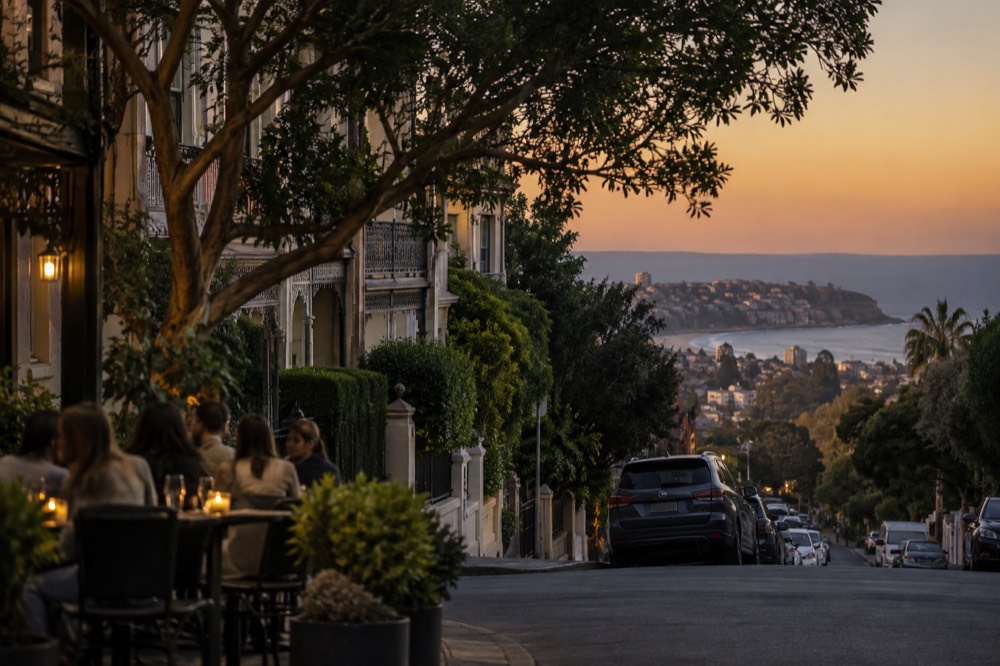
If you want a structured introduction rather than choosing blind, a guided food tour runs through the inner east with six tastings at independent venues over about three and a half hours. It is a good use of a first evening, since it covers several neighbourhoods at once and ends somewhere you can stay for dinner.
For the evening, the east's bar scene clusters in two places: the small bars of Darlinghurst and Surry Hills, and the rooftop and hotel bars around Bondi and Coogee. The Sydney bars and pubs guide sorts the two scenes, and the rooftop rooms with the best views are covered there too.
What Is There to Do in the East Besides the Beach?
More than the postcards suggest: Centennial Parklands for cycling and picnics, the Paddington and Surry Hills markets and boutiques, harbour-side Watsons Bay at the end of the peninsula, and a dense strip of galleries and small theatres through Darlinghurst. The eastern suburbs also hold two of the city's best free green spaces, Centennial Park and the coastal walk itself, which costs nothing and takes about two hours end to end.
Centennial Park is the east's back garden, a huge flat parkland of ponds, fig avenues and off-leash areas about a kilometre inland from Bondi Junction. It is where the eastern suburbs cycle with children, ride horses and hold birthday picnics, and on summer weekends it fills early. The Sydney parks and gardens guide places it in context with the harbour-side options.
Watsons Bay, at the top of the peninsula, is the quiet achiever of the east. It has a small harbour beach, a ferry back to Circular Quay, and the walk up to the Hornby Lighthouse at South Head, which is one of the best free lookouts in the city and costs nothing.
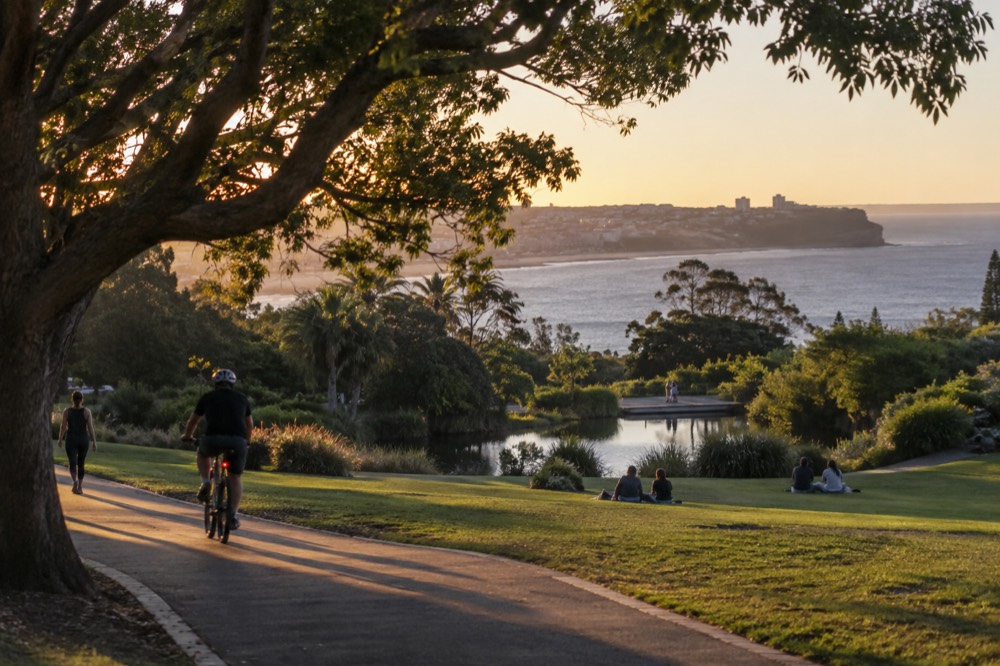
For shopping, the east splits between Oxford Street's boutiques in Paddington, the vintage and secondhand shops of Surry Hills, and the weekend markets. For nightlife beyond the small bars, the live-music rooms of the inner east are worth booking ahead for, and the neighbourhood theatres of Darlinghurst run a full program most weeks of the year.
When Is the Best Time to Visit the Eastern Suburbs?
Late winter and early spring, August and September, are statistically the clearest months in Sydney, with August averaging 13.4 clear days against February's 5.3, and the water is at its coldest. For swimming, December through March is warmest, but it is also the cloudiest and most crowded stretch of the year. June is the wettest month on the long-run record, with 133.1 mm of average rainfall, more than any summer month.
This is the east's most counterintuitive fact, and it comes straight from the Bureau of Meteorology's long-run averages for Sydney. Visitors arrive in February expecting endless blue skies, because February is an Australian summer month, and instead they meet the city's cloudiest period, with 5.3 mean clear days against August's 13.4. The peak-season crowds are real, the water is warm, but the postcard weather is more reliably found in late winter, when the air is cool and the skies are clear.
| Month | Mean max °C | Mean rainfall mm | Mean clear days | What it means for the east |
|---|---|---|---|---|
| February | 25.8 | 119.3 | 5.3 | Warmest water, cloudiest skies, biggest crowds |
| June | 17.0 | 133.1 | 9.1 | Wettest month; coastal walk still doable between showers |
| August | 17.9 | 80.2 | 13.4 | Clearest skies; cold water, thin crowds |
| September | 20.1 | 68.1 | 10.9 | Best balance of clear days, mild air and low crowds |
| December | 25.3 | 77.1 | 6.6 | Beach season begins; patrol hours at their longest |
The figures are long-term averages from the Bureau of Meteorology's climate record for Sydney, not a forecast for any specific week. Whale watching, for anyone combining the east with a harbour trip, runs May to November along this coast, with the southern migration passing closest to shore from August to November.
Swimming safety has its own calendar. Bondi, Bronte, Tamarama and Coogee are patrolled year-round by professional lifeguards, the only Sydney beach strip where that is true, but the hours are longer in the October-to-April high season. The rule that never changes: swim between the red and yellow flags, and if you are caught in a rip, stay calm, raise an arm and call for help, or float with the current rather than fighting it. The official advice is published by Beachsafe, Surf Life Saving Australia's public beach-safety site.
After rain there is one more check worth making. NSW's Beachwatch program grades swim sites on water quality, and the official advice is to stay out of the water while it is raining and for up to one day after heavy rain at ocean beaches, and up to three days at harbour and estuarine sites. Daily grades are published at Beachwatch.
How Do You Plan a Perfect Day in the Eastern Suburbs?
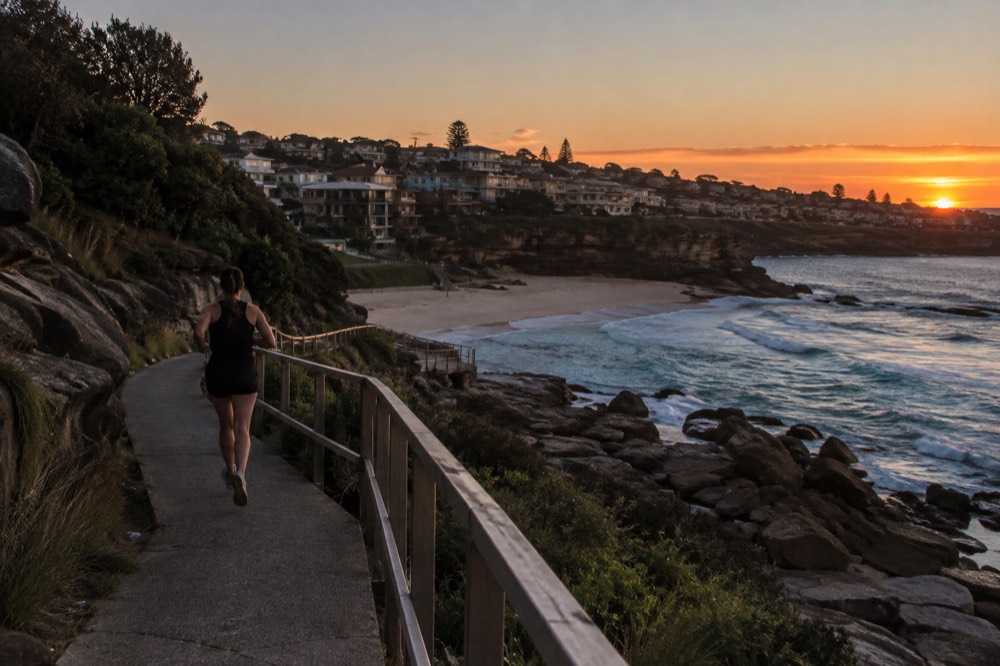
Start at Bondi early, before the buses bring the crowds, walk the coastal path to Bronte or all the way to Coogee, which takes about two hours with stops, then bus inland to Centennial Park or Paddington for lunch and the afternoon, and finish with dinner in Surry Hills or Darlinghurst. That single loop covers the beach east and the inner east in one day, uses two bus fares, and ends within walking distance of the city centre.
The morning matters most. Bondi Beach before 9am is a different place: swimmers in the ocean pool, the light good for photographs, and the coastal path still quiet. Walking south to Coogee rather than north means the sun is behind you and the cliffs are in front of you, and there are cafes at Bronte and Clovelly if you want to break the walk in half. Our Sydney coastal walks guide ranks the full route against the Spit to Manly walk.
Afternoon options split by energy. Centennial Park suits families and anyone who wants flat ground and shade. Paddington suits shoppers and terrace-house admirers, and the Saturday markets are the pick of the week there. Potts Point and Woolloomooloo work for a slower afternoon of coffee and the finger wharf, and the city centre is only one train stop back if you want to add the Royal Botanic Garden's free entry before sunset.
For dinner, book ahead in Surry Hills and Darlinghurst, since the best small rooms fill by mid-week and walk-ins get the bar. If your trip pairs the east with the historic west of the city, a guided walk through The Rocks makes a strong contrast to the beach day, covering the colonial streets where the eastern suburbs' story began.
Common Questions About Sydney's Eastern Suburbs
Is Bondi Beach actually worth visiting?
Yes, but go early. The beach itself is a good, well-patrolled surf beach with a paid ocean pool, and the coastal walk south is one of the best free experiences in the city. The midday summer crush is the worst version of it, and the 7am version, with swimmers in the pool and the light on the water, is the one locals rate.
Can you swim at eastern suburbs beaches in winter?
You can, and locals do, but the water is cold and the days are short. Bondi, Bronte, Tamarama and Coogee are patrolled year-round, with reduced winter hours, and the ocean pools are the popular winter option since still water feels warmer than surf. Bring a wetsuit if you plan to stay in longer than a few minutes.
How long does the Bondi to Coogee walk take?
About two hours of walking at a steady pace, and half a day done properly with a swim and a coffee stop. The full route is roughly six kilometres of cliff path with stairs, so wear real shoes rather than thongs, and check the weather, since sections close in big swell.
Where should you stay in the eastern suburbs?
For a beach-focused trip, Bondi or Coogee. For restaurants and walkability to the city, Potts Point, Darlinghurst or Surry Hills, which sit between the beaches and the CBD and cost less than beachfront [accommodation](https://booking.tpk.ro/ndznHj9h). Bondi Junction is the practical compromise, with the train and every beach bus at the door.
Do you need a car in the eastern suburbs?
No. The train reaches Bondi Junction and the buses cover every beach and neighbourhood from there, and beachside parking in summer is scarce and expensive. A car only earns its keep if you are combining the east with day trips to the Royal National Park, where vehicle entry is $12 per day.
What is the cheapest day to explore the eastern suburbs by public transport?
Friday, Saturday, Sunday and public holidays, when the adult daily cap is $9.65 rather than the $19.30 Monday-to-Thursday cap. Since a typical eastern suburbs day uses two or three buses, most visitors will not hit either cap, but a big sightseeing day is cheapest on those days.
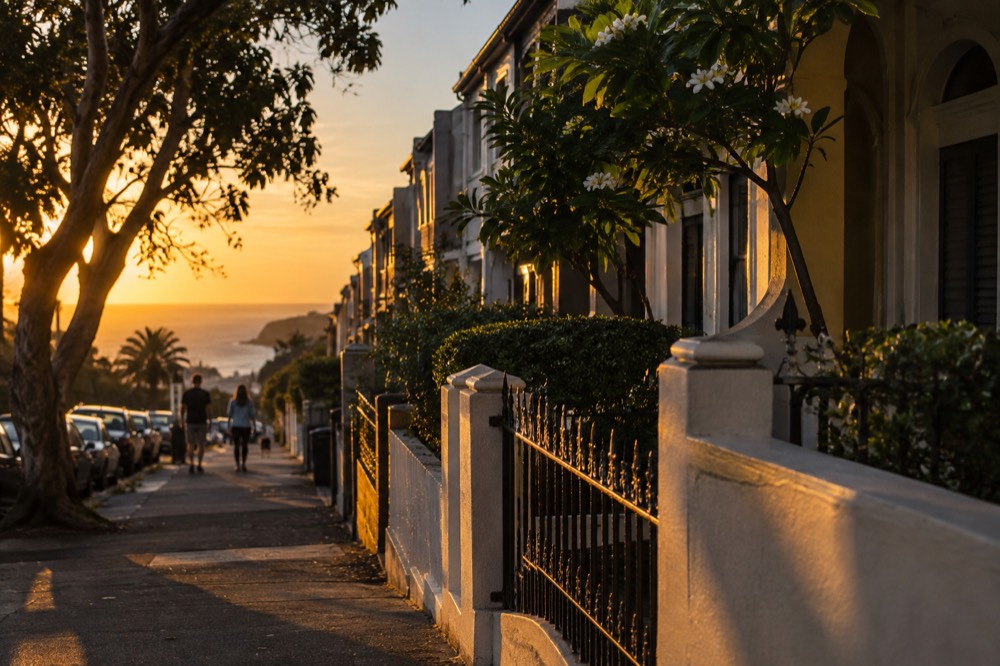
The eastern suburbs reward the same trick the rest of Sydney does: go early, swim between the flags, eat one street back from the water, and trust the averages over the postcards. Pair the beach day with the city's colonial west, and you have seen both halves of what Sydney Travel Guide exists to explain. If your trip stretches beyond the east, our day trips from Sydney guide covers the Blue Mountains, the Hunter Valley and the Royal National Park, all reachable without a car.