Potts Point Sydney: A Local's Guide to the Village Above the Cross
Potts Point is the densest, most walkable pocket of Sydney, a village of art deco flats, late-night eateries and harbour glimpses ten minutes by train from the city centre.
Short answer
Potts Point is an inner-east Sydney neighbourhood about 1 km east of the CBD, sitting between Kings Cross and Woolloomooloo. It packs art deco apartment blocks, some of Sydney's best small restaurants and a village main strip, Macleay Street, into roughly one square kilometre. Trains from Kings Cross station reach the city in about 4 minutes, and an adult Opal trip in the 0-10 km band costs $4.33 peak.
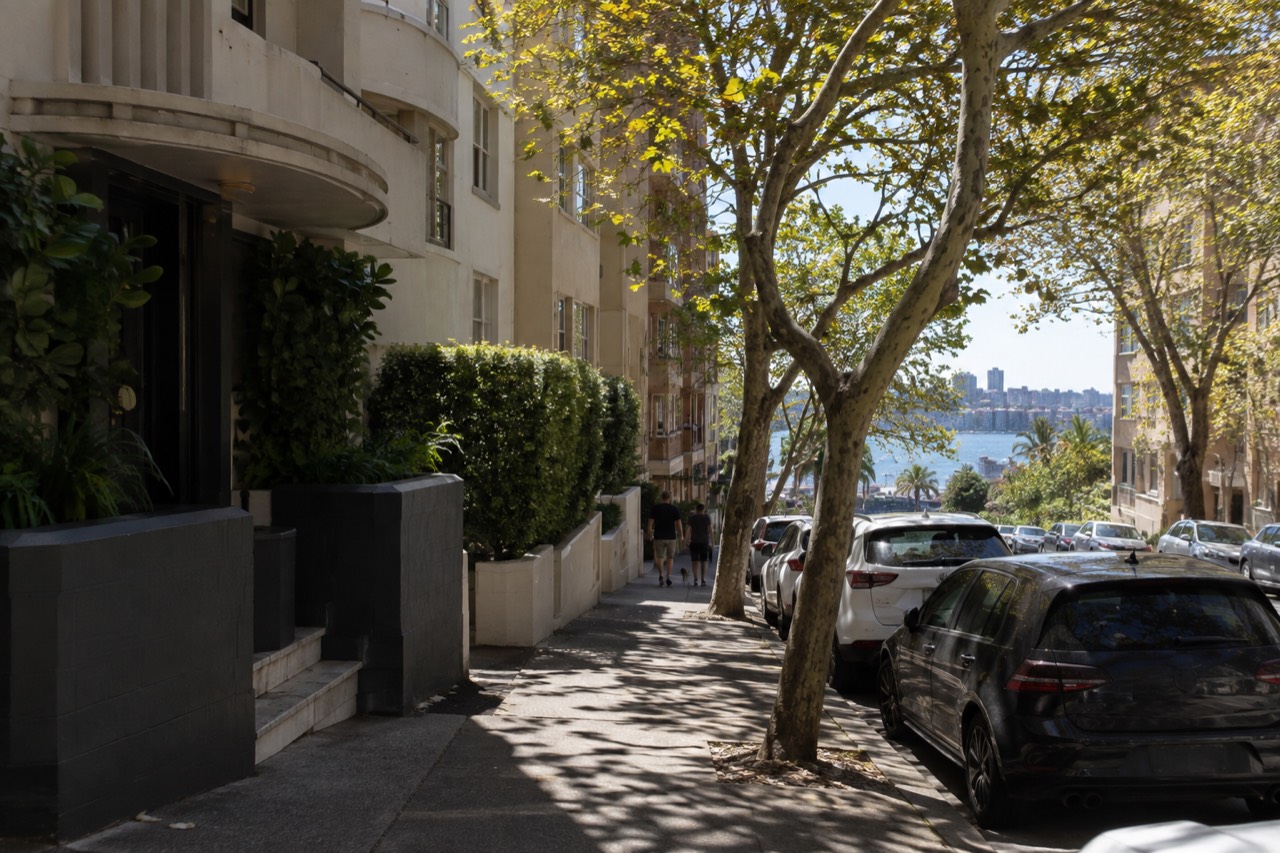
Potts Point does not behave like the rest of Sydney. It is the densest suburb in Australia, built almost entirely of three and four storey art deco apartment blocks, and it was planned around pedestrians long before the rest of the city pretended to. Macleay Street runs downhill from a ridge of grand Victorian terraces toward the harbour, and almost nothing here is more than a ten minute walk from anything else.
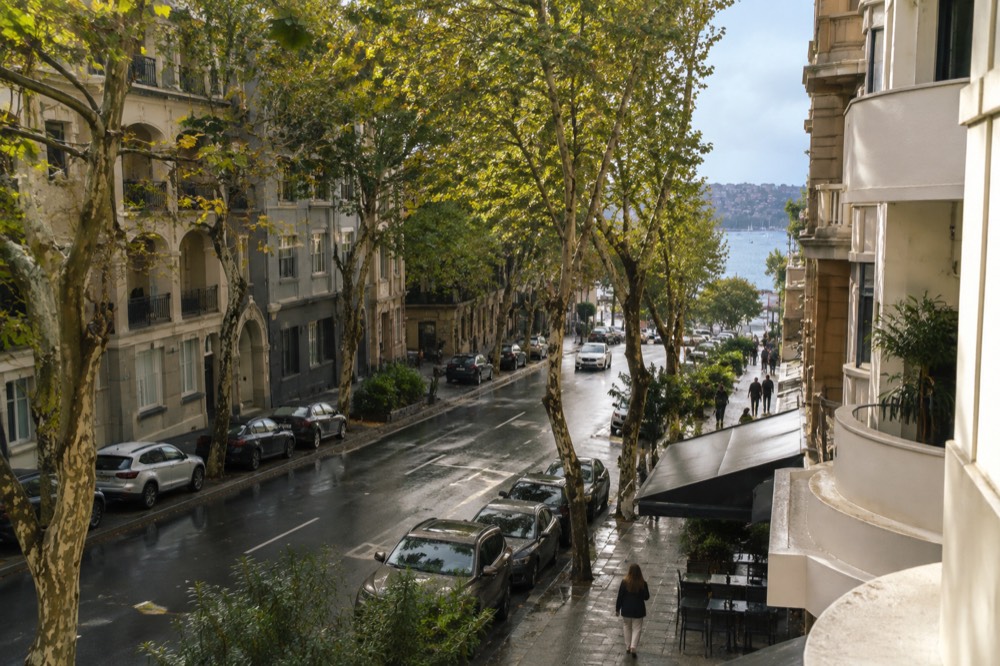
The suburb shares a peninsula with Kings Cross, Woolloomooloo and Elizabeth Bay, and the boundaries blur in a way locals rarely bother to police. What visitors call Potts Point and what the map calls Potts Point are often two different places, and this guide covers the whole walkable pocket: the eating streets, the harbour parks, the history, and the practical questions about transport, safety and timing that decide whether a stay here works.
Where Is Potts Point in Sydney?
Potts Point sits on a small peninsula on the southern side of Sydney Harbour, roughly 1 km east of the central business district, between Woolloomooloo Bay and Rushcutters Bay. Kings Cross station, on its western edge, is two stops from Town Hall, about 4 minutes by train. The suburb climbs from the water at Woolloomooloo up to a ridge around Macleay Street, then falls again toward Elizabeth Bay, and almost all of it is flat enough to walk comfortably.
The shape of the land explains the suburb. The ridge was subdivided in the colonial era for grand marine villas with harbour views, and the street grid was laid out by surveyors who followed the contours rather than fighting them. That grid survives, which is why Potts Point has almost no through traffic: cars entering the peninsula mostly end at a T-junction and turn around.
Neighbouring Woolloomooloo holds the working harbour, the famous Finger Wharf and the naval base at Garden Island. Kings Cross, immediately west, is the nightlife strip with the station, the Coca-Cola sign and the late-night economy. Elizabeth Bay, to the east, is the quiet residential edge with a small marina and two of the best small parks in the city. For orientation purposes, treat Potts Point as the residential and dining heart of the peninsula and the Cross as its loud front door.
What Makes Potts Point Worth Visiting?
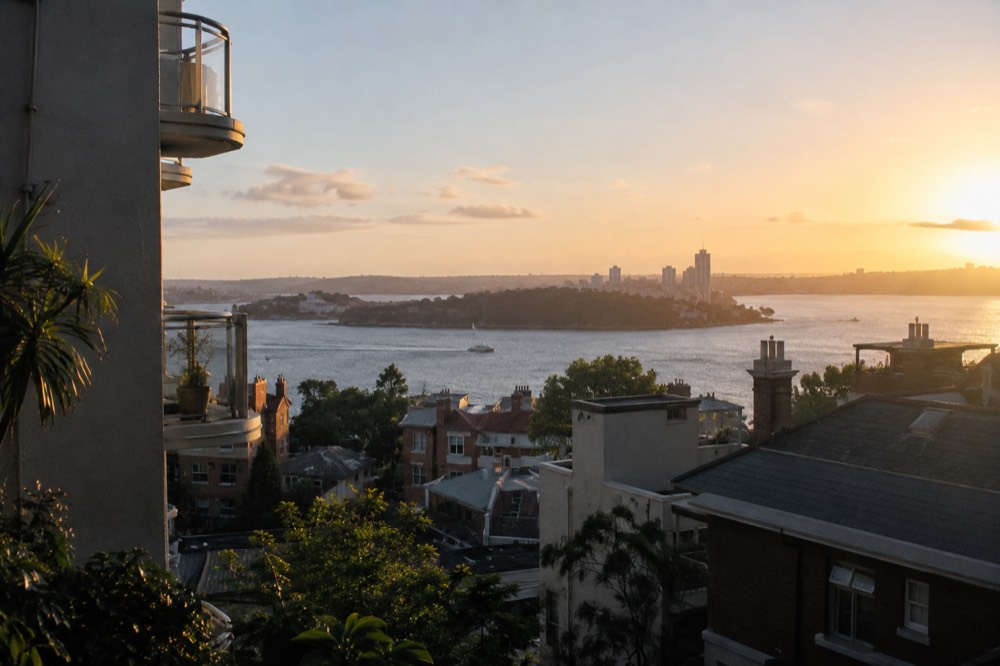
Potts Point rewards a visitor with three things in one short walk: the finest concentration of art deco apartment architecture in Australia, an eating and drinking strip that outperforms most of the city per square metre, and free harbour access at Elizabeth Bay and McElhone Stairs. It is also genuinely central, with a train station on its edge and the Opera House about a 30 minute walk away. The suburb works as a base for a whole Sydney trip.
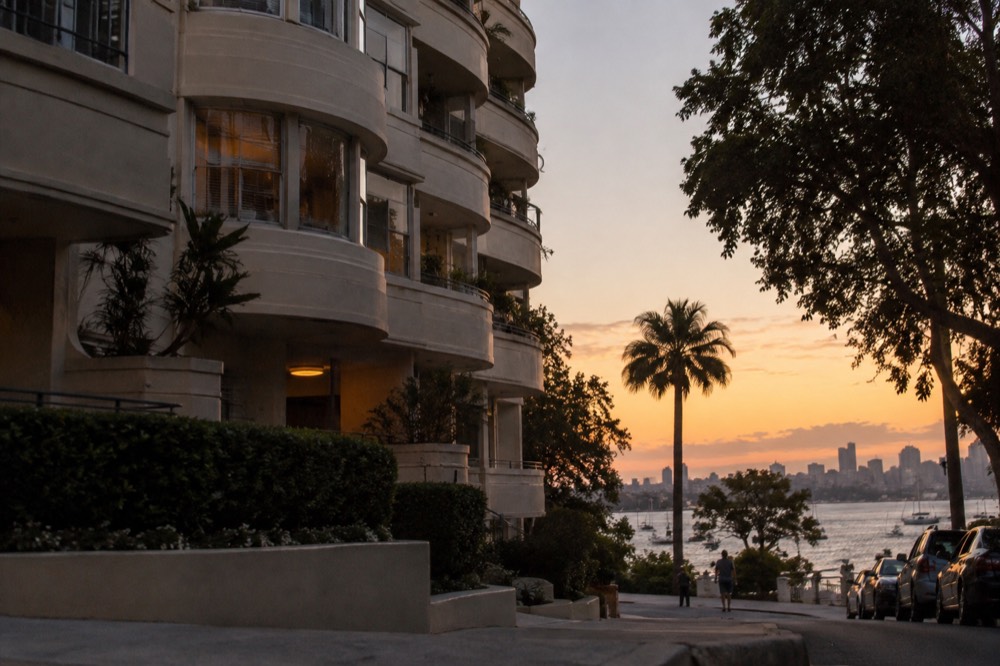
The architecture is the part most visitors under-rate. After the marine villas came the Victorian terraces, and after the terraces came the interwar flat boom, when Potts Point became the fashionable place for Sydney's middle class to live in apartments. The result is streetscapes of decorated cream and brick blocks with curved balconies, sunburst motifs and name plates like "Macleay Regis" and "Brunswick". A self-guided wander down Macleay Street, Springfield Avenue and Greenknowe Avenue reads like an open-air architecture museum, and it costs nothing.
The second drawcard is food. Macleay Street, Challis Avenue and the top of Bayswater Road hold a dense cluster of small restaurants, wine bars and cafes that punch well above the suburb's size, and the late-night culture inherited from the Cross means several kitchens serve past midnight. Our Sydney food guide covers the city-wide picture, but Potts Point holds its own against much larger neighbourhoods.
Third, the harbour is closer than it looks. McElhone Stairs, a long stone staircase from Victoria Street down to Woolloomooloo, is one of the great short walks of inner Sydney, and Beare Park and Elizabeth Bay Marina give you water, yachts and skyline views for free. If you want the harbour from the water rather than the shore, a sightseeing cruise from nearby Circular Quay is the easy option.
The Rocks walking tour in that shortlist is the best history primer for this whole peninsula: Potts Point's terraces and the Rocks' laneways were built in the same decades by the same city, and understanding one makes the other read more clearly. A guided walk of The Rocks runs about 1 hour 30 minutes and starts a short train ride away.
How Do You Get to Potts Point?
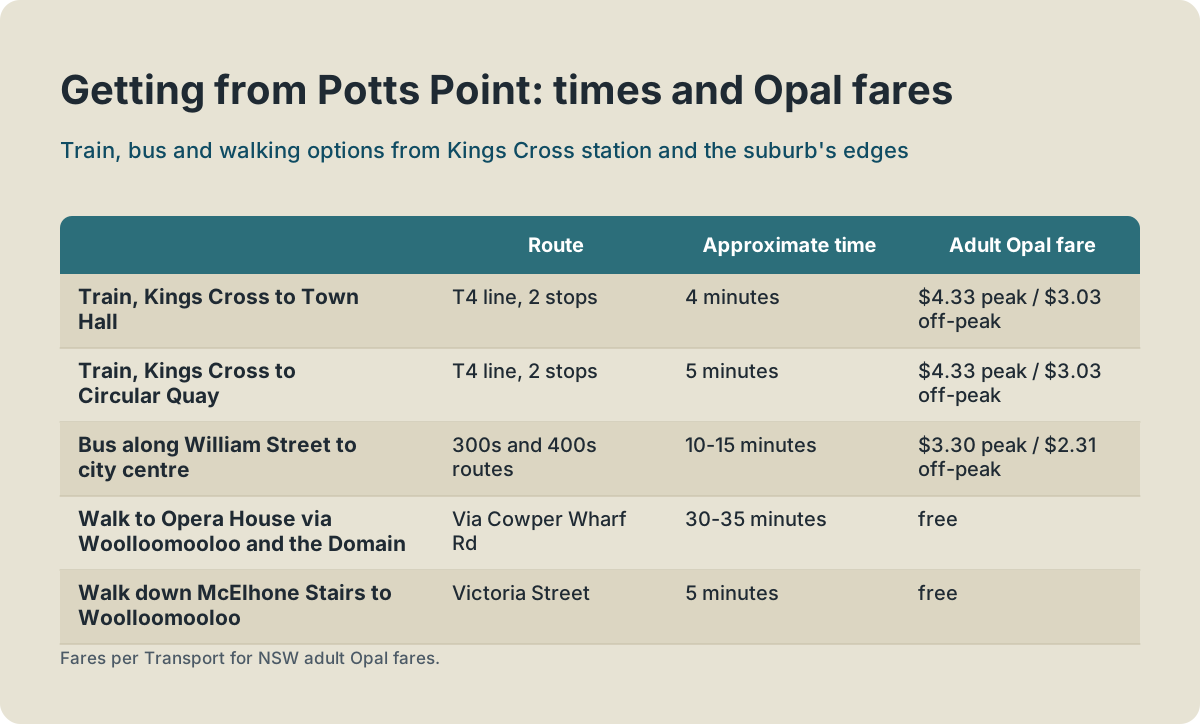
Kings Cross station, on the T4 Eastern Suburbs and Illawarra line, is the main gateway, about 4 minutes from Town Hall and 2 stops from Circular Quay. An adult Opal train trip in the 0-10 km band costs $4.33 peak or $3.03 off-peak, and the daily cap is $19.30 Monday to Thursday or $9.65 Friday to Sunday and public holidays. Buses run along William Street to the city, and the whole suburb itself is best covered on foot.
Contactless payment works everywhere Opal does, at identical fares, so most visitors never need to buy a card. Tap on and tap off, or the system charges a default maximum fare. The full fare and cap details are published by Transport for NSW, and the off-peak discount of 30 percent applies on trains and buses on Fridays, weekends and public holidays, which makes weekend travel from Potts Point unusually cheap.
| Route | From Potts Point | Approximate time | Adult Opal fare |
|---|---|---|---|
| Train, Kings Cross to Town Hall | T4 line, 2 stops | 4 minutes | $4.33 peak / $3.03 off-peak |
| Train, Kings Cross to Circular Quay | T4 line, 2 stops | 5 minutes | $4.33 peak / $3.03 off-peak |
| Bus along William Street to city centre | 300s and 400s routes | 10-15 minutes | $3.30 peak / $2.31 off-peak |
| Walk to the Opera House via Woolloomooloo and the Domain | Via Cowper Wharf Rd and Mrs Macquarie's Rd | 30-35 minutes | free |
| Walk down McElhone Stairs to Woolloomooloo | Victoria Street | 5 minutes | free |
Taxis and rideshares from Sydney Airport take 20 to 30 minutes depending on traffic, and the airport train carries an extra station access fee of $18.61 on top of the fare, which is worth knowing before you choose. Our Sydney airport to the city guide breaks down every option with current costs.
Getting around the suburb itself needs no timetable at all. The peninsula is roughly a kilometre from its western to its eastern edge, and the ridge means most walks end with a view. Bicycle hire is an option, and our cycling in Sydney guide covers where the safe routes run, though the hills here are real.
What Are the Best Things to Do in Potts Point?
The short answer is walk, eat and look. Walk Macleay Street and Springfield Avenue for the art deco blocks, take McElhone Stairs down to Woolloomooloo and the Finger Wharf, rest in Elizabeth Bay's two harbour parks, and finish with a drink on a rooftop or in a basement wine bar. Potts Point has no single headline attraction, and that is its character: it is a neighbourhood you experience street by street rather than a place you tick off.
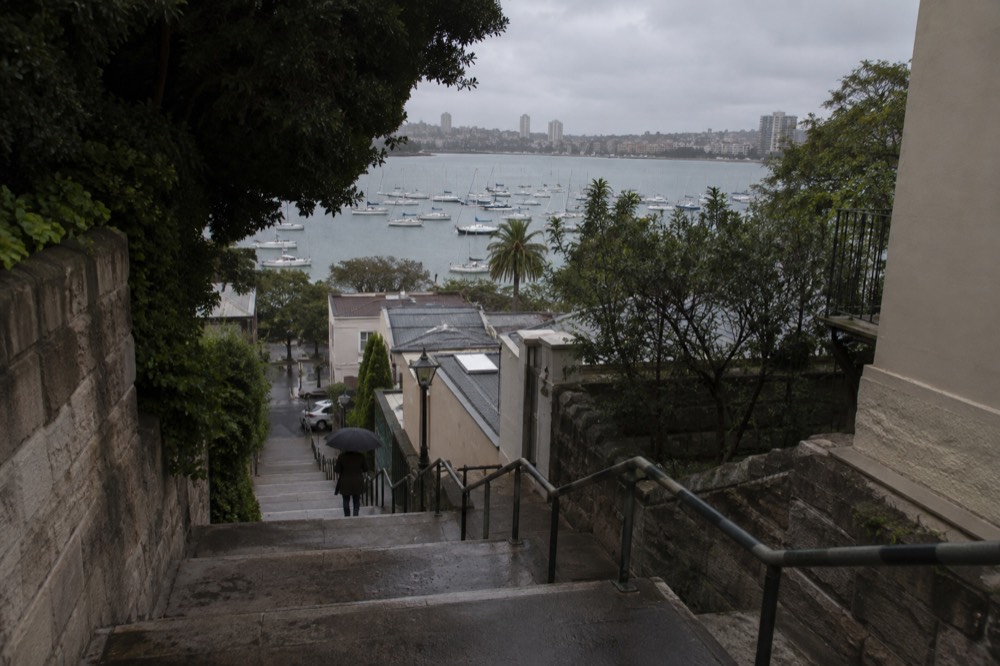
Start on the ridge. Fitzroy Gardens, at the top of Macleay Street, holds the McElhone Stairs descent and a lookout over Woolloomooloo Bay that photographers rate among the best free views in inner Sydney. The stairs themselves are steep and old, cut from the sandstone of the ridge, and they drop you beside the heritage pubs of Woolloomooloo, a five minute walk from the Finger Wharf.
Elizabeth Bay is the quiet eastern half. Elizabeth Bay House, a colonial-era mansion now open as a museum, sits above a harbour garden, and Beare Park and the marina next door give you a place to sit with a coffee watching the ferries cross the harbour mouth. Both parks are free, and neither is ever crowded on a weekday morning.
The suburb also works as a base for guided experiences, because Kings Cross station is two stops from Circular Quay, where most tours depart. A food tour is the natural pairing for a neighbourhood this food-focused: a six-tasting walk through the city's eating streets runs about 3 hours 30 minutes and suits anyone who wants the food scene explained rather than discovered by trial and error.
For culture beyond the suburb, the Art Gallery of New South Wales is a 25 minute walk through the Domain or a short bus ride, and general entry is free with late opening until 10pm on Wednesdays, per the gallery's own visitor page. The Australian Museum is similarly free for general entry and sits near Museum station.
Where Should You Eat and Drink in Potts Point?
Macleay Street and Challis Avenue are the two main eating streets, with a dense run of cafes, small-plate restaurants and wine bars, and Bayswater Road and the top of Darlinghurst Road add late-night options. Expect cafe brunch culture in the morning, a strong wine bar scene from late afternoon, and kitchens serving past midnight on weekends. Book for dinner on Friday and Saturday, because the rooms are small and fill early.
The suburb's dining identity is small rooms and serious cooking. Macleay Street runs from the ridge down toward the harbour with cafes at the top end and restaurants clustered mid-street, while Challis Avenue, one block east, is where locals point visitors for a slower, leafier meal under the plane trees. Our Sydney brunch spots guide places several Potts Point cafes on the citywide list.
| Street or lane | Character | Best for |
|---|---|---|
| Macleay Street | Village main strip, ridge to harbour | Cafes, wine bars, people-watching |
| Challis Avenue | Leafy, quieter, terrace-lined | Long lunches and dinners |
| Springfield Avenue | Small local strip | Casual dinners, coffee |
| Bayswater Road | Edge of the Cross | Late-night kitchens |
| Darlinghurst Road (Kings Cross end) | Nightlife strip | Bars, kebabs after midnight |
For the drinking side, Potts Point and its Cross edge hold basement cocktail bars, rooftop pubs and old boozers that survived the area's changes. The rooftop at the Macleay Street pub looks straight down the harbour, and our Sydney rooftop bars guide and Sydney bars and pubs guide map the standouts, several of which are a five minute walk from Kings Cross station.
Where Should You Stay in Potts Point?
Potts Point suits travellers who want a neighbourhood base rather than a hotel district: expect boutique and mid-range hotels, art deco apartment stays and hostels concentrated around Kings Cross station. Prices sit below the CBD waterfront hotels for equivalent walkability, and the trade-off is hillier streets and a nightlife strip on the western edge. Families generally do better elsewhere, but couples and solo travellers rank it among the best-located areas in the city.
The suburb's accommodation grew out of its apartment boom, so many stays are converted flats or small hotels rather than towers. That means character and space quirks in equal measure. Location-wise, staying east of Darlinghurst Road puts you in the quieter residential streets closer to Elizabeth Bay, while staying west puts you nearer the station and the noise that comes with it. Our where to stay in Sydney guide compares Potts Point against the CBD, Darling Harbour and the beach suburbs in detail.
Accessibility matters here more than in most of Sydney: the suburb is flat along its spine, but McElhone Stairs and the ridge streets are steep, and wheelchair users should plan around the station lifts and the main roads. Our accessible Sydney guide covers the city-wide picture.
Is Potts Point Safe, Especially at Night?
Potts Point itself is a low-crime residential neighbourhood, and the streets around Macleay Street and Elizabeth Bay feel quiet and safe at night. The western edge, where Potts Point meets Kings Cross around Darlinghurst Road, is busier and rowdier late at night, as any nightlife strip is, but violent crime is rare and the area is heavily policed and camera-covered. Standard city care applies: stick to lit streets, keep your phone out of back pockets, and walk the main roads after midnight rather than the lanes.
Kings Cross spent decades with a rough reputation, and some of that reputation lingers in older guidebooks long after the substance changed. The lockout laws era ended, the strip quieted, and the residential population of the peninsula grew steadily. Late at night the realistic annoyances are drunk crowds, noise and the occasional aggressive beggar, not violence. Our is Sydney safe for tourists guide and the is Sydney safe at night breakdown cover the citywide statistics and the neighbourhood-by-neighbourhood picture.
For solo travellers, the walk from Kings Cross station to anywhere in Potts Point at night is one most residents do without a second thought. The area's density is a safety asset: unlike quiet suburbs, there are almost always people on the street, and small restaurants and bars keep the footpaths active until late.
When Is the Best Time to Visit Potts Point?
For weather, the sweet spots are April to May and September to November, when daytime averages sit in the low 20s Celsius and rainfall is moderate. For value and crowds, avoid late December to January, when domestic holiday demand peaks and February, statistically Sydney's cloudiest month, arrives. Winter, June to August, is cooler, 16 to 18 degrees on average by day, but August is actually Sydney's clearest month, with 13.4 clear days on the long-run averages.
The climate data for Sydney upends the usual assumption. June is the wettest month on the long-run averages, at 133.1 mm, wetter than any summer month, while February, in the middle of peak season, has the fewest clear days, 5.3 on average. Anyone planning around "sunny Australia" should plan around the Bureau of Meteorology normals instead, which is what the table below summarises.
| Month | Mean daily max °C | Mean rainfall mm | Mean clear days |
|---|---|---|---|
| January | 26.0 | 101.2 | 6.8 |
| February | 25.8 | 119.3 | 5.3 |
| April | 22.5 | 126.5 | 9.1 |
| June | 17.0 | 133.1 | 9.1 |
| August | 17.9 | 80.2 | 13.4 |
| October | 22.2 | 76.7 | 8.1 |
| December | 25.3 | 77.1 | 6.6 |
Event timing matters too. Vivid Sydney runs in late May and June and lights up the harbour a short train ride away, and our Sydney events calendar tracks what lands in each season. Our best time to visit Sydney guide goes deeper on the trade-offs.
What Day Trips Work from Potts Point?
Because Kings Cross station sits on the T4 line and buses run along William Street, Potts Point is a strong base for car-free day trips: Bondi and the eastern beaches by bus, Manly by train plus ferry from Circular Quay, and the Blue Mountains by train from Central, two stops away. The ferry network is the real asset, since a 0-9 km ferry trip costs $7.35 and the 9 km plus band costs $9.20, with full Opal caps applying.
The classic pairing from this suburb is a morning in the city and an afternoon on the water. A harbour sightseeing cruise from Circular Quay, about 5 minutes by train, is the low-effort version of that, and morning and afternoon departures both run about 1 hour 30 minutes.
For bigger days out, our day trips from Sydney without a car guide ranks the train-accessible options, and the Blue Mountains day trip is the headline: roughly two hours each way by train from Central. Closer to home, Bondi Beach is a direct bus ride over the ridge, and the Bondi to Coogee coastal walk starts where that bus drops you.
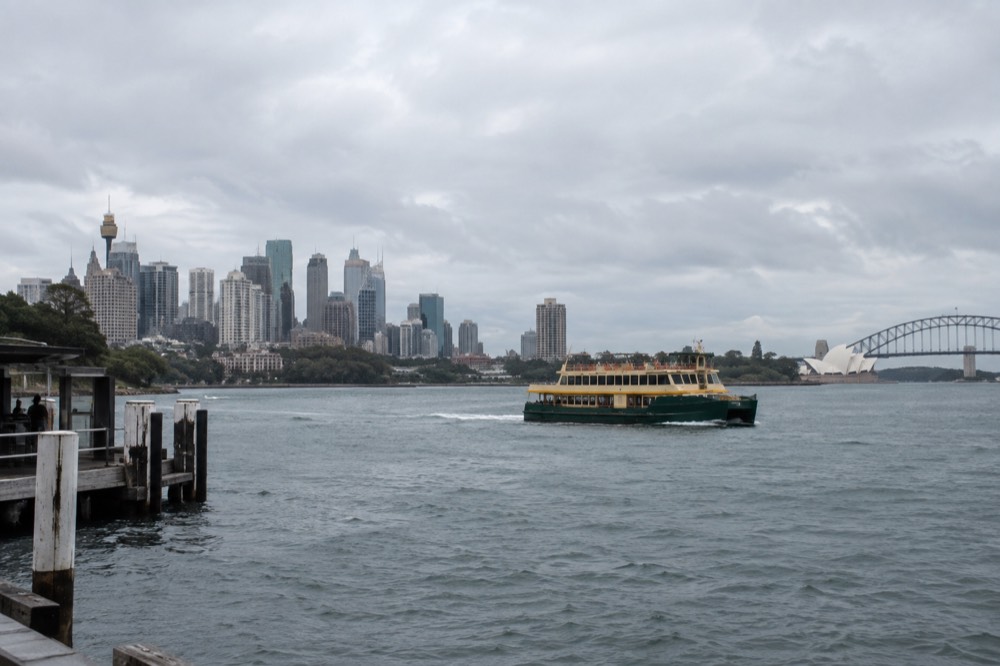
One planning note from the climate data: June's rainfall average of 133.1 mm makes it the one month where an indoor-heavy itinerary, museums, galleries, long lunches, is the sensible default, and Potts Point happens to be rich in exactly those.
Potts Point rewards the traveller who books a base and stays a while. It is the rare Sydney suburb where you can walk to dinner, walk to a harbour park, walk down a staircase into history and catch a train to anywhere, all without crossing a car park. The Sydney Travel Guide covers the rest of the city neighbourhood by neighbourhood if this one wins you over.
Common Questions About Potts Point
Is Potts Point a good area to stay in Sydney?
Yes, for couples and solo travellers it is one of the best-located bases in the city. Kings Cross station is about 4 minutes by train from Town Hall, the eating and drinking scene is dense and good, and the suburb is walkable end to end. Families and travellers wanting resort-style hotels usually do better near Darling Harbour or the beaches.
Is Potts Point the same as Kings Cross?
No, but they share a peninsula and the boundary is blurry. Kings Cross is the nightlife strip around Darlinghurst Road and the station; Potts Point is the quieter residential and dining suburb to its east and south, centred on Macleay Street. Locals treat them as distinct, and visitors mostly notice the change within two blocks.
How far is Potts Point from the Sydney Opera House?
About 2.5 km by road, roughly a 30 to 35 minute walk via Woolloomooloo and the Domain, or 5 minutes by train from Kings Cross to Circular Quay plus a short walk. Many residents walk it in the evening for shows and dinner, since the route is flat along the harbour side after the initial descent.
Do you need a car in Potts Point?
No. The suburb is one of the least car-dependent places in Australia, with a train station on its edge, frequent buses on William Street and ferries two stops away. Parking is scarce and mostly metered or permit-based, so a car is more often a liability than a help. Our do I need a car in Sydney guide covers the citywide answer.
What is the best street in Potts Point for food?
Macleay Street for range and energy, Challis Avenue for leafy sit-down meals, and the Bayswater Road end for late-night kitchens. All three sit within a five minute walk of each other, so the honest answer is to walk the triangle and pick what smells best.