Sydney Markets: The Complete Guide to Shopping, Food and Weekend Stalls
Sydney's market scene runs from a working fish wholesale floor at dawn to weekend vintage stalls in the inner west. This guide covers which markets are worth your time, what things cost, how to reach them by ferry, and when the weather is actually on your side.
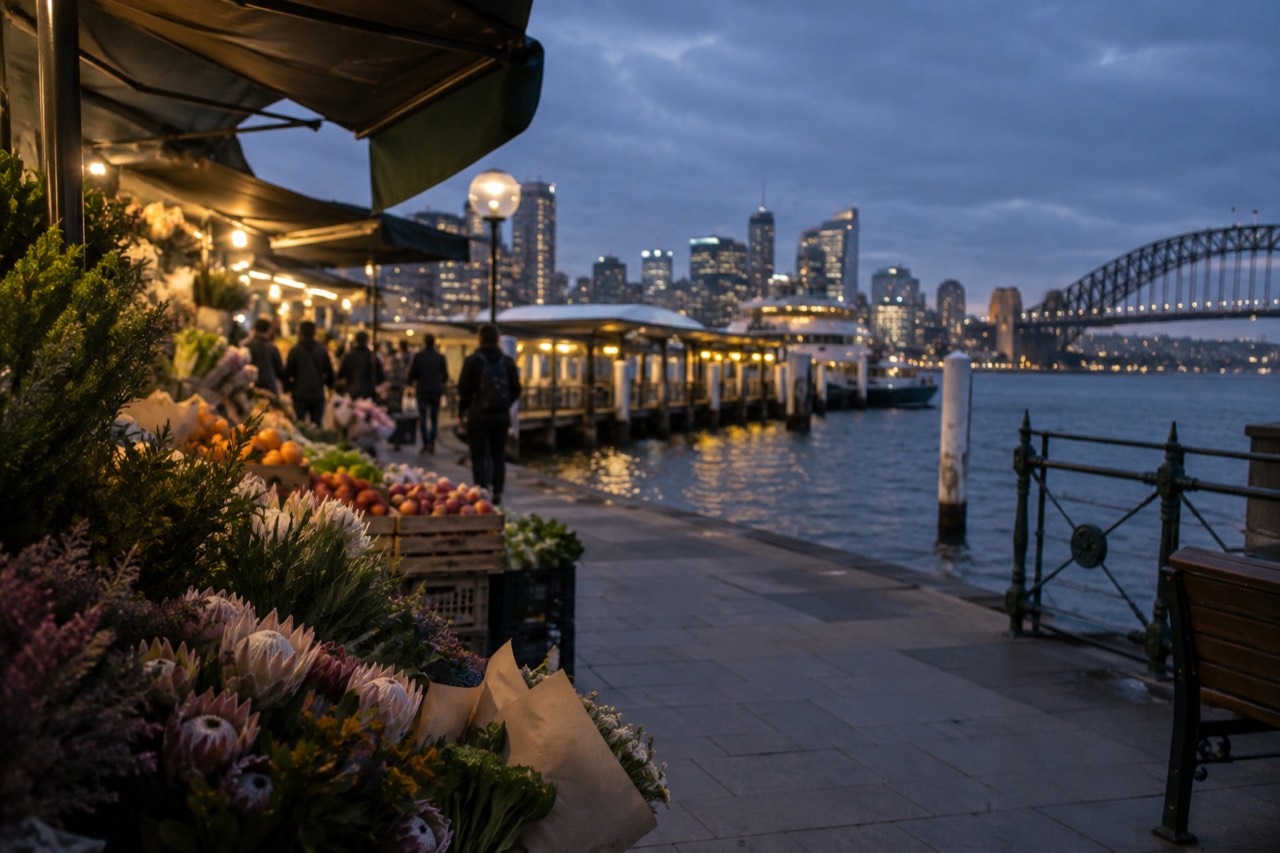
Short answer
Sydney's best markets are the new Sydney Fish Market at Blackwattle Bay for seafood, The Rocks Markets for weekend crafts near Circular Quay, Glebe and Paddington for vintage and design, and Chinatown's night markets for street food. Most weekend markets are free to browse, ferry-reachable, and at their best from April to November, when Sydney's skies are clearer than in peak summer.
Sydney's market culture is older than the city's most famous buildings, and it is having its biggest shake-up in a generation. The Sydney Fish Market reopened at a new Blackwattle Bay building in January 2026 with more than 40 retailers, weekend stallholders at The Rocks trade against a backdrop of historic sandstone, and the inner west's vintage circuits in Glebe and Newtown draw crowds every weekend. This guide sorts the worthwhile from the tourist-trap, with real costs, transport detail and the climate data most guides get wrong.
What Markets Does Sydney Actually Have?
Sydney's markets fall into four working categories: a major seafood market at Blackwattle Bay, weekend craft and design markets concentrated at The Rocks and Paddington, second-hand and vintage markets in the inner west at Glebe and Newtown, and Asian street-food night markets centred on Chinatown. Most are free to enter, run on fixed weekly or monthly schedules, and sit within a short ferry, bus or light rail ride of the central business district. Only the Fish Market operates seven days a week as a permanent venue.
That last point matters for planning. Weekend markets are exactly that: weekend markets. Turn up on a Tuesday expecting the Glebe or Rocks stalls and you will find quiet streets. The permanent venues, the Fish Market above all, run daily and reward early visits, because that is when the wholesale floor is at its most active and the seafood counters are at their fullest.
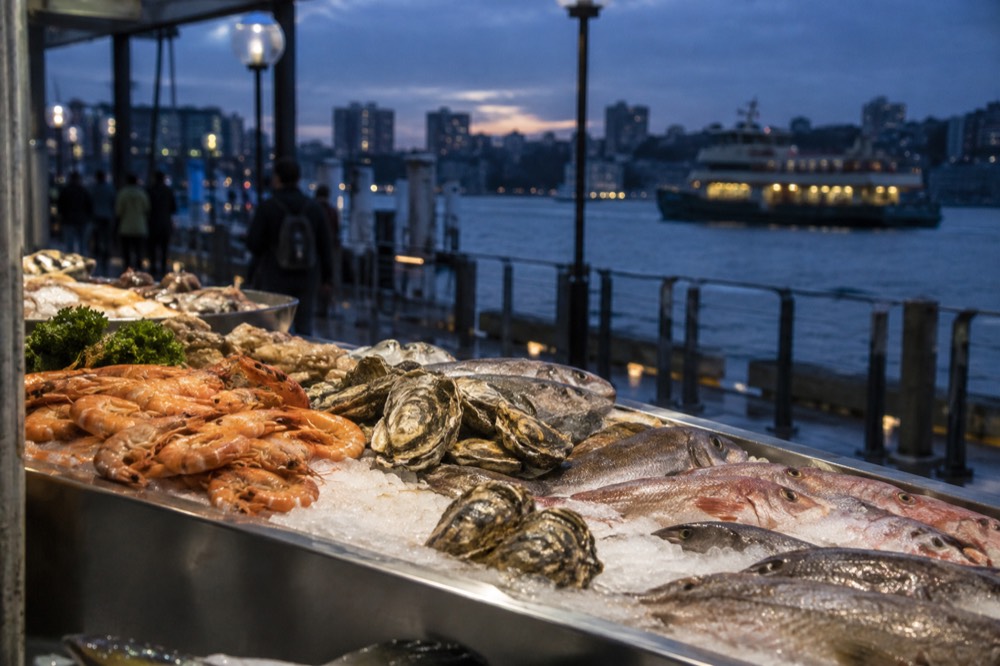
The table below is the honest overview: what each market sells, when it runs, and whether it is worth crossing the city for.
| Market | What it sells | When | Worth the trip? |
|---|---|---|---|
| Sydney Fish Market, Blackwattle Bay | Seafood, wholesale and retail, plus dining | Daily, year-round | Yes, especially mornings |
| The Rocks Markets | Craft, design, jewellery, local makers | Weekends | Yes, combined with The Rocks walk |
| Paddington Markets | Fashion, art, local designers | Saturdays | Yes for design and vintage |
| Glebe Markets | Second-hand, vintage, records | Saturdays | Yes for bargain hunters |
| Newtown stalls and shops | Vintage clothing, books, music | Daily shops, weekend stalls | Yes, browse anytime |
| Chinatown night markets | Asian street food | Evenings, busiest Friday to Sunday | Yes for dinner |
One more category deserves a mention even though it is not a market in the stall-and-canopy sense: Sydney's produce and growers' scene. Weekly grocery markets exist around the suburbs, but visitors rarely find them better than the permanent destinations above, and their schedules change often enough that chasing them is not worth a tourist's morning. Stick to the six in the table and you will not miss much.
Which Sydney Markets Are the Best Ones to Visit?
For most visitors the shortlist is three: the Sydney Fish Market for seafood and harbour-side eating, The Rocks Markets for crafts within walking distance of Circular Quay, and Glebe Markets for vintage and second-hand finds. Paddington is the pick if fashion and local design interest you more than bargains, and Chinatown's night markets are the best evening option. The Fish Market is the only one that justifies a dedicated half-day trip on its own.
The trio below covers three different ways to spend a Sydney day, and they pair naturally with the markets: a [multi-attraction pass](https://gocity.tpk.ro/rUvgw2vS) if you are combining shopping with the big sights, a harbour cruise if your market day starts or ends at the waterfront, and a guided food tour if you want someone local to walk you through the eating.
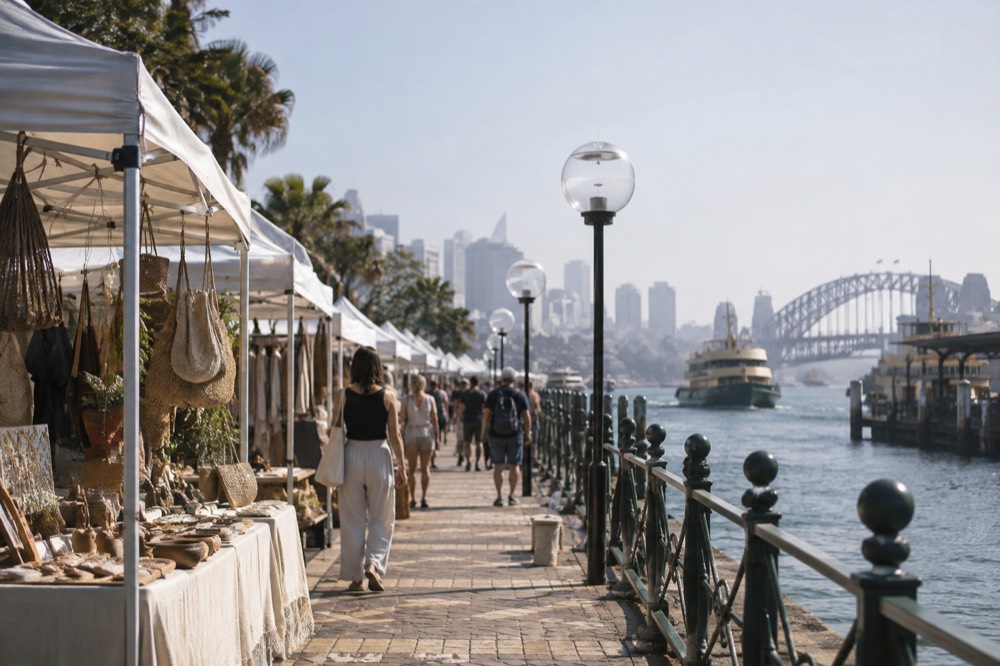
Choosing between them comes down to what kind of traveller you are. Shoppers want Glebe and Paddington on a Saturday, and they should do one or the other, not both, because the two overlap heavily in spirit. Food-first visitors should build a morning around the Fish Market and an evening around Chinatown. Craft buyers get The Rocks, which has the advantage of position: the stalls sit in the middle of Sydney's oldest neighbourhood, a short walk from the Harbour Bridge's southern footings and the Pylon Lookout.
Is the Sydney Fish Market Worth Visiting?
Yes, and it is now easier to reach than it has ever been. The Fish Market moved from its old Pyrmont site to a new building at Blackwattle Bay, opened to the public in January 2026, with more than 40 retailers covering wholesale, retail seafood counters and sit-down dining. It operates daily, mornings are the liveliest time, and a ferry now serves Blackwattle Bay directly, with the F10 route joining the Opal network in 2026. Allow two to three hours, more if you are eating a proper meal.
The move matters more than most coverage acknowledges. The old site was cramped, car-oriented and famously hard to park at; the new Blackwattle Bay building was purpose-built for the market and opened after construction finished in late 2025, with the public welcomed in around 19 to 20 January 2026. The NSW government's own announcement of the completed construction is the clearest record of the change, and any guide still sending you to the old Pyrmont address is out of date.
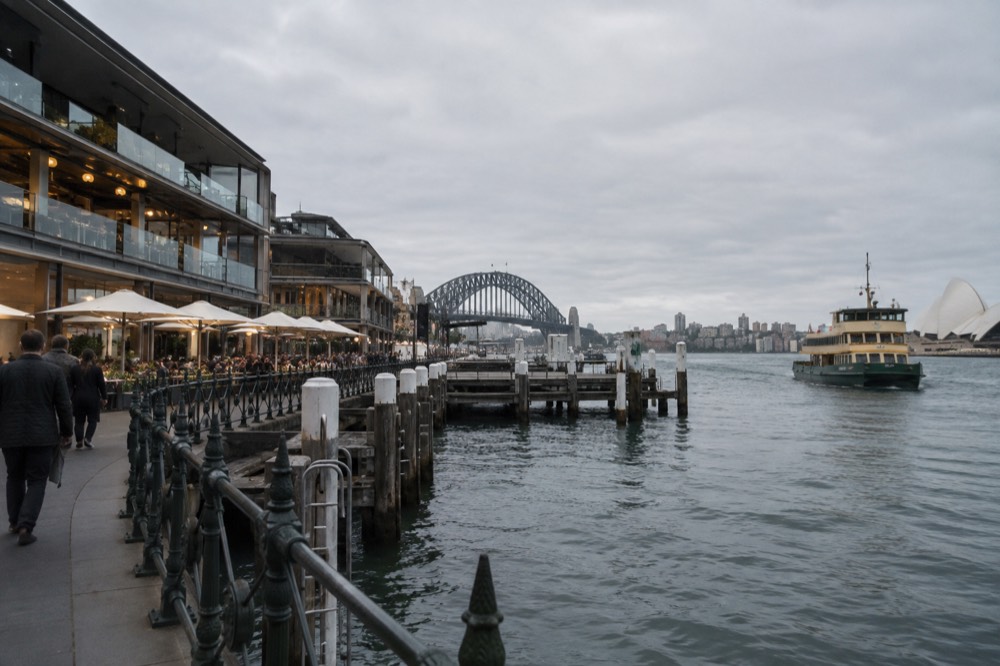
What you actually do there: browse the retail counters for oysters, prawns, sashimi-grade fish and bugs, then either take a paper tray outside to the water's edge or eat at one of the sit-down venues. Arrive before mid-morning if you want to see the wholesale side at full volume. Prices at the counters are market prices, which means they move with the catch; treat any figure you see as that day's, not a permanent price list.
Getting there is now genuinely pleasant. The F10 Blackwattle Bay ferry service joined the Opal network in 2026, per Transport for NSW, so a contactless card or Opal card takes you there by water with the usual fare caps applying. The Sydney ferries guide covers the network in detail, and the Opal card guide for visitors explains the caps. The light rail and buses also serve the area.
If you are pairing the Fish Market with a bigger sightseeing day, an attractions pass covering several of the city's headline venues can beat buying individual tickets, particularly for families. Check availability for the multi-attraction pass and compare it against your actual list before committing.
What Are the Rocks Markets and When Do They Run?
The Rocks Markets are weekend craft and design stalls set among the historic sandstone lanes of The Rocks, the district where Sydney's European settlement began. Entry is free, the focus is local makers rather than mass-produced souvenirs, and the setting is the real draw: the stalls sit minutes from Circular Quay, with the Harbour Bridge overhead. Combine them with a walk through the neighbourhood's heritage lanes and they earn their place on any first-time itinerary.
Stall quality here is higher than at a typical tourist market, and the curation leans toward Australian designers, jewellers and artists. That makes it a better place to buy something you will keep than a place to haggle. Prices reflect that: expect boutique retail prices, not flea-market ones.
The setting is what lifts it. The Rocks is Sydney's oldest neighbourhood, and the stalls sit inside a grid of historic lanes that are worth walking even on a day when the market is not running. The Rocks ghost tour covers the district's darker history after dark, and the pub walk is another way to see the sandstone up close. For the daytime version, start at Circular Quay and let the lanes carry you uphill.
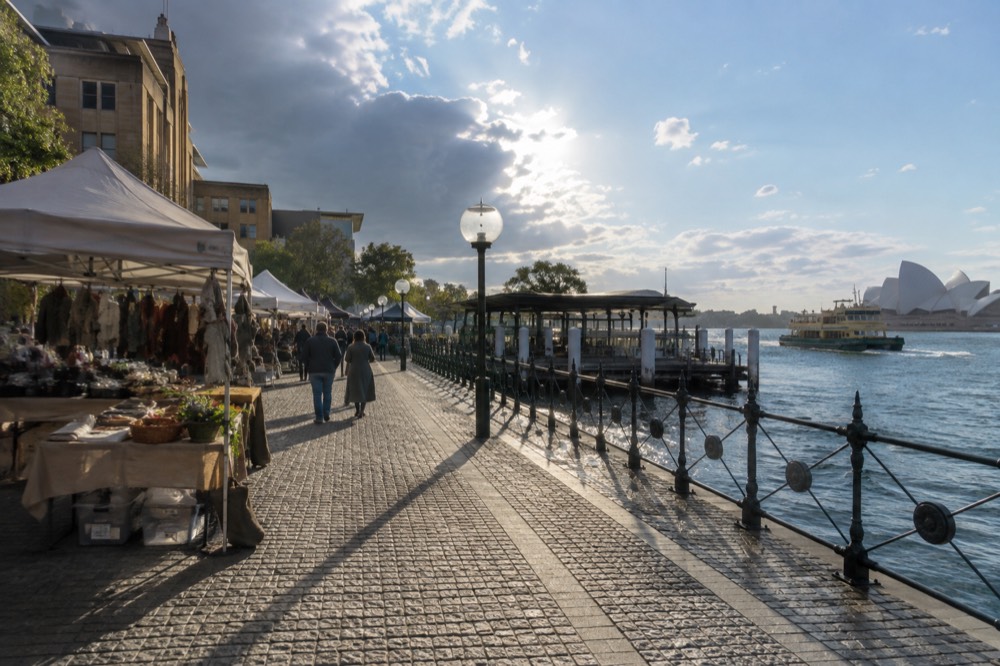
Timing advice: Saturdays and Sundays are when the stalls run, and mornings are quieter than the post-lunch crush. If your visit falls on a weekend, do The Rocks Markets in the morning and save the afternoon for the BridgeClimb or a harbour walk, both of which start within a few hundred metres.
Where Do You Find Vintage and Second-hand Markets in Sydney?
Glebe Markets is Sydney's best-known second-hand market, running on Saturdays around Glebe's school grounds, with vintage clothing, records and bric-a-brac at genuinely low prices. Newtown is the permanent vintage precinct, with op shops, record stores and second-hand fashion open daily. Paddington Markets, also Saturdays, skews toward local design and new fashion rather than second-hand. Do Glebe or Paddington, not both, and browse Newtown any day of the week.
Glebe's market has the texture people imagine when they hear "Sydney markets": folding tables, hand-lettered signs, clothes by the kilo and crates of vinyl. It sits in Glebe, an inner-west neighbourhood of terrace houses and bookshops that rewards an hour of wandering after the stalls. The light rail runs straight there from the city centre, which keeps the trip cheap under the Opal caps.
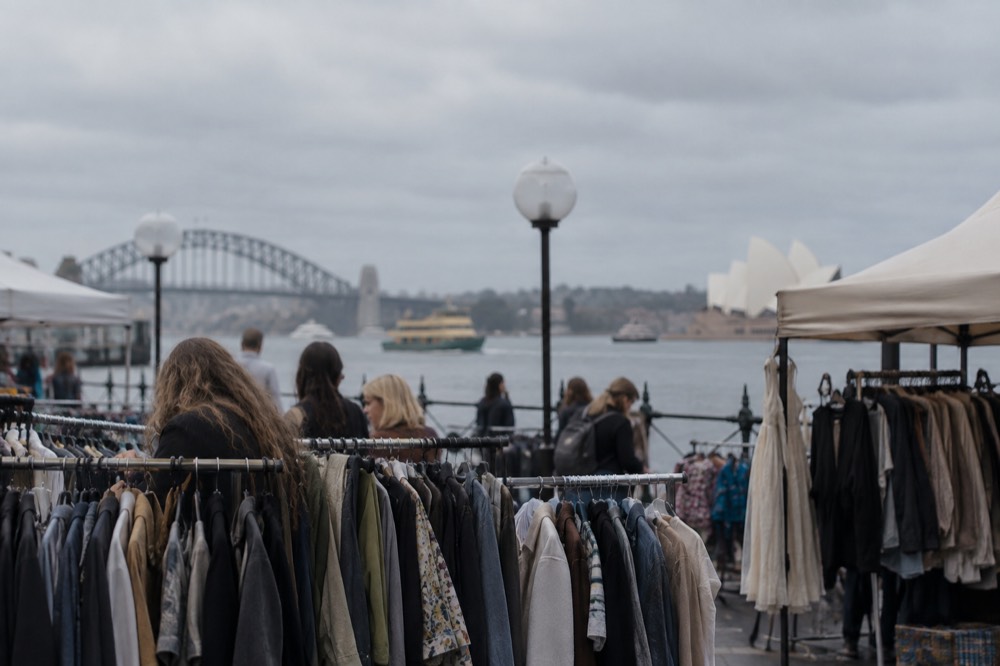
Newtown works differently. It is a strip, not a market: King Street's vintage stores, record shops and op shops are open all week, so it suits a spare weekday better than a scheduled Saturday. Newtown is also where Sydney's street art concentrates, so the browsing comes with a free gallery attached. Paddington, by contrast, is polished: the Saturday market there has run for decades and is the place to find emerging Australian fashion labels, prints and jewellery at designer prices. Paddington itself, with its terrace rows and the nearby Queen Victoria Building a short bus ride away, makes a good half-day loop.
A note on expectations: Sydney's vintage scene is real but smaller than Melbourne's, and the honest comparison is in the Sydney vs Melbourne guide. If second-hand shopping is the entire point of your trip, Glebe on a Saturday plus a few hours in Newtown is the right allocation, and anything more is diminishing returns.
What About Food Markets and Night Markets?
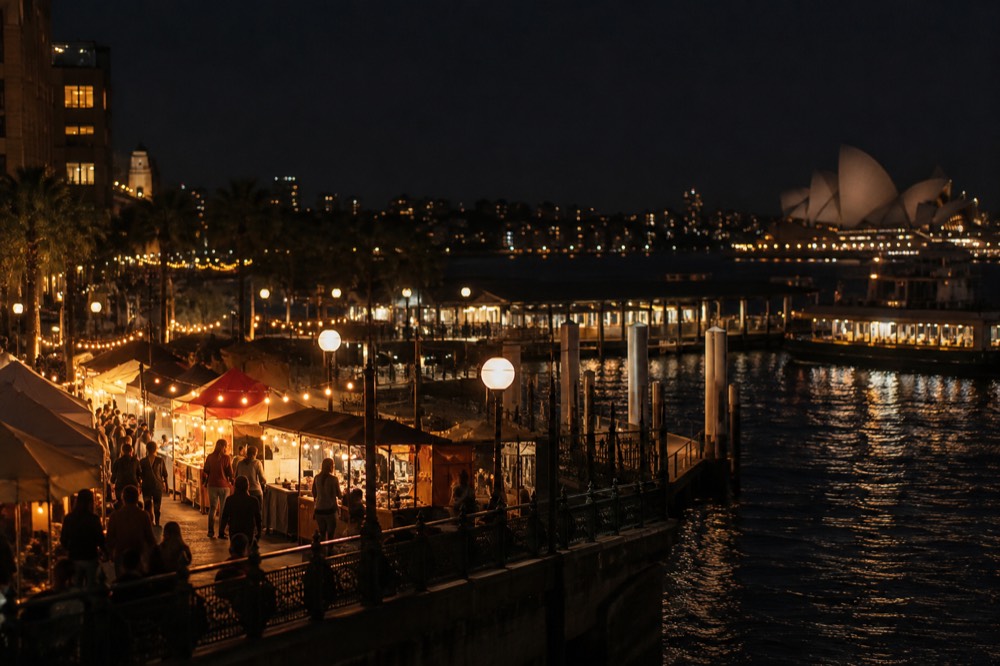
Chinatown's night markets are Sydney's best evening food option, with Asian street food stalls and late-opening eateries concentrated around Dixon Street in the city centre, busiest from Friday to Sunday. For daytime food, the Fish Market's counters and the weekend food stalls at the bigger markets cover most needs. A guided food tour is worth considering if you want the eating organised for you, since Sydney's best food is spread across several neighbourhoods rather than one market hall.
Chinatown sits at the southern end of the city's shopping spine, a short walk from Central station and Darling Harbour, so it slots easily into an evening after a day at the harbour. The night-market atmosphere peaks on weekends; midweek it is quieter but the permanent restaurants are unaffected.
For travellers who would rather have a local walk them through the food scene, a guided tasting tour visits multiple stops in one organised run, which is a genuinely efficient way to eat Sydney if your time is short.
If you would rather self-direct, build your own trail: Fish Market in the morning, a market lunch at Glebe or The Rocks on a Saturday, and Chinatown at night. That is a full day of eating, and it is a better use of a food-motivated visit than chasing a single "best" venue.
How Do You Get to Sydney's Markets Without a Car?
You do not need a car for any market in this guide. The Fish Market is served by the F10 Blackwattle Bay ferry plus light rail and bus routes; Glebe and Chinatown sit on the light rail; Paddington and The Rocks are on frequent city buses; and Newtown is on a direct train line from Central.
A contactless credit card pays for all of it at the same adult fare as an Opal card, with daily caps of A$19.30 Monday to Thursday and A$9.65 Friday to Sunday.
That fare structure rewards market-hopping more than most visitors realise. The weekend daily cap of A$9.65, per Transport for NSW's fares pages, means a Saturday that takes in The Rocks, Glebe and Chinatown by public transport costs less than a single sandwich at a harbour cafe. The weekly cap is A$50, and the off-peak discount of 30 percent applies on trains, metro, buses and light rail on Fridays, weekends and public holidays, though not on ferries.
| Market | Best car-free route | Typical mode |
|---|---|---|
| Sydney Fish Market | F10 ferry to Blackwattle Bay, or light rail | Ferry or light rail |
| The Rocks Markets | Any train or ferry to Circular Quay, then walk | Train or ferry |
| Paddington Markets | Bus along Oxford Street | Bus |
| Glebe Markets | Light rail to Glebe | Light rail |
| Newtown | Train to Newtown station | Train |
| Chinatown night markets | Light rail or walk from Central | Light rail or walk |
One trap to avoid: the privately operated Manly fast ferries accept Opal cards through OpalPay but do not honour the Opal caps or transfer discounts, which matters if a market day ever takes you across to Manly. The public ferries, trains, buses and light rail all honour the caps. The full detail is in the getting around Sydney guide.
If your market day starts or ends near the water, a harbour sightseeing cruise slots in neatly between destinations, and the circular-quay departures put you within walking distance of The Rocks stalls.
What Do Things Cost at Sydney Markets?
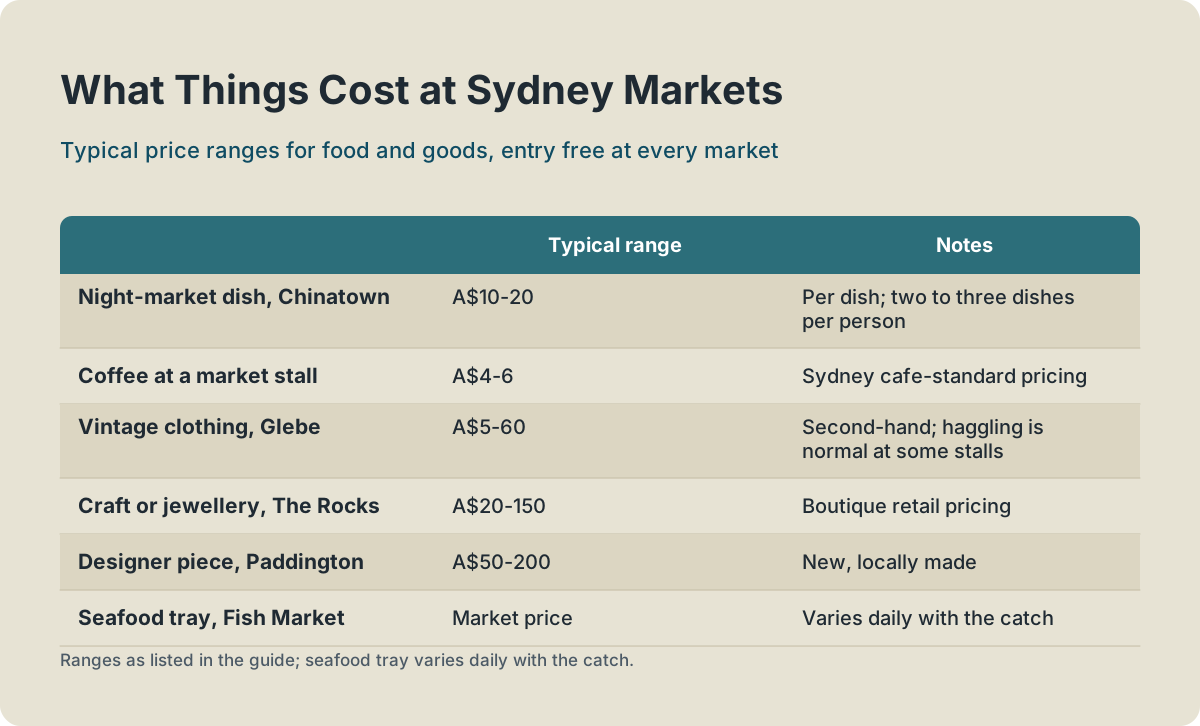
Entry is free at every market in this guide, so your spend is entirely food and goods. Street-food meals at night markets typically run A$10-20 a dish, a seafood tray at the Fish Market depends on the day's catch and market prices, and vintage clothing at Glebe starts from a few dollars for second-hand pieces while Paddington's designer stalls charge boutique retail prices. Budget roughly A$30-60 per person for a market morning with lunch, more if you are buying crafts or clothing.
The ranges below are planning figures for a typical visit, not operator quotes. Prices at food stalls and vintage tables move with the season and the stallholder.
| Item | Typical range | Notes |
|---|---|---|
| Night-market dish, Chinatown | A$10-20 | Per dish; two to three dishes per person |
| Seafood tray, Fish Market | Market price | Varies daily with the catch |
| Coffee at a market stall | A$4-6 | Sydney cafe-standard pricing |
| Vintage clothing, Glebe | A$5-60 | Second-hand; haggling is normal at some stalls |
| Designer piece, Paddington | A$50-200 | New, locally made |
| Craft or jewellery, The Rocks | A$20-150 | Boutique retail pricing |
Two spending notes worth having. First, most stallholders take cards, but a little cash is still useful at second-hand tables. Second, the money you save on transport under the weekend fare cap is real: A$9.65 covers an entire Saturday of trains, buses, ferries and light rail, which is why the car-free market loop in the section above is not just possible but cheaper than driving and paying for parking.
When Is the Best Time of Year for Sydney's Markets?
The best months for Sydney's markets are April through November, and the climate data explains why: August averages 13.4 clear days, the most of any month, while February averages just 5.3, the fewest, despite being peak season. June is Sydney's wettest month at 133.1 mm on average, wetter than any summer month. Winter markets come with clear skies and short queues; the February school-holiday crush comes with the year's cloudiest weather.
This is the single most counterintuitive fact about visiting Sydney, and it comes straight from the Bureau of Meteorology's long-run averages for the Observatory Hill station. Peak tourist season, December through February, is statistically the cloudiest and among the dampest time of year, while late winter, July and August, delivers the clearest skies the city sees. A Saturday at Glebe Markets in August is, on the averages, a better bet than one in February.
| Month | Mean max °C | Mean rainfall mm | Mean clear days |
|---|---|---|---|
| January | 26.0 | 101.2 | 6.8 |
| February | 25.8 | 119.3 | 5.3 |
| April | 22.5 | 126.5 | 9.1 |
| June | 17.0 | 133.1 | 9.1 |
| August | 17.9 | 80.2 | 13.4 |
| October | 22.2 | 76.7 | 8.1 |
Seasonal events change the picture too. Vivid Sydney, which ran across 23 days in May and June 2026, brings night-time crowds to the harbour end of town, which is good for atmosphere at The Rocks and Chinatown but bad for elbow room. The Sydney events calendar tracks what lands when, and the best time to visit Sydney guide weighs the whole year.
What Should You Know Before You Go?
Go early for the best stalls and the thinnest crowds, bring a reusable bag because stallholders rarely supply them, carry a little cash for second-hand tables, and check each market's day of the week before you plan around it, because most Sydney markets run only on Saturdays or Sundays. Wear comfortable shoes: Glebe, Newtown and The Rocks are walking precincts, and the distances add up in hundreds of metres, not steps.
A few practical notes that first-timers get wrong. The Fish Market's liveliest hours are the morning ones, and the wholesale activity you may have read about is a dawn affair, so treat anything before 9am as bonus atmosphere rather than the main event. Weekend markets typically wind down by mid-afternoon, so a late start means a short market.
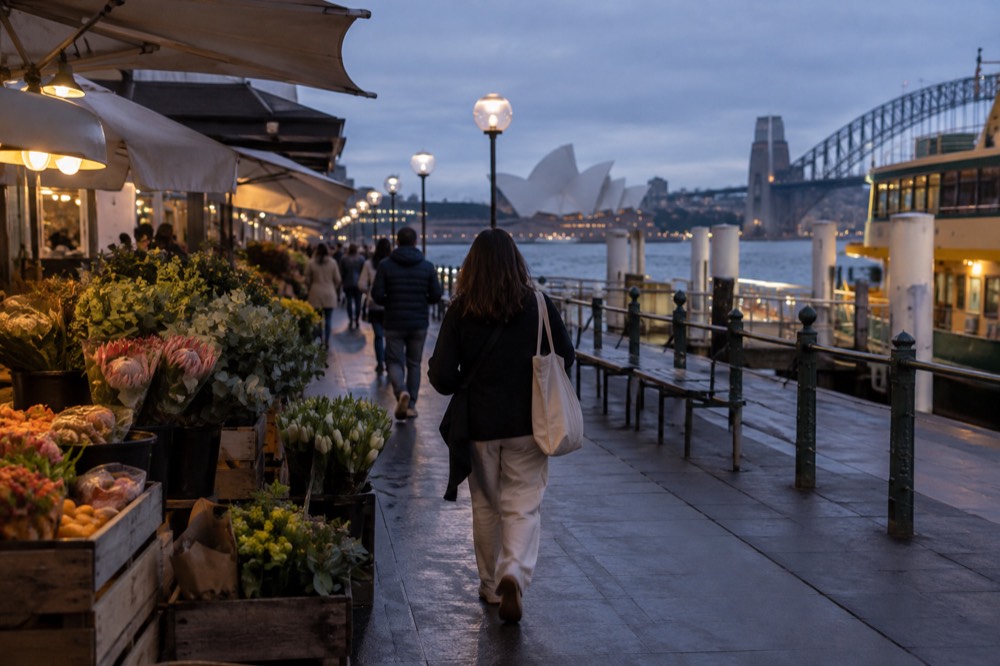
Weather planning deserves one repeat mention because it is the most useful thing in this guide: check the forecast, not the calendar. Sydney's averages say winter is clear and February is cloudy, but any given Saturday can break the rule. The Sydney weather month by month guide has the full table, and the Sydney rainy day itinerary covers the wet-Saturday fallback, which is largely the Fish Market and Chinatown, the two markets that happen indoors or under cover.
Finally, if your market day is one item on a longer list of Sydney sights, the multi-attraction pass covering several headline venues can undercut individual tickets, especially if the aquarium or the tower is already on your list.
Whether you are building a full week around the stalls or just squeezing one Saturday market between the harbour and the bridge, the same three products keep earning their place: the attractions pass for the big venues, the harbour cruise for the water, and the food tour for the eating.
For a broader look at what else the city offers beyond the stalls, this Sydney Travel Guide hub collects the full range of neighbourhood, transport and itinerary guides, and the free things to do in Sydney page picks up where the markets leave off, since browsing them costs nothing.
Common Questions About Sydney Markets
What days are Sydney markets open?
The Sydney Fish Market is open daily year-round. The Rocks Markets run on weekends, and Glebe and Paddington markets run on Saturdays. Newtown's vintage shops are open daily, while its stalls and Chinatown's night markets are busiest from Friday to Sunday. Always check the specific market's schedule before planning a weekday visit, because most stall-based markets in Sydney do not run midweek.
Is the Sydney Fish Market worth visiting?
Yes. It moved to a new purpose-built Blackwattle Bay building that opened to the public in January 2026, with more than 40 retailers spanning wholesale, retail seafood counters and dining. It is now reachable by ferry on the Opal network, and mornings are the best time to see the market at full activity. Allow two to three hours, longer if you are eating a full meal there.
Which Sydney market is best for vintage shopping?
Glebe Markets, on Saturdays, is Sydney's best second-hand market, with vintage clothing, records and bric-a-brac at low prices. Newtown is the permanent vintage precinct, with op shops and record stores open every day. Paddington Markets skews toward new local design rather than second-hand, so choose Glebe for bargains and Paddington for fashion.
Are Sydney markets free to enter?
Yes, every market in this guide is free to enter. Your only costs are food and goods. Night-market dishes typically run A$10-20, vintage pieces start from a few dollars at Glebe, and designer stalls at Paddington charge boutique retail prices. Getting between markets by public transport is capped at A$9.65 on weekends under the Opal fare structure.
What is the best month to visit Sydney's markets?
On the long-run climate averages, the best open-air market months are outside peak summer. August is Sydney's clearest month with 13.4 clear days on average, while February, in the middle of peak season, is the cloudiest at 5.3. June is the wettest month at 133.1 mm on average. For stalls, queues and skies combined, April through November beats December through February.
Can you get to Sydney's markets by ferry?
Partly. The F10 Blackwattle Bay ferry, which joined the Opal network in 2026, serves the Sydney Fish Market directly. The Rocks Markets are a short walk from the Circular Quay ferry wharves, so a ferry arrival works there too. Glebe, Paddington, Newtown and Chinatown are better reached by light rail, bus or train, all under the same fare caps.