Glebe, Sydney: The Inner West's Bookish Waterfront Village
Glebe is the suburb Sydneysiders mean when they talk about the inner west: terrace houses, a long café strip on Glebe Point Road, a Saturday market in the school grounds, and a waterfront that now sits beside the new Sydney Fish Market.
Short answer
Glebe is an inner-west peninsula about ten minutes from Central by light rail, hemmed by Blackwattle Bay and Rozelle Bay. Come for Glebe Point Road's bookshops and cafés, the Saturday markets, free waterfront parks, and the new Sydney Fish Market across the water. Budget half a day, more if you eat.
Glebe sits on a stubby finger of land between Blackwattle Bay and Rozelle Bay, wrapped on three sides by Sydney Harbour's inner reaches. For decades it was the suburb people moved to for cheap rent and stayed in for the community; the rent has caught up but the character has not washed out. A single long street, Glebe Point Road, runs the spine of the peninsula from Broadway down to the water, and most of what visitors come for lines that one road or clusters at its foot. The Sydney Travel Guide covers the harbour icons elsewhere; this page is about the suburb where the city exhales.
Two recent changes have quietly upgraded Glebe's waterfront. The new Sydney Fish Market opened at Blackwattle Bay in January 2026, putting one of the city's biggest food destinations directly across the water from the suburb's parks. And the Blackwattle Bay ferry services joined the Opal network in 2026, giving Glebe a harbour link it never properly had. Both are covered in detail below.
Where Is Glebe and What Kind of Suburb Is It?
Glebe is an inner-west peninsula roughly ten minutes from Central station by light rail, bounded by Blackwattle Bay to the east and Rozelle Bay to the west, with Glebe Point Road as its single main street. It is residential at heart: terrace houses, students from the nearby universities, long-time locals, and a café-and-bookshop strip that has resisted the glossier parts of Sydney's renewal. You visit Glebe to slow down, not to tick off monuments.
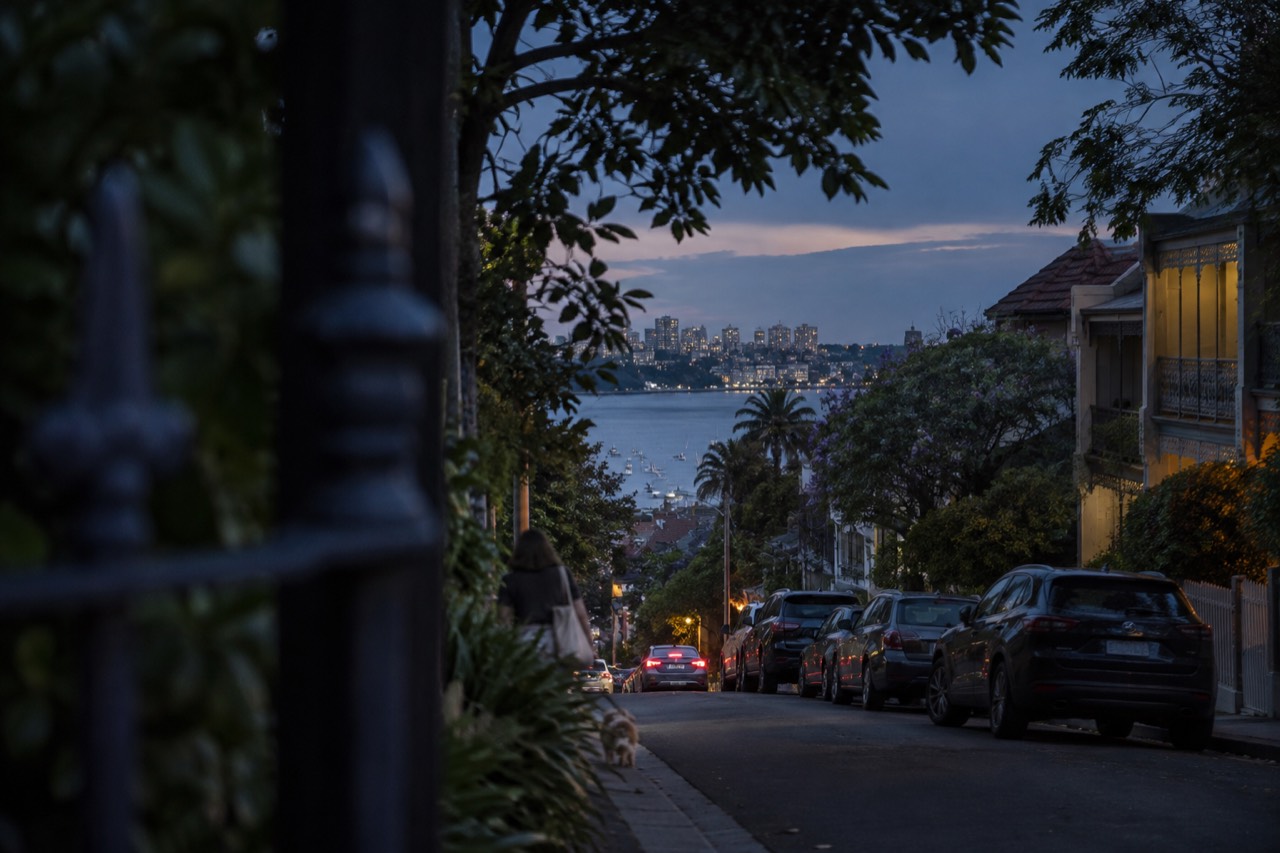
The suburb's shape does a lot of its work for it. Because Glebe is a peninsula with essentially one arterial road, everything funnels along Glebe Point Road, which means you can walk its whole length without a map and without getting lost. The road starts at Broadway, where the universities and the busy interchange sit, and drops steadily through the café strip, past the school where the markets are held, and ends at Blackwattle Bay with a row of parks looking across the water to the Sydney Fish Market and the towers of Pyrmont beyond.
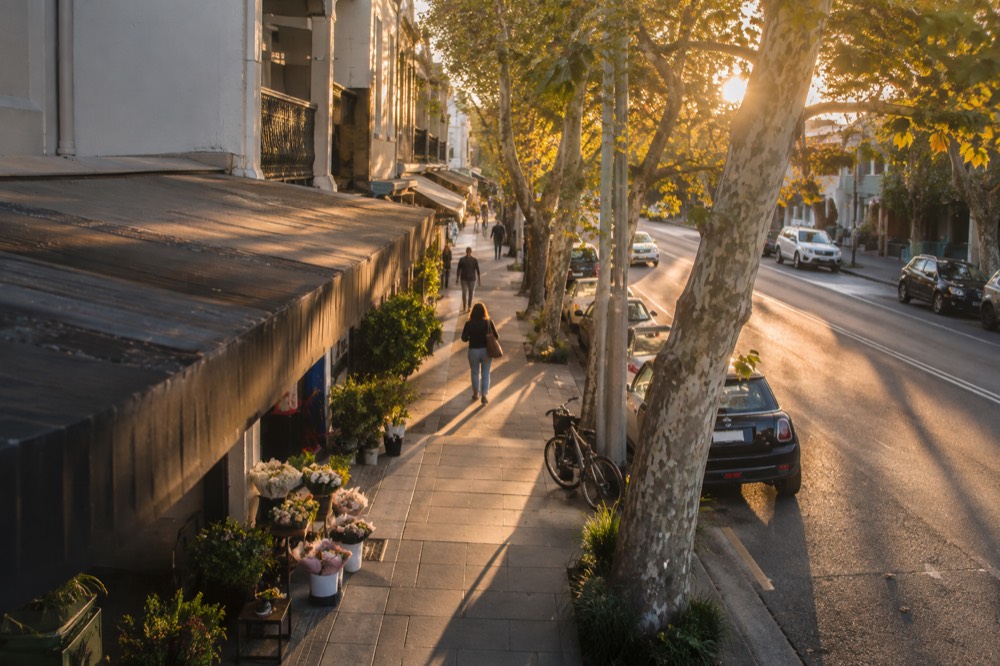
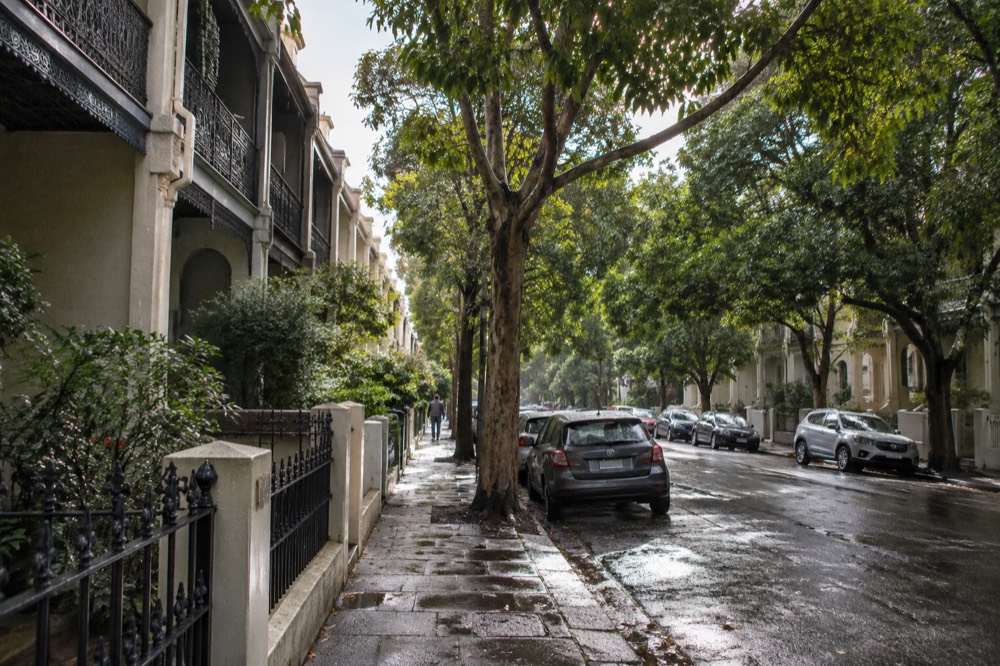
The housing is the other half of the identity. Glebe is one of the best places in Sydney to see rows of Victorian terraces, some grand and some shabby, many with the iron-lacework balconies that postcards usually reserve for Paddington. The streets running off either side of the main road, especially toward the water, are quiet, leafy and made for aimless walking. If your image of Sydney is all glass and water, Glebe is the corrective.
Neighbouring suburbs matter for planning. Broadway and the university precinct sit at the top of the peninsula, Darling Harbour is a short walk or ride east around the bay, and Newtown, the inner west's other famous café-and-culture strip, starts a little further south. Visitors often pair Glebe and Newtown on the same afternoon since they share a mood and a bus corridor.
What Are the Best Things to Do in Glebe?
The four anchors are Glebe Point Road itself, the Saturday markets held in the local school grounds, the string of free waterfront parks along Blackwattle Bay, and the new Sydney Fish Market across the water. Everything else, from second-hand bookshops to the small galleries dotted through the side streets, fills in around those. A first visit needs about half a day; a Saturday visit with the markets running takes longer.
Start at the top of Glebe Point Road and walk down. That single decision structures the whole suburb, because the road gathers nearly everything worth stopping for: cafés, a well-known second-hand bookshop scene, vintage clothing, cheap eats from half a dozen cuisines, and the odd shop that seems to sell nothing in particular but has been there forever. The inner west generally is Sydney's best region for this kind of unscripted browsing, and Glebe Point Road is its most compact version.
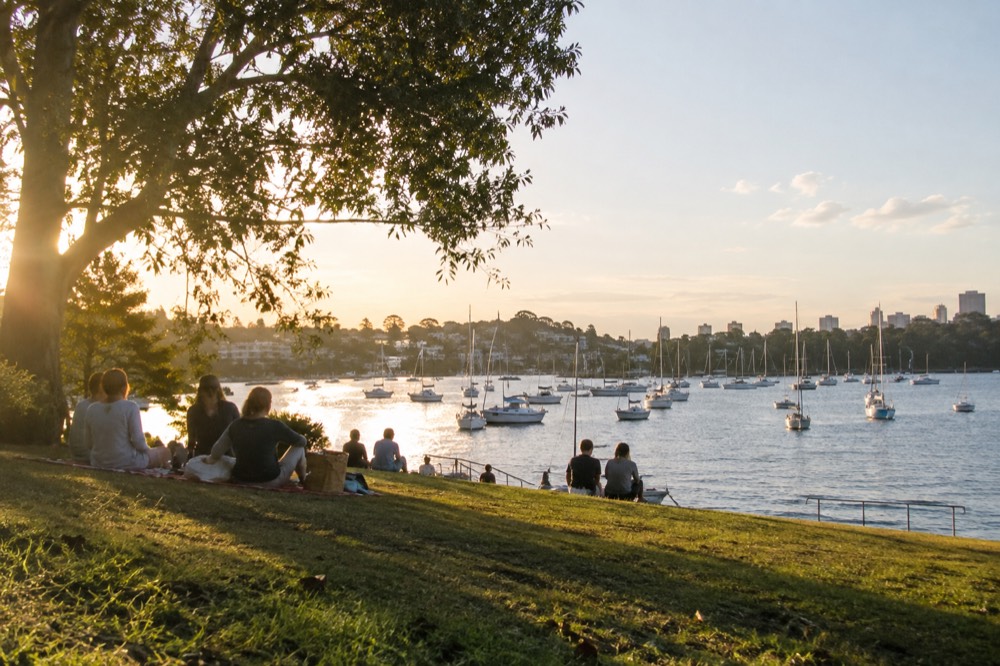
The waterfront is the surprise for most visitors. A continuous band of parkland runs along Blackwattle Bay at the bottom of the peninsula: Bicentennial Park and the adjoining foreshore reserves give you open grass, mature fig trees, a shared path along the water, and direct views across to the new fish market. It is one of the few places in Sydney where you can picnic with a working-harbour view without crowds, and on weekday mornings you will mostly share it with dog walkers and joggers. The shared path also connects Glebe around Rozelle Bay toward the Anzac Bridge approaches and the longer coastal and harbour walking routes, if you want to extend a stroll into something more serious.
The markets deserve their own section below, but in short: Saturdays turn the school grounds near the middle of Glebe Point Road into one of Sydney's most loved open-air markets, heavy on vintage clothing, records, jewellery and food stalls. Even outside market hours, the suburb keeps a weekend rhythm, and the city's wider market scene has few entries with as much personality.
For something structured, the Sydney Fish Market at Blackwattle Bay is now a genuine half-day destination in its own right. The new building opened to the public in January 2026 after its move from the old site, with more than 40 retailers spread across wholesale and dining in a purpose-built structure on the water directly opposite Glebe's parks. You can walk or ride around the bay to it from Glebe, or arrive by ferry.
| Thing to do | Type | Where | Time needed |
|---|---|---|---|
| Walk Glebe Point Road end to end | Street browsing, cafés | The suburb's spine | 1-2 hours |
| Glebe Markets | Open-air market | School grounds off Glebe Point Rd | 1-2 hours, Saturdays |
| Blackwattle Bay foreshore parks | Free parks, picnic, shared path | Bottom of the peninsula | 1-3 hours |
| Sydney Fish Market | Food hall, dining, harbour views | Across Blackwattle Bay | 1-2 hours |
| Terrace-house streets | Architecture walk | Side streets off the main road | 30-60 minutes |
| Second-hand bookshops and vintage shops | Shopping | Mid-Glebe Point Road | As long as you like |
Where Should You Eat and Drink in Glebe?
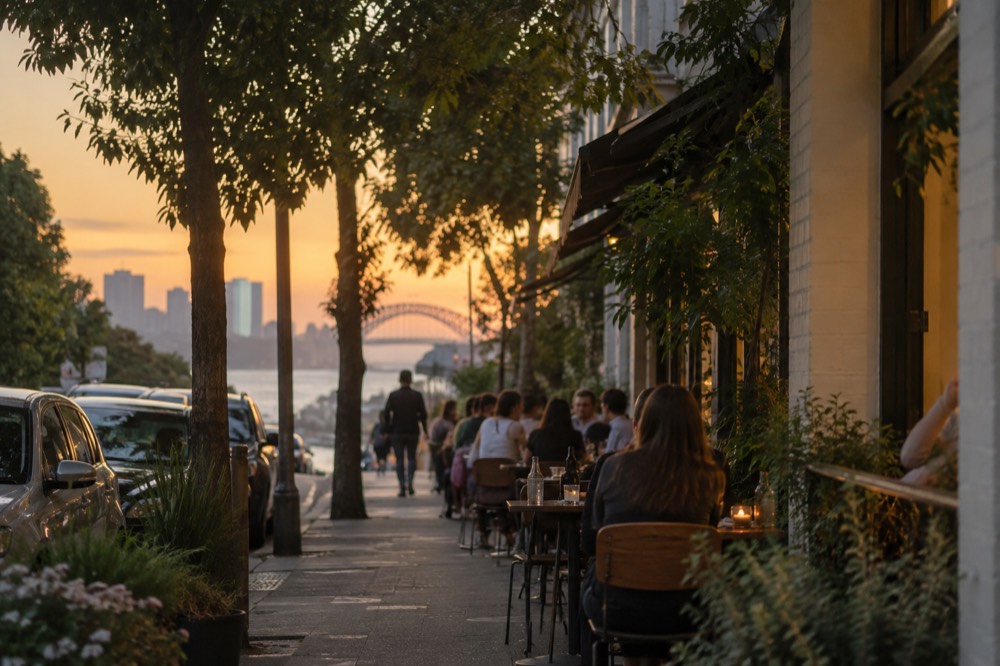
Glebe Point Road is one of Sydney's most reliable budget-eating streets: a dense run of cafés, Vietnamese, Thai, Indian, Italian and pub dining, with prices generally below the harbour-side precincts. The café culture runs strong all week, the pubs are old and characterful rather than glossy, and the new fish market across the bay has added a premium seafood option within walking distance.
The eating here has always leaned student-and-local rather than tourist, which keeps it honest. Along the middle stretch of Glebe Point Road you can move from a flat white in a converted terrace to a banh mi to a long boozy pub lunch without crossing the street twice. Sydney's brunch scene has spread everywhere, but Glebe's version is less curated than, say, Surry Hills, and cheaper for it.
The pubs are worth singling out. The suburb has several old corner hotels, the kind with wide verandas, cheap parmas and a mixed crowd of locals, students and staff from the nearby hospitals and universities. They are among the better places in Sydney to drink without a dress code or a view tax. For a fuller run of the city's options, see the guide to Sydney's bars and pubs, but Glebe's contribution is the unpretentious end.
For a structured introduction to how Sydneysiders actually eat, a guided food tour is one of the few paid experiences that pairs naturally with a Glebe visit. The six-tasting Secret Food Tours walk runs in the city centre rather than in Glebe itself, so it works best slotted onto a different day.
If your interest in Glebe is really an interest in Sydney's colonial-era streets, the Rocks guided walking tour covers the city's oldest neighbourhood with a guide who can put the sandstone and the laneways into context. Glebe's terraces are residential history; the Rocks is where that history started.
| Eating option | Vibe | Rough price level | Best for |
|---|---|---|---|
| Glebe Point Road cafés | Local, laptop-friendly | Low to mid | Breakfast, coffee, long lunches |
| Vietnamese and Thai on the strip | Quick, casual | Low | Cheap dinner |
| Corner pubs | Old-school, verandas | Low to mid | A drink, a parma, sport on TV |
| Sydney Fish Market | Bustling food hall | Mid to high | Seameal, harbour views |
| Market food stalls (Saturdays) | Festival-style | Low | Snacking while browsing |
When Is Glebe Markets on and What Will You Find?
Glebe Markets runs on Saturdays in the grounds of the local school off Glebe Point Road, typically from morning to mid-afternoon, and it is one of Sydney's best-known open-air markets. Expect vintage clothing, records, handmade jewellery, second-hand books, food stalls and a crowd that is as much a part of the show as the stalls. Arrive before midday on a fine Saturday if you want the full range of stock.
The market's character is vintage-first. Where some Sydney markets have drifted toward artisan candles and expensive small-batch food, Glebe has kept a strong second-hand core: racks of old clothing, crates of records, bric-a-brac tables and jewellers working their own designs. Bargaining is not really the culture here, but prices are generally fair and the browsing is the point. Check the city's market overview for seasonal variations, and note that wet weather thins both stalls and crowds.
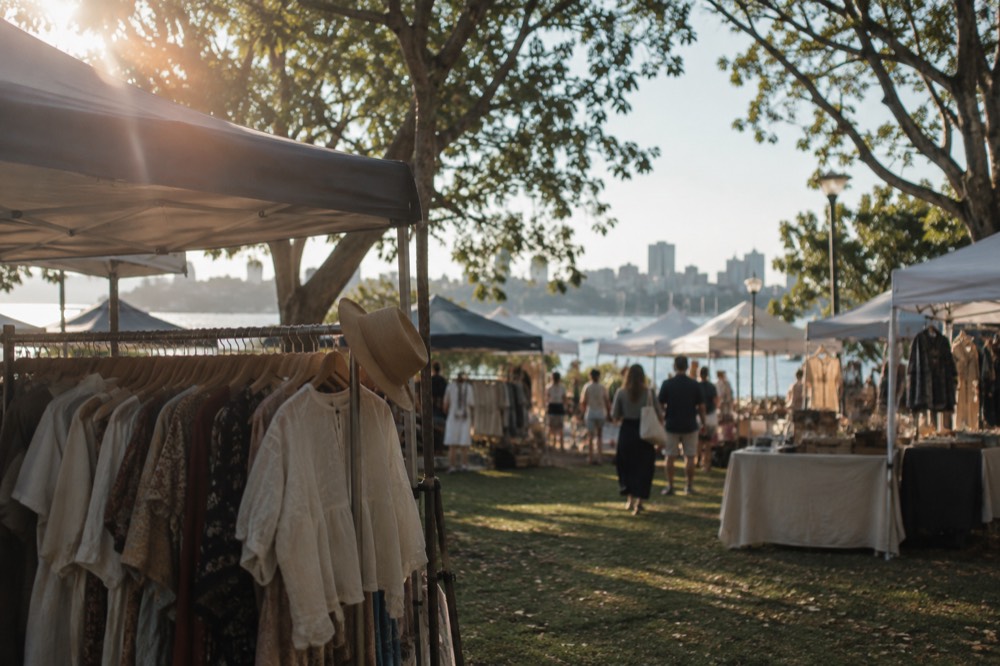
Two practical notes. First, parking around the school on a Saturday is genuinely difficult, and the light rail or a bus is the saner way in. Second, the market finishes in the mid-afternoon, which makes the classic Glebe Saturday a late-morning market browse, a lunch on the strip, and an afternoon walk down to the water. That sequence is hard to beat.
How Do You Get to Glebe?
Glebe is reached by light rail from Central in about ten minutes, by buses along Glebe Point Road and Parramatta Road, and since 2026 by ferry from Blackwattle Bay. It is a 25 to 35 minute walk from Central along Broadway and down the peninsula, mostly flat until the gentle drop toward the water. An adult contactless or Opal tap covers all of it, with the usual daily caps.
The light rail is the simplest arrival. The L1 line runs from Central through the inner west, with stops serving Glebe along the way, and it deposits you within a short walk of the market grounds and the middle of Glebe Point Road. Buses run the length of Glebe Point Road itself, which is convenient because the road is the destination. The visitor's guide to the Opal card explains the payment system, but the short version: tap a contactless bank card or an Opal card on and off, and the daily cap does the rest.
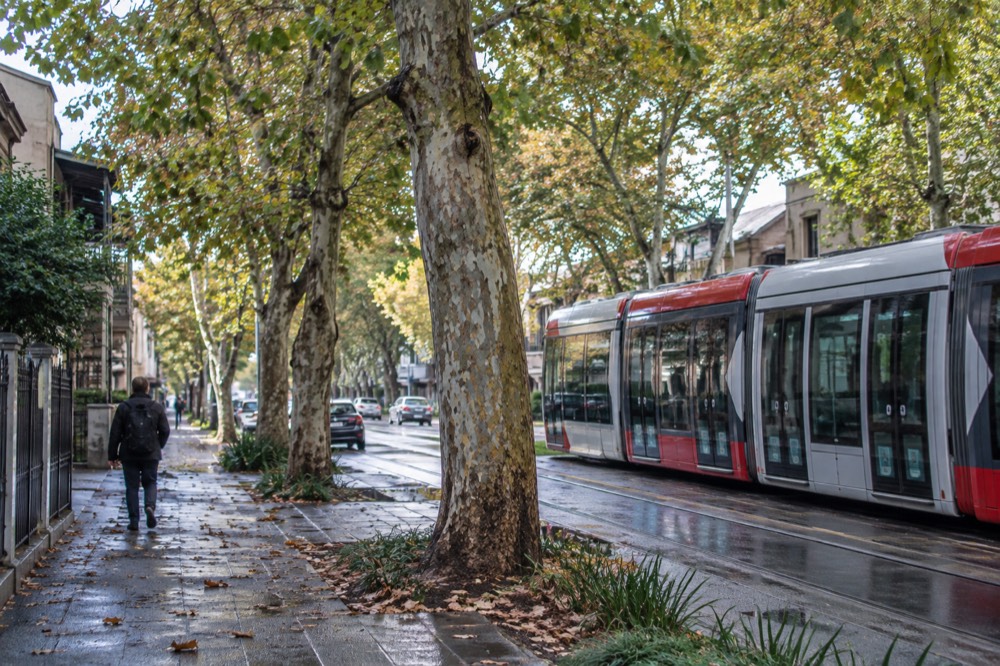
The ferry is the new option. Blackwattle Bay ferry services joined the Opal network in 2026, giving the Glebe foreshore a proper harbour connection with full Opal benefits and caps, where previously the bay had no scheduled public service of its own. It is a short link rather than a scenic cruise, but it connects the fish market precinct to the wider Sydney Ferries network and makes a Glebe-and-harbour day easier to assemble.
| Transport option | Route | Adult Opal fare | Notes |
|---|---|---|---|
| Light rail L1 | Central through the inner west | $3.30-$5.77 by distance band | Fastest from Central, about ten minutes |
| Bus | Along Glebe Point Road and Parramatta Rd | $3.30-$5.77 by distance band | Drops you on the main street itself |
| Ferry (Blackwattle Bay) | Harbour link, Opal network | $7.35-$9.20 by distance band | Joined Opal in 2026; no off-peak discount on ferries |
| Walking | Central to the Glebe foreshore | Free | 25-35 minutes, mostly gentle gradient |
| Cycling | Shared paths around the bay | Free | Connects toward the Anzac Bridge paths |
Cycling deserves a mention. The shared path around Blackwattle Bay and Rozelle Bay links into the inner-west network, and cycling in Sydney is far more pleasant along these flat waterfront routes than in the traffic above. If you would rather have a bike and a guide, Sydney Bike Tours offers guided rides of two to five hours that take in the harbour's calmer edges.
How Does Glebe Fit Into a Sydney Itinerary?
Give Glebe a half day, ideally a Saturday, and pair it with Darling Harbour or the fish market rather than with a second suburb. Its position at the end of a light rail line from Central makes it an easy add-on to a morning in the city or an afternoon near the harbour. It is not a first-day Sydney activity; it is the day-three or day-four activity, once you have seen the Opera House and want the city at its own pace.
The natural pairing is food. A morning at the fish market, a walk around the bay through Glebe's parks, a wander up Glebe Point Road, and a late lunch on the strip makes a complete and almost entirely free-flowing day. Add the Saturday market into that sequence and you have one of the better low-cost days available in Sydney, which matters if you are working to a budget itinerary. Visitors assembling a first trip's worth of days usually slot Glebe in as the "local Sydney" counterpoint to the harbour icons.
If you are staying without a car, Glebe is one of the easier suburbs to enjoy, which is the general case laid out in the car-free guide to day trips from Sydney: the inner west is dense, walkable and transit-rich. The mistake to avoid is treating Glebe as a destination you drive to. Between the Saturday parking, the one-road geography and the light rail, arriving any other way is simply better.
| Time budget | What fits | Best days |
|---|---|---|
| 2 hours | Glebe Point Road walk plus one coffee stop | Any day |
| Half a day | The road, the foreshore parks, a meal | Any fine day |
| A Saturday half day | All of the above plus Glebe Markets | Saturday |
| A full day | Add the Sydney Fish Market and a harbour walk around the bay | Saturday or Sunday |
Is Glebe Worth Visiting?
Yes, if you want the Sydney that residents actually live in: terrace streets, a genuinely good market, cheap and varied food, and free waterfront parks with the fish market across the water. No, if you only have one or two days in the city and have not yet seen the Opera House, the Harbour Bridge or Bondi. Glebe is a third-day suburb, and on a Saturday it earns that slot as well as anywhere in the inner west.
The honest framing is that Glebe sells atmosphere rather than attractions. Nothing here is a monument. What it has is density of ordinary pleasures: a street that rewards walking, a market that rewards rummaging, parks that cost nothing, and food that does not punish the wallet. That combination is common in the inner west generally and Glebe does it in the most compact footprint.
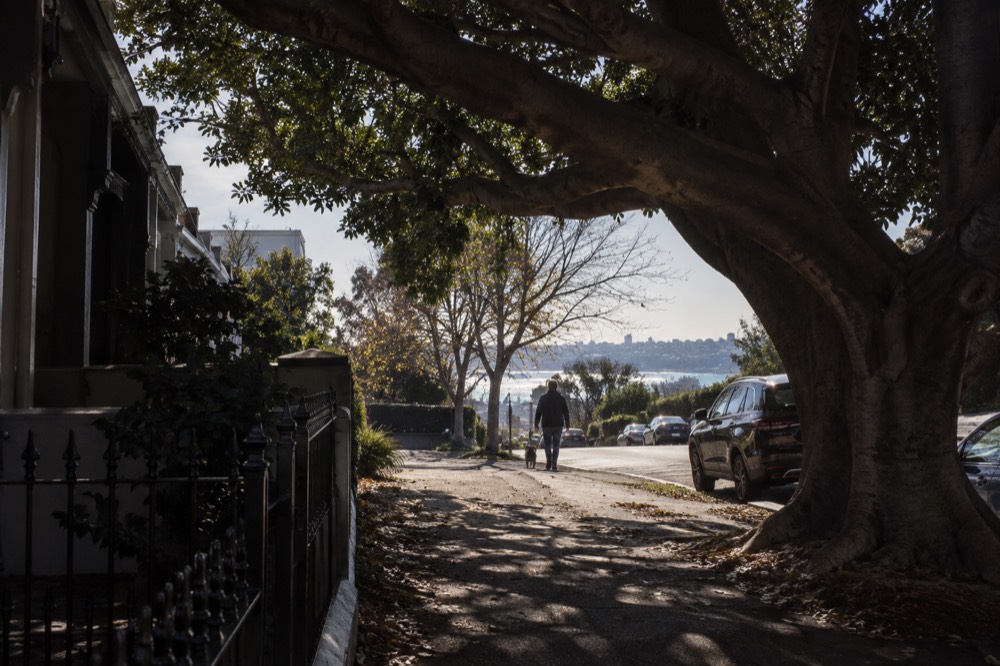
It is also the suburb that shows how fast Sydney's harbour edge is changing. A decade ago Blackwattle Bay was a working backwater; now it holds one of the city's biggest food destinations, the new fish market that opened in January 2026, and a ferry link that plugged Glebe into the harbour network. The terrace houses have not moved, but the water at the bottom of the street is a different proposition than it was.
For contrast, a guided walk through the Rocks gives you the city's founding streets in 90 minutes with a guide who can name what you are looking at, and it pairs well with an inner-west afternoon on a different day.
If your Sydney days are filling up and you are choosing between Glebe and a bigger excursion, weigh it against the Blue Mountains day trip, which is the opposite register entirely: eucalypt valleys and lookouts instead of terraces and coffee. Many visitors fit both, one as a slow city day and one as the big outing.
Common Questions About Glebe
What is Glebe in Sydney known for?
Glebe is known for Glebe Point Road's cafés and bookshops, the Saturday Glebe Markets, its rows of Victorian terrace houses, and the parks along Blackwattle Bay. Since January 2026 it also sits directly across the water from the new Sydney Fish Market.
How do I get to Glebe from Central station?
Take the L1 light rail toward the inner west; the trip takes about ten minutes and stops within a short walk of Glebe Point Road. Buses along Parramatta Road and Glebe Point Road are the alternative, and walking from Central takes roughly 25 to 35 minutes.
Is Glebe Markets on every Saturday?
Glebe Markets runs on Saturdays in the school grounds off Glebe Point Road, generally from morning to mid-afternoon. Numbers of stalls and traders vary, and wet weather thins the market out, so a fine Saturday is the best bet for the full range.
Can you walk from Glebe to the Sydney Fish Market?
Yes. The fish market sits on Blackwattle Bay directly opposite Glebe's foreshore parks, and the shared waterfront path connects the two. It is an easy flat walk, and since 2026 you can also arrive by ferry, as Blackwattle Bay services joined the Opal network.
Is Glebe good for budget eating?
Very. Glebe Point Road is one of Sydney's better streets for cheap Vietnamese, Thai, Indian and café food, and the corner pubs serve old-school meals at prices below the harbour precincts. The market food stalls on Saturdays add another cheap layer.
How much time should I spend in Glebe?
Half a day covers the main street, the foreshore parks and a meal. A Saturday visit with the markets plus a walk to the fish market across the bay can fill most of a day without any ticketed attractions.