Sydney Coffee Guide: Where the City Drinks
Sydney takes coffee seriously enough that a bad cup is a genuine social offence. This guide covers where to drink, how to order, and how the city's weather and transport shape the café day.
Short answer
Sydney coffee culture centres on the inner suburbs: Surry Hills, Newtown, Paddington and the CBD, all reachable by Opal for a capped daily fare. Order a flat white, drink it slowly, and expect cafés to be busiest on weekend mornings. June is the wettest month, so plan a rainy-day café list too.
Sydney runs on espresso. The flat white, an Australian and New Zealand invention argued over to this day, is the default order in most of the city's cafés, and the standard is high enough that a weak cup is rare and a bad one is remarkable. The city's café culture grew out of Italian and Greek migration in the mid twentieth century and then diversified through the inner suburbs, so a visitor gets both old-school espresso bars and modern single-origin roasters within a few kilometres of each other.
This guide explains where the coffee is, how to order it without hesitation, and how the practical realities of Sydney, its weather, its transport caps and its weekend rhythms, shape a café day. It also connects coffee to the wider food scene, because in Sydney the two are inseparable: the best cafés are usually attached to the best brunches, and the Sydney food guide covers that half of the equation in detail.
What Makes Sydney Coffee Culture Different?
Sydney coffee culture is built around espresso milk drinks, independent cafés and long weekend brunches rather than takeaway chains. The flat white is the city's signature order, cafés cluster in walkable inner suburbs rather than one central district, and weekend mornings between roughly 8am and 11am are the peak café hours, when popular rooms fill and queues form. Visitors should expect high quality as the baseline, not the exception.
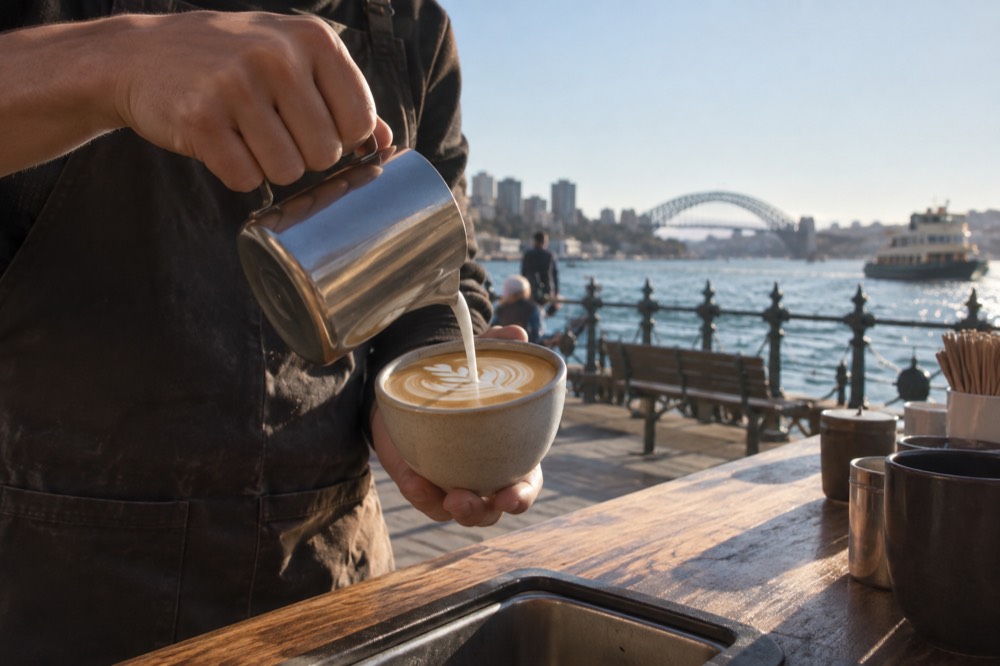
The first difference is structural. Sydney's coffee identity lives in its neighbourhoods, not in a single café strip. Surry Hills, Newtown, Paddington, Redfern and the inner west each have their own concentration of roasters and espresso bars, and locals rarely cross the harbour for a cup when something excellent sits five minutes' walk away. That geography rewards a visitor who picks one suburb per morning rather than darting between them.
The second difference is the drink itself. Sydney's default is milk-based espresso, and the vocabulary matters. A flat white is a smaller, stronger milk coffee. A long black is espresso lengthened with hot water, the local answer to an Americano. A piccolo is a tiny latte for people who want the milk texture without the volume. Ordering any of these is unremarkable; asking for modifications to an existing drink is where you start to stand out.
The third difference is time. Coffee in Sydney is not a five-minute transaction bolted onto a commute, though the CBD does a brisk takeaway trade on weekdays. On Saturday and Sunday mornings the café becomes a destination in itself, tables hold for an hour, and brunch menus run until early afternoon. Anyone planning a weekend visit should either arrive at a popular café before 9am or accept a wait.
Which Sydney Neighbourhoods Should a Coffee Lover Explore?
Four neighbourhoods carry most of Sydney's coffee reputation: Surry Hills and Darlinghurst for the densest strip of celebrated cafés and roasters, Newtown for volume and variety along a long walkable street, Paddington for terrace-house charm and quieter rooms, and the CBD for fast, excellent espresso near work crowds. Each sits on the Opal network, so a multi-suburb coffee crawl costs no more than the daily fare cap.
Surry Hills and neighbouring Darlinghurst are where most international lists point, and the density is real: within a few blocks you can move from a roaster with its own training room to a tiny corner espresso bar to a full brunch institution. The suburb also holds some of the city's most-discussed brunch rooms, which the Sydney brunch spots guide maps out. Crown Street and its side lanes are the spine of the area, and everything is walkable in ordinary shoes.
Newtown is the volume play. King Street runs for over a kilometre and the cafés are thick along it, ranging from long-standing alternative institutions to newer specialty roasters. The suburb has a student energy from the nearby university, prices tend to sit a little below the eastern suburbs, and the Newtown guide covers the wider neighbourhood, vintage shops and all.
Paddington offers the prettiest setting. Victorian terraces, fig-tree shade and the weekly markets a short walk away make it a slow-morning suburb, and the Paddington guide explains how it pairs with neighbouring Woollahra. The CBD, finally, is where the weekday trade lives: fast, competent espresso bars around the business district, at their busiest between 7am and 9am and again at the mid-morning coffee run.
| Neighbourhood | Character | Best time to go | Getting there |
|---|---|---|---|
| Surry Hills / Darlinghurst | Densest strip of roasters and brunch cafés | Weekday mornings | Light rail or bus |
| Newtown | Long street, big variety, student energy | Any morning | Train to Newtown station |
| Paddington | Terrace-house charm, quieter rooms | Weekend morning | Bus along Oxford Street |
| CBD | Fast, high-quality espresso for work crowds | Weekdays 7am-9am | Any train or bus line |
| Manly | Seaside café scene near the ferry wharf | Weekend late morning | F1 ferry from Circular Quay |
A coffee crawl also pairs naturally with a guided food walk, because a good guide will route you past the rooms locals actually use rather than the ones with the loudest reputations. The six-tasting Secret Food Tours walk is built around exactly that idea.
The tour roster above is worth a look if you want your coffee morning to roll into a fuller food day; the food tour in particular spends three and a half hours on tastings across the city, which sits well after a morning of espresso.
How Do You Order Coffee in Sydney Like a Local?
Order by drink name and size, pay at the counter, and know the local vocabulary before you reach the register. The essential terms are flat white, long black, piccolo, and "skinny" for skim milk. Most cafés serve coffee in ceramic cups if you sit down and takeaway cups if you ask for it, and tipping is not expected for a counter coffee. A simple order, stated plainly, is the local way.
The vocabulary is the main barrier, and it is a small one. A flat white, again, is the signature: espresso with steamed milk, served in a smaller cup than a latte, with less foam. A long black replaces the Americano. A piccolo is a single-shot mini latte. If you want a cappuccino, ask for one, and you will get it with chocolate dusting in most traditional rooms, though modern specialty cafés may skip it. "Takeaway" is the local word for to-go, and you say it before the drink name.
| Local term | What you get | Closest overseas equivalent |
|---|---|---|
| Flat white | Espresso with steamed milk, small cup, thin foam | A stronger, smaller latte |
| Long black | Espresso topped with hot water | Americano |
| Piccolo | Single-shot mini milk coffee | A tiny cortado |
| Magic | Double ristretto with a small amount of milk | A Melbourne-born double-shot piccolo |
| Skinny flat white | Flat white with skim milk | Skim latte |
| Takeaway | Served in a disposable cup | To-go |
Payment and tipping are simpler than in the United States. Counter service is standard at most coffee-focused rooms: order, pay, take a number or wait at the end of the bench. Tipping is not customary for coffee, and nobody will expect it; the tipping and etiquette guide covers where gratuities do apply in Sydney restaurants. Card payment is near-universal, and many cafés are effectively cashless, so do not count on paying with notes.
One more local habit worth copying: sit down. The ceramic-cup culture rewards lingering, and on a weekday morning you will see Sydney workers doing exactly the opposite, standing at the bench, drinking fast, leaving. Both are normal. The only real faux pas is treating a busy weekend brunch café as a laptop office for three hours over one flat white.
If a coffee-and-food morning sounds good but you would rather have the route organised for you, the guided food tour is the easy answer.
When Is the Best Time of Year for Café Hopping in Sydney?
The most pleasant café months in Sydney are autumn (March to May) and spring (September to November), when daytime maxima average between 19.5 and 24.8 degrees Celsius and outdoor tables are comfortable. Winter (June to August) is cooler but statistically clearer than summer, and June is the city's wettest month at 133.1 mm on average, so pack a rainy-day café list if you visit then.
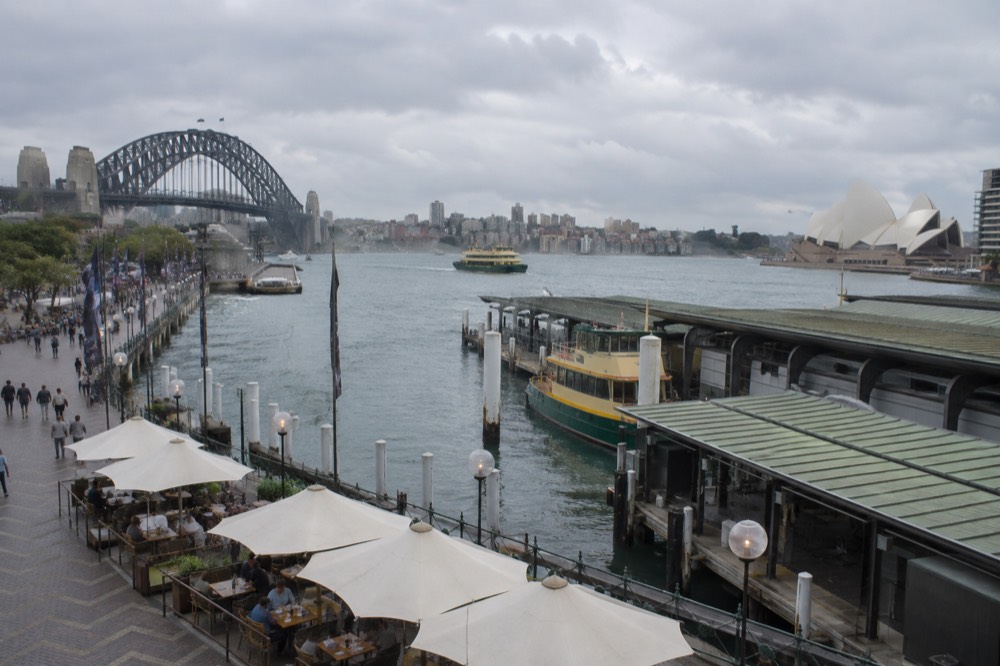
Sydney's climate surprises visitors in two ways, and both matter to a café plan. First, the seasons are inverted relative to the northern hemisphere: December through February are summer, June through August are winter. Second, the rainfall pattern is not the one people assume. The Bureau of Meteorology's long-run averages for the Observatory Hill station show June as Sydney's wettest month at 133.1 mm, wetter than any summer month, while August is the clearest month of the year with 13.4 mean clear days on average. February, in the middle of peak tourist season, is actually the cloudiest. The wider set of guides lives on Sydney Travel Guide.
The practical read: winter is a genuinely good café season. Days are short, with June averaging 5.5 hours of daily sunshine, but skies are often clear and the rooms are warm, and the comfort of a long black rises sharply with the temperature drop. Summer, by contrast, pushes the culture toward iced drinks and earlier mornings, and a February visit should assume some grey, humid days rather than constant sunshine. The full month-by-month picture is in the Sydney weather month by month guide.
| Month | Mean max °C | Mean rainfall mm | Mean clear days | Café-day verdict |
|---|---|---|---|---|
| January | 26.0 | 101.2 | 6.8 | Warm, busy, go early |
| March | 24.8 | 131.6 | 7.1 | Warm and wet, indoor tables |
| May | 19.5 | 117.4 | 9.5 | Mild, comfortable |
| June | 17.0 | 133.1 | 9.1 | Wettest month, plan indoors |
| August | 17.9 | 80.2 | 13.4 | Clearest month, best winter skies |
| October | 22.2 | 76.7 | 8.1 | Pleasant, outdoor tables |
How Do You Get Between Sydney's Café Precincts?
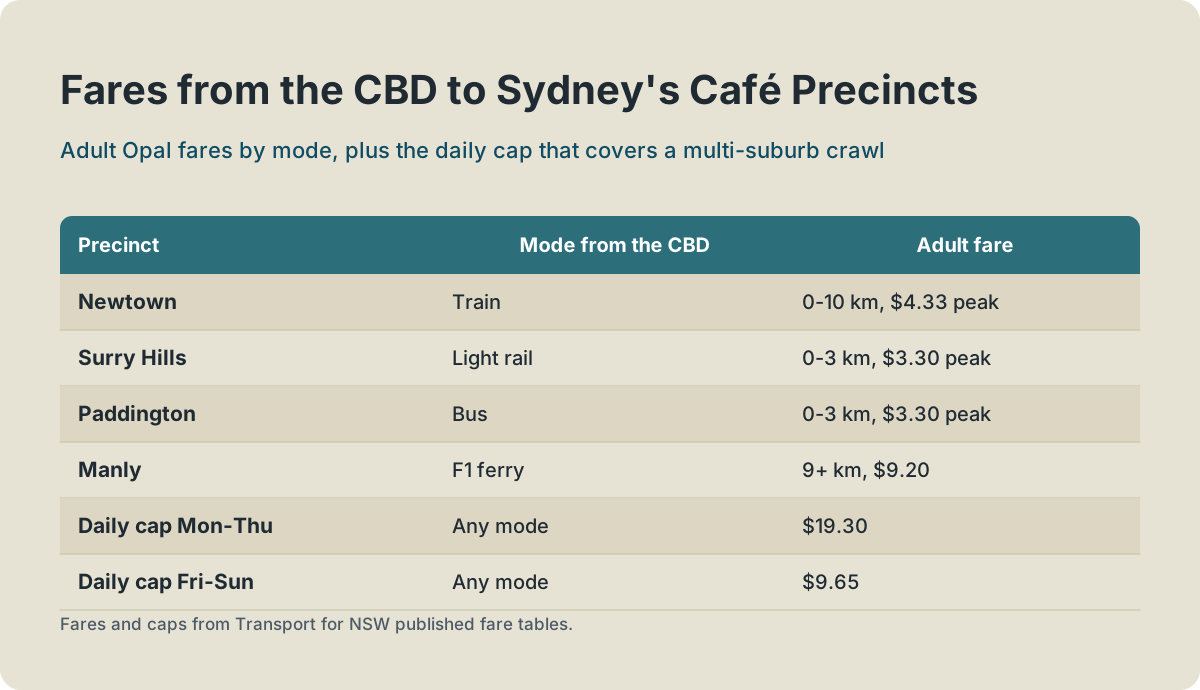
Sydney's café suburbs are all on the Opal network, and contactless card payment earns identical fares and caps to an Opal card. The daily cap is $19.30 Monday to Thursday and $9.65 from Friday to Sunday, so a multi-suburb coffee crawl costs no more than the cap on the day you travel. Trains reach Newtown, buses reach Paddington, and light rail serves Surry Hills.
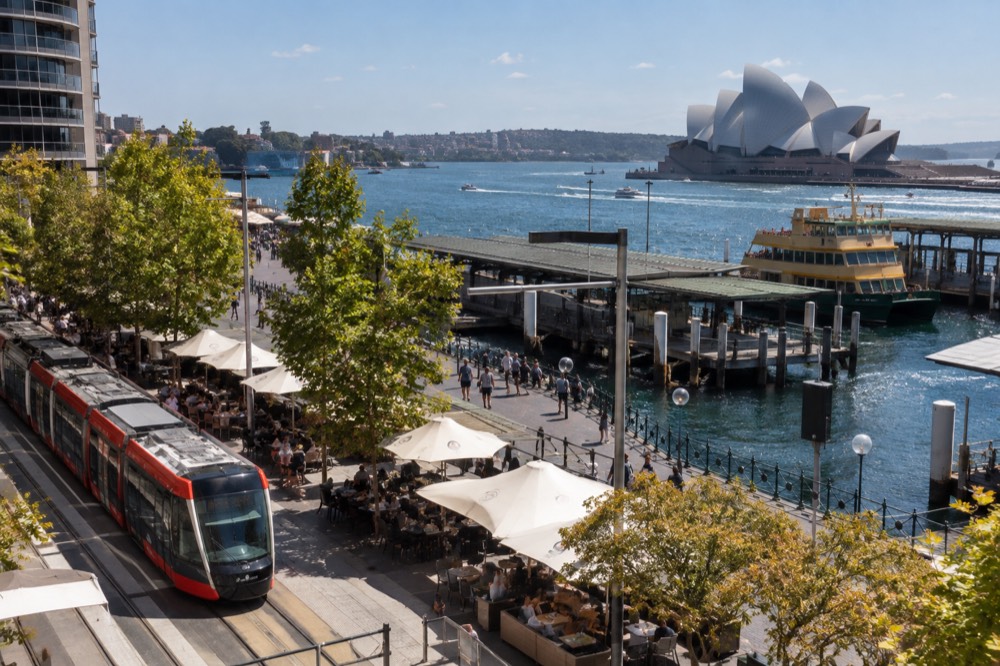
The network is generous for café purposes because the coffee suburbs cluster along a rough inner arc. Newtown is a direct train run from the CBD. Surry Hills and Darlinghurst sit on the light rail lines from Central. Paddington is a bus ride along Oxford Street. Manly, if you want a seaside flat white, is the F1 ferry from Circular Quay, and the ferry fare falls in the 9-plus-kilometre band at $9.20 one way, a trip the Manly ferry guide covers in full.
| Precinct | Mode from the CBD | Fare band (adult) | Notes |
|---|---|---|---|
| Newtown | Train | 0-10 km, $4.33 peak | Direct run, walk King Street |
| Surry Hills | Light rail | 0-3 km, $3.30 peak | Crown Street a short walk |
| Paddington | Bus | 0-3 km, $3.30 peak | Oxford Street corridor |
| Manly | F1 ferry | 9+ km, $9.20 | No off-peak ferry discount |
| CBD rooms | Walk or any mode | Within short-distance band | Everything is close |
Fares and caps come from Transport for NSW's published fare tables, and the Opal card guide for visitors explains the full system, including the 30 percent off-peak discount that applies on trains, buses and light rail from Friday to Sunday but never on ferries. One trap worth repeating here: the private fast ferry to Manly accepts Opal payment but outside the Opal fare and cap system, so a visitor who thinks they have hit the daily cap can still be charged more on that boat. The public F1 ferry is the one that behaves normally.
Can You Build a Whole Sydney Day Around Coffee?
Yes, and Sydney rewards it: a realistic coffee day pairs a morning crawl through one inner suburb with a long brunch, an afternoon walk, and an evening meal or harbour cruise. Coffee anchors the morning, but the city's food and harbour experiences carry the afternoon and night, and a planned day avoids both wasted transit time and the 9am weekend café crush.
A sample structure works like this. Start early in Surry Hills or Newtown, before 9am, and take the first coffee standing at the bench. Move to a second room for a sit-down flat white and brunch. Late morning, walk off the meal: the Sydney coastal walks guide and the Bondi to Coogee coastal walk guide both offer routes where a café sits near the finish. Mid-afternoon is the natural espresso dip, and Sydney's low winter UV and clear August skies make that walk genuinely pleasant outside summer.
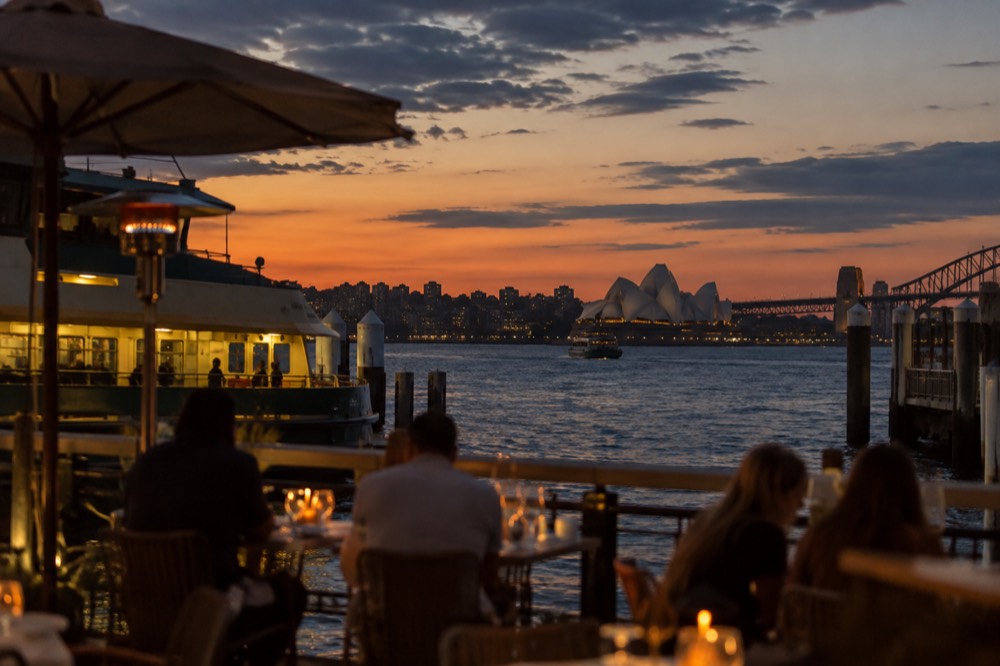
For the evening, the harbour does the work. An early-dinner cruise is the natural companion to a day spent walking and drinking coffee, since it converts the afternoon's appetite into a waterfront meal without another long transit leg.
The cruise above departs from Darling Harbour, runs just under two hours, and pairs a three-course meal with the working harbour views that Sydney's land-based restaurants cannot offer. Book the early sitting and you are back on land in time for a nightcap in the Darling Harbour guide precinct.
Visitors with more than a weekend can push the coffee theme outward, too. The Blue Mountains sit two hours west by road, and the mountain towns have their own café culture worth the trip; the Blue Mountains day trip guide covers the full itinerary, and an all-inclusive guided day trip handles the driving while you enjoy Katoomba's cold-air espresso.
That tour above runs about ten hours with a local guide and covers the headline sights without you needing to plan a single connection, which is the right trade after several early café mornings. Either way, the mountain air makes the flat white taste better; that part is not sourced, it is simply what a hot cup does at 1,000 metres in July.
Common Questions About Sydney Coffee
What coffee is Sydney known for?
The flat white. Sydney's café culture is built on espresso milk drinks, and the flat white, a smaller, stronger milk coffee with thin foam, is the city's default order. Long blacks are the standard black-coffee order, and piccolos are common among baristas themselves.
Where is the best coffee in Sydney?
There is no single best, but the densest strips are Surry Hills and Darlinghurst, followed by Newtown along King Street, Paddington, and the CBD's weekday espresso bars. Quality is high across the city, so the more useful question is which suburb suits your morning.
Do you tip for coffee in Sydney?
No. Tipping is not expected at café counters, and card payment is near-universal. Gratuities apply mainly to full-service restaurants, and even there they are modest by United States standards.
Is coffee expensive in Sydney?
Specialty coffee in Sydney's inner suburbs is priced in line with other major Australian cities, and the cost sits within the general expense profile the [Sydney trip cost breakdown](/guides/sydney-trip-cost-breakdown/) describes. Prices vary by suburb and venue, so a CBD room will usually cost more than a Newtown one.
What does "takeaway" mean in a Sydney café?
It means to-go. Say "takeaway flat white, thanks" at the counter and you will get the drink in a disposable cup. If you sit down, most rooms serve in ceramic, and lingering is normal outside weekday peak hours.
Can you do a coffee tour of Sydney?
There is no dedicated coffee crawl in the tour roster here, but the guided food tour covers six tastings across the city with a local guide, and its route passes through the same neighbourhoods as the café strips. A self-guided crawl through Surry Hills and Newtown is easy on foot and rail.