Sydney Tipping and Etiquette: What Visitors Actually Need to Know
Tipping in Sydney is genuinely optional, and the etiquette rules that matter here are different ones: quiet queues, sun safety, smoke-free zones and a public holiday calendar that shifts your costs.
Short answer
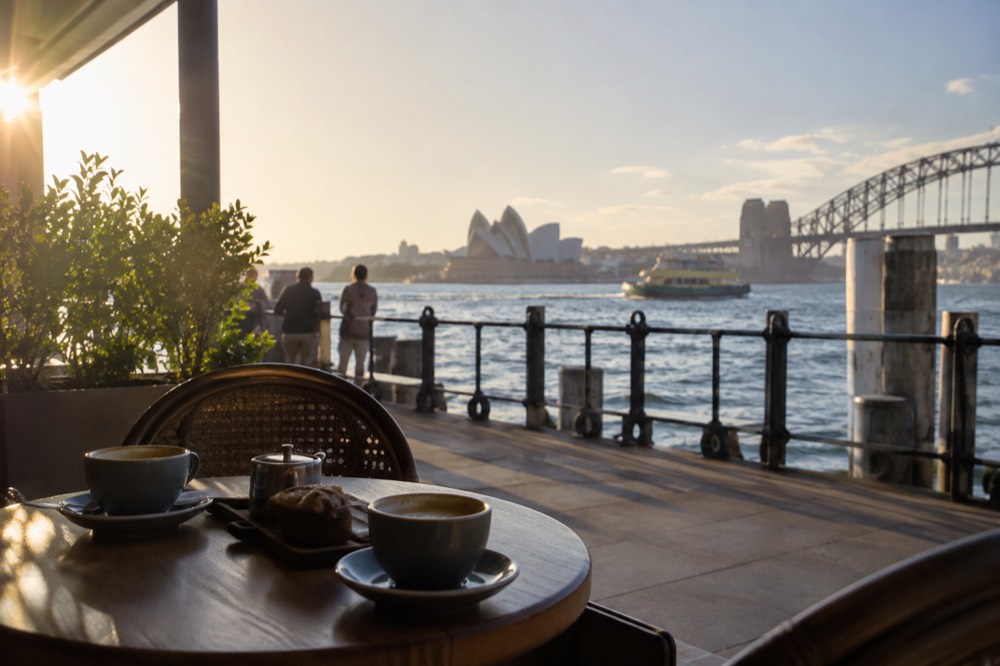
Tipping in Sydney is optional and never automatic. No service is added to your bill, and nobody will chase you for a tip. Round up a taxi fare or leave 5 to 10 percent at a good restaurant if you choose, but the etiquette that actually matters locally is different: swim between the flags, queue quietly, and respect smoke-free zones.
Sydney runs on a simple rule that surprises almost every visitor arriving from the United States: nobody here expects a tip. No service charge appears on your restaurant bill, no bartender has a jar out, and no tour guide waits at the door for a little extra. The workers are paid a legal minimum wage, and the price on the menu is the price you pay.
That does not mean etiquette does not exist. It does, and it is a different set of rules from the ones you may be used to. Some of them are about money, most are not. This guide covers both: what to do with your wallet, and the small behaviours that mark you as a considerate guest in this city rather than a confused one. If you want the wider money picture, our Sydney trip cost breakdown covers daily budgets, and is Sydney expensive tackles the big question head on.
Do You Tip in Sydney?
No, tipping is not required or expected anywhere in Sydney. Australia pays hospitality workers a legal minimum wage, so tips are a genuine bonus rather than a wage subsidy. No service charge is added to restaurant bills, and leaving nothing is completely normal. If a meal or a service was excellent, rounding up or leaving 5 to 10 percent is a kind gesture, and it is never refused.
The cultural logic is worth understanding, because it explains why tipping feels different here. In the United States, tipped workers rely on tips to reach a living income. In Australia, the minimum wage is set nationally and applies to waiters, bartenders, hotel cleaners and everyone else, so a tip does not decide whether someone eats that week. This is why tips here are small, occasional and unremarkable. A bartender will not remember you for tipping, and will not think less of you for not tipping.
Where tips do happen, they are usually rounding gestures. Leave the loose coins from a cafe bill, or round a taxi fare up to the nearest convenient amount. Card terminals sometimes offer a tip prompt on the screen, especially in tourist areas. You can tap "no tip" without a flicker of awkwardness, and locals do exactly that. Nobody watches the screen.
One trap worth naming: a "Sunday surcharge" line on a menu is not a service charge in disguise. Many Sydney restaurants add around 10 percent on public holidays to cover higher penalty-rate wages, and it is legally required to be shown on the menu. It is not a tip, it is not optional, and it goes to the business rather than to your waiter. If you see it, factor it into the bill and do not double-tip on top of it.
How Much Should You Tip in Restaurants and Cafes?
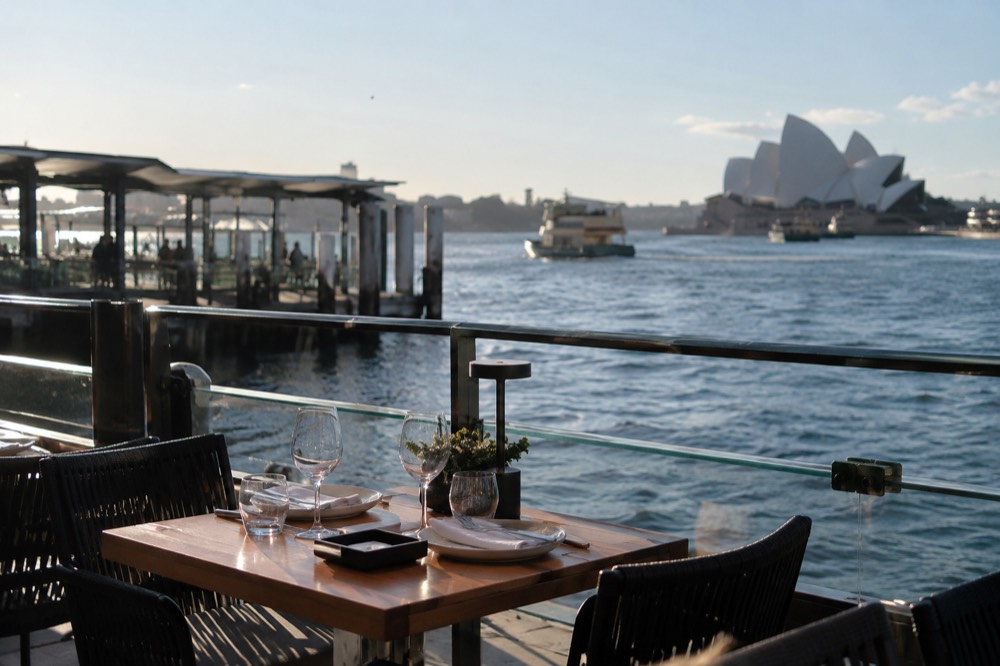
Nothing is the default, and it is entirely acceptable. If service was genuinely excellent, leaving roughly 5 to 10 percent of the bill in cash or via the card terminal is a generous move that regulars make occasionally, not a social obligation. In cafes, tipping is almost unheard of beyond leaving loose change in a jar by the register. A 10 percent public holiday surcharge on the menu is separate and is not a tip.
The practical rhythm in a Sydney restaurant looks like this. You are usually given the bill only when you ask for it, and you pay at the table or at a counter on the way out. There is no dance of the card machine hovering while you decide on a percentage. If you want to leave something, cash on the table is the cleanest route, or use the tip prompt if the terminal offers one.
Cafes operate on looser conventions. Counter service means nobody has waited on you, so the change jar near the register is the whole tipping economy. Drop your coins after a flat white if you like, or keep them. Both happen a thousand times an hour across this city.
For visitors who want to eat well without guessing at conventions, a guided food walk removes the ambiguity entirely, and Sydney has a strong one. The six-tasting food tour moves through several neighbourhoods with a local guide who handles every interaction, which is worth considering if the etiquette questions feel like work.
Here is how the common situations sort out in practice:
| Situation | Common local practice | Expected? |
|---|---|---|
| Full-service restaurant, good meal | 5-10 percent, or round up | No |
| Full-service restaurant, ordinary meal | Nothing, pay the bill | No |
| Cafe, counter service | Loose change in the jar | No |
| Taxi or rideshare | Round up to the nearest few dollars | No |
| Hotel housekeeping | Nothing, occasionally A$5 for a long stay | No |
| Tour guide | Nothing, occasionally A$5-10 for an outstanding day | No |
| Bar, ordering at the counter | Nothing at all | No |
Our best restaurants in Sydney guide covers where to eat across the city, and the Sydney food guide goes deeper on what the city is actually famous for plate by plate.
What About Hotels, Tours and Guides?
Hotel staff in Sydney do not expect tips. Bellhops, concierges and housekeepers are paid properly, and a tip is a rare bonus rather than a norm. Tour guides are the same: a tip is a thank you for an exceptional day, not a wage top-up, and roughly A$5 to A$10 for a brilliant full-day guide is the ceiling of what locals do. Nobody will prompt you.
The one place where a small tip feels natural is a private guide or a small-group day tour where one person has carried your whole experience. If a guide has driven you to the Blue Mountains, read the weather, found the wildlife and kept a group of ten people happy for ten hours, a few dollars per person is a decent thank you. It is still optional, and on big coach tours it is essentially never done.
For the paid attractions themselves, there is no tipping dimension at all. Ticket desks, aquarium staff and observation-deck attendants are all simply doing their jobs, and the price of admission covers everything. This is one reason a multi-attraction pass works cleanly here: no hidden extras, no expected gratuity layer, just entry. The four-attraction combo pass bundles SEA LIFE Sydney Aquarium, Sydney Tower Eye, WILD LIFE Zoo and Madame Tussauds, and it suits families who want the big paid sights handled in one purchase.
On the water, the same rule holds. Ferry crews, sightseeing cruise crews and kayak guides are all salaried. A sunset or morning harbour cruise is one of the city's best-value experiences, and the harbour sightseeing cruise runs at a price that already includes everything you need on board.
Taxis, Rideshare and Everyday Small Payments
Round up a taxi fare to the nearest convenient amount and that is the whole convention, often to avoid fumbling for coins. Rideshare apps let you add a tip afterwards and most riders do not. There is no expectation from drivers, and the fare you are quoted is the fare you pay. Contactless card payment is standard everywhere, including in taxis.
Sydney taxis are required to accept card payment, and nearly every rider taps on and off without cash. The rounding habit survives from the cash era: you round up to the nearest dollar or two, and the driver says thanks and means it either way. Rideshare works through the app, so any tip is added digitally after the ride, silently, and is entirely your call.
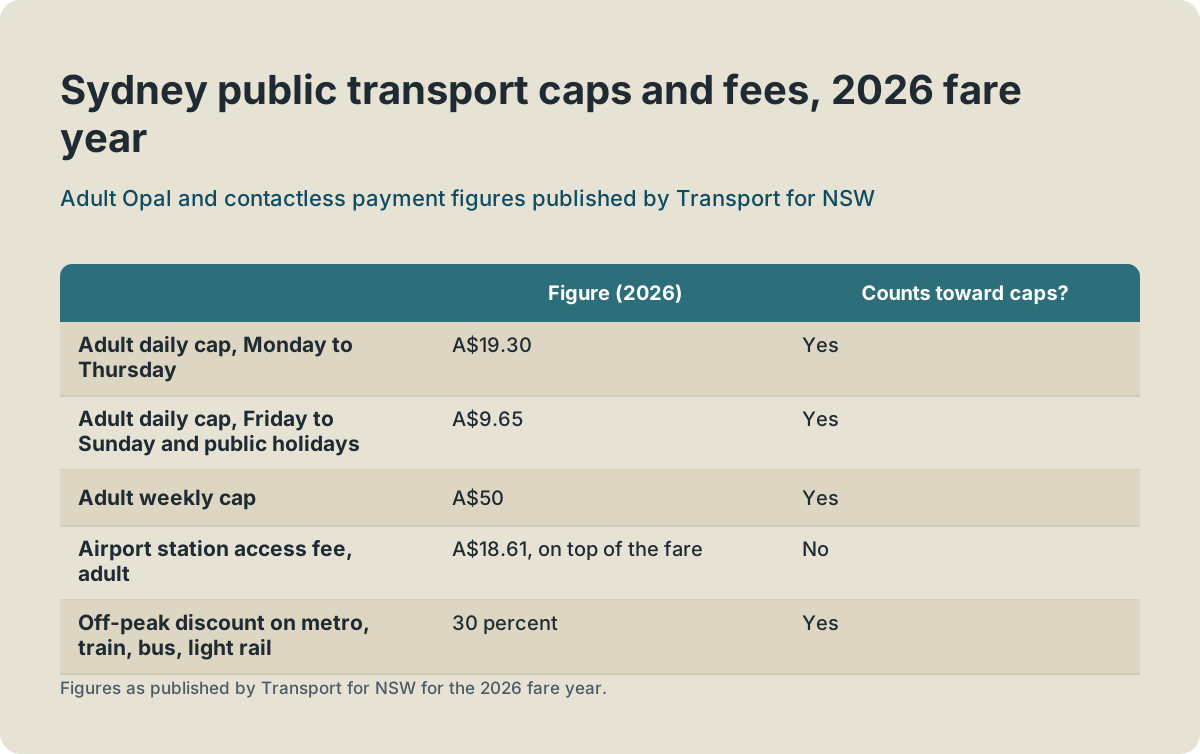
While we are on everyday payments, two local facts save visitors real money. Opal and contactless travel on public transport is capped, and the caps make a difference to how you plan a day of sightseeing. Transport for NSW publishes the current caps, and they are:
| Payment fact | Figure (2026 fare year) |
|---|---|
| Adult daily cap, Monday to Thursday | A$19.30 |
| Adult daily cap, Friday to Sunday and public holidays | A$9.65 |
| Adult weekly cap | A$50 |
| Airport station access fee, adult | A$18.61, on top of the fare |
| Off-peak discount on metro, train, bus, light rail | 30 percent |
The airport station access fee is the number to know, because it sits outside the daily and weekly caps and catches nearly every arriving visitor. The details, plus the cheaper 400 bus alternative, are in Sydney airport to the city, and the Opal card guide explains the whole system. A public holiday is genuinely the cheapest day to travel widely, because the A$9.65 cap applies.
Etiquette Rules That Genuinely Surprise Visitors
The etiquette locals notice has little to do with money. The big ones are: walk on the left and stand on the left on escalators, let people off the train before you board, queue without asking, and greet with a casual first-name basis almost immediately. Sydney is informal, and formality itself is what reads as stiff.
A few specifics. People step aside on footpaths and escalators without being asked, and blocking a train door while someone is trying to exit is the closest thing Sydney has to a mortal sin. "Please" and "thanks" are constant, and "ta" is a common short form of thanks you will hear at every register. First names arrive fast: your waiter, your guide and your barista will likely use yours if they can see it, and using theirs back is normal rather than forward.
Dress codes barely exist. Jeans are fine at the Sydney Opera House and in almost every restaurant in the city, a question we answer in full in can I wear jeans to Sydney Opera House. The only places with real dress standards are a small number of upmarket bars and fine-dining rooms, and they say so when you book.
Sun behaviour is the etiquette rule with actual safety behind it. Locals shade, hat and slop on sunscreen from September through April, and the official advice from the radiation protection authority is to use sun protection whenever the UV index reaches 3 or above, which in Sydney is most of the year, with extreme levels above 11 in summer. Applying sunscreen at the beach is not a tourist tell here, it is what everyone does. Our Sydney weather month by month guide puts the UV and temperature picture in one place.
Beach and Surf Etiquette
Swim between the red and yellow flags at a patrolled beach, and that is the single most important rule of Sydney etiquette, because it is a safety rule rather than a courtesy. Unpatrolled stretches of coast kill people every year, and every recorded coastal drowning in the latest national report happened outside the flags, outside patrol times, or at an unpatrolled location.
The flags are not decoration. Professional lifeguards in blue, and volunteer surf lifesavers in red and yellow, patrol the city's major beaches, and Bondi, Bronte, Tamarama, Coogee and Manly are patrolled year-round, with Dee Why added to the year-round list in 2026. Most other beaches are patrolled only through the warmer months, roughly late September to late April. If no flags are up, the honest answer is that you swim at your own risk, and the better answer is to move to a patrolled beach.
Between the flags, the courtesy rules are simple. Do not swim outside them, do not dive into unknown water, and do not take a surfboard into a flagged swimming area, because boards and swimmers are kept apart for a reason. If you are learning, lessons are the local way in, and surfing lessons in Sydney covers the options at Bondi and elsewhere.
One more water rule that matters: stay out of the water while it is raining and for up to one day after heavy rain at ocean beaches, and for up to three days at harbour and estuarine swim sites, which is the official Beachwatch advice on water quality after storms. The best beaches in Sydney guide ranks the swimming options, and the Bondi to Coogee coastal walk explains the pools and patrolled stretches along the eastern beaches.
Smoking, Vaping and Drinking Rules
Smoking and vaping are restricted far more tightly than many visitors expect. Smoke-free law covers all enclosed public spaces plus outdoor dining areas, playgrounds within 10 metres, and public transport stops. Nicotine vapes are pharmacy-only in Australia, so you cannot legally buy one at a convenience store, and bringing more than a small personal quantity into the country is not allowed.
The practical consequences for a visitor are straightforward. There is no smoking or vaping inside any bar, restaurant, cafe or venue, and no ashtray on the table will tell you otherwise, because there will not be one. Smoking at an outdoor dining table is generally off-limits too. If you smoke, step well away from doorways and dining areas, and expect to be asked to move if you get it wrong. NSW Health publishes the full rules on its tobacco pages.
Drinking etiquette is relaxed but regulated. The legal drinking age is 18, licensed venues scan ID rigorously, and carrying an open alcohol container on the street or on public transport is an offence in most of the city. Alcohol bought at a bottle shop is for drinking at home or in a designated picnic area, not on the footpath. For the social side, our Sydney bars and pubs guide covers the local culture, and do and don'ts in Sydney collects the visitor mistakes in one place.
| Rule | What applies |
|---|---|
| Smoking indoors | Banned in all enclosed public spaces |
| Smoking at outdoor dining | Banned at licensed outdoor dining areas |
| Vaping products | Nicotine vapes pharmacy-only |
| Drinking age | 18, ID routinely scanned |
| Street drinking | Restricted in most public areas |
| Bringing vapes into Australia | Small personal quantities only |
Public Holidays, Surcharges and the Calendar That Shifts Your Bill
A handful of dates each year change what you pay, and knowing them is worth more than any tip. On NSW public holidays, many restaurants add a surcharge of around 10 percent to cover penalty wages, and public transport caps drop to the cheaper weekend rate, A$9.65, making a holiday the cheapest day to travel widely. The Bank Holiday in August is not a public holiday for most workers, and shops and attractions open normally.
The surcharge must be printed on the menu, so you will never be ambushed by it, but a visitor who does not know it exists sometimes mistakes it for a service charge and tips on top. Do not. The NSW Government publishes the full public holiday list, and the calendar is worth a glance before you plan expensive meals: Christmas Day, Boxing Day, New Year's Day, Australia Day, Easter and Anzac Day are the ones most likely to affect a holiday itinerary, and our Sydney public holidays and school holidays guide puts them in a visitor's context.
The counterweight is that the free side of Sydney is unusually large. The Royal Botanic Garden Sydney is free to enter, the Australian Museum has free general entry, and the Art Gallery of New South Wales is free too, and open late on Wednesdays until 10pm. A visitor who mixes free institutions with a few paid highlights spends far less than one who buys tickets all week. The free things to do in Sydney guide lists the lot, and Sydney on a budget builds whole days around them.
What You Can Safely Skip
You can skip tipping entirely, skip dressing up, and skip any worry about hidden service charges, because Sydney has none. You can also skip the airport access fee by taking the 400 bus, skip paying full price at the zoo by booking online, and skip the private fast ferry if you want your Opal cap to apply, because the private Manly fast ferry is excluded from Opal benefits.
The fast ferry trap deserves one more sentence, because it is a genuine money leak: the private operator accepts Opal cards through OpalPay, but the fares differ and the caps and transfer discounts do not apply, so a visitor who thinks they have hit the daily cap keeps paying. The public F1 ferry to Manly is the one with full Opal benefits, at A$9.20 one way from Circular Quay, and how to pay for a Manly ferry explains the difference in detail.
Taronga Zoo is the other easy saving. Booking online is roughly 10 percent cheaper at every ticket tier, and the Taronga Zoo guide covers the ferry-plus-entry bundles that make the whole day cheaper still.
For the big paid sights, the combo pass remains the simplest way to cover several in one purchase, and it suits a family itinerary better than four separate tickets. Whatever you book, the etiquette around it stays the same: pay the printed price, enjoy it, and keep your spare change for the ferry ride home.
The last word on etiquette is that Sydney forgives almost everything except rudeness to staff and ignoring the flags at the beach. Pay the printed price, be warm to the people serving you, swim between the red and yellow, and you will fit in better than you expect. The city that publishes its own weather normals, caps its own fares and makes its head institutions free is not looking for your spare change. It is, in the way of Sydney Travel Guide's home city, mostly looking for you to have a good time without being fleeced.
Common Questions About Tipping and Etiquette in Sydney
Do you tip in Sydney restaurants?
No, it is not expected. Restaurant staff are paid a proper legal wage, no service charge is added to the bill, and leaving nothing is normal. If the meal was excellent, 5 to 10 percent is a generous extra that regulars make occasionally.
Do you tip taxi drivers in Australia?
Not as a rule. The common gesture is rounding the fare up to a convenient amount, mainly to avoid coins. Rideshare apps have an optional digital tip that most riders never use, and drivers do not expect it.
Is service included in Sydney restaurant bills?
There is no service charge in the American or European sense, and the menu prices already include the 10 percent GST. The only extra you may see is a public holiday surcharge, around 10 percent, which must be shown on the menu and is not a tip.
Do you tip hotel staff in Sydney?
No. Bellhops, concierges and housekeepers do not expect tips, and leaving nothing is entirely normal. An occasional A$5 for housekeeping on a long stay is a kind gesture, not a convention.
What is the biggest etiquette mistake visitors make in Sydney?
Two stand out: blocking a train door while people are trying to get off, and swimming outside the red and yellow flags at the beach. The first makes you look rude, the second puts your life at risk. Everything else, including not tipping, is forgiven instantly.
Do you tip tour guides in Sydney?
It is optional and uncommon. A few dollars for a private guide who carried an exceptional day is a genuine thank you, but on standard group tours and cruises it essentially never happens, and no guide will prompt you.