Sydney Observatory: What to See at Australia's Oldest Working Observatory
The Sydney Observatory sits on the highest natural ground in the city centre, wedged between The Rocks and the harbour bridge approach. It is one of the few places in a modern capital city where you can look through a heritage telescope at the night sky, and it doubles as a museum, a park with some of the best free harbour views going, and a New Year's Eve vantage point.
Short answer
The Sydney Observatory is a heritage astronomy site on Observatory Hill in The Rocks area, run by the Museum of Applied Arts and Sciences. It offers telescope viewing sessions and a small museum, and the surrounding hilltop park is free to wander with wide harbour and Sydney Harbour Bridge views. Session times and days are limited, so check the official site before you go.
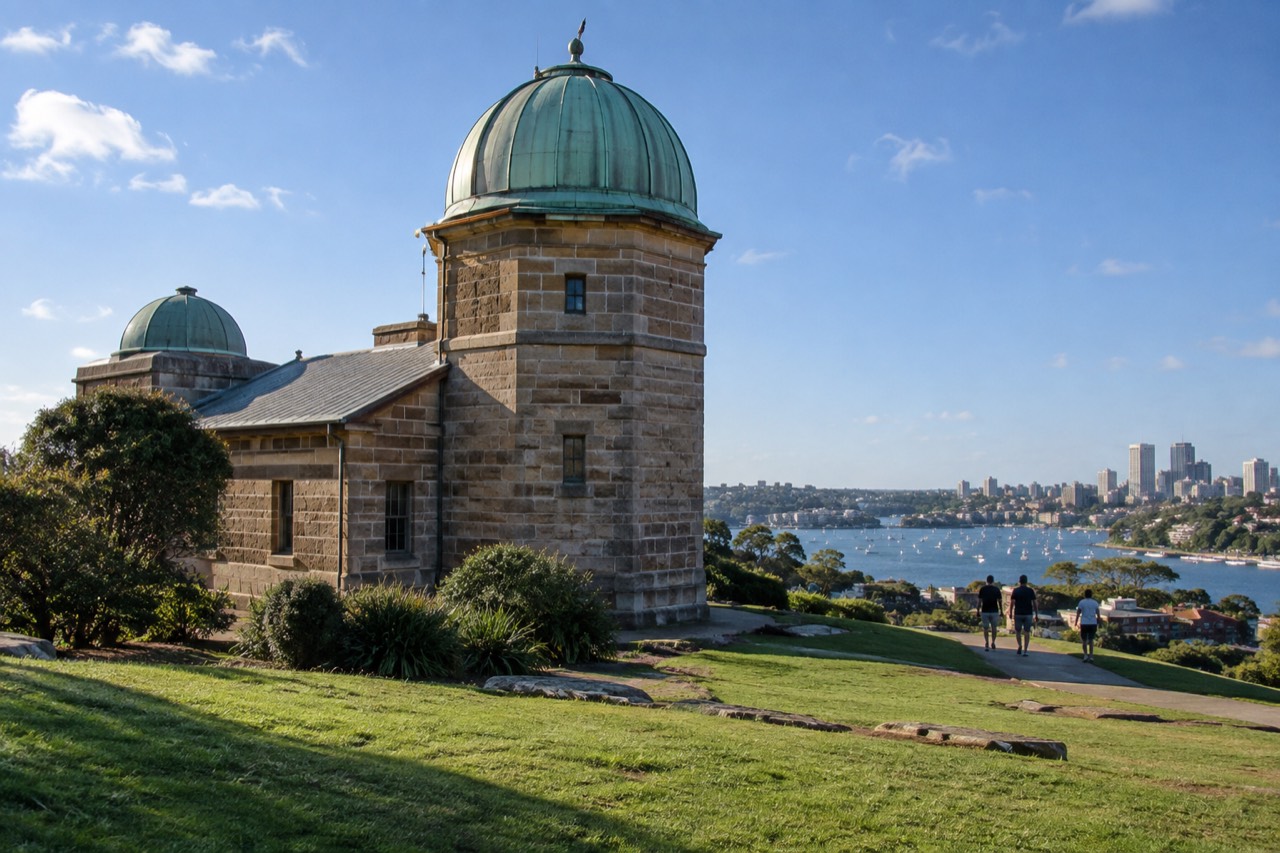
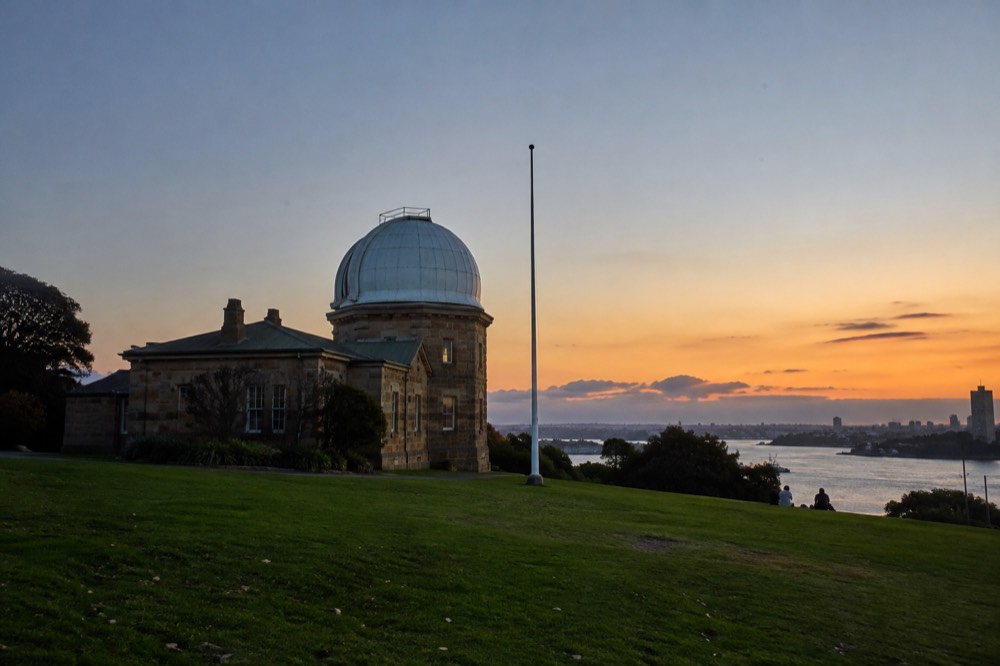
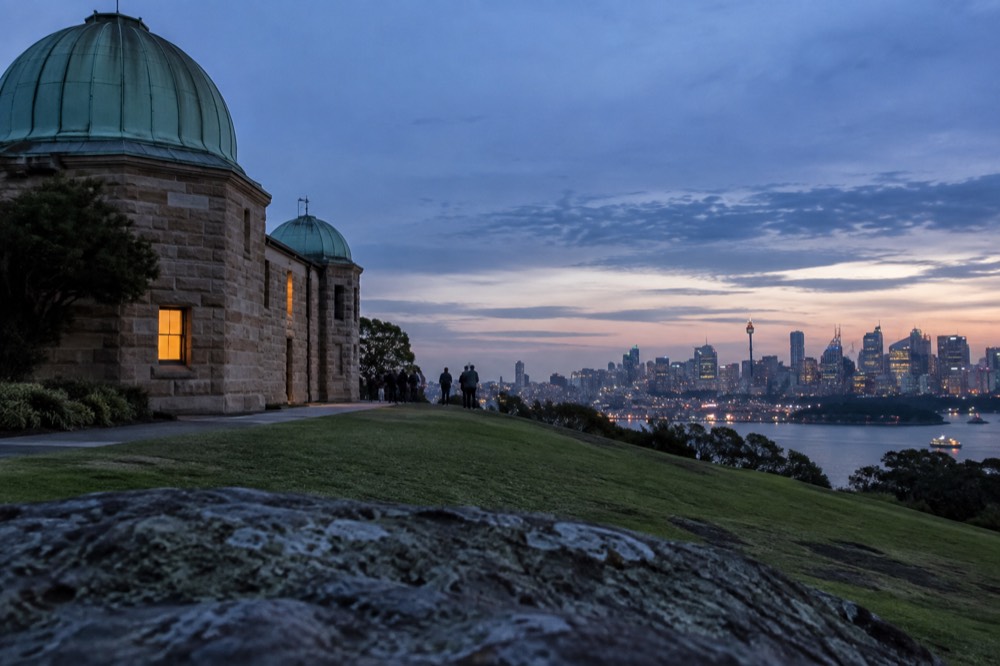
The Sydney Observatory occupies one of the best pieces of real estate in the city, and most visitors walk straight past it. The building sits on Observatory Hill, the highest natural point in the Sydney central business district, a short walk uphill from The Rocks and the western approach of the Sydney Harbour Bridge. The hill itself is public parkland, open to anyone, with grass, fig trees and an unbroken view over the harbour to the North Shore. The observatory building, a heritage structure with two distinctive telescope domes, is run by the Museum of Applied Arts and Sciences, the same institution behind the Powerhouse collection.
That institution is in the middle of a generational change. Powerhouse Ultimo has been closed to the public since 4 February 2024 for a major redevelopment, and the new Powerhouse Parramatta is scheduled to open on 7 November 2026. The observatory, as the museum's smallest and oldest site, carries the institution's science story in the meantime, and it does that with working telescopes rather than display cases alone.
This guide covers what the observatory actually offers, how to get there on public transport, the best months for clear skies, and what to combine with a visit, from the bridge's Pylon Lookout to the harbour cruises that leave from nearby wharves.
What Is the Sydney Observatory?
The Sydney Observatory is a former working astronomical and meteorological station, now a museum and public observatory run by the Museum of Applied Arts and Sciences. It sits on Observatory Hill in Millers Point, at the edge of The Rocks, and it still puts on night sessions where visitors look through heritage telescopes at the moon, planets and bright stars. The surrounding hilltop park is free, open to the public and gives some of the best unpaid views of Sydney Harbour and the bridge.
The site's story is genuinely unusual for a city centre. What began as a colonial astronomical and signalling post later became the state's official timekeeper and weather station, and the functions only wound down as modern instruments moved elsewhere. The building survived with its domes and much of its original equipment intact, which is why a visit today mixes museum displays with actual sky viewing rather than pure nostalgia.
Two things surprise most first-time visitors. The first is the location: you are a few hundred metres from the cruise-ship berths at Circular Quay West and the pub laneways of The Rocks, yet standing on a quiet, grassy hill with cockatoos in the trees. The second is that the night sessions are genuinely dark-sky adjacent. Light pollution from a city of this size is real, but the moon, Saturn's rings, Jupiter's cloud bands and bright star clusters all come through the heritage refractors clearly enough that the session is not a token gesture.
The observatory is small. This is not a full-day attraction; it is a one-to-two-hour experience, or a free half-hour on the hill if a session is not running. Plan it as one thread of a day in The Rocks and the harbour foreshore rather than as the destination itself, and it pays off. Our Sydney Travel Guide covers the wider neighbourhoods if you are still shaping the rest of the day.
What Can You Actually See and Do There?
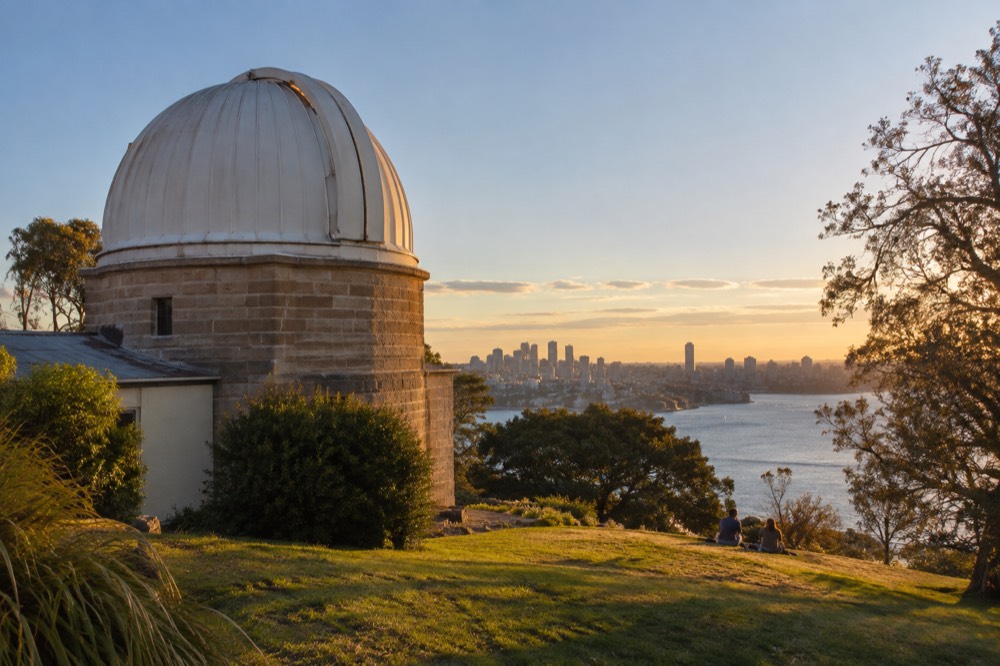
A visit splits into three parts: the museum displays inside the heritage building, the telescope sessions that run when the sky cooperates, and the free hilltop park outside. Daytime visitors get the museum, the history and the views; evening session holders get time at the eyepiece of working telescopes. The park itself needs no ticket at all, and it is the single best free vantage point for the harbour bridge within walking distance of The Rocks.
Inside, the displays cover the site's astronomical and timekeeping past: the instruments, the signalling role the point played when ships needed accurate time to set their chronometers, and the meteorological records that were kept here for well over a century. Some of that weather record matters more than you might expect. The Bureau of Meteorology's long-running Sydney climate station, Observatory Hill, takes its name from this hill, and the city's official climate normals, the averages every Sydney weather article leans on, were compiled from the record kept essentially on this spot. When you read that Sydney's annual mean maximum is 21.8 °C, that number's home address is this hill.
The telescope sessions are the drawcard. Sessions are held on limited days and times, they are weather dependent, and they book out, so check the museum's official site for current session days and times before building your evening around one. Do not turn up on spec expecting a session to be running. What you see through the eyepiece depends on the night: the moon at any phase is the reliable crowd-pleaser, planets when they are up, and double stars or nebulae when the seeing is good. Guides run the sessions, and they are used to first-time telescope viewers and to children.
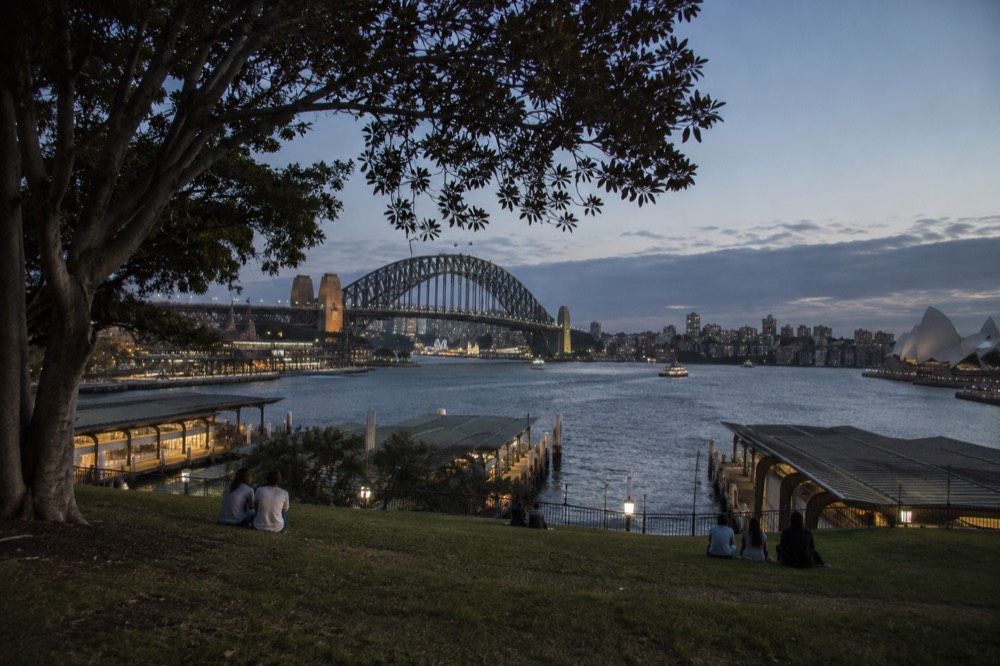
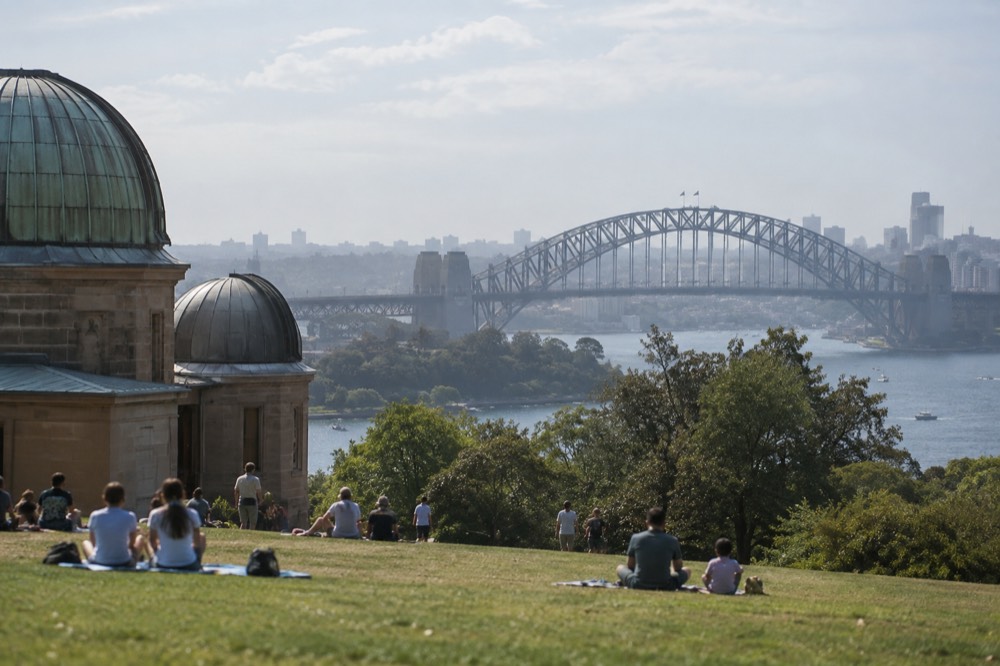
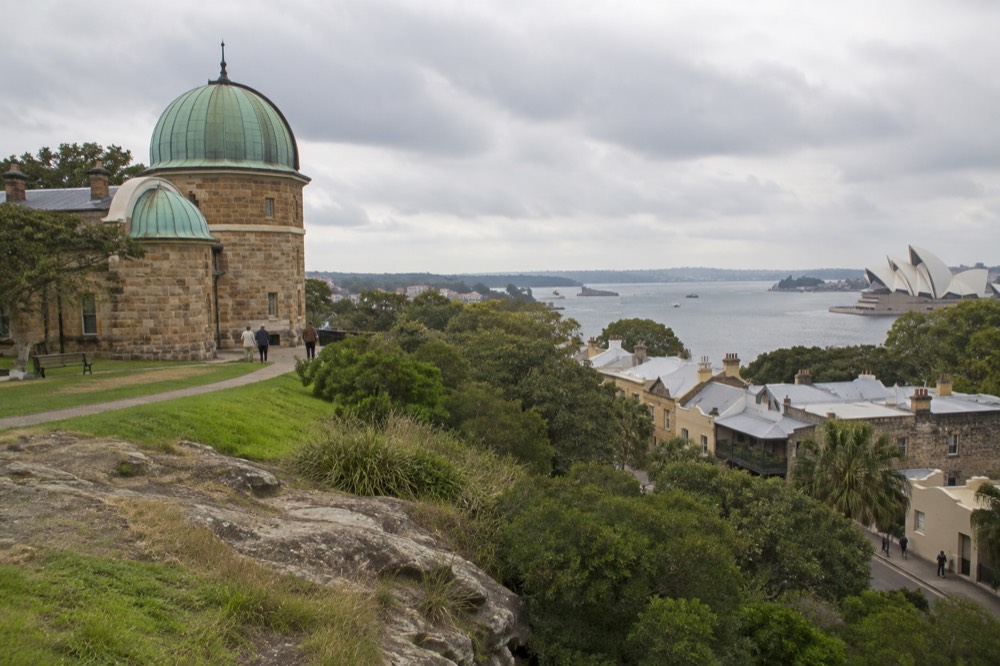
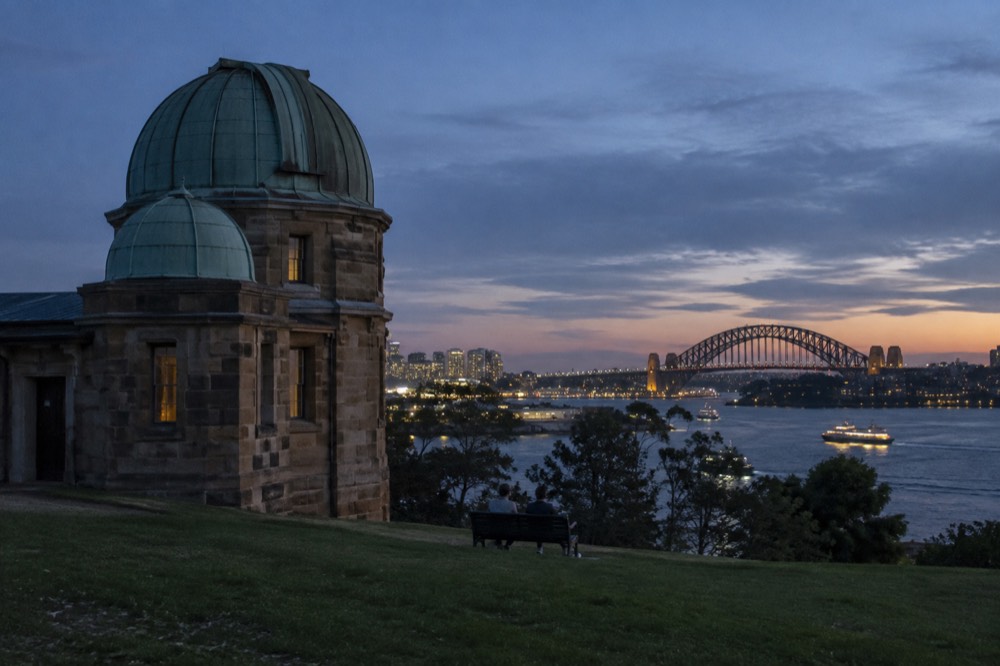
The hill is the underrated third act. Because it is the highest natural ground in the city centre, the park looks east over Circular Quay and the Opera House, north across the water to Kirribilli and the North Shore, and straight across at the western spans of the Sydney Harbour Bridge, close enough that you can see people on the bridge's pedestrian walkway. Locals come here with takeaway coffee and picnic rugs; few tourists make the five-minute climb from The Rocks' main strip. Sunset is the sweet spot, and photographers who want the bridge against an evening sky without a ticketed viewpoint often end up here. Our guide to the best lookouts in Sydney places the hill in the wider context of the city's viewing spots, and our piece on Sydney sunrise and sunset spots covers the timing in detail.
For visitors building a multi-stop day, the observatory pairs naturally with the paid attractions around the harbour. If you are doing the rounds of the big ticketed sights, a combo pass can cut the per-attraction cost:
The pass bundles SEA LIFE Sydney Aquarium, Sydney Tower Eye, WILD LIFE Sydney Zoo and Madame Tussauds into one ticket, which suits families doing a full attractions circuit. The Tower Eye works as the observatory's glass-and-steel opposite number: one gives you heritage instruments and a free hill, the other gives you a paid deck 250 metres up with a revolving view. The sightseeing cruise covers the water side of the same geography you see from the hill.
How Do You Get There, and When Is It Open?
The Sydney Observatory is a 5 to 10 minute uphill walk from The Rocks and about 10 minutes from Circular Quay station and the ferry wharves. The nearest train line serves Circular Quay, the light rail stops at Wynyard a few minutes further out, and the F3 and F4 ferries from Circular Quay stop at nearby Darling Harbour and Pyrmont wharves on the other side of the point. Opening days and session times are limited and change seasonally, so check the museum's official site before you go.
The walk is the thing to understand. From Circular Quay, head west along the foreshore past the Museum of Contemporary Art Australia, then climb through the lower streets of The Rocks; the hill is signposted and the observatory domes are visible from several angles on the approach. From Wynyard, cut north through the city blocks to the bridge approach and the hill is on your right. It is steep in short bursts, so allow time if you are pushing a pram or travelling with anyone who struggles with inclines; our accessible Sydney guide covers the city's hillier terrain in more depth.
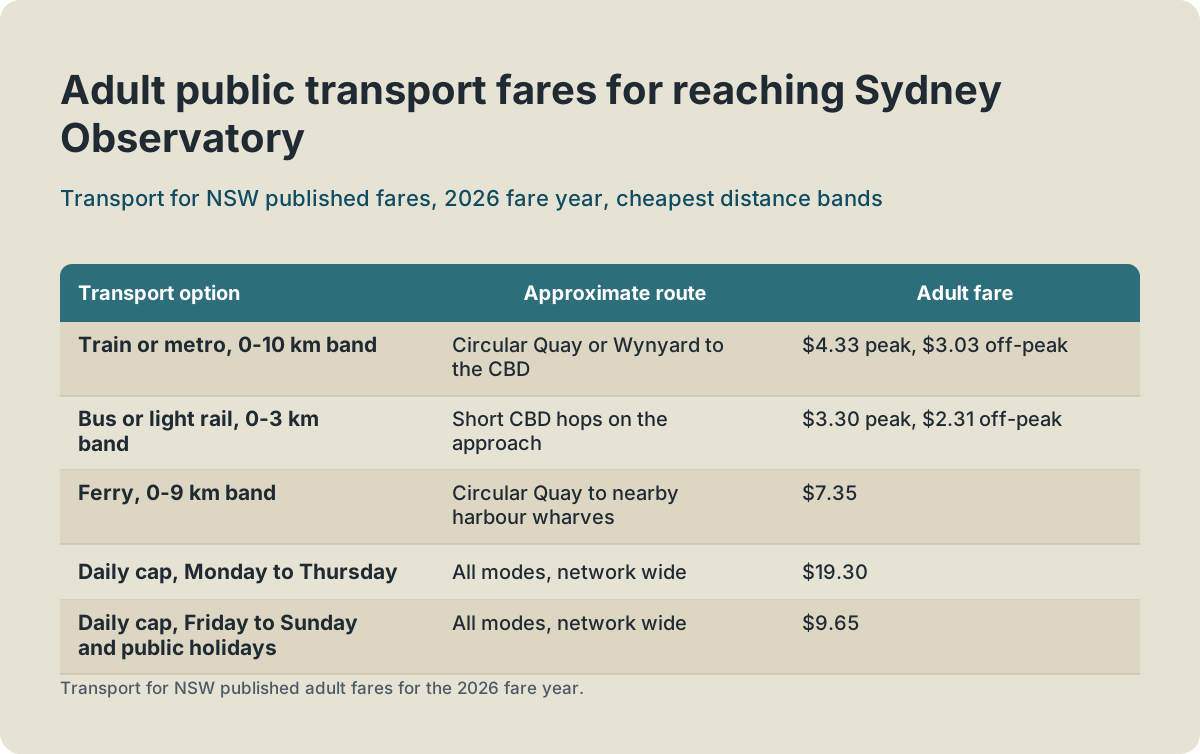
Public transport fares are distance based, and the short hops involved here sit in the cheapest bands. The following table uses Transport for NSW's published adult fares for the 2026 fare year; fares are reset annually, so treat these as current indicative figures rather than permanent prices.
| Transport option | Approximate route | Adult fare |
|---|---|---|
| Train or metro, 0-10 km band | Circular Quay or Wynyard to the CBD | $4.33 peak, $3.03 off-peak |
| Bus or light rail, 0-3 km band | Short CBD hops on the approach | $3.30 peak, $2.31 off-peak |
| Ferry, 0-9 km band | Circular Quay to nearby harbour wharves | $7.35 |
| Daily cap, Monday to Thursday | All modes, network wide | $19.30 |
| Daily cap, Friday to Sunday and public holidays | All modes, network wide | $9.65 |
Contactless cards and devices are charged exactly the same as an Adult Opal card and earn every benefit, including the caps, so most short-stay visitors do not need to buy a card at all. The one trap worth knowing is the airport: the Sydney Airport station access fee sits outside the daily and weekly caps and is charged on top of the train fare, which catches out visitors who assume the cap covers everything. Our opal card guide for visitors has the detail.
Opening arrangements are the other moving part. The site runs on limited days and set session times rather than continuous opening hours, and night sessions depend on darkness, weather and bookings. Check the museum's official site for the current week's schedule, and have a wet-weather plan: The Rocks is full of covered alternatives, and our Sydney rainy day itinerary is built for exactly this problem.
If you are pairing the observatory with a paid sightseeing stop, the harbour cruise is the closest fit geographically: the morning and afternoon departures leave from Circular Quay, the same wharves you walk past on the climb up the hill, and they show you the bridge and the North Shore from the water before you see them from above.
Is the Sydney Observatory Good for Kids?
Yes, with the right expectations. The night telescope sessions welcome children and the guides are used to young first-time viewers, but sessions run late, need booking and depend on the weather, so they suit roughly ages six and up rather than toddlers. For younger children, the free hilltop park is the better half of the visit: open space, harbour views, no tickets and no timetable. Combine the hill with the museum displays in daylight and the observatory becomes a relaxed family stop.
The practical split matters. A toddler will get more out of running on the grass and watching the ferries than out of standing in a dark dome waiting for a turn at an eyepiece. An eight-year-old who has never seen Saturn's rings through a real telescope is a different proposition, and the session guides handle that age group well, keeping explanations short and moving people through the eyepiece queue quickly. If your child is somewhere in between, do the hill in the late afternoon, watch the sunset over the bridge, and judge their stamina before committing to a night session.
Families usually build the day outward from the hill, and the neighbourhood does most of the work. This table shows how the nearby options stack up for a family day; walking times are approximate and assume the uphill route from The Rocks.
| Nearby family stop | What it offers | Roughly from the hill |
|---|---|---|
| The Rocks weekend markets | Stalls, street food, buskers | 5 minutes downhill |
| Sydney Harbour Bridge walkway | Free pedestrian crossing to the North Shore | 8 minutes to the stairs |
| Pylon Lookout | Paid viewing deck inside the bridge's south-east pylon with a museum of the bridge's story | 8 minutes |
| Circular Quay ferries | Cheap harbour rides, including the F1 to Manly | 10 minutes |
| SEA LIFE Sydney Aquarium | Ticketed, in Darling Harbour, a ferry or light rail ride away | 20 minutes by ferry |
The bridge itself deserves a special mention for families, because the free pedestrian walkway starts almost at the bottom of the hill. Walking part of the way across costs nothing, delivers the same views as the paid climbs from a lower vantage point, and can be abandoned at any point if small legs object. Our Sydney Harbour Bridge guide covers the walkway, and the Pylon Lookout guide covers the paid deck inside the pylon, which is the budget middle ground between the free walkway and the full BridgeClimb.
For a full circuit of the ticketed family attractions, the four-attraction pass is the one product that bundles the aquarium, the tower, the zoo and the wax museum into a single purchase, and it is worth checking against single tickets if you plan to visit more than two of the four.
The pass covers a set validity window once activated, so buy it when you are ready to start the circuit rather than weeks ahead, and check the current terms on the live listing before you commit.
Which Months Give You the Clearest Skies?
Sydney's clearest skies arrive in late winter, not summer. August averages 13.4 clear days, the most of any month, and July averages 12.0, the second most. February, the middle of peak tourist season, is statistically the cloudiest month with just 5.3 clear days on average. For the best odds of a usable telescope session, aim for July through September; for the longest evenings, accept the cloud risk of the warmer months.
This is the single most counterintuitive planning fact about stargazing in Sydney, and it comes straight from the Bureau of Meteorology's long-run record for the Observatory Hill station, the climate record kept on this very hill. Visitors assume an Australian summer means clear nights; the data says the opposite. Summer brings humidity, afternoon storm cells and the year's thickest cloud cover, while the dry, cold air of late winter delivers the most reliable clear skies of the year.
| Month | Mean clear days | Mean daily sunshine hours | Mean rainfall mm |
|---|---|---|---|
| January | 6.8 | 7.1 | 101.2 |
| February | 5.3 | 6.7 | 119.3 |
| May | 9.5 | 5.9 | 117.4 |
| July | 12.0 | 6.4 | 96.3 |
| August | 13.4 | 7.1 | 80.2 |
| September | 10.9 | 7.2 | 68.1 |
| November | 6.0 | 7.8 | 83.8 |
| Month | Mean clear days | Mean daily sunshine hours | Mean rainfall mm |
|---|---|---|---|
| March | 7.1 | 6.4 | 131.6 |
| April | 9.1 | 6.4 | 126.5 |
| June | 9.1 | 5.5 | 133.1 |
| October | 8.1 | 7.2 | 76.7 |
| December | 6.6 | 7.6 | 77.1 |
Read the table with two caveats. First, these are long-term averages, not forecasts: any individual August night can be rained out and any February night can be perfect. Second, the winter months give you earlier darkness, which is its own advantage. Sydney gets dark before 6pm in July, so a telescope session can start early and still leave time for dinner in The Rocks afterwards, whereas a February session starts two or three hours later in the evening. June is the wettest month of the year on average, at 133.1 mm, so it is the one winter month to treat with caution. Our best time to visit Sydney guide weighs these patterns against crowds, prices and events across the whole year.
What Else Is on Observatory Hill and Around It?
Observatory Hill is more than the observatory. The parkland around the building is free, popular with locals, and framed by heritage buildings including the old Fort Street school site and the National Trust Centre. Below the hill, The Rocks' laneways, the Garrison Church, Dawes Point and the bridge's southern approach are all within a short walk. The hill is also a published free vantage point for Sydney's New Year's Eve fireworks, with capacity limits and early arrivals.
The immediate neighbourhood rewards a slow loop. Heading downhill to the east you drop into the upper streets of The Rocks, where the The Rocks guide covers the markets, the sandstone laneways and the pub crawl options. Heading north you reach Dawes Point and the harbour's edge under the bridge, one of the quietest patches of foreshore in the city and a good place to watch the river of pedestrians crossing the span above you. Heading west takes you over the ridge toward Darling Harbour, where the new Sydney Fish Market building at Blackwattle Bay opened to the public in January 2026, replacing the old Pyrmont site that many out-of-date guides still send people to.
New Year's Eve is the hill's other identity. Observatory Hill is one of the official free vantage points published each year by the Sydney New Year's Eve organisers, alongside sites like Birchgrove Park and Circular Quay West, and the two displays, the 9pm family fireworks and the midnight fireworks, draw up to a million people to the foreshore overall. The hill's elevation and direct bridge view make it a genuinely good one, but vantage points fill early, capacities are reset every year, and some areas are ticketed or need booking, so check the official vantage-point list before you plan your night rather than relying on this or any article's snapshot.
Day to day, the hill is at its best in the golden hour. Photographers shooting the bridge at sunset, office workers on the grass, and the occasional wedding party under the fig trees share the space without friction, and the view east toward the Opera House across the water is the angle most people miss. Our Sydney photography spots guide ranks where this view sits among the city's best.
How Does the Observatory Compare with Sydney's Other Viewpoints?
The observatory is the free, heritage, ground-level option among Sydney's viewpoints. Observatory Hill costs nothing and gives you the bridge and harbour from a natural hilltop; Sydney Tower Eye is a paid indoor deck roughly 250 metres up with views across the whole city; the Pylon Lookout is a paid deck inside the bridge itself; and the bridge climbs are the premium, guided, open-air option. None of them replaces the others, and the choice comes down to budget, weather and how much structure you want.
The comparison is worth making explicitly, because visitors routinely buy an expensive viewpoint and then discover the free one afterwards. The hill's view is not as high as the Tower Eye's, and it is not as close to the bridge as the Pylon Lookout's, but it is the only one of the set that costs nothing, needs no booking and comes with a park attached. On a clear winter evening, when the August skies do their thing, the free option is genuinely hard to beat.
| Viewpoint | Cost structure | Best for |
|---|---|---|
| Observatory Hill park | Free, no booking | Sunset, picnics, families, photographers |
| Sydney Tower Eye deck | Paid, dynamic pricing, cheaper in advance | Whole-city views, wet days |
| Pylon Lookout | Paid, inside the bridge pylon | Bridge history plus mid-height views |
| Harbour sightseeing cruise | Paid, departs Circular Quay | Seeing the skyline from the water |
| Bridge climbs | Premium paid, guided, around 3 hours | The full committed experience |
If your Sydney itinerary is viewpoint-heavy, the tower is the natural paid companion to the free hill, and buying in advance is cheaper than buying on the day.
The tower's deck hours vary by season and event, so check the operator's live listing for the day you plan to go, and note that children under 16 need a paying adult with them. The optional outdoor Skywalk is a separate, guided experience on the tower's roof for those who want the wind in it.
What Should You Know Before You Go?
Three things carry most of the practical weight. First, check the museum's official site for current session days and times, because the observatory runs on a limited schedule and night sessions depend on weather and bookings. Second, go in late afternoon even without a session booked, because the free hill at sunset is the reliable half of the visit.
Third, wear warm layers for any evening visit: this is the highest ground in the city centre and winter nights here are genuinely cold, with July averaging a minimum of 8.1 °C.
A few smaller notes round it out. The climb from The Rocks is short but steep; take the slower, gentler route via the upper streets if steps are a problem. There is no through-route for cars on the hill itself, so taxis and rideshares drop at the edges and you walk the last stretch. If a night session is your goal, book the night with a fallback: The Rocks' pubs and the Sydney bars and pubs guide give you a plan B that is a five-minute walk downhill. And if you are visiting in the warmer months, remember the UV index passes the protection threshold by mid-morning even in early spring, so sun protection matters on the hill long before it matters at the beach.
For families and multi-attraction visitors, the bundled pass remains the simplest way to fold the ticketed sights around a free evening on the hill:
Whichever way you build the day, the observatory's real value is proportion. It is a small heritage site on a big free view, and it asks almost nothing of you: a short climb, a checked schedule, and a jacket after dark. The city's headline attractions are all visible from its lawn, which is exactly why the hill has survived as the locals' quiet favourite while the queues form elsewhere.
Common Questions About the Sydney Observatory
Is the Sydney Observatory free to visit?
The hilltop park around the observatory is free and open to the public, with harbour and bridge views that cost nothing. The observatory building itself, including its museum displays and telescope sessions, is ticketed, and session prices are set by the Museum of Applied Arts and Sciences. Check the museum's official site for current admission and session details.
Can you see stars from the Sydney Observatory given city light pollution?
Yes, within limits. The moon, the major planets, double stars and bright clusters all come through clearly in the heritage telescopes, and the session guides choose targets that suit the night's conditions. You will not see faint deep-sky objects the way you would from dark rural sky, but for a first look at Saturn or the moon through a historic refractor, the location works.
How do I get to the Sydney Observatory by public transport?
Take a train to Circular Quay or Wynyard, or a ferry to Circular Quay, and walk 5 to 10 minutes uphill through The Rocks. The short train hops sit in the cheapest Opal fare band, and a contactless card is charged the same as an Adult Opal card with all the same caps. The climb is steep in short bursts, so allow extra time with a pram or mobility constraints.
When is the best time of year for a telescope session?
July through September gives you the best odds: August averages 13.4 clear days, the most of any month in the Bureau of Meteorology's long-run record, and July averages 12.0. February is statistically the cloudiest month, with 5.3 clear days on average, despite being peak tourist season. June is the wettest month on average, so hedge any June booking with a plan B.
Is Observatory Hill a good spot for New Year's Eve fireworks?
Yes. Observatory Hill is one of the official free vantage points published by the Sydney New Year's Eve organisers, with a direct view of the harbour bridge and elevation above the foreshore. Vantage points fill early, capacities and access rules are reset every year, and some areas are ticketed, so check the official vantage-point list for the current year before you commit to the night.
Is the Sydney Observatory suitable for young children?
The free hilltop park suits all ages, and it is the better half of the visit for toddlers. Night telescope sessions welcome children and the guides are experienced with young first-time viewers, but the late start, the booking requirement and the dark, quiet dome make it a better fit for roughly ages six and up.