SEA LIFE Sydney Aquarium: Tickets, Highlights and How to Plan Your Visit
SEA LIFE Sydney Aquarium sits on the Darling Harbour foreshore and is one of the city's most reliable all-weather attractions. This guide covers what a ticket includes, how the aquarium's dynamic pricing works, how to get there on Opal, and how it compares with the city's other animal attractions.
Short answer
SEA LIFE Sydney Aquarium is a large indoor aquarium at Darling Harbour, open year-round and best suited to families, rainy days and anyone who wants sea creatures without sand. Tickets are dynamically priced by date and time slot, so book ahead online rather than at the door. Allow roughly two hours, and pair it with the other Darling Harbour attractions on the same ticket pass.
Darling Harbour has spent decades assembling a cluster of attractions that work in any weather, and the anchor of the underwater side of that cluster is SEA LIFE Sydney Aquarium. It sits at the eastern end of the harbour's entertainment precinct, a few minutes' walk from the CBD, and it pulls a steady crowd of families, school groups and cruise passengers whose shore time happens to coincide with a cloudy sky. This guide walks through what the aquarium actually is, what a ticket gets you, how the pricing model works, and how to decide between it and the city's other animal attractions.
What Is SEA LIFE Sydney Aquarium?
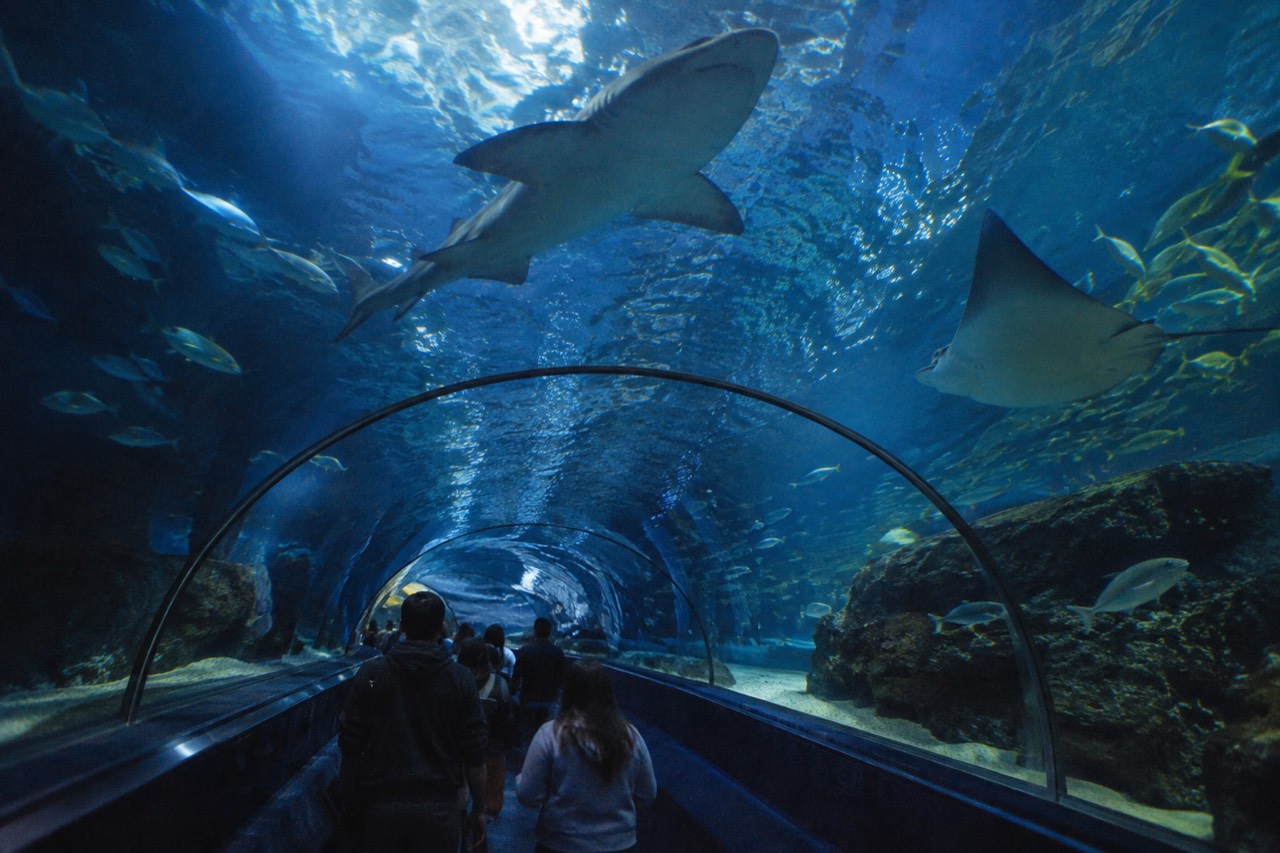
SEA LIFE Sydney Aquarium is a purpose-built indoor aquarium on the Darling Harbour foreshore, a short walk from the CBD, holding saltwater exhibits that range from small seahorse displays to large walk-through tunnels where sharks and rays pass overhead. It is an all-weather, year-round attraction aimed squarely at families, with most visits running about two hours. It is one of several Merlin-operated attractions clustered around Darling Harbour, which is why combo passes exist.
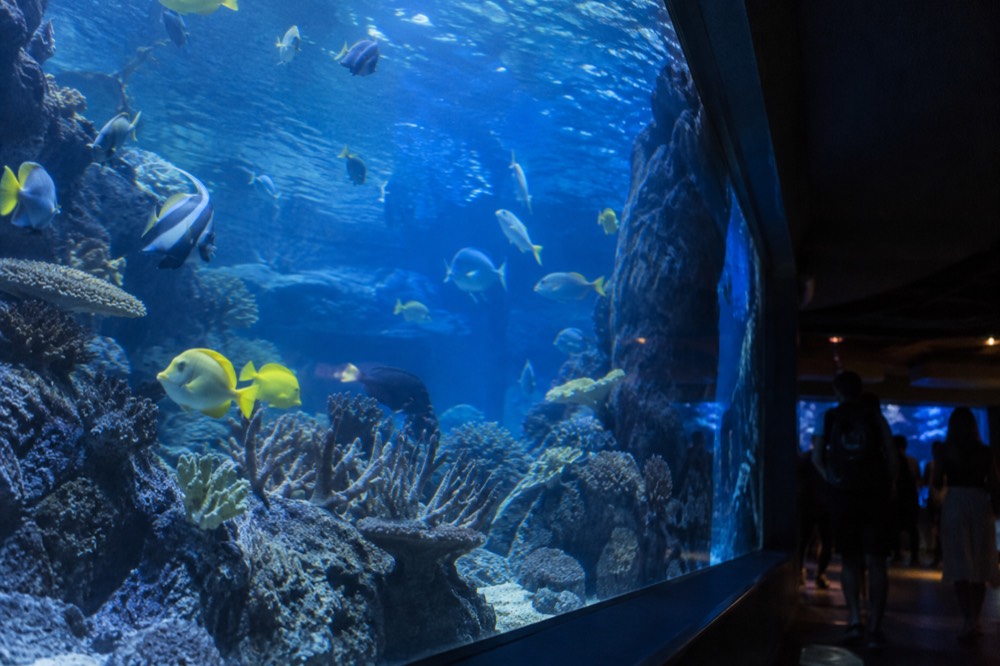
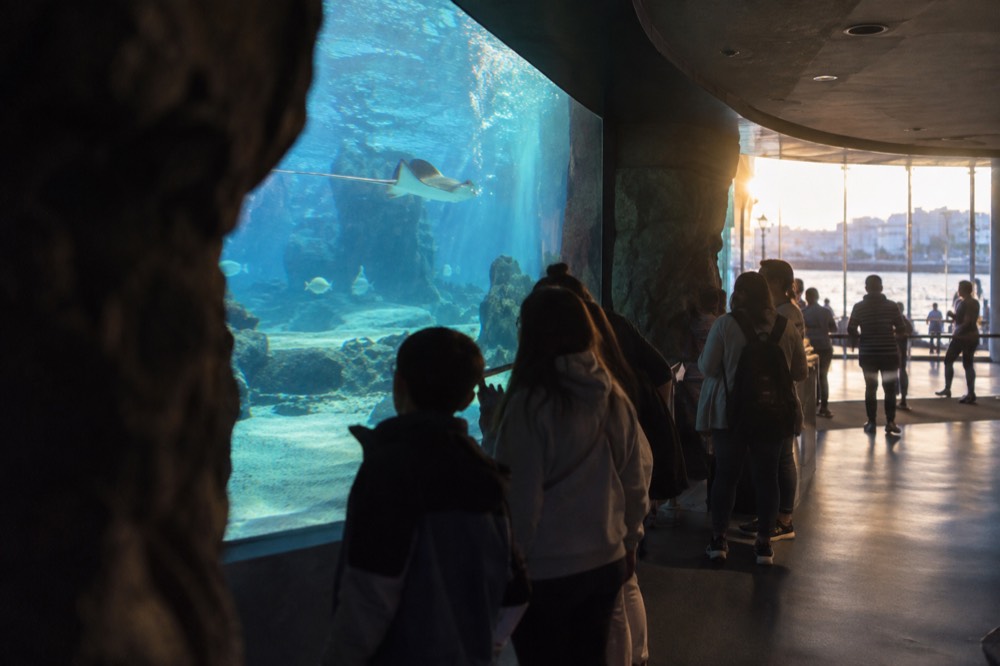
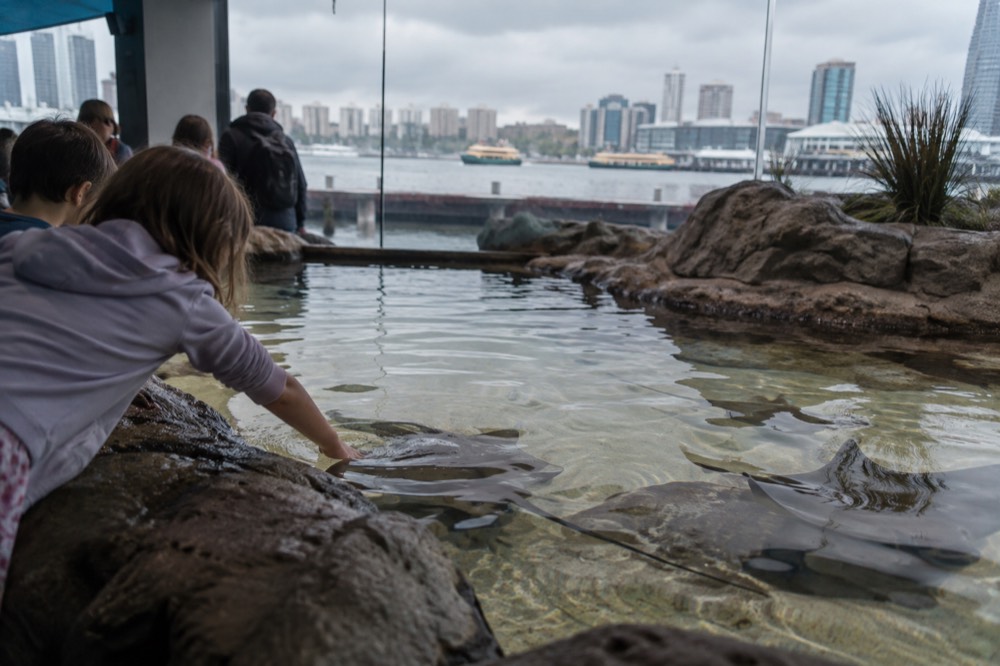
The aquarium's layout moves you through a sequence of themed zones rather than one giant hall. You walk past tropical reef tanks, temperate-water exhibits, touch pools where the younger crowd can get their hands wet, and the signature underwater tunnels that give the bigger species room to glide over the top of you. The pace is self-directed: there is no fixed route time, and families with small children routinely stretch a visit well past the two-hour mark because the touch pools and the penguin exhibit absorb so much attention.
It is worth being clear about what this place is not. It is not an ocean-side marine park, and it is not a zoo. Everything happens indoors, which is precisely why Sydneysiders treat it as the default answer to a washed-out weekend. If your Sydney plans include beaches and coastal walks, the aquarium is the backup plan that never gets rained off, and our guide to Sydney's rainy day itinerary is built around exactly that logic.
Is SEA LIFE Sydney Aquarium Worth Visiting?
For families with children under about twelve, and for adult visitors on a wet or scorching day, yes, it earns its ticket. The exhibits are large, the walk-through tunnels are genuinely impressive, and the indoor setting removes weather from the equation entirely. Solo adult travellers on a tight schedule who have already paid for a harbour cruise or a BridgeClimb may find it lower priority; it is an excellent attraction rather than an essential one, and two hours is enough to see all of it.
The honest case for the aquarium rests on three things. First, accessibility: it sits in the middle of Darling Harbour, attached to a precinct that also holds a wildlife zoo, a wax museum, a giant screen theatre and a large children's play area, so it slots into a half-day without any transit friction. Second, reliability: opening is year-round, the exhibits do not close for seasons, and a 35 °C February afternoon or a rainy June one changes nothing. Third, the shark tunnels, which are the kind of exhibit children talk about for weeks afterwards.
The case against is equally honest. It is an indoor attraction in a city whose headline experiences are outdoors: the Bondi to Coogee coastal walk, the harbour beaches and the ferry to Manly all cost less or nothing. An adult travelling child-free in perfect weather who visits the aquarium instead of doing any of those things has probably made the wrong call. The aquarium's sweet spot is a family trip, a bad-weather day, or a day already anchored to the Darling Harbour precinct.
If you are building a Darling Harbour day rather than a whole-city itinerary, the aquarium is the natural first stop, and the pass options below change the arithmetic considerably.
How Do SEA LIFE Sydney Tickets and Pricing Work?
SEA LIFE Sydney does not publish a fixed walk-up price list; entry is dynamically priced, meaning the cost of a ticket moves with the date, the time slot and demand, and timed entry slots are the norm. Booking online in advance is the standard advice for every dynamically priced attraction, and this one is no exception: you pick a date and session, and the price you see is locked to that slot. The ticket card on this page carries the current from-price.
Dynamic pricing confuses people who remember flat-rate attractions, so it helps to spell out the mechanics. Rather than one adult price at the door, the aquarium sells entry by session: you choose the day and an arrival window, and the price reflects how in-demand that window is. School holidays, weekends and wet-weather days push prices up; weekday mornings in the shoulder season are the cheapest sessions. Concessions exist for NSW students and seniors with proof, and children under a certain age enter free, though the age threshold and the exact figures live on the booking page rather than in any printed price list.
The second thing to understand is the pass structure. SEA LIFE is one of four Sydney attractions, alongside the Sydney Tower Eye, WILD LIFE Sydney Zoo and Madame Tussauds, sold together on a multi-attraction combo pass. If Darling Harbour is your base for a day or two, the per-attraction cost of that pass drops well below buying each door separately. We break down the full maths in our Sydney attraction passes compared guide, which runs the numbers across every pass sold in the city.
A standard entry ticket covers the full aquarium, all zones and exhibits, with no separate paid tiers inside. Food is not included, and there is a cafe and gift shop at the exit, which is the standard aquarium funnel and worth knowing about before you arrive with a six-year-old.
When Should You Visit, and How Long Do You Need?
Plan on roughly two hours for a full circuit, longer with young children, and go for a weekday morning if you can: early opening slots carry the thinnest crowds and usually the lowest dynamic prices. Opening hours shift with seasons and school holidays, so treat any fixed time you read online, including in older guidebooks, with suspicion and confirm current session times on the operator's site before you set out. Weekends and school holidays are busy enough that the walk-through tunnels get congested.
The rhythm of a visit matters more here than at a zoo, because everything is indoors and the crowd has nowhere to disperse. Mid-morning on a Saturday in the July school holidays is the aquarium at its densest: strollers, tour groups and cruise passengers converge, and the tunnels slow to a shuffle. The same building on a Tuesday at opening feels like a different attraction. If your dates are locked to a weekend, book the first session of the day and be through the doors when they open.
Weather cuts the other way from every outdoor attraction in Sydney. A clear August day, which the climate record says is statistically Sydney's clearest month, is a poor day to spend indoors: the Bureau of Meteorology's long-run normals show August averaging 13.4 clear days, more than any other month. A wet June day, when the long-run average rainfall peaks at 133.1 mm for the month, is the day the aquarium earns its keep. If you are visiting in the cooler months, our Sydney in winter guide lines up the indoor options.
How Do You Get to SEA LIFE Sydney Aquarium?
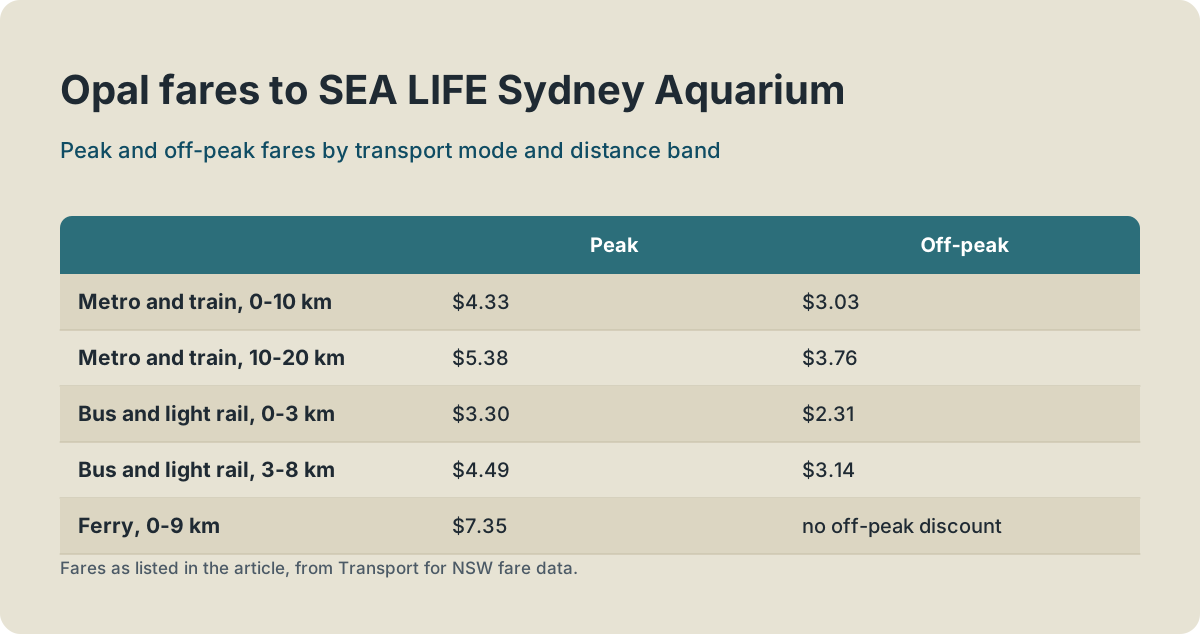
The aquarium sits on the eastern side of Darling Harbour, within a short walk of both Town Hall and Wynyard train stations, and the precinct is also served by light rail and by ferry wharves on the harbour itself. An Opal card or a contactless bank card covers every option, with the adult daily fare cap at $19.30 Monday to Thursday and $9.65 on Fridays, weekends and public holidays, according to Transport for NSW's fare page.
For most visitors staying in the CBD, walking is genuinely the fastest option: the aquarium is at the bottom of the hill from Town Hall, and the precinct is flat, stroller-friendly and signposted. If you are coming from further out, the train to Town Hall or Wynyard followed by a short downhill walk beats every other combination. The light rail runs along the western edge of the CBD with stops serving Darling Harbour, and the ferry network puts you on the water for the approach, which is the more enjoyable way to arrive if your itinerary allows it.
| Way in | Route | What to know |
|---|---|---|
| Train | To Town Hall or Wynyard, then walk | Short downhill walk to the harbour; both stations are on the main city lines |
| Light rail | CBD and South Eastern lines to the Darling Harbour stops | Runs through the precinct; check the Transport for NSW trip planner for the stop nearest the aquarium |
| Ferry | Darling Harbour and Pyrmont wharves | The scenic approach; ferry fares are distance-based with no off-peak discount |
| Bus | CBD stops on George Street or Market Street | Adds a walk of several hundred metres; slower than the train for most origins |
| On foot | From the CBD or The Rocks | Flat, signposted, and often faster than transit from anywhere central |
One transport trap deserves its own paragraph. The privately operated fast ferries on some harbour routes accept Opal through the separate OpalPay system, but Opal caps and transfer discounts do not apply to them, so a rider who assumes they have hit the daily cap keeps getting charged. The public Sydney Ferries routes, by contrast, take Opal with full benefits. Our Sydney ferries guide explains which routes are which, and the Opal card guide for visitors covers the caps in detail.
| Opal fare band | Peak | Off-peak |
|---|---|---|
| Metro and train, 0-10 km | $4.33 | $3.03 |
| Metro and train, 10-20 km | $5.38 | $3.76 |
| Bus and light rail, 0-3 km | $3.30 | $2.31 |
| Bus and light rail, 3-8 km | $4.49 | $3.14 |
| Ferry, 0-9 km | $7.35 | no off-peak discount |
The off-peak discount is worth 30% on trains, metro, buses and light rail, and it applies on Fridays, weekends, public holidays and outside peak times, so a weekend aquarium trip is discounted on the way there as well as capped at the lower weekend daily rate.
How Does SEA LIFE Sydney Compare with Taronga Zoo and WILD LIFE Sydney?
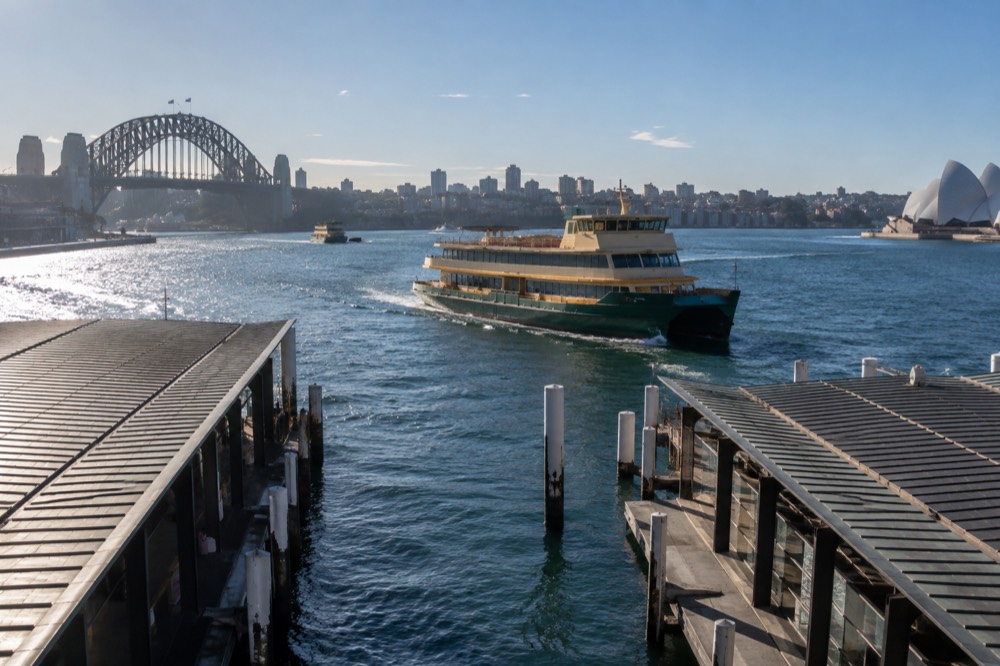
SEA LIFE is the marine option, all indoor and all Darling Harbour; Taronga Zoo is the full-day, outdoor, native-wildlife option reached by ferry across the harbour; and WILD LIFE Sydney Zoo is the small Australian-animal attraction next door to the aquarium itself. If you want sea creatures, choose SEA LIFE. If you want koalas, kangaroos and a ferry ride with the best harbour views in Sydney, choose Taronga.
If you want both in one day without leaving Darling Harbour, the combo pass covers SEA LIFE and WILD LIFE together.
The three products answer different questions, and the confusion usually comes from the word "zoo" appearing on more than one of them. Taronga Zoo Sydney is a large, open, hillside zoo in Mosman, a 12-minute ferry ride from Circular Quay, with Australian and exotic animals, a cable car and views that would justify the ticket even without the animals. WILD LIFE Sydney Zoo is a compact Australian-animals exhibit on the Darling Harbour foreshore, a two-minute walk from the aquarium's doors. SEA LIFE covers everything that swims.
| Attraction | Location | Setting | Best for |
|---|---|---|---|
| SEA LIFE Sydney Aquarium | Darling Harbour | Fully indoor | Marine life, rainy days, families with young children |
| Taronga Zoo Sydney | Mosman, by ferry from Circular Quay | Large outdoor hillside park | Native wildlife, full-day visits, harbour views |
| WILD LIFE Sydney Zoo | Darling Harbour, next to the aquarium | Compact, mostly indoor | Koalas and kangaroos without leaving the city |
The pairing question matters for families. Taronga is the better attraction in isolation, but it is a half-day commitment minimum once the ferry ride is included, and it is exposed to whatever the sky is doing. SEA LIFE plus WILD LIFE is a compact half-day entirely under cover, walkable from the CBD, and the combo pass that bundles them with the Sydney Tower Eye and Madame Tussauds turns it into a full rainy-day programme for one price. Families plotting a longer stay should read our Sydney with kids itinerary, which sequences both options against the city's outdoor days.
For the zoo comparison, our Taronga Zoo guide covers its ferry-and-entry bundles, and the question of which suits a family day out is answered in full there.
What Are the Aquarium's Highlights?
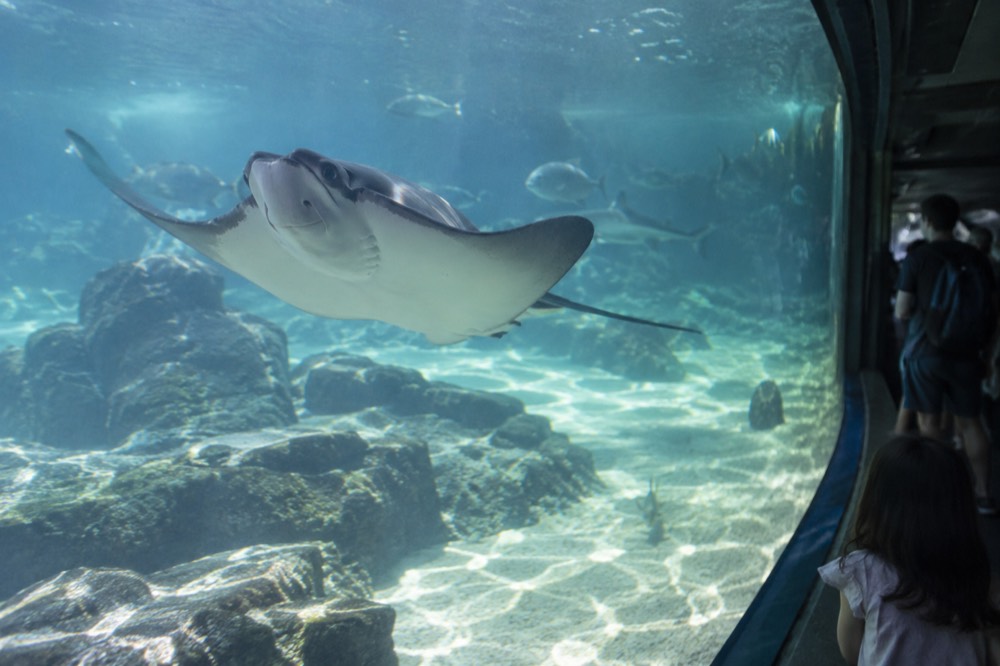
The walk-through shark and ray tunnels are the headline exhibit, and the penguin colony is the other crowd anchor; around them sit tropical reef tanks, seahorse and jellyfish displays, and hands-on touch pools where children can handle some of the smaller marine animals under staff supervision. The route is one-directional, which keeps crowds moving but means you cannot easily backtrack to an exhibit you rushed past, so it pays to let the slow zones be slow.
The tunnels deserve their reputation. Walking beneath sharks and large rays in a dim, blue-lit corridor is the moment the aquarium is built around, and it is the stretch where every phone comes out. Photographers will find the lighting challenging but workable; our Sydney photography spots guide is mostly about outdoor vantage points, but the same low-light advice applies indoors. The penguin exhibit runs a close second for younger visitors, with above-water and underwater viewing of the colony.
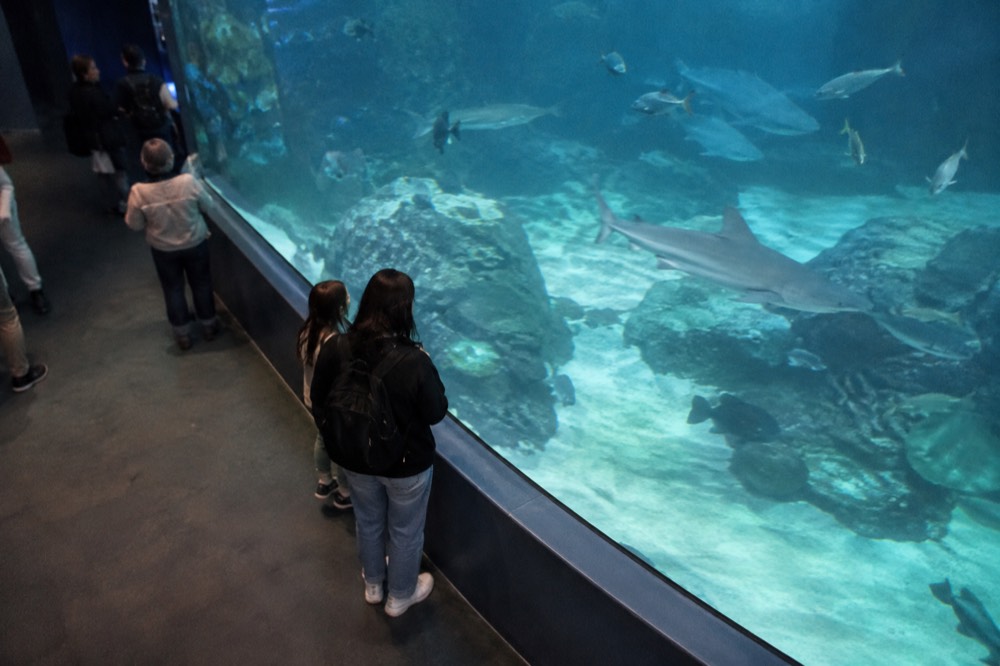
The touch pools are where a visit's length gets decided. Staff supervise the handling sessions, and the smaller marine animals on display rotate, so no two visits are quite the same. If you are visiting with a toddler, budget extra time here and near the entrance exhibits, because the back half of the route moves faster. The seahorse and jellyfish tanks are the quiet interludes, and they are worth slowing down for rather than treating as corridor filler.
What Else Is Around SEA LIFE Sydney Aquarium?
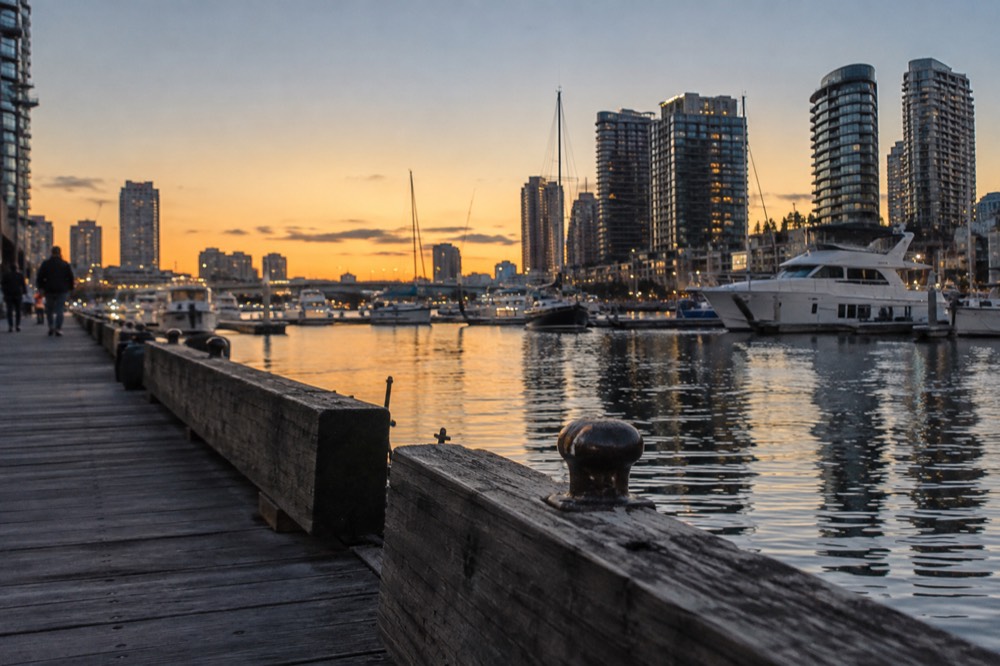
Darling Harbour packs the rest of the Merlin cluster, WILD LIFE Sydney Zoo and Madame Tussauds, within a two-minute walk of the aquarium's doors, along with the harbour-side playground, the maritime museum and the precinct's restaurants, and the new Sydney Fish Market at Blackwattle Bay is a short trip up the water. The aquarium is best treated as the anchor of a half-day in the precinct rather than a standalone destination, and the combo pass pricing is built on exactly that assumption.
The immediate neighbours need no transit at all. WILD LIFE Sydney Zoo sits alongside the aquarium, Madame Tussauds is in the same block, and the Sydney Tower Eye, while a walk back into the CBD, completes the four-attraction pass. The harbour-side playground south of the precinct is one of the best free stops in the city for families, and the Australian National Maritime Museum anchors the western end. Our Darling Harbour guide maps the whole precinct, and the Sydney Fish Market guide covers the new Blackwattle Bay building that opened in January 2026.
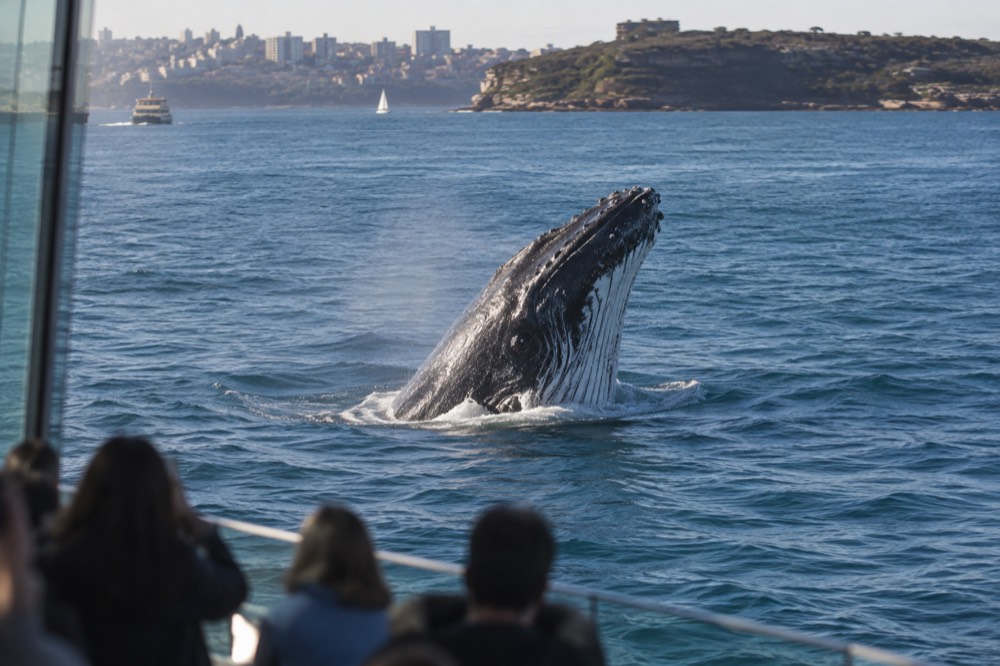
If marine life is your theme for the day, the seasonal option is the whale cruise. Humpbacks migrate along the NSW coast between May and November, with the southern run returning past Sydney with calves from roughly August, according to NSW National Parks. A morning whale cruise from the city followed by an afternoon in the aquarium is a coherent sea-life day that works in any weather the harbour allows.
How Should You Plan a Half-day Around the Aquarium?
Book the first session of your chosen day, do the aquarium before the crowds build, then stay in the precinct: the playground and harbour boardwalk fill the middle of the day for free, WILD LIFE or the Tower Eye fills the afternoon if you are on the pass, and the evening belongs to Darling Harbour's restaurant strip. With the Opal weekend daily cap at $9.65 and the off-peak discount running on Saturdays and Sundays, a weekend version of this half-day costs very little beyond the tickets themselves.
The sequencing matters because the aquarium is a fixed-duration attraction inside a variable-duration precinct. Two hours indoors, then a decision: families with children under eight will drift to the playground and stay; visitors without children will walk the boardwalk to Barangaroo, which has become one of the city's better harbour-side strolls, covered in our Barangaroo guide. Either way, the aquarium is the morning and Darling Harbour supplies the rest.
Eating is the one thing not to over-plan. The precinct's restaurants are plentiful and priced for tourists, and the new fish market up the water has raised the food standard within a short ferry or light rail ride. A picnic from a bakery in the CBD, eaten on the boardwalk, beats most of the precinct's mid-range menus on both price and speed.
Common Questions About SEA LIFE Sydney Aquarium
How much are SEA LIFE Sydney Aquarium tickets?
Entry is dynamically priced by date and time slot rather than sold at one fixed rate, so the price moves with demand. Booking an online session in advance is the standard approach, and the ticket card on this page shows the current from-price. Concession rates exist for NSW students and seniors with proof.
How long do you need at SEA LIFE Sydney Aquarium?
Roughly two hours covers the full route at a steady pace. Families with young children should budget longer, because the touch pools and penguin exhibit absorb a lot of time. There is no time limit on a standard entry ticket once you are inside.
Is SEA LIFE Sydney Aquarium good for toddlers?
Yes. The whole venue is indoors, stroller-accessible and flat, the touch pools are designed for small hands, and the tunnels hold a toddler's attention for a long time. It is one of the most reliable toddler outings in the city on a wet or very hot day.
Is SEA LIFE or Taronga Zoo better?
They answer different questions. SEA LIFE is the marine, indoor, half-day option at Darling Harbour; Taronga is the outdoor, full-day zoo across the harbour with native wildlife and spectacular views. Families often do SEA LIFE on a bad-weather day and Taronga on a good one.
Can you buy a pass that includes SEA LIFE Sydney Aquarium?
Yes. A combo pass bundles SEA LIFE with the Sydney Tower Eye, WILD LIFE Sydney Zoo and Madame Tussauds, and it is the cheapest way to do more than one of the four. The full maths across every Sydney pass is in our [attraction passes](https://gocity.tpk.ro/rUvgw2vS) comparison guide.
What is the best time of day to visit the aquarium?
The first session of a weekday morning is the quietest and usually the cheapest under dynamic pricing. Avoid mid-morning on weekends and school holidays, when the tunnels are at their most congested. Opening hours shift with the seasons, so confirm session times before you travel.
For everything else in the precinct, start with the Sydney Travel Guide Darling Harbour coverage and build the rest of the day from there.