Coogee Beach: Sydney's Gentler Eastern Suburbs Swim Spot
Coogee Beach is the Eastern Suburbs' family swim beach: year-round lifeguard patrols, ocean pools at both ends, and a coastal walk to Bondi that most visitors rate the best free thing they do in Sydney.
Short answer
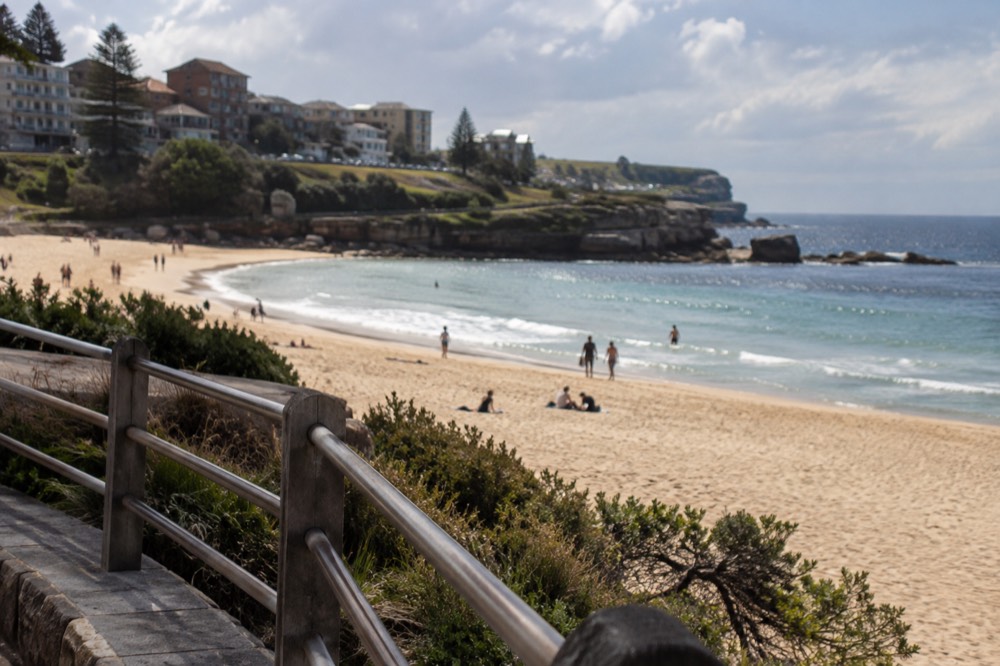
Coogee Beach is a patrolled swimming beach in Sydney's Eastern Suburbs, about 8 km south-east of the city centre, reached by bus in roughly 30-40 minutes. Council lifeguards patrol it year-round, volunteer lifesavers join on summer weekends, and ocean pools including Wylie's Baths sit at the southern end. Entry is free.
Coogee Beach sits at the end of a bus ride from the city, and it earns its loyal following the honest way: it is a swimming beach first and a postcard second. Randwick City Council employs professional lifeguards here all year, which puts Coogee on a short list of Sydney beaches, Bondi, Bronte, Tamarama, Manly and, since 2026, Dee Why, where the flags go up in winter too. The sand is broad and flat, the headlands at each end blunt the swell, and the promenade behind it is backed by barbecue areas, a park and a strip of cafes that locals actually use.
The Bureau of Meteorology's long-run record for Sydney tells you something the postcards do not: June is the wettest month of the year here at 133.1 mm on average, wetter than any summer month, while August is the clearest. A beach day in late winter is statistically a better bet for clear skies than one in February. This guide covers how to get to Coogee, what a day there costs, how to swim safely, the coastal walk to Bondi, and when to come.
Why Do So Many Locals Prefer Coogee Beach to Bondi?
Coogee trades surf swagger for swimability. The beach faces south into a bay bracketed by two headlands, so the wave energy is lower than Bondi's open stretch, and the swimming areas sit between flagged sections watched by council lifeguards every day of the year. The sand is flatter and wider, the grassed reserve behind it has free barbecues, and the whole strip is a five minute walk from buses, cafes and a gelato shop. Families and swimmers who want laps rather than waves choose it on purpose.
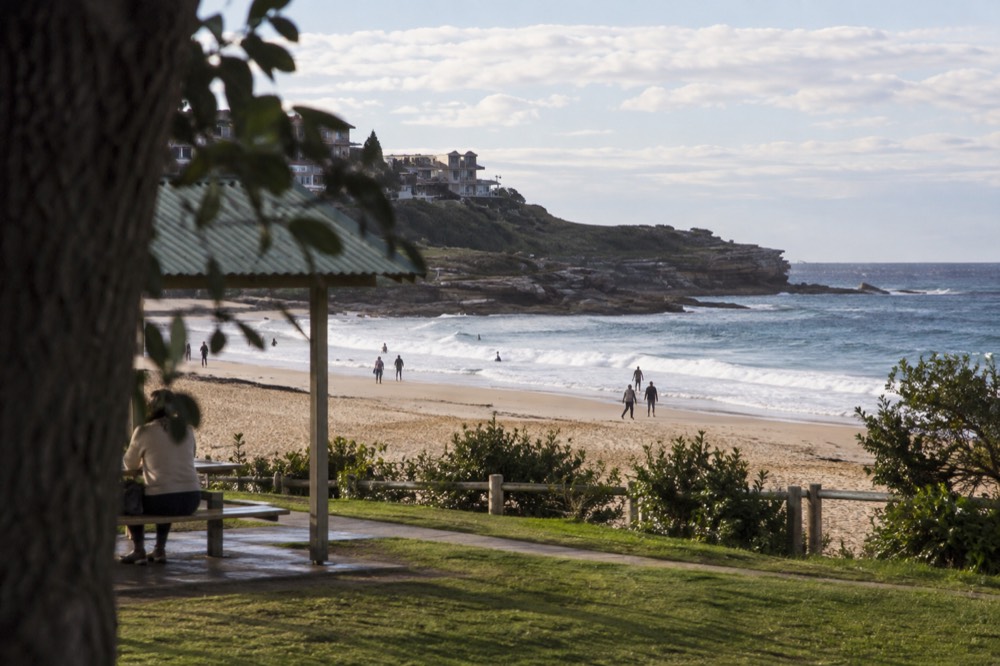
Bondi is the beach the world can name, and that is exactly the point of difference. Coogee's crowd skews local, its surf club culture is strong, and its layout keeps the day simple: one curved bay, one promenade, one road of shops. The trade-off is real and worth stating plainly. Coogee's sheltered shape means the surf is small and often messy, so board riders and learners chasing waves do better at Bondi Beach, where surf schools run daily lessons.
The two beaches are connected by the Bondi to Coogee coastal walk, a 6 km clifftop track that turns the "which beach" question into a false choice. Many visitors do the walk one way, swim at whichever end they finish, then bus back.
If your Sydney trip is built around swimming rather than surfing, Coogee belongs in your plans alongside the best beaches in Sydney, and it is the natural base if you are staying in the Eastern Suburbs.
How Do You Get to Coogee Beach from the City?
There is no train to Coogee; buses are the public transport answer. Services run from the city centre and Central Station through the Eastern Suburbs to Coogee in roughly 30 to 40 minutes depending on traffic, and an adult bus fare costs $4.49 peak or $3.14 off-peak for a 3-8 km trip. A contactless credit card or Opal card both work, and the Friday-to-Sunday daily cap is $9.65.
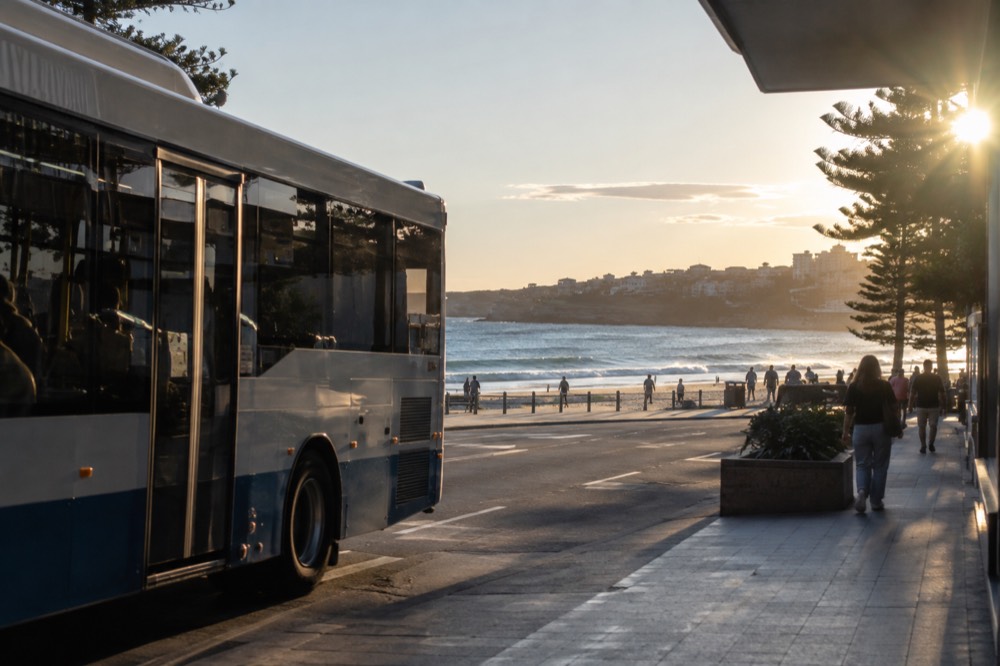
Transport for NSW publishes the fare structure, and the detail that matters for a beach day is the off-peak discount: metro, train, bus and light rail fares drop 30 percent on Fridays, weekends, public holidays and outside peak times, so a Saturday beach trip is charged at the cheaper rate automatically. Ferries do not get the discount, and there is no ferry to Coogee anyway; the harbour and the open coast are different worlds. Driving takes about 25 minutes without traffic, but parking is scarce in summer, so the bus is the reliable choice on a hot weekend.
| Option | Approximate time | Adult cost | Notes |
|---|---|---|---|
| Bus from city centre | 30-40 min | $4.49 peak / $3.14 off-peak (3-8 km band) | Contactless or Opal, tap on and off |
| Bus from Central Station | 30-40 min | same bands apply | Frequent weekday services |
| Taxi or rideshare | 20-30 min | metered, varies with traffic | Drop-off on Arden Street or the beachfront |
| Drive and park | 20-30 min | parking fees vary, limited spaces | Fills early on hot weekends |
| Bicycle | 45-60 min from the city | free | Route through Centennial Parklands, shared paths |
The practical advice is simple: bus in, and do not fight for a parking space on a 30 degree day. The streets around Coogee are permit-heavy and the beachfront car parks reach capacity by mid-morning through the warmer months. If you are coming for a sunrise swim, parking is easy and the buses have not started; if you are coming at midday in summer, let the bus do the work.
One planning note for the wider week: Coogee pairs naturally with a harbour day, since the buses that serve the beach also connect to Circular Quay via the Eastern Suburbs. A morning on the water and an afternoon on the sand is a full and very Sydney day, and the sightseeing cruise option above leaves from the Quay.
What Does a Day at Coogee Beach Cost?
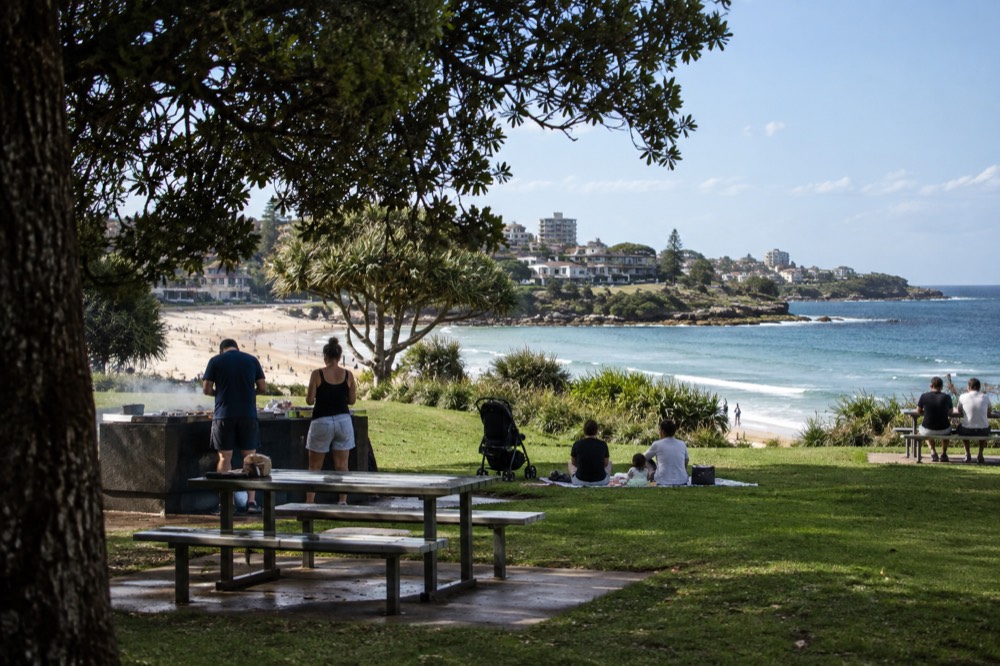
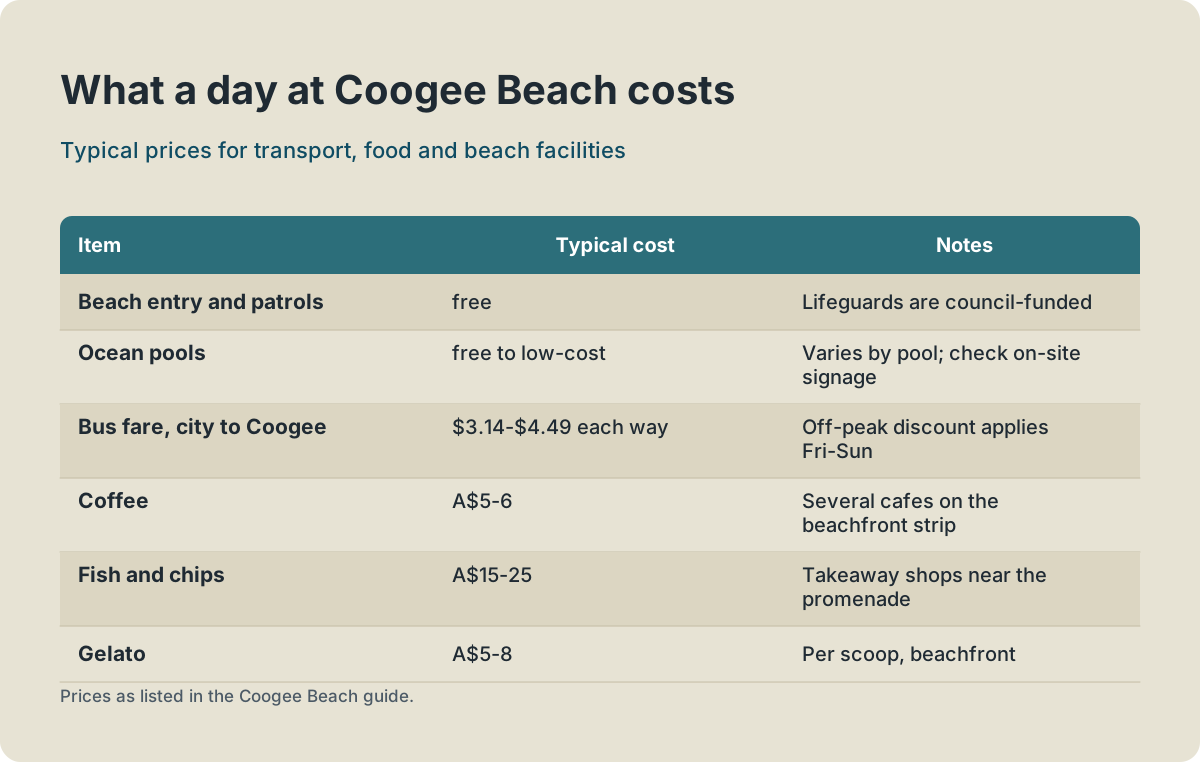
The beach itself is free, and so is almost everything around it. Lifeguard patrols, the promenade, the ocean pools at the southern end and the barbecue areas in the reserve cost nothing. Your realistic spend is transport there and back, food, and any extras: a gelato, a coffee, fish and chips on the grass. A family of four can do the whole day for the price of two bus fares each and lunch; there is no entry gate, no deckchair monopoly and no parking requirement if you arrive by bus.
Coogee is one of the anchors of a budget-friendly Sydney stay, and the free pool access is the detail most visitors miss before they arrive. Wylie's Baths, the historic ocean pool on the southern headland, is one of several rock pools along this coast; some are free public pools, while club-run ones like Bondi Icebergs charge entry. Check the sign at each pool for the current arrangement.
| Item | Typical cost | Notes |
|---|---|---|
| Beach entry and patrols | free | Lifeguards are council-funded |
| Ocean pools | free to low-cost | Varies by pool; check on-site signage |
| Bus fare, city to Coogee | $3.14-$4.49 each way | Off-peak discount applies Fri-Sun |
| Coffee | A$5-6 | Several cafes on the beachfront strip |
| Fish and chips | A$15-25 | Takeaway shops near the promenade |
| Gelato | A$5-8 | Per scoop, beachfront |
The ranges above are planning figures for everyday purchases, not operator promises; prices at individual shops vary. For tour products around the city, the live listings carry current prices.
If a full Sydney week is on the cards, the money question is bigger than one beach day, and our Sydney trip cost breakdown and Sydney on a budget guides do that arithmetic in detail.
Is It Safe to Swim at Coogee Beach?
Yes, when you swim between the red and yellow flags during patrol hours. Randwick council lifeguards patrol Coogee year-round, with volunteer surf lifesavers adding weekend and public holiday patrols through the summer season. Rips remain the number one hazard on every Australian beach, and the official rule is absolute: no recorded coastal drowning in recent seasons has occurred between the flags. Outside patrol hours, or after heavy rain, stay out of the water.
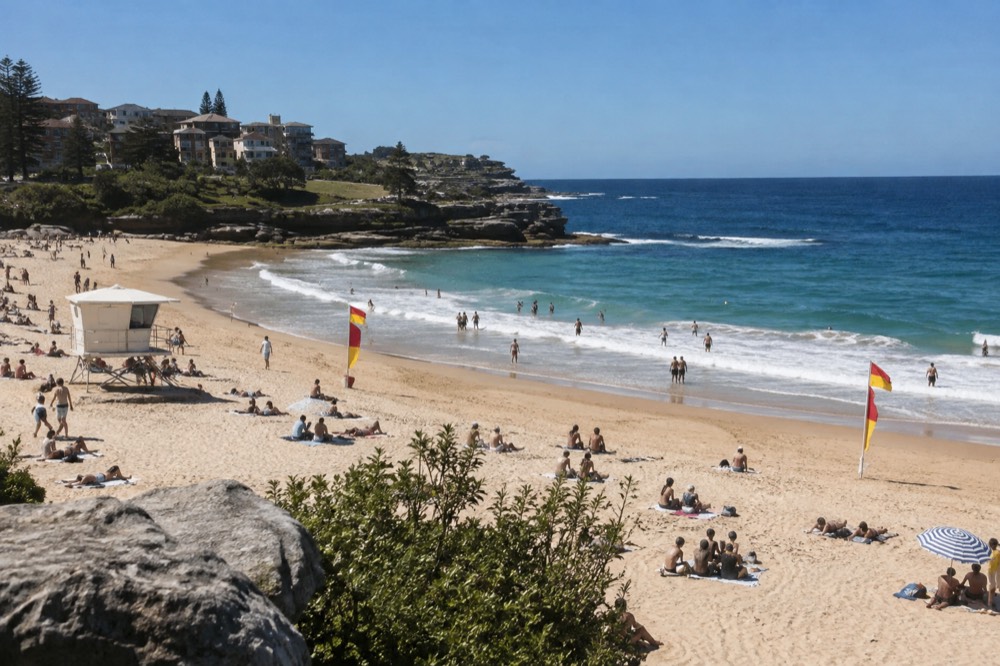
The flags are not decoration. Surf Life Saving Australia's National Coastal Safety Report 2025 recorded 154 coastal drowning deaths nationally, the highest on record, and every single one occurred outside the flags, outside patrol times, or at an unpatrolled location. That statistic is the strongest argument in Australian beach safety, and it is why this guide will not tell you any beach is fine outside the flags.
If you are caught in a rip, the official advice from Beachsafe, Surf Life Saving's own public safety site, is to stay calm and conserve energy, raise an arm and call for help, float with the current which may return you to a sandbank, or swim parallel to the beach toward breaking waves. Prevention beats all of it: check for rips before you enter, and swim at a patrolled beach in patrol hours.
Water quality is the second question, and it has a precise official answer. NSW's Beachwatch program grades swim sites and advises staying out of the water while it rains and for up to one day after heavy rain at ocean beaches like Coogee, and for up to three days after heavy rain at harbour and estuarine swim sites. You can check the daily Beachwatch grade before you go.
| Safety factor | What applies at Coogee |
|---|---|
| Lifeguard patrols | Council lifeguards year-round; hours vary by season |
| Volunteer patrols | Summer weekends and public holidays |
| Rip currents | Present at any beach; swim between the flags |
| After heavy rain | Stay out up to 1 day at ocean beaches |
| Bluebottles | More common in warmer months; do not touch, seek a lifeguard if stung |
| Ocean pools | A safer alternative in marginal conditions, but can close in big swell |
Shark meshing along the NSW coast runs seasonally from 1 September to 31 March, and the nets reduce but do not eliminate risk. The flags, not the nets, are the layer of protection you control.
What Is the Coogee to Bondi Coastal Walk Like?
The walk is about 6 km one way along the clifftops, and it takes most people 2 to 3 hours without stops, longer with a swim or lunch. The track is paved or well-formed for almost its entire length, passing Bronte, Tamarama, two ocean pools, a cemetery with harbour views and several beaches where you can cut the walk short and catch a bus. It is free, it is the best-known walk in Sydney, and the hardest decision is which direction to do it.
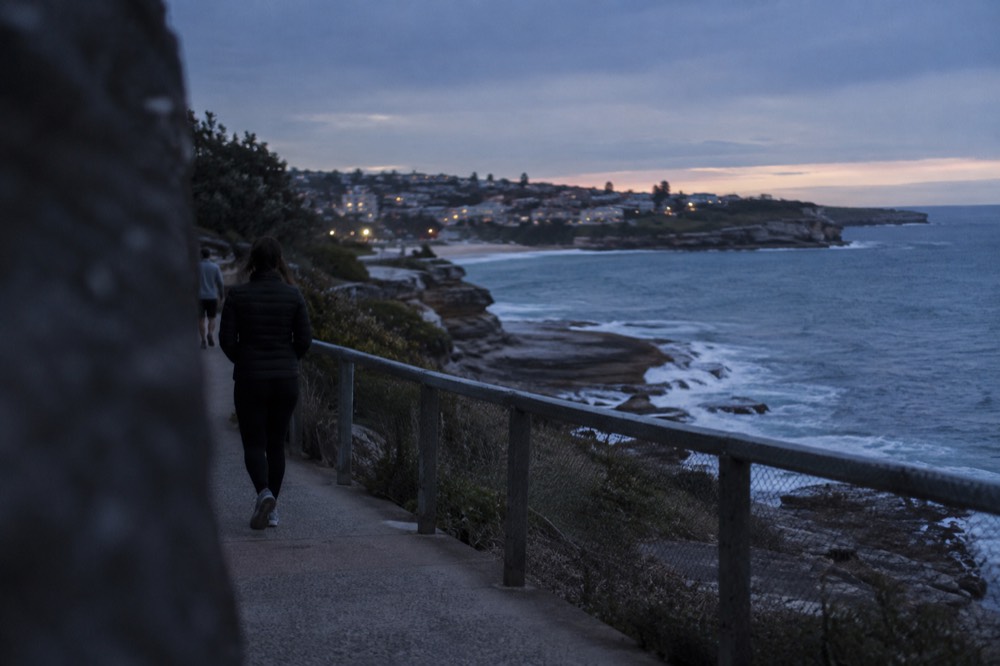
From the Coogee end you climb to the headland past the ocean pools almost immediately, which front-loads the views and makes the walk feel downhill in spirit even where it is not. The middle sections around Bronte and Tamarama are the most photographed, and the grave markers at Waverley Cemetery, perched above open ocean, are the stretch nobody expects. There is no guided bookable version of the walk worth paying for: the track is free, signposted and busy, and the only commercial products are private guides at high prices with thin review bases. The wider set of guides lives on Sydney Travel Guide.
| Segment | Approximate distance | Character |
|---|---|---|
| Coogee to Bronte | 2 km | Ocean pools, graveled slopes, Gordon's Bay |
| Bronte to Tamarama | short middle stretch | Rock platform, Sculpture by the Sea route in spring |
| Tamarama to Bondi | 2.5 km | Cliff top finish above Bondi Icebergs pool |
Do it early in summer: the track has almost no shade, the UV index in Sydney reaches extreme levels of 11 or higher in the December-to-February summer, and protection is advised whenever the index passes 3, which it does for most of the year. The full directions, transport notes and the which-direction debate are in our Bondi to Coogee coastal walk guide, and the wider options are in Sydney's coastal walks.
Where Do You Eat and Drink Around Coogee?
The beachfront strip and the streets behind it carry the eating: a gelato institution, fish and chip shops, a long-running seafood restaurant on the promenade, and cafes that fill with swimmers from early morning. Expect coffee around A$5-6 and a takeaway fish feed in the A$15-25 range. The park behind the beach has free public barbecues, and the local move in summer is exactly that: buy prawns, cook nothing, eat on the grass.
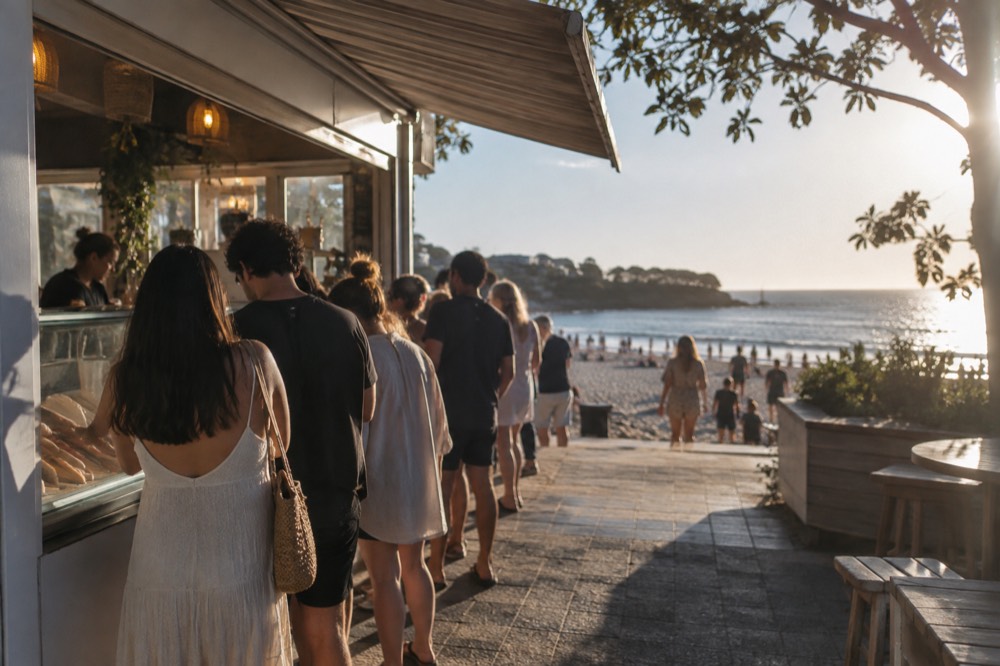
Coogee's food scene is deliberately modest, and that is its strength. There are no hatted restaurants on the sand, but there is a dependable cluster of breakfast spots, a famous gelato counter that queues out the door on warm evenings, and a pub or two within walking distance. For a serious food day, locals ride the bus into the city; our Sydney food guide and Sydney brunch spots cover where those buses should take you.
The sunset is the other reason to stay for dinner. Coogee faces south-east, so the beach itself catches sunrise rather than sunset, but the evening light along the headland walk and the rock pools is when the photographers arrive, and the strip stays lively until late in the warmer months. Our Sydney sunrise and sunset spots guide places Coogee's early hours in context.
When Is the Best Time to Visit Coogee Beach?
For swimming, the December-to-February summer, but for clear skies and thin crowds, late winter and early spring. The Bureau of Meteorology's long-run averages show August as Sydney's clearest month, with 13.4 mean clear days, while February, peak tourist season, is its cloudiest at 5.3. June is the wettest month at 133.1 mm on average. The water is warmest and the days longest in summer; the sand is quietest and the skies most reliable in August and September.
The counterintuitive pattern in that chart is one of the most useful facts in Sydney planning, and most guides never publish it. Rainfall here peaks in autumn and early winter, not summer, and the cloudiest month of the year is the one most visitors arrive in. A winter swim is also more viable than northern-hemisphere instinct suggests: the August mean maximum is 17.9 °C, patrolled beaches keep their lifeguards, and the ocean pools hold the afternoon sun.
Shoulder seasons split the difference nicely. October and November warm up to mean maximums of 22.2 °C and 23.7 °C with spring's clearer skies, and the Sculpture by the Sea exhibition, when it runs, turns the coastal walk into an outdoor gallery, though its dates are announced season by season. Check our best time to visit Sydney and Sydney weather month by month guides for the full picture.
What Else Is There to Do Near Coogee?
Three things fill a Coogee-based day easily: the coastal walk in one direction or the other, a swim in an ocean pool when the surf is uninviting, and a trip further afield. Gordon's Bay, just north of the beach, is a sheltered snorkelling spot on the walk route. Centennial Parklands sits a short bus ride inland with cycling and picnic lawns, and the harbour's cruise and kayak products are a direct connection from the Eastern Suburbs into the city's other great waterway.
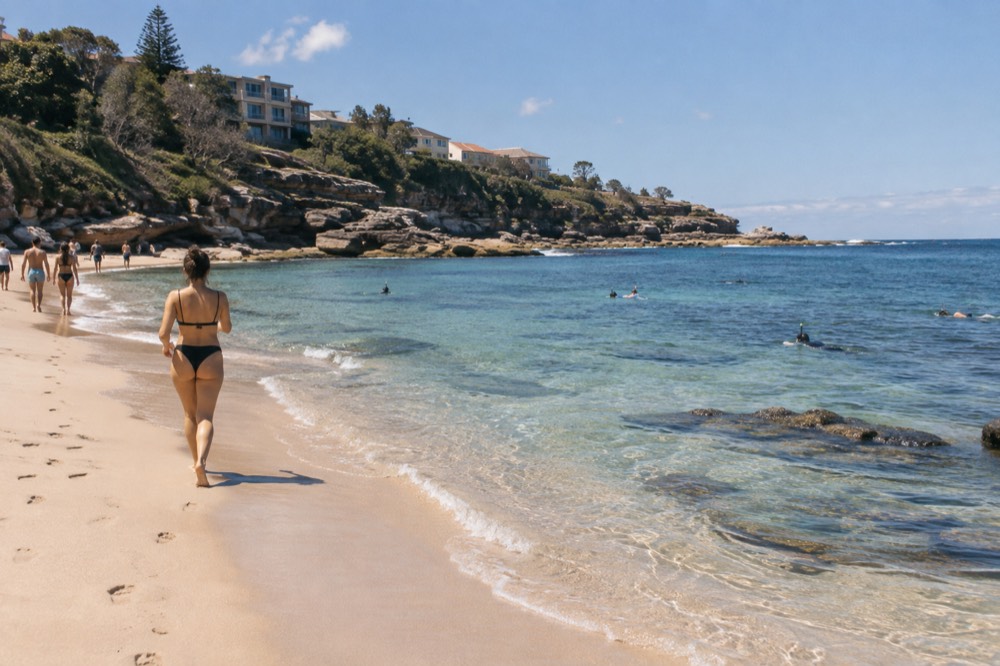
Gordon's Bay deserves its own sentence because almost nobody plans for it: a small, protected bay on the coastal walk with an underwater nature trail marked by chain along the seabed. Calm days in the warmer months are when it works. For organised snorkelling with gear and a guide, the Manly and Shelly Beach product across the harbour is the bookable option.
Back on the harbour side, a sunrise paddle before a Coogee afternoon is a pairing worth building a day around; the kayak tour above launches in the early light and has you back with a whole beach day ahead.
And if the forecast turns against the coast entirely, the rain plan is a real plan: our Sydney rainy day itinerary covers museums, arcades and covered markets, and the Australian Museum and Art Gallery of New South Wales both offer free general entry on the days you need them most.
For a longer escape, the Blue Mountains day trip below is the standard answer when Sydney's beaches have had their week, and it departs with all inclusions handled.
Common Questions About Coogee Beach
Is Coogee Beach patrolled all year?
Yes. Randwick City Council employs professional lifeguards at Coogee year-round, with volunteer surf lifesavers adding weekend and public holiday patrols through the summer season. Patrol hours vary by season and conditions, so check the signage at the beach or the council's information before you swim.
Is Coogee or Bondi better for swimming?
Coogee is generally the better pure swimming beach: the bay is more sheltered, the sand is flatter, and the flagged areas suit families and lap swimmers. Bondi is better for surf and surf lessons. The 6 km coastal walk connects them, so many visitors do both in one day.
Can you swim at Coogee in winter?
Yes, within reason. The August mean maximum is 17.9 °C, lifeguards patrol year-round, and the ocean pools are a popular winter option. Ocean pools can still close in big swell, and you should never swim outside patrol hours regardless of season.
How much does it cost to go to Coogee Beach?
Nothing to enter. The beach, patrols, promenade and reserve are free, and some ocean pools are free while others charge a modest entry. Your realistic costs are transport, roughly $3.14-$4.49 each way by bus, and food.
Is there parking at Coogee Beach?
Limited. The beachfront streets and car parks fill early on warm weekends, and much of the surrounding street parking is permit-restricted. Buses from the city centre run frequently and are the reliable option in summer.
Are there sharks at Coogee Beach?
Shark interactions on Sydney's ocean beaches are rare. NSW runs seasonal shark meshing from 1 September to 31 March, which reduces but does not eliminate risk. Swimming between the flags during patrol hours remains the main safety measure.