What Should I Book in Advance in Sydney?
A practical answer to what needs advance booking in Sydney, from BridgeClimb and Opera House tours to whale season, Vivid and holiday-week ferries.
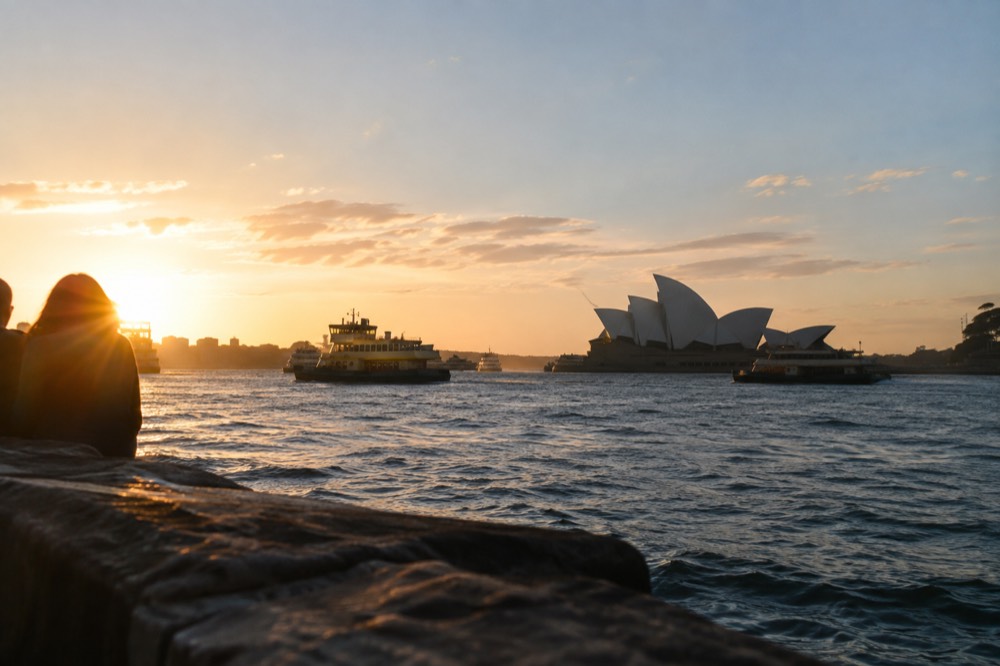
Sydney rewards the organised and forgives the spontaneous, in roughly equal measure. The city that welcomes 67.5 million visitors in a year, per Destination NSW figures for the year ending March 2026, has built a visitor economy big enough to absorb most last-minute plans. Yet a small set of experiences, the ones almost every visitor wants, runs on fixed daily capacity, and that is where the sold-out disappointment lives. The BridgeClimb roster, the Opera House tour sessions, whale-season cruises and anything scheduled during Vivid Sydney all sit inside that narrow band. This page sorts the two categories apart so you spend your planning time where it actually matters.
What Should I Book in Advance in Sydney?
Book ahead for anything with fixed daily capacity or a seasonal window: BridgeClimb, Opera House tours, whale-watching cruises between May and November, Blue Mountains day tours, and accommodation during Vivid Sydney and the Christmas and New Year period. Everything else, ferries, museums, the Royal Botanic Garden, most walking tours and harbour cruises, can be arranged a day or two ahead or on the day itself. The dividing line is not price, it is capacity. A ferry carries thousands of people a day; a bridge climb group carries a dozen at a time.
That single principle, capacity versus walk-up supply, explains nearly every booking decision in this city. Ask one question about any activity: how many people can it take today, and how many want it? When the second number regularly exceeds the first, book. When it does not, do not bother, because Sydney's cancellation policies on prepaid tours are good but not magical, and every unnecessary booking is a small administrative chore on a holiday.
The seasonal dimension matters as much as the capacity one. Whale watching runs May to November along the NSW coast, with the northern migration roughly May to July and the southern, calf-carrying migration roughly August to November, peaking late June through July. Outside that window there is nothing to book because nothing is running. Inside it, the better boats fill first.
Which Sydney Experiences Sell Out First?
The Sydney Harbour Bridge climb sells out first, especially twilight and night slots in school holidays and the December-January peak, followed closely by Opera House tour sessions, Blue Mountains small-group day tours, whale-watching cruises at the peak of the season, and any harbourfront dining room booked for a Vivid Sydney or New Year's Eve date. Each has a hard daily ceiling. The climb runs in small guided groups across set departure times, so a popular summer evening can be fully committed weeks out.
The Opera House is the other big one, and for a reason people often miss: the standard guided tour runs in roughly hourly sessions of limited size, and the venue's own tours page notes that pricing is dynamic and booking-only, so the cheap early-morning sessions thin out first. A traveller who arrives at Circular Quay at 2pm hoping for a 3pm tour in January is gambling. The same logic applies to the combined tour-and-dine experiences, which tie a tour session to a restaurant booking and therefore have even less flexibility.
Blue Mountains day tours fill because the good ones are deliberately small. An all-inclusive small-group tour with a local guide caps its numbers for a reason, and that reason is the experience you are paying for. If the Blue Mountains is the centrepiece of your trip, treat it like a reservation, not a whim. Our Blue Mountains day trip planning guide covers the choice between tours, trains and self-driving in detail.
For contrast, look at what sits comfortably outside the sold-out zone. Harbour sightseeing cruises run multiple departures a day from Darling Harbour and Circular Quay, the observation deck at Sydney Tower Eye is a large-capacity space with timed but plentiful entry, and the Rocks walking tours run several times daily with room to spare. These three are the classic walk-up-or-book-tonight category, and they are also the category where booking a day ahead, rather than a week, gets you the same ticket at the same session.
What Can You Safely Leave Until You Arrive?
Ferries, the Royal Botanic Garden, the Australian Museum, the Art Gallery of New South Wales, general city wandering, most food tours and most harbour cruises can all be arranged on the day or the day before, with no reservation needed and nothing lost by waiting. The garden is free to enter and opens at 7am daily; the Australian Museum's general entry is free, open 10am to 5pm; the Art Gallery of New South Wales is free general entry and stays open until 10pm on Wednesdays, a detail worth building an evening around.
Museums deserve a special note because visitors routinely over-book them. General entry at the major state institutions costs nothing, so there is no ticket to secure and no session to miss. The exception is a headline temporary exhibition, which is separately ticketed and can be popular; check what is showing before you assume either outcome. The same walk-up logic applies to the Rocks historic quarter, where laneways, weekend markets and viewpoints require nothing but comfortable shoes.
The one thing to verify rather than book is transport. Tap a contactless card and you are charged exactly what an Opal card holder pays, with the same caps and the same off-peak discounts, per Transport for NSW's visitor fares guidance. There is nothing to reserve, only a rule to remember: the airport station access fee sits outside the daily caps. Our visitor's Opal card guide explains the whole system, and the short version is that transport is the last thing in Sydney that needs booking ahead.
How Far Ahead Should You Book Each Thing?
Book the bridge climb and Vivid-period accommodation two to four weeks out for shoulder season and four to eight weeks out for December and January; book Opera House tours and Blue Mountains small-group tours about a week ahead outside peak and two to three weeks inside it; book whale cruises a few days ahead, more around the late-June-to-July peak. Walk-up supply exists for almost everything else. The table below turns that into a checklist you can work through in one sitting.
| Experience | Book how far ahead (shoulder) | Book how far ahead (peak: Dec-Jan, school holidays, Vivid) | Why it fills |
|---|---|---|---|
| Sydney Harbour Bridge climb | 1-2 weeks | 4-8 weeks | Small guided groups, fixed departure times |
| Opera House guided tour | 2-3 days | 2-3 weeks | Hourly sessions, capped group sizes, dynamic pricing |
| Blue Mountains small-group day tour | 1 week | 2-4 weeks | Deliberately capped group size |
| Whale-watching cruise (May-November) | 2-3 days | 1-2 weeks around late June-July peak | Seasonal window, limited sailings |
| Hunter Valley wine day tour | 3-5 days | 2 weeks | Small vehicles, lunch included |
| Harbour sightseeing cruise | Same day | 1-2 days | Multiple daily departures, high capacity |
| Sydney Tower Eye deck | Same day | 1-2 days | Large-capacity timed entry |
| Rocks walking tour | Same day | 1-2 days | Several departures daily |
| Taronga Zoo | Same day | 1-2 days | Online entry is roughly 10% cheaper than the gate, so booking still pays |
Peak is not one thing in Sydney, it is three overlapping ones. The December-January school holidays coincide with the Christmas and New Year period, when up to a million people gather on the harbour foreshore for the fireworks, and then Vivid Sydney, scheduled for 28 May to 19 June in 2027 after drawing 2.53 million visitors in 2025, creates its own [accommodation](https://booking.tpk.ro/ndznHj9h) crunch in late autumn. If your dates touch any of those windows, shift every figure in the right-hand column earlier. The rest of the planning pages sit on Sydney Travel Guide.
What Does Booking Ahead Cost You If Your Plans Change?
Almost nothing, if you read the cancellation terms before you pay: most Sydney tours booked through a listing offer free cancellation up to 24 hours before departure, and several offer pay-later options that hold your slot without charging your card. That combination makes advance booking close to risk-free for the sell-out category. The genuine costs are the exceptions: bridge climbs, some dining events and some small-group day tours carry stricter change windows, and a whale cruise you cancel inside the window during peak season is money genuinely spent.
The practical habit is to book the scarce things early with the cancellation window noted in your calendar, and hold off on everything else until your plans firm up. Sydney's weather makes this worth doing properly, because the long-run averages hold a surprise: June is the city's wettest month at 133.1 mm on average, wetter than any summer month, while August is its clearest with 13.4 mean clear days and February, the middle of peak season, its cloudiest at 5.3. The Bureau of Meteorology's Observatory Hill record is the source, and its implication for booking is direct: a mid-winter trip has a better claim on a clear harbour vista than a February one, and a flexible cancellation policy is worth more in the wet months.
One structural note for the spontaneous: some of the best Sydney experiences need no booking at all because they are not products. The Bondi to Coogee coastal walk is free and unguided, the ferry to Manly is a tap-and-go Opal trip, and the eastern suburbs beaches are patrolled year-round by council lifeguards, with the flags up between them. Swim between the red and yellow flags, and the best of the city costs a train fare.
Does the Time of Year Change the Booking List?
Yes, more than most visitors expect: whale watching only exists as a bookable product from May to November, Vivid Sydney compresses late May and June, the December-January holidays stretch every lead time by weeks, and winter, June to August, is the quiet season where even the bridge climb can sometimes be booked inside a week. Seasons in Sydney are inverted from the northern hemisphere, so June, July and August are winter, and the tourist peak sits in the southern summer of December to February.
The whale season deserves the most careful reading because it is the item people most often get wrong in both directions. Arrive in April hoping to book a whale cruise and there is nothing to book; the season has not started. Arrive in late June without a booking and the peak-window sailings may be full, because late June through July is when the northern migration is at its thickest, with an estimated 40,000-plus humpbacks moving along the NSW coast each year according to NSW National Parks. Our Sydney whale watching guide covers vantage points, boat options and the season month by month.
Winter, counterintuitively, is the booking-relaxed season. Fewer visitors, clearer skies on average, and the same tour roster mean the pressure drops across the board. If your dates are flexible and you would rather book things from your hotel room the night before, plan around the winter months and check the best time to visit Sydney guide first.
Common Questions About Booking Ahead in Sydney
What should I book in advance in Sydney?
Book the bridge climb, Opera House tour sessions, Blue Mountains small-group day tours and whale-watching cruises ahead, plus accommodation if your dates touch Vivid Sydney or the Christmas and New Year period. Ferries, free museums, the Royal Botanic Garden and most harbour cruises can be arranged on the day.
How far in advance should I book the BridgeClimb?
Roughly one to two weeks outside peak, and four to eight weeks for December, January, school holidays and popular twilight or night slots. The climb runs in small groups at fixed departure times, which is why it sells out before almost anything else in the city.
Do I need to book the Sydney Opera House tour?
Yes, especially in peak season. Tours run in capped, roughly hourly sessions and pricing is dynamic and booking-only on the official site, so popular midday sessions fill first. Early sessions are the ones that thin out slowest.
Can I book Sydney tours when I arrive?
For most of them, yes. Harbour cruises, the observation deck, walking tours and zoo entry all have same-day or next-day availability. The exceptions are the fixed-capacity experiences: the climb, Opera House tour sessions, small-group Blue Mountains tours and peak-season whale cruises.
Is it cheaper to book Sydney attractions online?
Often, yes. Taronga Zoo's own pricing shows online entry roughly 10% below the gate price at every tier, and dynamic-pricing venues such as Sydney Tower Eye charge less for advance purchase than on-the-day tickets. Booking early is not just availability insurance; on some attractions it is a discount.
What if it rains on the day of my booking?
Check the cancellation window when you book. Most tour listings allow free cancellation up to 24 hours before departure, and several hold your slot with a pay-later option. Note that June is statistically Sydney's wettest month, so a flexible policy is worth more in early winter than in August, the city's clearest.