What Are the Best Road Trip Stops Between Sydney and the Hunter Valley?
The best stops on a Sydney to Hunter Valley drive, from the Hawkesbury River crossing to Wollombi's historic village, with route options, timing advice and a wine tour alternative.
What Are the Best Road Trip Stops Between Sydney and the Hunter Valley?
The best stops are the Hawkesbury River crossing just north of Sydney, the waterways and lookouts of the Central Coast around Gosford and Terrigal, the historic village of Wollombi on the old Great North Road, and the town of Cessnock as the gateway to wine country. Each one breaks the drive into comfortable legs, and each rewards an hour or two rather than a rushed photo. The route is flexible: you can take the fast motorway or the slower, more scenic back road through Wollombi, and the choice changes the whole day.
The Hunter Valley sits north of Sydney, and the drive there is one of the more underrated half-day routes in New South Wales. Most travellers treat it as a corridor: get on the motorway, get off at Cessnock, start tasting. That works if the only goal is wine. But the country between the city and the vines has its own character, from wide river crossings to sandstone ridges and a village that time largely forgot.
This guide from Sydney Travel Guide breaks the run into legs with stops worth making, and finishes with the question most visitors end up asking anyway: whether the drive is the best way to do it at all. If you are planning a fuller itinerary, our Hunter Valley day trip guide covers the wine region itself in detail.
Where Should You Stop First: The Hawkesbury River Crossing
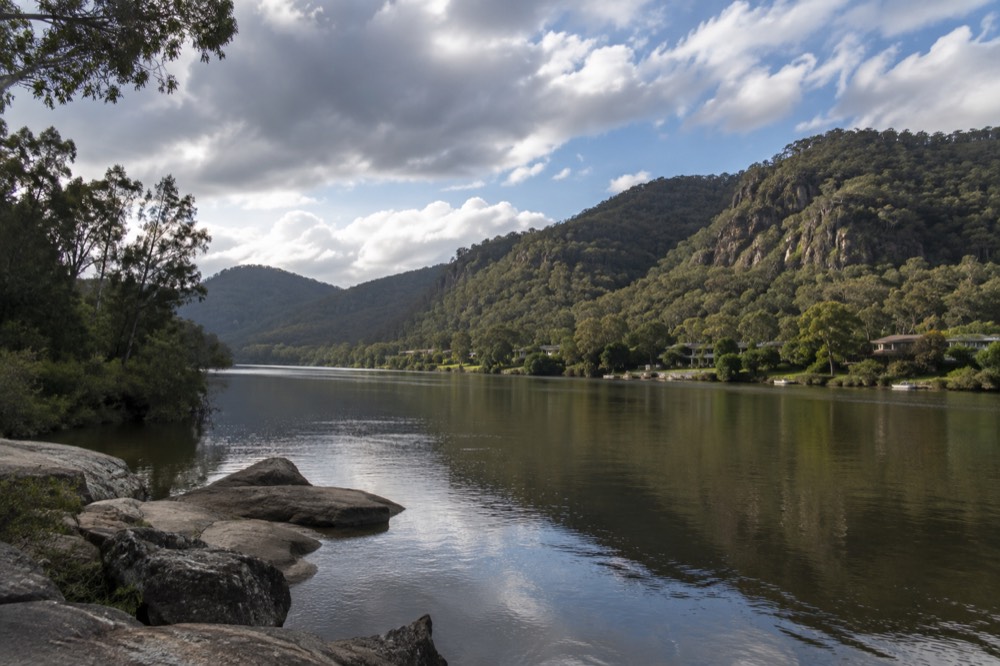
The first stop worth making is the Hawkesbury River, where the motorway crosses the water north of Sydney and the landscape shifts from suburbs to sandstone bush. Berowra Waters, with its roadside reach down to the river, and the small settlements along the water's edge give you the first genuine country feel of the drive. Pull over somewhere safe, look back at the ridgelines, and the trip has officially started. This leg sets the tone for everything that follows, so give it twenty minutes rather than a rolling glance.
The Hawkesbury is one of the defining waterways of the Sydney region, and the crossing north of the city is the moment the drive changes character. The road drops from the plateau toward the water, and on a clear morning the river glints between steep, tree-covered slopes. There are picnic areas and boat ramps on the approaches where you can stop without blocking traffic.
Berowra Waters is the best-known stop on this stretch, a small waterside settlement where the road threads down a spur to the river. It is the kind of place that rewards a slow coffee more than a checklist. If you would rather stretch your legs properly, the surrounding bush is part of the same sandstone country that defines the Hawkesbury River region, which is worth its own day trip if you have the time.
A practical note on timing: leave Sydney early enough that this stretch is not swallowed by peak-hour traffic on the approaches to the motorway. An early start also puts you in wine country before the mid-afternoon rush of tastings, which is when cellar doors are at their busiest.
Is the Central Coast Stretch Worth Adding to the Drive?
Yes, if you have a full day. The Central Coast detour around Gosford, Terrigal and the coastal waterways adds scenery and swim stops, and it turns a simple transfer into a genuine road trip. Brisbane Water and the beaches near Terrigal are the highlights, with the Skillion headland at Terrigal the single most photogenic spot on the leg. The trade-off is time: this route is slower than staying on the direct motorway, so it suits travellers with a relaxed schedule rather than anyone racing to a lunch booking.
The Central Coast begins roughly where the Hawkesbury country ends. Gosford is the main town, sitting on the shores of Brisbane Water, and the surrounding area is a mix of waterfront reserves, quiet beaches and bush ridgelines. Terrigal is the best-known beach town, with a foreshore of cafes and a rock formation called the Skillion at the headland. It is a natural coffee stop and leg-stretch.
If swimming is on the agenda, remember that beach safety rules apply here just as they do in Sydney: choose a patrolled beach and swim between the red and yellow flags during patrol hours. Patrol seasons and hours vary by beach, so check locally rather than assuming. Our Central Coast from Sydney guide covers the whole region if this stretch appeals more than the wine at the end of it.
| Route option | What you see | Best for | Trade-off |
|---|---|---|---|
| Direct motorway to Cessnock | Hawkesbury crossing, rural fringes | Getting to wine country fast | Misses the coast entirely |
| Central Coast detour via Gosford and Terrigal | Waterways, beaches, the Skillion | A full-day road trip with a swim | Adds meaningful driving time |
| Old Great North Road via Wollombi | Historic village, sandstone country, back roads | Travellers who enjoy the drive itself | Slower roads, fewer services |
The table above is the honest summary of the choice. There is no single best route; there is only the route that matches how much of your day you want to spend on the road. Families with children usually prefer the coast leg for its swim stops, while wine-focused groups go direct and save their hours for the cellar doors.
Why Is Wollombi the Stop Most Travellers Miss?
Wollombi is a small historic village on the old Great North Road, reached by a winding back road, and it is the most atmospheric stop between Sydney and the vines. Stone buildings from the nineteenth century, a famous pub, and a quiet valley setting give it a character the bigger towns on the route simply lack. The catch is the road: the approach is slow and winding, so it suits confident drivers and unhurried itineraries rather than anyone on a tight schedule or a first tasting booked for midday.
The old Great North Road is one of the region's defining routes, built in the early colonial period to connect Sydney with the Hunter. The modern drive follows much gentler alignments, but the sandstone country it crosses is the same, and the village of Wollombi sits near where the historic road met the valley. The Wollombi Tavern is the landmark most visitors come for, and the surrounding countryside is quiet, green and photogenic.
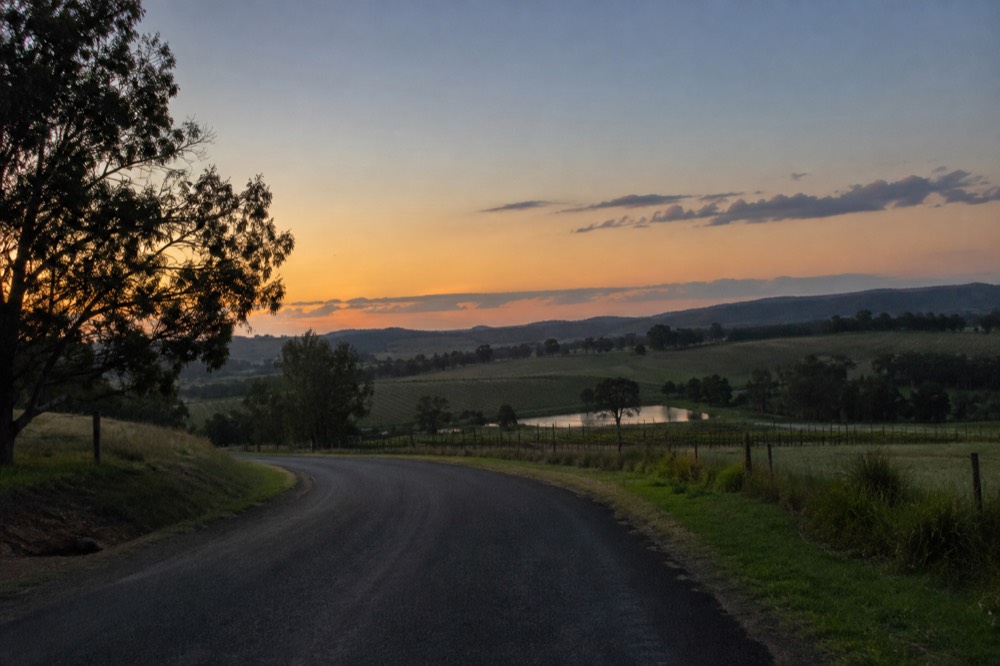
This is the stretch where the drive stops feeling like a commute and starts feeling like a road trip. The road narrows, the traffic thins, and the vineyards begin to appear on the hillsides as you drop toward the valley floor. Take it slowly, both for safety and because the scenery deserves it. If a slower pace through sandstone country appeals, the same instinct is worth applying to a Blue Mountains day trip, where the journey is genuinely half the point.
One honest caveat: Wollombi's services are limited. Fill the tank and buy supplies before you leave the motorway towns, and do not count on late-opening shops on the back road. The village is a place to linger for an hour, not a place to plan around for meals unless you have checked what is open.
What Should You Do When You Reach Cessnock and Wine Country?
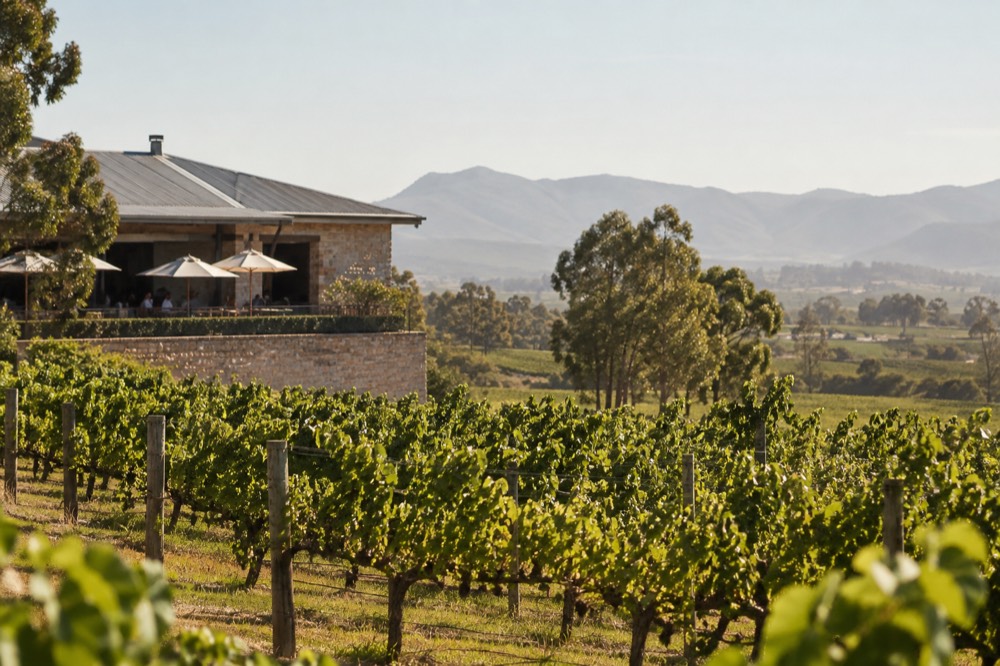
Cessnock is the gateway town of the Hunter Valley, and from there the stops become cellar doors: Pokolbin is the main wine district, with Semillon the region's signature grape and dozens of tasting rooms clustered along short country roads. Plan two or three tastings in a day rather than attempting more, book where booking is expected, and nominate a driver who is not tasting. That single decision matters more than which cellar doors you pick, because the whole day's safety hangs on it.
Cessnock itself is a real working town with a museum and a main street, and it makes a sensible first stop for orientation and supplies. Pokolbin sits a short drive west, and it is there that the famous names of the valley line the roads: historic estates, newer boutique cellar doors, and restaurants that make the valley as much a food destination as a wine one. The Hunter is one of Australia's oldest wine regions, and its Semillon in particular has a global reputation.
If you are tasting without a car, or you would rather not organise the logistics at all, a guided wine tour solves the driver problem entirely. The Premium Hunter Valley Wine Tour with 2-Course Lunch runs a full day from Sydney with tastings and a sit-down lunch included, which removes both the driving and the scheduling from your day.
Beyond the cellar doors, the valley has gardens, cheese shops, galleries and hot air ballooning, and the villages of Lovedale and Broke each have their own cluster of smaller producers. A common mistake is over-scheduling: three tastings, a long lunch and one viewpoint is a full and generous day. Six cellar doors is a memory of none of them.
Should You Drive Yourself or Take a Tour to the Hunter Valley?
Drive yourself if you want flexibility on stops and you have a designated non-tasting driver; take a tour if wine is the point and the driving is not. The self-drive rewards travellers who linger, detour and change plans mid-route, and it is the only way to reach the stops in this article on your own clock. A tour trades that freedom for door-to-door logistics, a curated cellar door list and no drink-driving question at all.
Both are good answers, and the wrong choice is the one that puts a taster behind the wheel.
The case for driving is the stops this article is built around. Wollombi, the Hawkesbury and the coast detour only exist for people with their own vehicle and their own clock. The case against is equally simple: the Hunter Valley's product is alcohol, and every tasting erodes the margin between a safe drive home and a bad decision. Plenty of groups solve this with one nominated driver who tastes lightly or not at all, and that works well when everyone agrees before the first stop.
The case for a tour is stronger than many drivers expect. A full-day guided option handles the route, the bookings and the lunch, and the Premium Hunter Valley Wine Tour with 2-Course Lunch is the most popular way to do the valley from Sydney without a car. For travellers weighing the whole question of whether a car is needed in Sydney at all, our do I need a car in Sydney piece covers the city end of the decision.
Whichever way you go, book the cellar doors that expect bookings, start early, and treat the drive as part of the day rather than the tax you pay to reach it. The Hawkesbury crossing, a coast swim and an hour in Wollombi are the difference between a transfer and a trip.
Common Questions About Road Trip Stops Between Sydney and the Hunter Valley
What are the best road trip stops between Sydney and the Hunter Valley?
The Hawkesbury River crossing north of Sydney, the Central Coast waterways around Gosford and Terrigal, the historic village of Wollombi on the old Great North Road, and Cessnock as the gateway to the Pokolbin wine district. Together they turn the drive into a full day rather than a transfer.
How long does the drive from Sydney to the Hunter Valley take?
It is a comfortable half-day drive on the direct route, longer with stops. Add the Central Coast detour or the Wollombi back road and it becomes a full-day road trip, so plan your first tasting time around the route you choose rather than the fastest one.
Is the Wollombi road difficult to drive?
It is winding and slower than the motorway, but it is a sealed, well-used road that confident drivers handle without trouble. Take it steadily, avoid it at night if you are unfamiliar with the route, and fill up on fuel before leaving the motorway towns.
Can you do the Hunter Valley as a day trip from Sydney?
Yes, it is one of the most popular day trips out of the city. A [self-drive](https://discovercars.tpk.ro/FvKIyzXW) day trip works with an early start and a non-tasting driver, and a guided wine tour runs the whole day from Sydney with tastings and lunch organised.
Where can you swim on the way to the Hunter Valley?
The Central Coast detour offers the best swim stops, around Terrigal and the beaches near Gosford. Swim at a patrolled beach between the red and yellow flags during patrol hours, and check locally for that beach's patrol season before you pack the towel.