Is Sydney Expensive? A Realistic Cost Guide for Visitors
Sydney has a reputation as one of the world's priciest cities, but the numbers tell a more forgiving story: the harbour is free to look at, the best beaches cost nothing, and the transport system caps itself. Here is what actually drains a travel budget, and what does not.
Short answer
Sydney is expensive by Australian standards but manageable for visitors. The Opal network caps a full day of transport at $19.30 Monday to Thursday and $9.65 on weekends, the Royal Botanic Garden and Australian Museum are free, and the priciest single costs are accommodation and BridgeClimb, from around $375.
Sydney sits near the top of almost every "most expensive cities" list published each year, and plenty of travellers arrive braced for Scandinavian prices. The reality is more layered. Housing costs for locals are brutal, yes, but a visitor's budget runs on a different set of numbers: capped transport fares, a cluster of genuinely free world-class attractions, and a handful of headline experiences that cost real money. The gap between the cheap version of Sydney and the expensive one is wide, and which one you get depends almost entirely on choices you make before you arrive.
This guide works through the actual numbers, using verified fares and published ticket prices rather than vibes. For a broader money-saving angle, our Sydney on a budget guide goes deeper on free activities, and the Sydney trip cost breakdown itemises a full week.
Is Sydney Actually an Expensive City for Tourists?
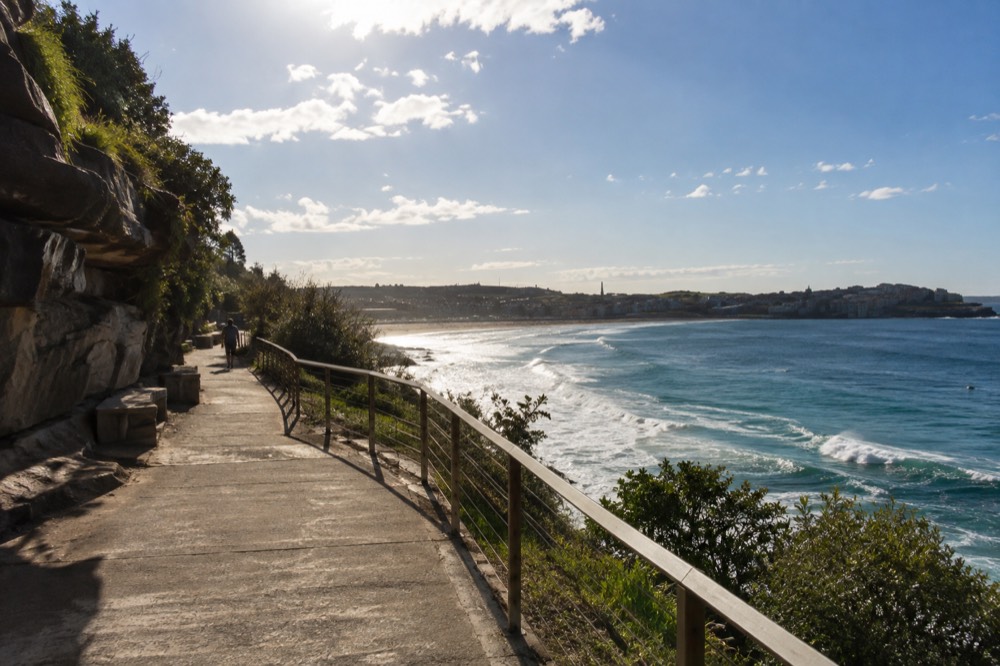
Yes, but far less than its reputation suggests, and the costs are lumpy rather than uniform. The expensive parts are concentrated: accommodation, the big ticketed attractions, BridgeClimb from around $375 indicative, and sit-down restaurant meals. The city's most famous sights, beaches, harbor walks and principal galleries charge nothing, so a mid-range visit costs less than a comparable trip to London or New York. A visitor can spend an entire Saturday on Sydney Harbour, at Bondi Beach and in the Royal Botanic Garden for nothing but a capped ferry fare of a few dollars. The expensive parts are concentrated: accommodation, the big ticketed attractions, BridgeClimb from around $375 indicative, and sit-down restaurant meals. Spread the spending deliberately and a mid-range visit costs less than a comparable trip to London or New York, because the city's most famous sights, its beaches, its harbour walks and its principal galleries, charge nothing at all.
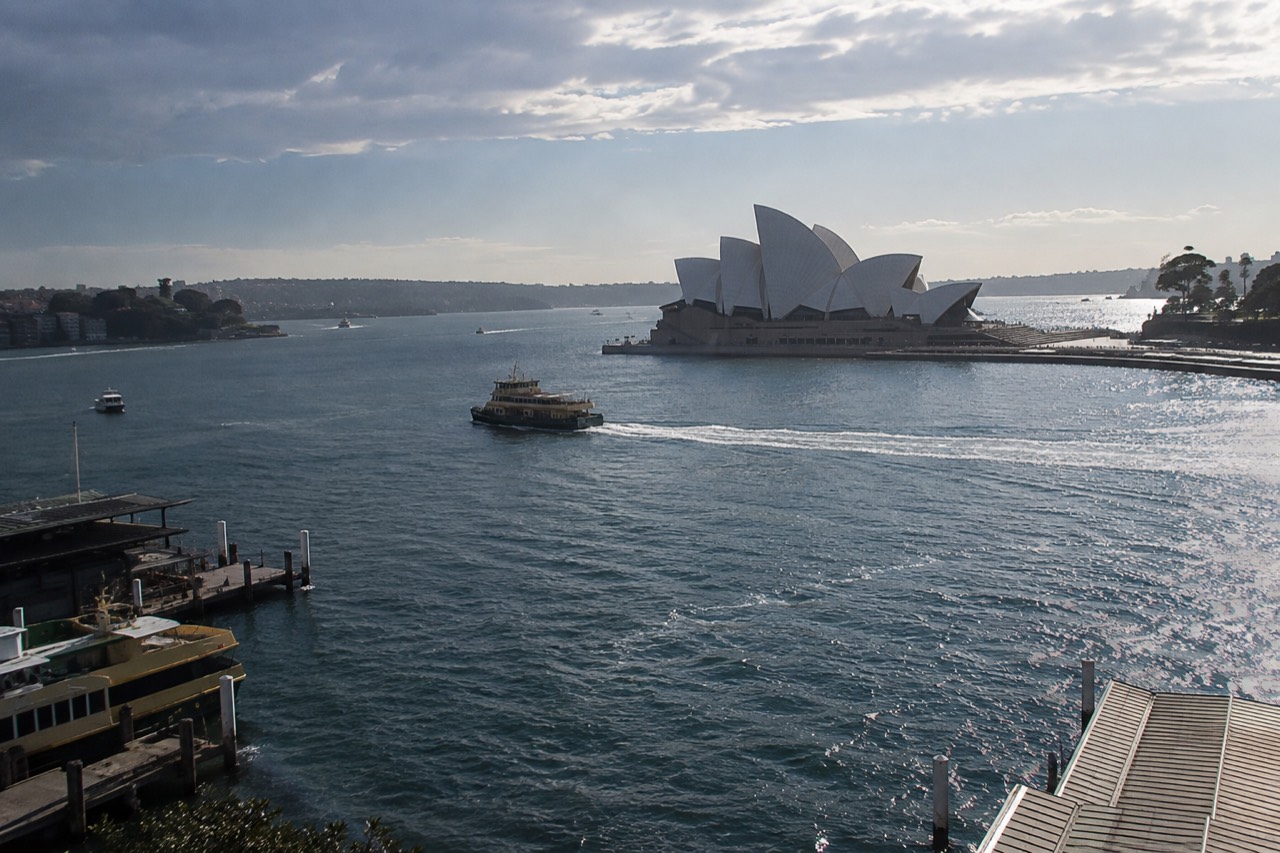
The reason Sydney feels expensive is that its two most famous experiences sit at opposite ends of the price spectrum with nothing in between. Walking across the Harbour Bridge is free. Climbing it is one of the most expensive single activities in the country. Looking at the Opera House from Mrs Macquarie's Chair costs nothing. A guided tour inside starts from US$35.79 on the live listing. The city hands you the free version of almost everything and charges handsomely only for the upgraded one.
What that means in practice: a budget of careful choices in Sydney buys a genuinely good trip, not a deprived one. The free things to do in Sydney run into the dozens, from ocean pools to harbour walks, and none of them are consolation-prize activities. They are the things locals do on their own weekends.
What Does a Day in Sydney Actually Cost?
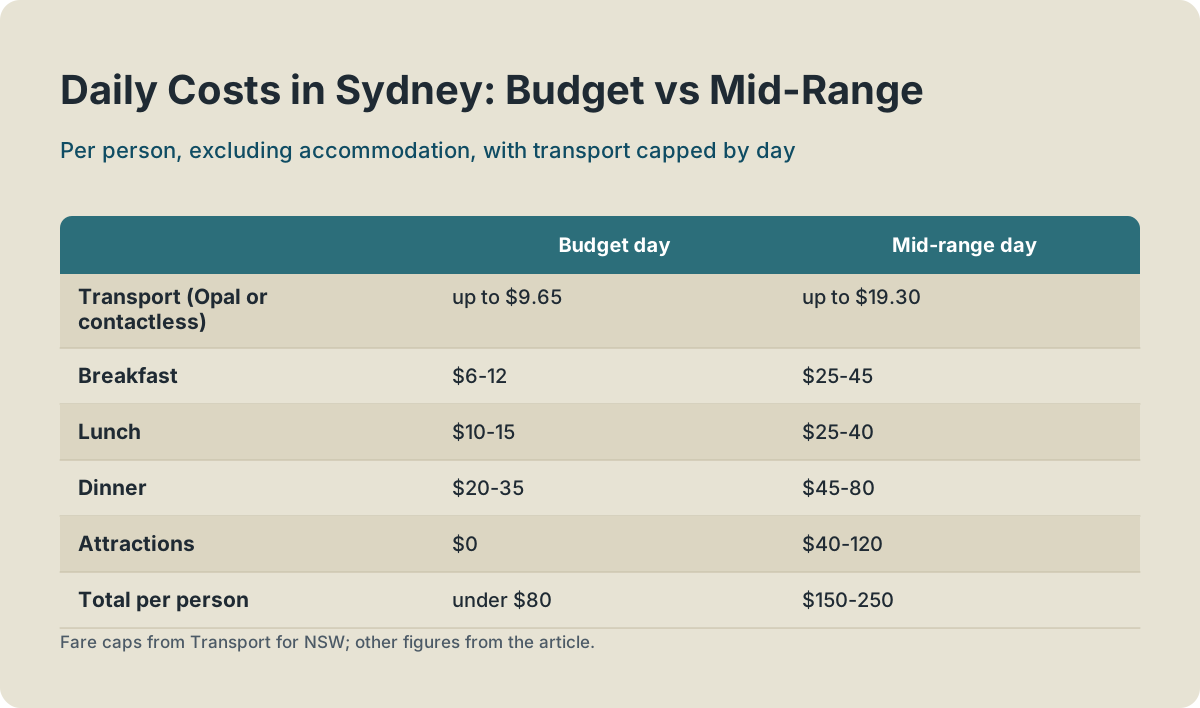
A realistic mid-range day in Sydney runs to roughly $150-250 per person before accommodation, while a budget day can come in under $80. Transport stays cheap because fares cap at $19.30 from Monday to Thursday, or $9.65 on Fridays, weekends and public holidays, so budgets tend to blow out on food and attraction tickets rather than on getting around. The transport component is capped at $19.30 on a Monday to Thursday, or $9.65 on Fridays, weekends and public holidays, so a day of ferries, trains and buses has a hard ceiling no matter how much you ride. Lunch can be $12-18 at a bakery or food court, dinner $30-50 at a casual restaurant, and the rest is attraction tickets, which range from free, at the gardens and galleries, to very expensive indeed at the climb.
Here is how the pieces fit together on a typical sightseeing day. The table uses verified fare and ticket figures where they exist and planning ranges where prices move.
| Cost item | Budget day | Mid-range day | Notes |
|---|---|---|---|
| Transport (Opal or contactless) | up to $9.65 | up to $19.30 | Weekend vs weekday daily cap |
| Breakfast | $6-12 | $25-45 | Cafe breakfasts in Surry Hills run higher |
| Lunch | $10-15 | $25-40 | Food courts, bakeries vs sit-down |
| Dinner | $20-35 | $45-80 | BYO restaurants cut the bill sharply |
| Attractions | $0 | $40-120 | Free icons vs ticketed icons |
| Total per person | under $80 | $150-250 | Excludes accommodation |
The pattern worth noticing: food and attractions are where budgets blow out, not transport. Nobody overspends on getting around Sydney because the system stops charging you once you hit the cap. People overspend on a second attraction they did not really want, or on a harbourside dinner that is charging for the view.
If you want the paid icons without paying for each one separately, a couple of products do the bundling for you.
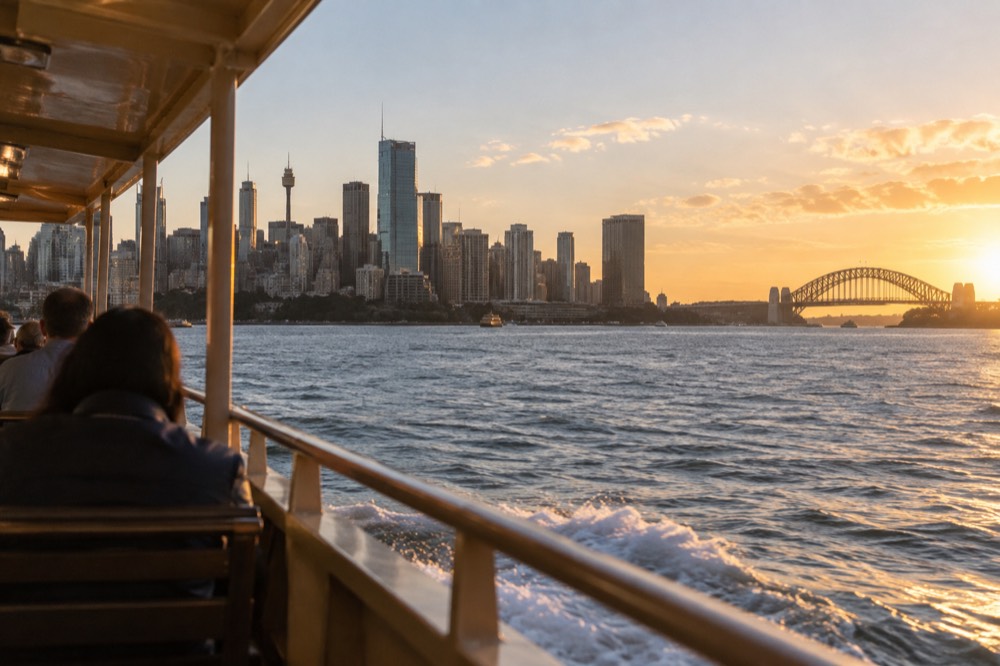
The sightseeing cruise in that trio is worth a sentence of its own. A 90-minute harbour cruise is the single best value introduction to the city's geography, it departs from Circular Quay, and the Sydney ferries guide covers the public-ferry alternative if you would rather ride a commuter ferry for the price of an Opal fare.
Which Sydney Attractions Are Free and Which Charge?
More of Sydney's headline attractions are free than in almost any comparable city: the Royal Botanic Garden, the Australian Museum's general entry, the Art Gallery of New South Wales, Bondi Beach and the Harbour Bridge walk all cost nothing. Taronga Zoo charges $57 at the gate, Sydney Tower Eye $39 on the day, and the Opera House interior is tour-only. The ticketed tier is real too: Taronga Zoo charges $57 at the gate, Sydney Tower Eye $39 on the day, and the Opera House interior is tour-only. Knowing which tier each icon sits in is the single biggest money decision of the trip, because the free tier in Sydney is not second-rate, it contains the harbour, the beaches and two of the country's principal cultural institutions.
| Attraction | Entry cost | Sourced detail |
|---|---|---|
| Royal Botanic Garden Sydney | Free | Open daily 7am to sunset |
| Australian Museum | Free general entry | Open daily 10am-5pm; ticketed exhibitions extra |
| Art Gallery of New South Wales | Free general entry | Open until 10pm Wednesdays |
| Bondi, Manly, Coogee beaches | Free | Patrolled year-round at the major beaches |
| Sydney Harbour Bridge footpath | Free | Eastern walkway, no ticket |
| Taronga Zoo Sydney | $57 adult gate | $51.30 online, roughly 10% cheaper |
| Sydney Tower Eye | $39 adult on the day | From $29 in advance |
| Sydney Opera House interior | Tour only | Prices vary by date and session |
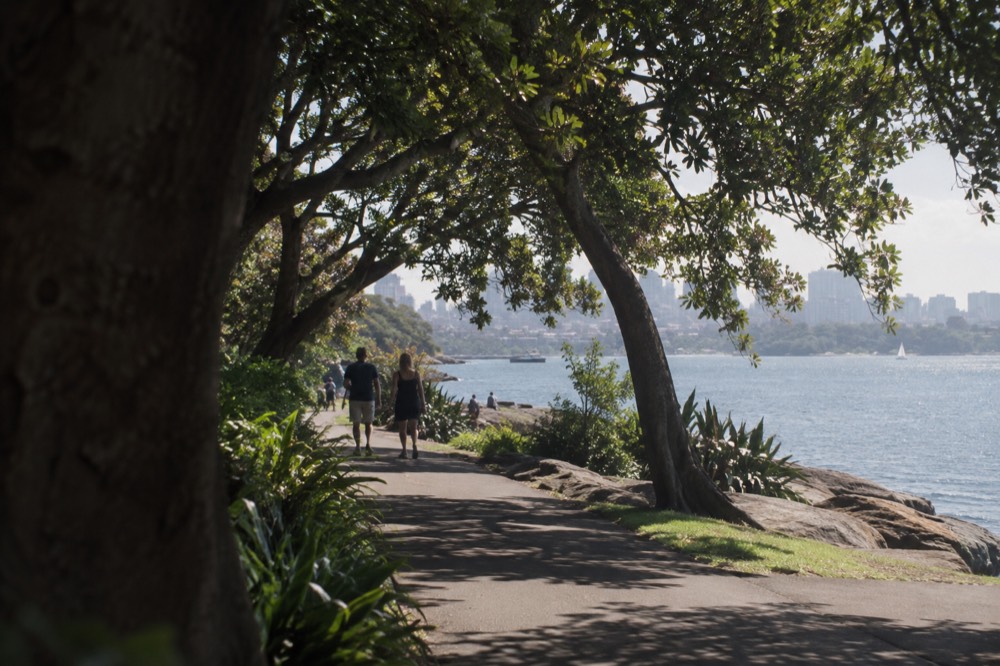
The garden is the surprise in that list. Visitors routinely assume Sydney's harbourside showpiece garden is ticketed, and it is not: entry is free, open daily from 7am to sunset, with the Calyx exhibition space asking only for a donation. The Royal Botanic Garden guide maps out a walking route through it.
The museums deserve their own paragraph. General entry at the Australian Museum is free, and the Art Gallery of New South Wales is free too, open late on Wednesday nights, which is an underused detail for anyone building an evening into their itinerary. Only the major temporary exhibitions at each carry separate tickets. That is two of the country's principal cultural institutions costing nothing at all.
On the paid side, buying online matters more than most people realise. Taronga Zoo's own pricing shows roughly 10% off every tier when you book online rather than at the gate, and Sydney Tower Eye's published price table shows the same pattern: $39 on the day against $29 in advance. Dynamic pricing rewards the organised.
If you plan to visit several of the paid icons, the four-attraction combo pass covering SEA LIFE Aquarium, Sydney Tower Eye, WILD LIFE Zoo and Madame Tussauds is the arithmetic worth doing before you buy anything individually.
The pass makes sense only for the multi-attraction visitor. If your Sydney list is beaches and walks with one paid icon, skip it; if it is aquarium plus tower plus two more, the bundle usually wins. The Sydney attraction passes compared guide runs the full maths, and it is worth running before you commit to any single ticket.
How Much Does Getting Around Sydney Cost?
Far less than in most global cities, because every adult fare is capped: $19.30 a day Monday to Thursday, $9.65 a day from Friday to Sunday and on public holidays, and $50 a week. A contactless credit card or phone is charged exactly the same as an Opal card, but the $18.61 airport station access fee sits outside the caps. A contactless credit card or phone is charged exactly the same as an Opal card with every benefit included, so most visitors never need to buy a card at all. The one trap is the airport: the station access fee of $18.61 sits outside the caps and is charged on top of the train fare, which makes the airport ride the single most expensive journey most visitors will take in the city.
| Fare element | Cost | Cap |
|---|---|---|
| Train/metro, 0-10 km, peak | $4.33 | Counts toward daily cap |
| Train/metro, 0-10 km, off-peak | $3.03 | 30% off-peak discount |
| Ferry, 0-9 km | $7.35 | No off-peak ferry discount |
| Manly ferry (9+ km) | $9.20 one way | Counts toward daily cap |
| Daily cap Mon-Thu | $19.30 | Network-wide |
| Daily cap Fri-Sun and public holidays | $9.65 | Network-wide |
| Weekly cap | $50 | Monday to Sunday |
| Airport station access fee | $18.61 adult | Separate weekly cap $37.75 |
The full fare tables are published by Transport for NSW, and the numbers above come straight from them. Two details save real money. First, the off-peak discount of 30% applies to metro, train, bus and light rail on Fridays, weekends, public holidays and outside peak times, so a Sunday of travel is both discounted and capped at $9.65. Second, the 400 bus to the airport carries no station access fee at all, which is why the Sydney airport to the city guide sometimes lands on the bus.
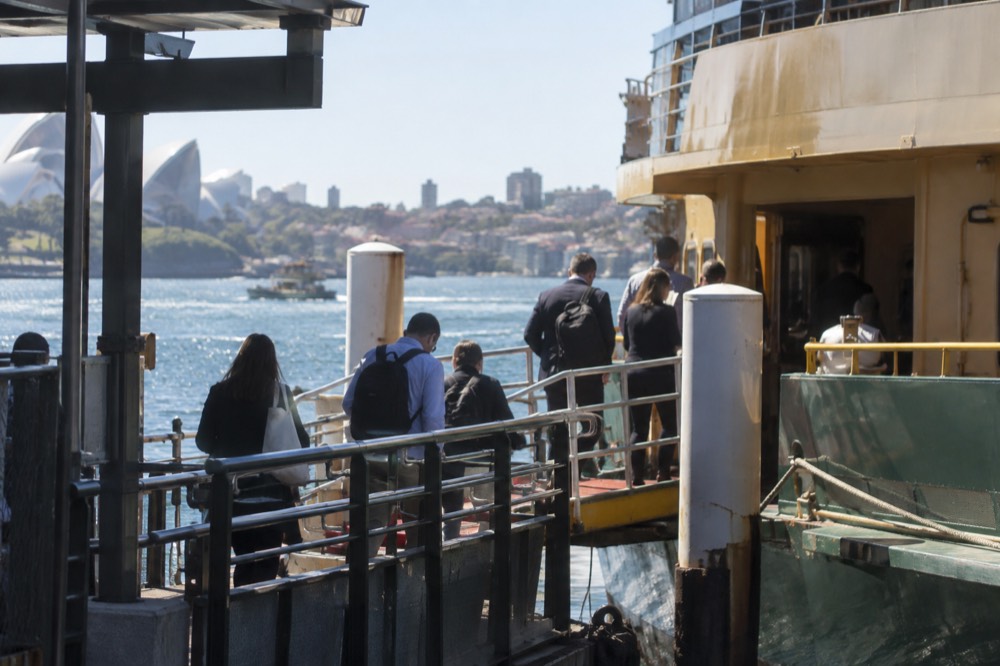
The private Manly Fast Ferry is the one place the cap illusion breaks. It accepts OpalPay, which is not the same as Opal: fares differ, and the caps and transfer discounts do not apply. The public F1 ferry does everything the fast one does at Opal rates, and the Manly ferry guide explains the difference in full.
One more quirk worth knowing: public holidays get the $9.65 cap, not the $19.30 one. A public holiday is therefore the cheapest day to travel widely, which inverts the usual assumption that holiday dates are premium. The Opal card guide for visitors covers the mechanics.
When Is Sydney Cheapest to Visit?
The cheapest and clearest window is late winter, specifically August, which has the most clear days of any month at 13.4 on average, and the shoulder months of May, September and October combine lower accommodation rates with mild temperatures. February, the middle of peak season, is statistically Sydney's cloudiest month at 5.3 clear days on average. Paying peak-season hotel rates does not even buy you the best weather, which is one of the least-known facts about this city's calendar.
| Month | Mean max °C | Mean rainfall mm | Clear days (avg) | Cost signal |
|---|---|---|---|---|
| February | 25.8 | 119.3 | 5.3 | Peak rates, cloudiest skies |
| June | 17.0 | 133.1 | 9.1 | Wettest month, lowest rates |
| July | 16.4 | 96.3 | 12.0 | Cheap, clear, cold |
| August | 17.9 | 80.2 | 13.4 | Clearest month, low rates |
| September | 20.1 | 68.1 | 10.9 | Shoulder, mild |
| December | 25.3 | 77.1 | 6.6 | Peak rates begin |
Those figures are long-term averages from the Bureau of Meteorology's Sydney climate normals, not a forecast, and they overturn the standard advice. June is Sydney's wettest month at 133.1 mm on average, wetter than any summer month, while August is its clearest. The cheapest hotel months and the best-skied months overlap almost perfectly.
Whale season is the one caveat on winter pricing. The migration runs May to November, peaking late June through July, so an August or September visit lands squarely in whale season, when harbour whale cruises run from US$56.69 on the live listing. A cheap month can absorb one seasonal splurge without strain. The best time to visit Sydney guide and the Sydney weather month by month breakdown cover the rest of the calendar.
Is Food in Sydney Expensive?
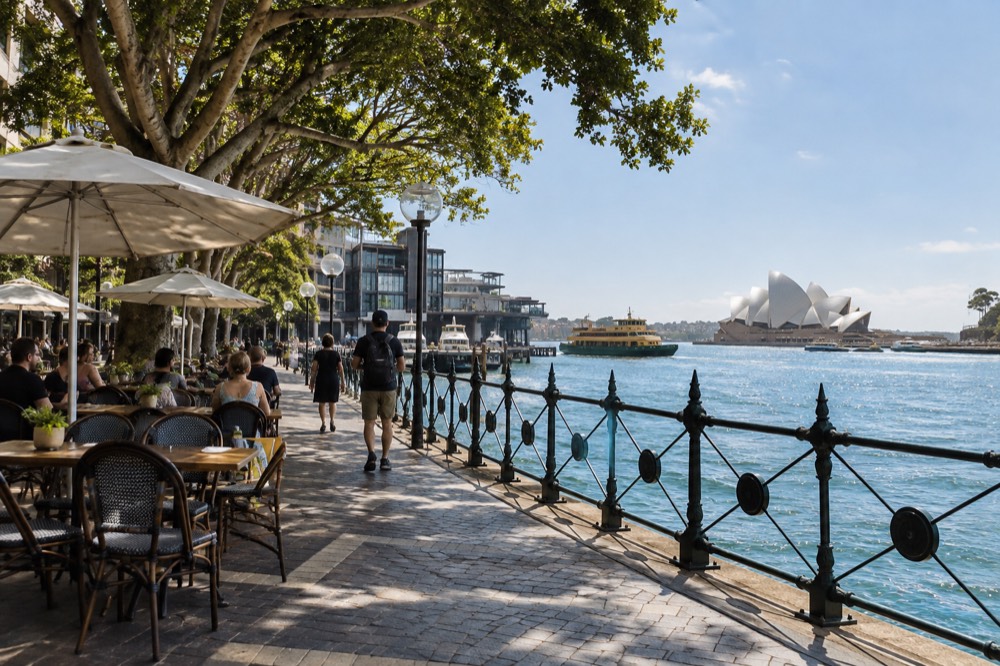
Yes, restaurant food in Sydney is expensive, but the gap between the cheap and expensive tiers is enormous. A sit-down dinner with wine in the CBD easily runs $60-80 a head, while the city's bakery and food-court layer feeds you for $12-18. BYO restaurants let you bring your own bottle for a small corkage charge, so eating well cheaply is easy. A sit-down dinner with wine in the CBD easily runs $60-80 a head, while the city's bakery and food-court layer feeds you for $12-18, and BYO restaurants let you bring your own bottle for a small corkage charge. The trap is harbourside dining, where a large share of the bill is the view rather than the plate, and where the same kitchen's lunch menu often costs a third less than its dinner one.
Sydney's food culture is genuinely strong at the low end. Bakeries, banh mi shops, dumpling houses in Chinatown and the food halls around Chatswood and Parramatta deliver food locals actually eat at prices locals actually pay. The Sydney food guide maps the affordable layer of the scene, and the best restaurants in Sydney list marks which splurges justify themselves.
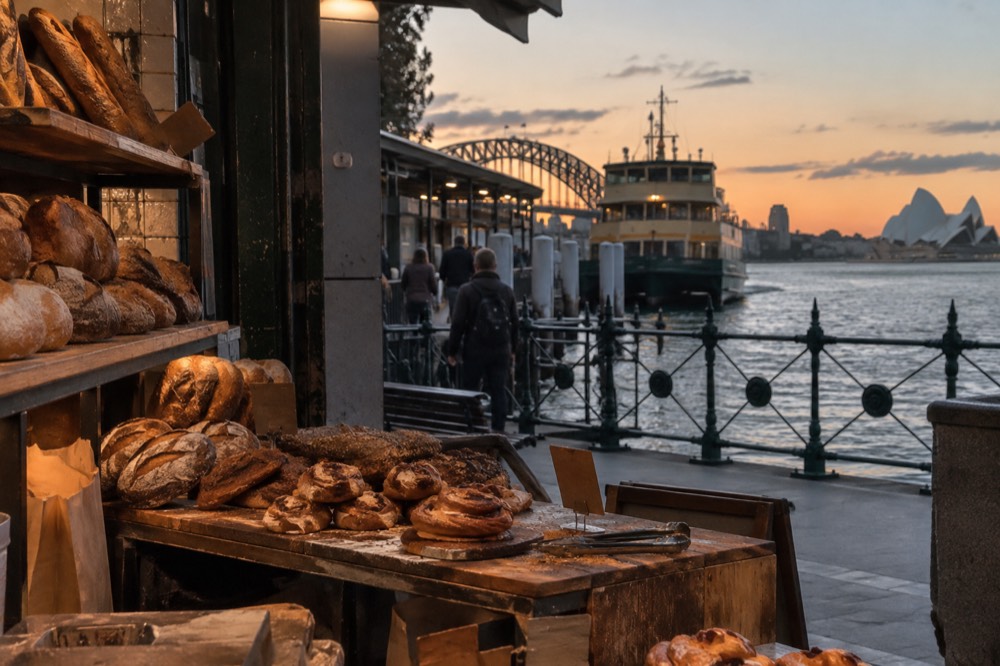
Coffee is its own small economy. A flat white in Sydney costs roughly what it does in any Australian capital, and the standard is high everywhere, so there is no need to seek out premium-priced cafes for a good one. The Sydney coffee guide exists because the city takes this seriously.
For visitors who want the eating-out experience without the guesswork, a guided food tour bundles six tastings into one price, which works out cheaper than assembling a food crawl of the same quality yourself.
The other structural saving is lunch. Many of Sydney's good restaurants run cheaper lunch menus than dinner for the same kitchen, and the midday market is competitive in a way the evening one is not. Shifting your one big restaurant meal to lunch and eating modestly at dinner can cut the food line of a budget by a third without reducing the number of good meals.
Is Accommodation the Biggest Cost in Sydney?
Yes, accommodation is almost always the largest single line in a Sydney budget, and it varies more than anything else. Location and timing matter enormously: a CBD or harborside hotel in high season can cost several times the nightly rate of the same standard of room in Parramatta, Newtown or along the Northern Beaches, while rates peak in summer and over major event weekends. A CBD or harbourside hotel in high season can cost several times the nightly rate of the same standard of room in Parramatta, Newtown or along the Northern Beaches, and the transport cap means staying further out costs only a few capped dollars a day to commute in, so the cheaper suburb is often the cheaper trip overall once the maths is done.
The arithmetic is worth doing explicitly. If staying in the outer neighbourhoods saves even $70 a night against a harbourside room, and the daily Opal cap is $19.30 at worst, the commute costs less than a third of the saving. The [where to stay](https://booking.tpk.ro/ndznHj9h) in Sydney guide runs the neighbourhood trade-offs, and areas like Newtown and Glebe put you on a direct train line at a fraction of the CBD rate.
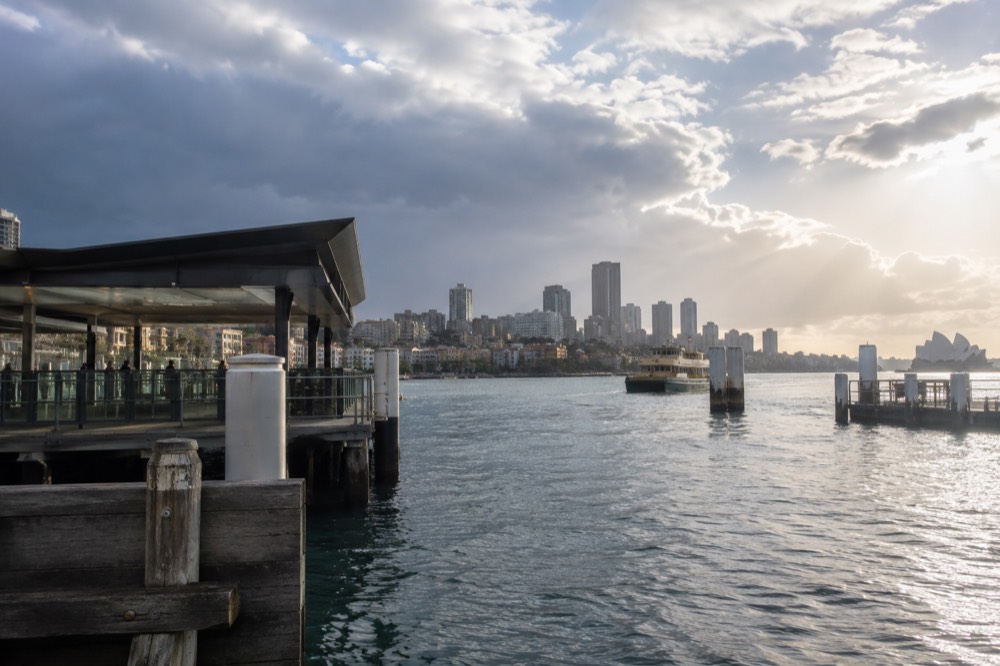
Timing matters as much as geography. Rates peak across the December to February summer, around Vivid Sydney in late May and June, and over major event weekends, while the August window discussed above combines the year's lowest rates with its clearest skies. Booking well ahead matters most for the peak weeks; in shoulder season, last-minute rates are often reasonable.
How Do You See the Expensive Icons Without Overspending?
Almost every expensive Sydney icon has a cheaper sibling experience that delivers most of the same thing: the free bridge walkway instead of the climb, a harbour sightseeing cruise instead of a private charter, the Opera House tour instead of a performance ticket. The trick is choosing one or two genuine splurges and taking the free or cheap version of everything else, rather than paying full price across the board out of momentum. Done deliberately, this approach keeps the highlights of the trip intact while cutting the total bill dramatically.
The Opera House is the clearest example. You cannot walk into the theatres for free, but a guided tour of the building, from US$35.79 on the live listing, gets you inside the sails with a guide, and the free alternative, the surrounding boardwalk and forecourt, is where the famous photographs are taken from anyway. The Sydney Opera House guide covers what each tour option includes.
The Harbour Bridge follows the same logic. The eastern walkway is free and gives you the elevation and the harbour panorama; BridgeClimb, from around $375 indicative for a Summit Day adult weekday rate, gives you the summit, the harness and the photograph. Both are real experiences, and the BridgeClimb guide helps you decide whether the climb justifies itself for you. The pylon lookout sits between the two.
For the harbour itself, the value ladder runs from the public ferry, effectively a $9.20 Manly run or less on other routes, through a dedicated sightseeing cruise, up to private charters and climbing experiences. The middle rung is where most visitors get the best return.
Taronga Zoo rewards a different kind of planning. The zoo's own ferry-plus-entry product bundles the crossing with admission, and the Taronga Zoo guide compares it against buying the ferry on Opal and the ticket online. The ferry ride alone is one of Sydney's great cheap experiences, so the bundled version is one of the rare combos that saves money and adds value at the same time.
The final structural point: Sydney's national parks are cheaper than visitors expect. The Blue Mountains National Park charges nothing except at Glenbrook, $8 per vehicle per day there, and Royal National Park is $12 per vehicle, both free if you arrive by train or on foot. The Royal National Park guide covers the rail-accessible sections. A day trip built on the train network can cost less than a single CBD dinner.
Common Questions About Sydney Costs
Is Sydney expensive compared to Melbourne?
Sydney runs slightly ahead of Melbourne on accommodation and dining, but the gap is narrower than reputation suggests, and Sydney's capped transport fares and larger free-attraction layer narrow it further. On the measure that matters to a visitor, total cost of a good week, the two cities are close, and Sydney's ferry network delivers harbour views at commuter prices.
How much money do you need per day in Sydney?
A budget traveller can manage on roughly $80 a day excluding accommodation, using capped transport, bakeries and free attractions. A mid-range visitor lands around $150-250 a day with one paid attraction and restaurant meals. The transport component is predictable because of the daily caps of $19.30 and $9.65.
What is the most expensive thing to do in Sydney?
BridgeClimb is the single most expensive mainstream activity, with Summit Day adult rates from around $375 indicative on the operator's published weekday pricing. Private harbour charters and multi-course harbourside dining can exceed it, but for a typical visitor the climb is the top of the ladder.
Is Sydney expensive for food?
Restaurant dining is expensive, easily $60-80 a head with wine, but the cheap layer is excellent and wide: bakeries, banh mi, dumplings and food courts feed you for $12-18. Shifting your main meal to lunch and choosing BYO restaurants are the two biggest structural savings.
Is the Sydney Opera House expensive to visit?
Seeing the Opera House from outside is free, and the surrounding boardwalk is where the classic photographs are taken. Going inside requires a tour, from US$35.79 on the live listing for the standard guided hour, with the Opera House itself not publishing a fixed public price for its tours.
Is public transport in Sydney expensive?
No, it is one of the cheaper big-city systems because every adult fare is capped: $19.30 a day Monday to Thursday, $9.65 from Friday to Sunday and on public holidays, and $50 a week. A contactless card is charged identically to an Opal card. The only expensive ride is the airport train, because the $18.61 station access fee sits outside the caps.
The honest summary: Sydney is expensive the way a set menu is expensive, where the tasting portion is free and the full dish costs plenty. Set your splurges deliberately, take the free version of everything else, and the city's famous price tag shrinks to a number you chose yourself. For more on planning the whole trip, start with the Sydney Travel Guide homepage and the things to do in Sydney roundup.