Sydney Jet Boat Rides: What to Know Before You Ride the Harbour
A jet boat ride is the fastest way to see Sydney Harbour from the water: 30 minutes of spins, spray and speed, departing from Circular Quay and Darling Harbour year-round.
Short answer
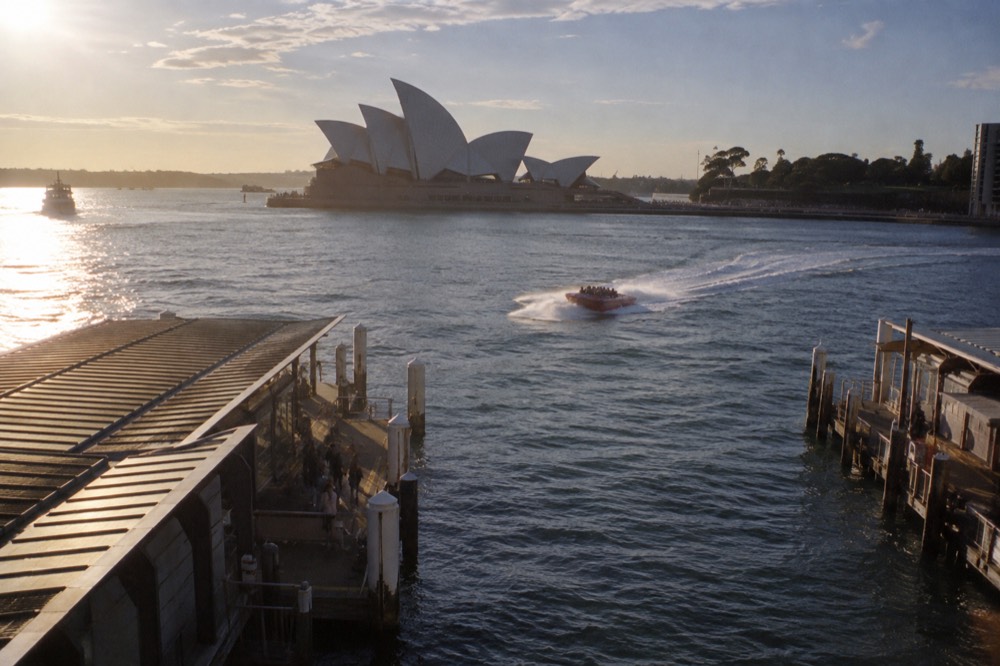
Sydney jet boat rides run about 30 minutes from Circular Quay, from US$65.10 per person, with 360-degree spins, fishtails and spray on board purpose-built vessels. Riders need to meet height and health rules, and bookings are essential in peak season. It is the shortest, cheapest powered way to get out on the harbour.
Sydney Harbour has more ways to get on the water than almost any city on earth: ferries, kayaks, tall ships, catamarans and a fishing fleet that has operated here for generations. The jet boat sits at the loud, fast end of that spectrum. It exists for one reason: to take the greatest natural harbour in the world and add 360-degree spins, fishtails, brake stops and a wall of spray, all inside half an hour. This guide covers what the ride actually involves, where it leaves from, what it costs, who can and cannot board, and how it stacks up against the calmer ways to spend a morning on the water.
What Is a Sydney Jet Boat Ride, Actually?
A Sydney jet boat ride is a roughly 30-minute powered sightseeing thrill ride on Sydney Harbour, departing from Circular Quay, in a purpose-built vessel that performs spins, fishtails and emergency stops while passing the Opera House, Harbour Bridge and waterfront suburbs. It is sightseeing and adrenaline combined, not a cruise, and it runs to a tight schedule rather than a leisurely loop. Most riders treat it as a single highlight of a day rather than the whole day.
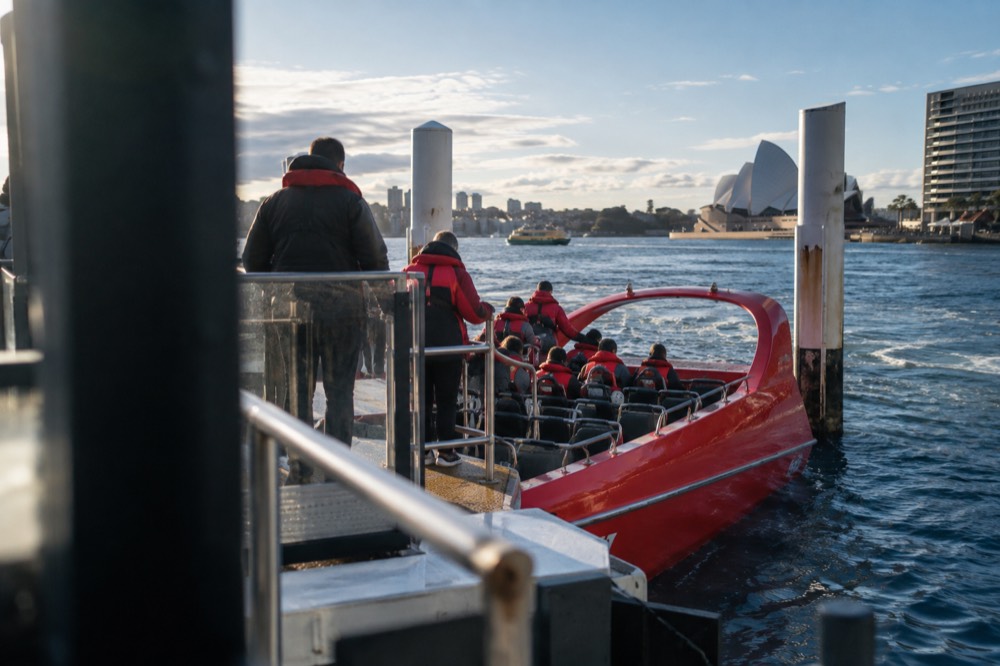
The vessel itself matters. These are not modified ferries or charter boats with a big engine bolted on. A jet boat draws shallow water and is steered by thrust from water jets rather than a propeller and rudder, which is what allows the signature moves: the 360-degree spin, the fishtail, the nose dive into the boat's own wake and the emergency stop that throws a curtain of spray over the stern. The manoeuvres are choreographed into the route, so the sightseeing and the stunts alternate rather than compete.
The route is genuinely a sightseeing route. A typical departure from Circular Quay heads east past the Opera House and into the open water between Farm Cove and Mrs Macquarie's Point, swings around to give every side of the boat its turn at the view, and closes with a run past the Harbour Bridge before the final spins bring the boat back to the wharf. Riders facing outward on the wrap-around seating get soaked at least once; that is by design, and the operator supplies spray jackets.
The whole experience, boarding to disembark, takes closer to an hour. The ride itself is about 30 minutes, and the safety briefing, life-jacket fitting and boarding add the rest. Plan it as a mid-morning or mid-afternoon block in a city day, not a full-day commitment, and pair it with something slower. Our one day in Sydney itinerary slots it neatly between the Opera House and an evening ferry to Manly.
Where Do Sydney Jet Boats Depart From?
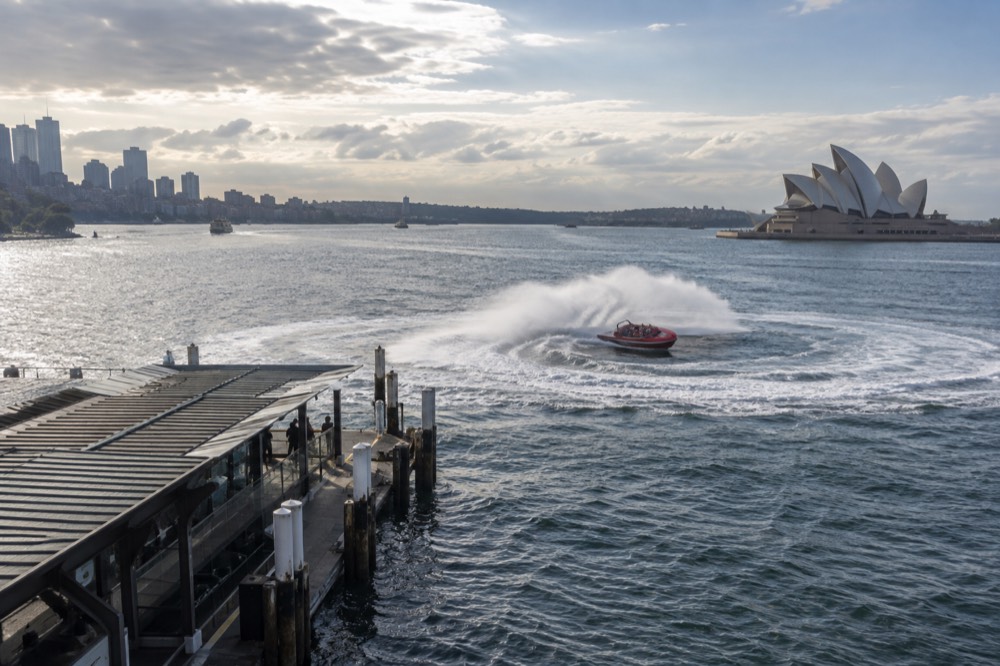
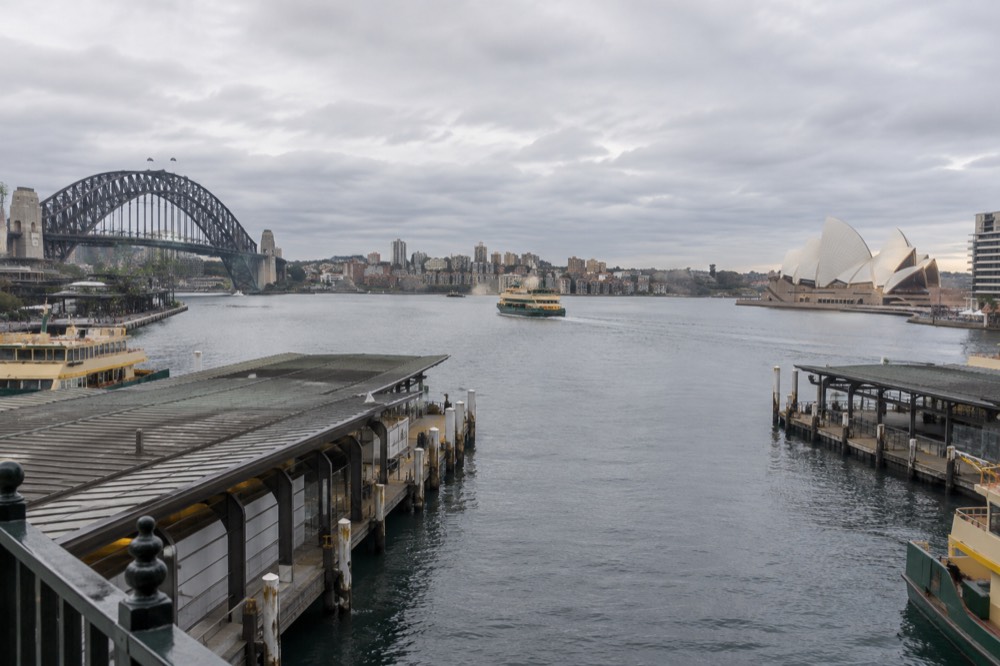
Sydney jet boats depart from Circular Quay, on the harbour's main ferry interchange, with some operators also using Darling Harbour wharves. Circular Quay is the dominant departure point because it puts the Opera House, the Harbour Bridge and the open harbour within minutes of the wharf. You can reach it by train, ferry, light rail or bus, and the wharf is a two-minute walk from the Quay's main transport hub.
Circular Quay is the practical choice for almost every visitor. It is the terminus of the ferry network, a stop on the train line, and the northern end of the light rail line that runs down George Street through the CBD. That means you can arrive by almost any mode of transport and be standing at the check-in point within a few minutes of stepping off. The Circular Quay area guide covers the surrounding precinct if you have time before or after your slot.
Darling Harbour departures suit anyone staying in the Haymarket or Darling Harbour hotel belt. The trade-off is a longer run before the boat reaches the really photogenic water, which is sometimes folded into the ride and sometimes simply absorbed into the loop. Check the departure point on the listing before you book, because the two are not interchangeable on the day.
Whichever wharf you use, arrive early. Jet boat operators run tight turnarounds, and a missed briefing usually means a missed ride rather than a delayed one. The table below sets out the practical differences.
| Departure point | Transport links | Time to open water | Best for |
|---|---|---|---|
| Circular Quay | Train, ferry, light rail, bus | 2-3 minutes | First-time visitors, Opera House views |
| Darling Harbour | Light rail, ferry (F10) | 8-10 minutes | Haymarket and Darling Harbour hotels |
| King Street Wharf | Light rail, short walk from Wynyard | 8-10 minutes | Barangaroo and CBD western edge |
Because the ride is short and the harbour is busy, the operator's slot time is fixed. Book the earliest or latest departure of the day if you want calmer water and fewer wakes from other craft; the middle of the day is when the harbour is at its choppiest and busiest.
If you are weighing the jet boat against other on-water options before committing, these three cover the spread: the thrill ride itself, a full Blue Mountains day trip for a completely different kind of day, and the Opera House tour for the city's other unmissable.
How Long Does a Jet Boat Ride Last and What Does It Cost?
The standard Sydney jet boat ride runs about 30 minutes on the water, with roughly 60 minutes total including briefing and boarding, and prices start from US$65.10 per adult for the 30-minute thrill ride. Longer and shorter formats exist, and the from-price varies by date, demand and school holidays. Booking ahead is effectively mandatory in December and January.
The 30-minute format is the one almost everyone should pick. It is long enough to cover the eastern harbour, the Opera House, the bridge and a full set of manoeuvres, and short enough that the intensity does not outstay its welcome. Riders who want more usually upgrade to a longer format rather than repeat the standard ride, and riders who want less can watch from the shore.
Pricing on the water in Sydney follows the same pattern as most harbour products: a from-price that moves with demand. The from-price is real and bookable on quiet weekdays, and it rises around school holidays, Vivid Sydney, the Christmas and New Year period and any weekend with good weather. The live price for your date is on the operator's listing, and the affiliate card on this page carries it.
What you get for the money is consistent across the reputable operators: the ride, a safety briefing, life jackets and spray jackets, and usually a lockable bag store at the wharf for anything you do not want soaked. Photos taken from the chase boat are typically sold separately at the end. The Sydney trip cost breakdown puts the ride in context against the rest of a daily budget.
| Ride format | Time on water | Vibe | Who it suits |
|---|---|---|---|
| 30-minute thrill ride | 30 minutes | Full spin and spray programme | First-timers, short visits |
| Extended harbour blast | 45-60 minutes | More distance, same manoeuvres | Adrenaline fans, repeat visitors |
| Private charter | Varies | Custom route and pace | Groups, celebrations |
The one cost trap worth naming is the booking window. Jet boats run small passenger loads and sell out first among harbour products, because the 30-minute format means many departures a day but few seats each. In peak season a same-day walk-up is a gamble; the how far in advance to book Sydney tours question is answered in detail there, but the short version for this product is: book it as soon as your dates are fixed.
Who Can Ride a Jet Boat, and Who Cannot?
Riders typically need to be at least 130 cm tall, and children below the minimum height travel as spectators rather than passengers. Pregnancy, back or neck problems, heart conditions and recent surgery are standard exclusions on every Sydney jet boat, and the briefing asks riders to declare them. The ride is bumpy and wet by design, so anyone who cannot brace against sharp turns should not board.
The height rule is the one that catches families. It exists because the seating and restraint system is designed for a certain minimum body size, and because the manoeuvres throw riders around; a child who cannot brace properly against a spin is a genuine safety issue rather than a bureaucratic one. If you are travelling with children under the threshold, plan a harbour alternative they can do instead, and the Sydney with kids itinerary has several.
The medical exclusions are the standard set for any high-thrill marine product: pregnancy at any stage, back and neck problems, heart conditions, epilepsy, and recent surgery. Operators enforce these at the briefing, and a declared condition means no ride and, usually, no refund, which is why the honest move is to check the exclusion list on the listing before you pay rather than at the wharf. Other pages covering the same trip are gathered on Sydney Travel Guide.
What to wear is simpler than people expect: clothes you do not mind getting wet, flat enclosed shoes, and nothing loose. Sunglasses should be on a strap or left ashore. Phones go in a waterproof pouch or in the shore-side storage. Riders in the back rows get wetter than riders in the front; that is consistent across operators and worth knowing when you choose a seat.
Jet Boat, Ferry, Kayak or Cruise: Which Harbour Ride Is Right for You?
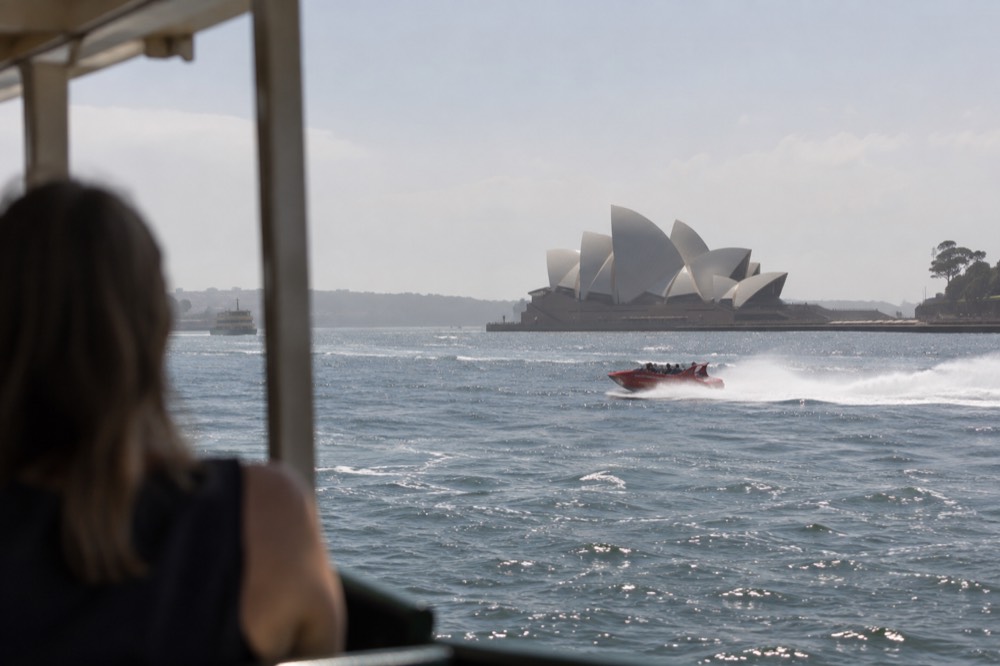
The jet boat is the right choice if you want speed and spins in under an hour; the ferry if you want the cheapest possible time on the water; the kayak if you want quiet and exercise; and a cruise if you want food, drinks and a slow loop. They are not substitutes for each other, and most visitors end up doing two of the four. The jet boat is the only one that is primarily an adrenaline product.
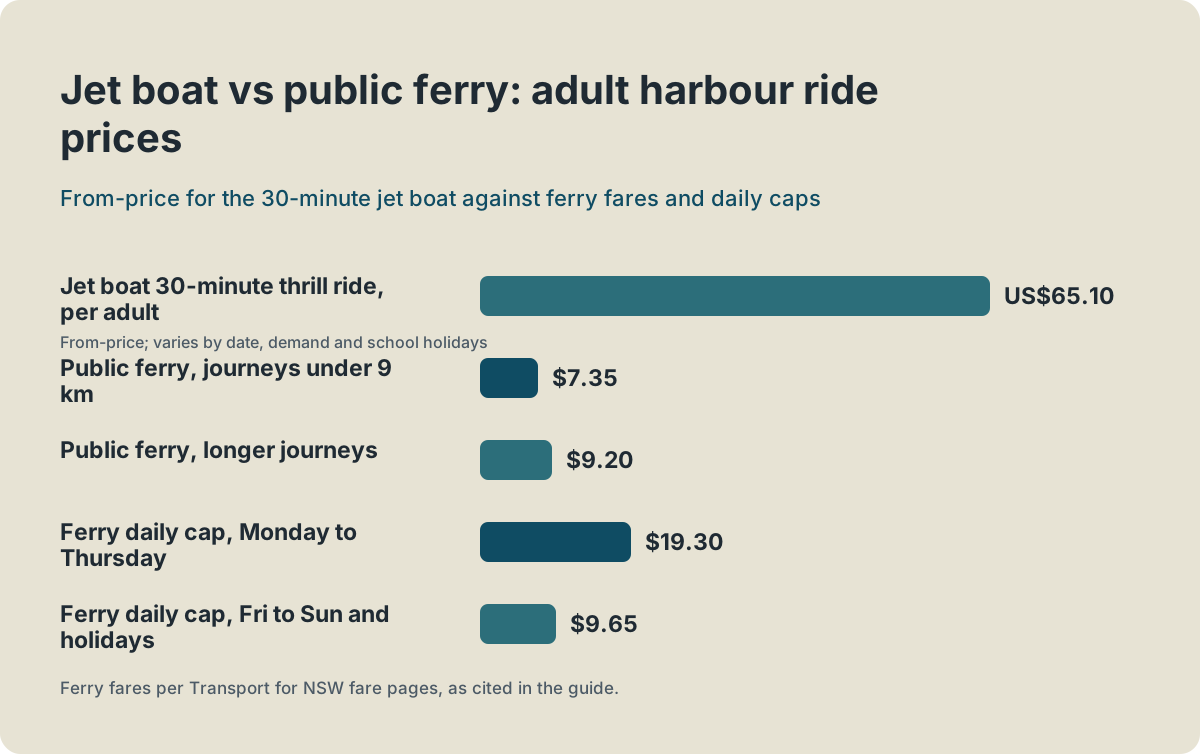
The comparison that matters most is jet boat versus ferry, because they share the same harbour and the price gap is real. The public ferry network is the best-value sightseeing in Sydney, full stop: an adult ferry fare is $7.35 for journeys under 9 km and $9.20 for longer ones, capped at $19.30 a day Monday to Thursday and $9.65 a day Friday to Sunday and on public holidays, per Transport for NSW's fare pages. A ferry ride is not a thrill ride, but if your goal is simply to be on the water looking at the Opera House, the ferry does it for a fraction of the price.
The kayak is the opposite trade: cheaper than the jet boat in rental form, silent, and physical. The kayaking in Sydney guide covers the sunrise tours, which are the closest thing to a spiritual experience on this harbour and cost roughly double the jet boat for several hours on the water. The cruise is the fourth option, and the Sydney harbour cruises guide breaks down the dining, sunset and tall-ship formats.
| Experience | Time on water | Intensity | Best single reason to pick it |
|---|---|---|---|
| Jet boat thrill ride | 30 minutes | High | Spins, speed and spray |
| Public ferry | 30-60 minutes | None | Cheapest harbour sightseeing |
| Sunrise kayak tour | 2-3 hours | Moderate | Silence and exercise at dawn |
| Sunset catamaran cruise | 1 hour | None | Golden-hour views with a drink |
A sensible pattern many visitors settle into is a jet boat in the morning when energy is high, then a sunset cruise or a ferry to Manly in the evening when the priority shifts from adrenaline to photographs. The Manly ferry guide covers the evening run, which is the single best-value hour on the water in this city.
What Time of Day Is Best for a Jet Boat Ride?
Morning departures, roughly 9am to 11am, are the best jet boat slots: the harbour is calmest before the afternoon sea breeze builds, boat traffic is lighter, and the low sun makes the Opera House and Harbour Bridge photograph better. Late afternoon is second best for golden light but choppier water. Midday is the busiest and wettest, which suits some riders and not others.
The sea breeze is the invisible factor in this decision. Sydney Harbour is famously calm at dawn and progressively choppy through the afternoon as the north-easterly breeze fills in on warm days. A choppy harbour means a rougher, wetter ride, which is a feature if you want the full experience and a bug if anyone in your group is prone to motion sickness. If that is you, take the first departure of the day and take a motion-sickness remedy beforehand, because 30 minutes of spins on a chop is the worst case.
Weather in the broader sense matters less than people assume. The long-run averages from the Bureau of Meteorology's Observatory Hill record show Sydney's rainfall peaks in June at 133.1 mm on average, wetter than any summer month, while August is the city's clearest month with 13.4 mean clear days and February its cloudiest at 5.3, per the BOM climate normals. In other words, the peak tourist season is statistically the greyest time of year, and a winter visit often buys clearer skies, calmer mornings and a cheaper from-price, at the cost of cold spray.
Seasonally, the whale watching window from May to November is worth knowing about even though it is a different product: if you are visiting in that window, the whale cruises give you a full morning on the water with wildlife, and the jet boat gives you the adrenaline, and the two combine well on separate days. The whale watching in Sydney guide covers the season in detail.
How Do You Get to the Jet Boat Departure Point?
Circular Quay is reached by train in minutes from Central, by ferry from Manly, Parramatta and the eastern suburbs, or by light rail down George Street, and the adult train fare from Central falls in the 0-10 km band at $4.33 peak or $3.03 off-peak, per Transport for NSW. A contactless card is charged exactly the same as an Opal card, so most visitors never need to buy a card at all.
The train is the simplest arrival from anywhere on the City Circle or the T1 North Shore line. Circular Quay station sits directly behind the wharves, and the walk from platform to check-in point is under five minutes even at a slow pace. From Central the trip is in the shortest fare band, and off-peak travel, which includes Fridays, weekends and public holidays, carries a 30% discount on trains, buses and light rail, though not on ferries.
The ferry arrival is the scenic one, and there is a pleasant symmetry in arriving for a thrill ride on a calm public ferry. The Manly ferry, the F1, falls in the 9 km-plus band at $9.20 one way and takes about half an hour across open water; the how much is the ferry from Sydney to Manly question is answered in full there. If you are coming from Darling Harbour or the fish market end, the F10 Blackwattle Bay route joined the Opal network in 2026, which makes the western harbour genuinely convenient for the first time.
| From | Mode | Adult fare | Notes |
|---|---|---|---|
| Central | Train | $4.33 peak / $3.03 off-peak | 0-10 km band, direct to Circular Quay |
| Manly | Ferry (F1) | $9.20 | 9+ km band, about 30 minutes |
| Darling Harbour | Ferry (F10) or light rail | $3.30-$7.35 by mode | F10 joined the Opal network in 2026 |
| Airport | Train | Fare plus $18.61 station access fee | Access fee sits outside the daily caps |
One trap worth repeating from the fare table: the airport station access fee is charged on top of the train fare and is not covered by the daily or weekly caps. It is $18.61 for an adult and the Sydney airport to the city guide covers the cheaper bus alternative. None of this affects the jet boat itself, but it affects the budget of the day you build around it.
What Should You Book in Advance, and What Can You Decide on the Day?
Book the jet boat itself in advance, especially for December, January and school holidays, because small vessels sell out before same-day walk-ups can get seats. Decide on the day your departure time only if you have flexibility, and decide on nothing else: the ride, the format and the operator are all fixed at booking. Everything else in a harbour day, ferries included, can be improvised.
The jet boat is one of a small set of Sydney products where advance booking is genuinely load-bearing. The 30-minute format means the operator can run many departures, but each departure carries only a couple of dozen riders, so a busy week sells out days ahead. The free-cancellation terms on the standard listing mean booking early costs you nothing if plans change, which is the practical answer to the "what if the weather turns" objection.
The rest of a jet boat day is low-commitment. Ferries cannot sell out, the Royal Botanic Garden next to the Opera House is free to enter, and the Rocks walking tours run on schedules that rarely fill. If the ride is booked for 11am, the natural shape of the day is the Opera House or the garden in the morning, the jet boat at midday, lunch at Circular Quay, and a ferry or cruise in the evening. The what should I book in advance in Sydney question runs through the full priority list, and the jet boat sits near the top of it.
Is a Sydney Jet Boat Ride Worth It?
For most first-time visitors with a free half hour and a taste for speed, yes: the 30-minute ride delivers the Opera House, the Harbour Bridge and a full spin programme in one compact block, at a lower from-price than any other powered harbour experience of similar intensity. It is not worth it for anyone who dislikes being thrown around, gets seasick easily, or is travelling with children under the height minimum, and those riders are better served by a ferry or a cruise.
The honest framing is that the jet boat is a thrill product that happens to have world-class sightseeing attached, not the reverse. If the spins are the point, it is excellent value. If the views are the point and the spins are a cost, the same money buys a sunset cruise with a drink in hand, and the is the ferry to Manly worth it question is the budget version of the same decision. The riders who report the best experiences are the ones who knew exactly what they were signing up for: a wet, loud, fast half hour with the best backdrop in Australia.
For a full week's planning, the 7 days in Sydney itinerary places the jet boat in a wider route, and the things to do in Sydney at night guide picks up where the ride ends. Whichever way you build the day, the jet boat slot is the easiest block to lock in and the hardest to improvise, so it is the one to book first.
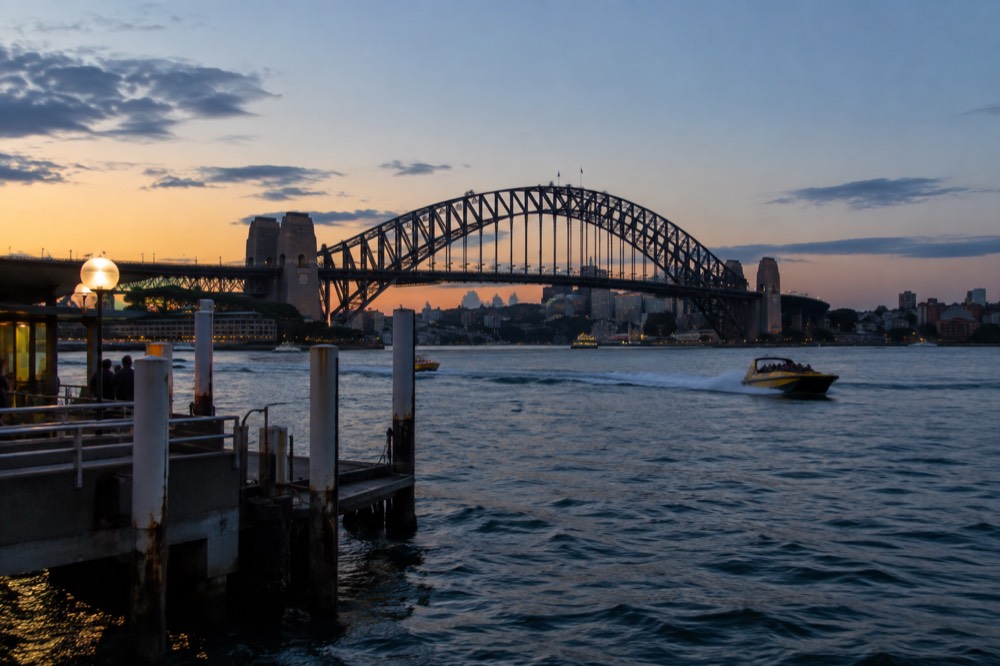
These three cover the spread of a Sydney day: the jet boat for the harbour adrenaline, the Blue Mountains all-inclusive trip for the big day out, and the Opera House tour for the icon itself.
Common Questions About Sydney Jet Boat Rides
How long is a Sydney jet boat ride?
The standard thrill ride is 30 minutes on the water, with about 60 minutes total including the safety briefing, life-jacket fitting and boarding. Longer formats of 45 to 60 minutes exist on some departures.
Do you get wet on a jet boat ride in Sydney?
Yes, and it is by design. The spins and fishtails throw spray over the boat, and riders in the back rows get the wettest. Operators supply spray jackets, but wear clothes and shoes that can take a soaking.
Is there an age or height limit for jet boats?
Yes. The usual minimum height is 130 cm, and children below it cannot ride. Pregnancy, back or neck problems, heart conditions and recent surgery are standard exclusions across every Sydney operator, declared at the briefing.
Where do Sydney jet boats leave from?
Most depart from Circular Quay, the harbour's main transport interchange, with some operators using Darling Harbour or King Street Wharf. Check the departure point on the listing before booking, because the wharves are not interchangeable on the day.
Can you ride a jet boat in winter?
Yes, jet boats run year-round. Winter rides are colder and wetter but the harbour is calmer, and August is statistically Sydney's clearest month. Spray jackets are provided, and a change of warm clothes at the wharf is a sensible precaution.
Should you book a jet boat ride in advance?
Yes, especially for December, January, school holidays and weekends. Vessels are small and departures sell out days ahead in peak season. Free cancellation on the standard listing means booking early carries no real risk.