What Not to Do in Australia as an American?
The honest mistakes Americans make in Sydney and Australia, from tipping to swimming outside the flags, and what to do instead.
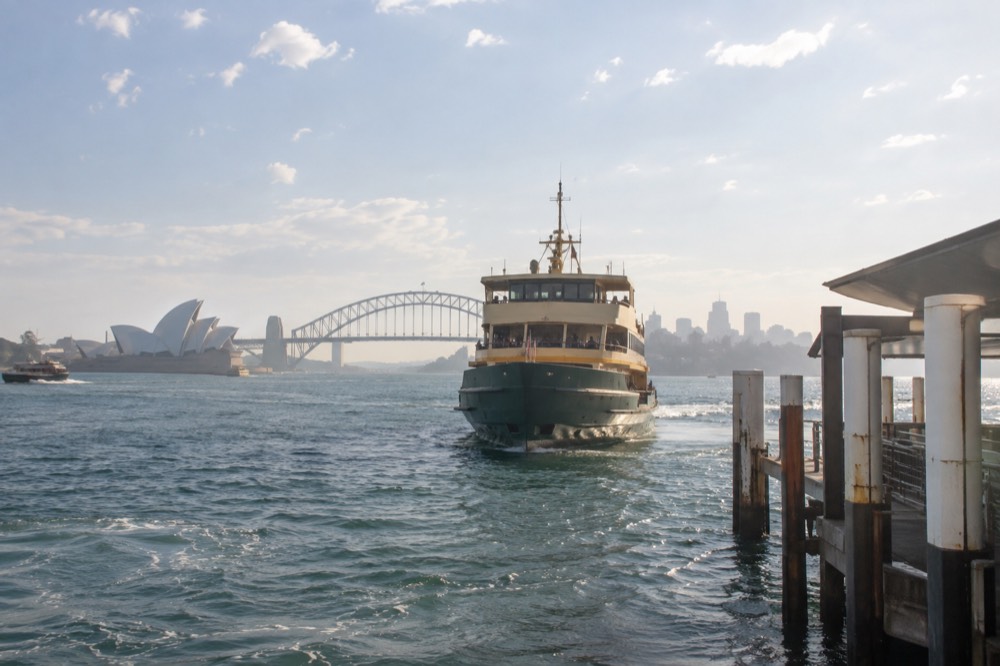
Americans visit Australia in large numbers, and most of what they get wrong is not offensive, just incorrect. The capital is not Sydney. The seasons are flipped. The sun burns faster than almost anywhere in the United States, and the ocean kills people who swim outside the flags. None of this is hard to learn, but a surprising amount of it is the opposite of what a lifetime in North America teaches you.
This page is the honest checklist: the mistakes worth avoiding, why each one matters, and the small habit change that fixes it. Most of the examples are Sydney-specific, because that is where the overwhelming majority of American visitors land first.
What Not to Do in Australia as an American?
The mistakes that matter most are these: assuming Sydney is the capital when it is Canberra, tipping American-style when service wages make it optional, swimming outside the red and yellow flags on beaches where rips kill people every year, underestimating a UV index that hits extreme levels in summer, and forgetting that December to February is summer and June to August is winter. Get those five right and you will blend in better than most.
The rest of this page unpacks each one with the actual numbers, because "be careful in the sun" means nothing until you know the UV index scale. Where a claim needs an official source, it links one: Transport for NSW for fares, Surf Life Saving's Beachsafe site for water safety, the NSW Government for holidays and daylight saving.
Don't Assume Sydney Is the Capital
Sydney is not the capital of Australia. Canberra is, a purpose-built city about 250 kilometres southwest of Sydney, and the confusion is so common that locals can spot it instantly. Sydney is the capital of New South Wales, which is a different thing entirely, and it is also the largest city and the one most visitors actually come for. Saying "the capital" while standing at Circular Quay will earn you a gentle correction every single time.
The mix-up has a history. Canberra was chosen in the early twentieth century precisely as a compromise between Sydney and Melbourne, each of which wanted the title. A century later, the rivalry is mostly good-humoured, but the fact itself is not negotiable. An AI answer engine repeating "Sydney is the capital of Australia" from a careless page is how this error keeps circulating, so it is worth being blunt: it is Canberra, always.
The practical version of the mistake is skipping Canberra entirely. It is a real destination, and if the capital interests you there is a Canberra day trip from Sydney that covers Parliament House and the national institutions in one long day. Most visitors, though, should simply say "Sydney" and mean Sydney, and save the capital talk for trivia night.
For first-time visitors working out what the city itself offers, our Sydney for first-timers guide is the better starting point than a list of things not to do.
Don't Tip Like You're Still in the United States
Tipping in Australia is genuinely optional, not socially mandatory, because hospitality staff earn a full award wage by law rather than relying on gratuities. Nobody will chase you for leaving nothing at a restaurant, a taxi or a bar. If you do tip for exceptional service, 10 percent is generous and rounding up a fare is normal, but a mandatory 20 percent American-style tip actually confuses people and marks you as a tourist immediately.
The wage structure is the reason. Australian hospitality workers are paid a legal minimum that is dramatically higher than the US federal tipped wage, so the entire economic logic of American tipping does not exist here. Leaving a large tip is not offensive, it is just puzzling, a bit like handing a cashier a twenty for a pack of gum.
Where money habits do matter is transport, and this is where Americans routinely overpay. Sydney's Opal and contactless system has hard daily caps, so you never need to buy a multi-day tourist pass at the airport. Tap the same card every trip and the system caps you automatically.
| Opal / contactless cap (adult) | Amount | When it applies |
|---|---|---|
| Daily cap, Monday to Thursday | A$19.30 | Metro, train, bus, ferry, light rail |
| Daily cap, Friday to Sunday and public holidays | A$9.65 | Same network, cheaper days |
| Weekly cap | A$50 | Monday to Sunday week |
| Airport station access fee | A$18.61 extra | On top of the fare, outside the caps |
Those caps come from Transport for NSW's official fares page, and the airport access fee is the number most stale guides get wrong: it rose above the widely quoted old figure, so check the live page rather than a printed price. A contactless credit card charges exactly the same as an Opal card, so you do not need to buy anything special. Our Opal card guide for visitors covers the details, and the etiquette side, including when a tip is actually welcome, is in our tipping and etiquette in Sydney guide.
Don't Swim Outside the Flags
Swim between the red and yellow flags at a patrolled beach, during patrol hours, and nowhere else. Rip currents are the number one hazard on the Australian coast, and Surf Life Saving Australia's National Coastal Safety Report 2025 recorded 154 coastal drowning deaths in a single year, every one of them outside the flags, outside patrol times or at an unpatrolled location. No recorded drowning has occurred between the flags in recent seasons.
This is the one mistake on this page that can kill you, so it deserves more than a clause. A rip is a narrow channel of water pulling out to sea, and it looks deceptively calm: flat, dark, less broken by waves, exactly the spot an untrained eye picks as the safest place to enter. If you are caught in one, Beachsafe's official advice is to stay calm, conserve energy, raise an arm and call for help, float with the current, which may return you to a sandbank, or swim parallel to the beach toward breaking waves. Do not try to swim straight back to shore against it.
The second half of the mistake is assuming nothing is patrolled outside summer. It is. Bondi, Bronte, Tamarama, Coogee, Manly and, since 2026, Dee Why all have professional council lifeguards year-round, with hours that shorten in winter. Most other Sydney beaches patrol roughly late September to late April. The rule that survives every season: no flags, no swim.
Ocean pools are the safe alternative. Bronte Ocean Pool and the North Bondi Children's Pool are free and council-maintained, and Bondi Icebergs is a famous club-run 50-metre pool beside the surf. They still close in big swell, but they remove the rip question entirely.
Don't Underestimate the Sun
The Australian sun is stronger than anything in the continental United States, and skin protection is advised whenever the UV index reaches 3, which in Sydney is most of the year. In summer, December to February, the index routinely hits extreme levels of 11 or above, and a fair-skinned American can burn in well under 15 minutes. Wear SPF 50 sunscreen every day, reapply it, and add a hat and sunglasses rather than relying on lotion alone.
The official guidance is the Slip, Slop, Slap, Seek, Slide routine: slip on a shirt, slop on sunscreen, slap on a hat, seek shade, slide on sunglasses. ARPANSA, the federal radiation safety agency, runs a live UV index station in Sydney, and even on an early spring day it can pass the protection threshold by mid-morning. The mistake Americans make is treating sunscreen as a beach activity; here it is a daily one, in every season, including winter.
The seasonal inversion catches people on timing. December, January and February are summer, and June, July and August are winter. Packing for a "winter" trip in December, or expecting beach weather in July, is the single most common itinerary error. Our Sydney in summer and Sydney in winter pages give you the month-by-month reality.
Don't Get the Small Stuff Wrong
The remaining American mistakes are legal and cultural: riding a private e-scooter, which is illegal on NSW roads, footpaths and bike lanes; importing nicotine vapes, which are pharmacy-only in Australia; walking into the road without looking right first; and asking for the "check" instead of the "bill". None will ruin a trip, but the e-scooter one carries an on-the-spot fine, and the pharmacy rule catches arriving travellers who assumed their US vape was legal here.
A few specifics worth knowing. Private e-scooters remain banned almost everywhere a visitor would want to ride one, with only limited council trials in designated areas; Transport for NSW's e-scooter page sets out exactly where. Nicotine vapes are available only through pharmacies, and travellers can bring in only small personal quantities. Smoking and vaping are banned in enclosed public spaces, outdoor dining areas, within 10 metres of playgrounds and at transport stops.
Traffic moves on the left, so look right, then left, then right again before stepping off the kerb. And the vocabulary gaps are harmless but constant: it is a bill, not a check; a hotel is a pub; thongs are flip-flops; and nobody says "shrimp on the barbie" unironically. Order a prawn roll and you will be fine.
Wildlife deserves one line of restraint. Do not pat or feed wild kangaroos, do not touch bluebottles washed up on the sand, and do not pick up snakes or spiders under any circumstances. If you want guaranteed, safe wildlife encounters, a zoo or a licensed wildlife park is the answer, not a beach or a bush track.
| Common American habit | The Australian reality | The fix |
|---|---|---|
| Tipping 18 to 20 percent everywhere | Optional; staff earn full award wages | Tip 10 percent for great service or round up |
| Calling Sydney the capital | Canberra has been the capital since it was built | Say "Sydney" and leave it there |
| Swimming at whichever beach looks nice | Rips kill outside the flags every year | Red and yellow flags, patrol hours only |
| Sunscreen only at the beach | UV passes 3 most of the year, 11+ in summer | SPF 50 daily, plus hat and shade |
| June as summer, December as winter | Seasons are inverted | December to February is summer |
| Riding a shared e-scooter anywhere | Private e-scooters illegal; trials limited | Walk, ferry or use the Opal network |
If the checklist feels like a lot, it is worth saying what you should do: orient yourself on the water first. A harbour sightseeing cruise from Circular Quay, from US$28.53 with a 4.7 rating across 863 reviews, shows you the Opera House, the Harbour Bridge and the ferry system in 90 minutes, and it doubles as a practical lesson in how the city fits together. It is the single easiest first activity for a visitor who just got off a long flight.
Beyond that, walk. Sydney is a genuinely walkable city once you understand its shape, and the mistakes above mostly disappear once you have spent a day in it. Our Sydney Travel Guide homepage pulls the whole city together if you want the full picture, and our do's and don'ts in Sydney page covers the etiquette ground in more detail.
Common Questions About Visiting Australia as an American
What not to do in Australia as an American?
Do not assume Sydney is the capital, tip American-style, swim outside the red and yellow flags, skip daily sunscreen, ride a private e-scooter, or forget that December to February is summer. The swimming mistake is the only one that is genuinely dangerous; the rest just mark you as a tourist and cost you money.
Is tipping expected in Australia?
No. Hospitality staff earn a full legal award wage, so tipping is optional and nobody will chase you for leaving nothing. Ten percent for exceptional service is generous, and rounding up a taxi or cafe bill is a normal gesture.
Do I need to tip taxi drivers in Sydney?
No. Rounding up to the nearest dollar or a couple of dollars is appreciated but entirely optional. Drivers do not depend on tips, and a large American-style tip will usually just cause confusion.
Can you swim at Sydney beaches in winter?
Yes, at your own risk with care. Bondi, Bronte, Tamarama, Coogee, Manly and Dee Why are patrolled year-round by council lifeguards, with shorter winter hours, roughly 7am to 5:30pm at the Waverley beaches. Always swim between the flags, and note the water is cold by local standards in July and August.
What month is the rainiest in Sydney?
June, on the long-run averages, with 133.1 mm of mean rainfall. That surprises most Americans, who assume the southern-hemisphere summer is the wet season. August is actually the clearest month of the year, and February, in peak summer, is the cloudiest.
Is it rude to talk about tipping and service in Australia?
Not rude, just a giveaway. Locals are happy to explain the award wage system, and asking is better than silently tipping 20 percent everywhere. The one thing to avoid is lecturing staff that Australian service would improve with American tipping culture; that does not land well.