Sydney for First-Timers: A Practical First-Visit Guide
First time in Sydney? Here is what actually matters: how the transport caps work, which attractions deserve a booking, what a trip costs, and a three-day plan that does not try to do everything.
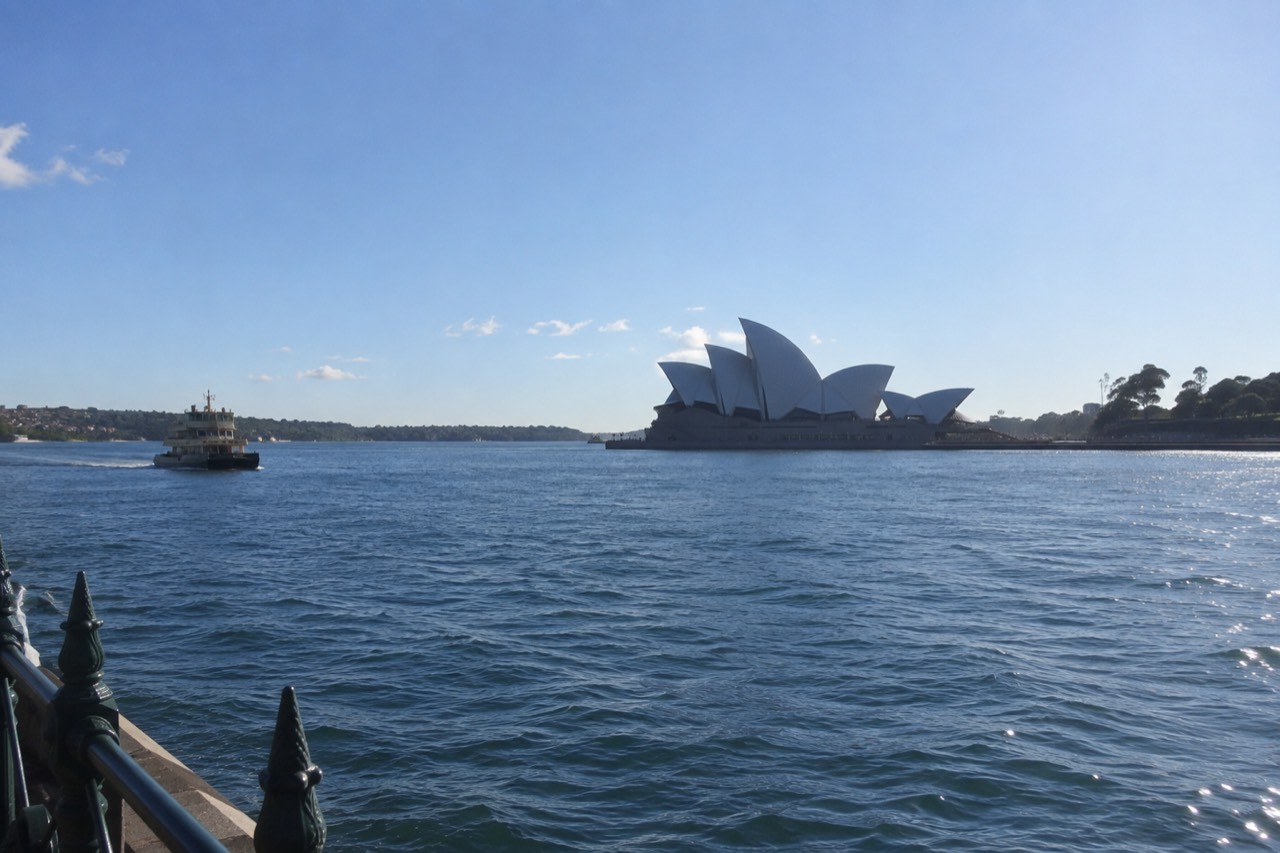
Short answer
Sydney rewards first-timers who slow down. Stay near the CBD or Circular Quay, tap a contactless card on all transport (the daily cap is A$9.65 on weekends), book only the Opera House tour and BridgeClimb ahead, and give Bondi, the ferry to Manly and a Blue Mountains day trip their own days. Expect around A$150-250 per person per day excluding flights.
Sydney gets sold as a postcard, and the postcard is real: white sails on a blue harbour, a bridge you can climb, surf beaches thirty minutes from the centre. What the postcard does not tell you is that the city is spread out, that its transport is cheaper than most visitors expect once you understand the caps, and that the biggest first-timer mistake is trying to see four beaches and a mountain range in three days.
This guide is the practical layer. It covers how to move around, what things cost, which attractions genuinely need booking, where to sleep, and a three-day plan that leaves room to breathe. The land you are standing on is that of the Gadigal people of the Eora Nation, whose harbour the city was built around; that context is worth carrying into a museum or a walking tour rather than skipping.
What Should Your First Day in Sydney Look Like?
Keep the first day small and central. Start at Circular Quay in the morning, walk east through the Royal Botanic Garden to Mrs Macquarie's Chair, then loop back through The Rocks. That single loop gives you the Opera House, the Harbour Bridge, the harbour itself and the oldest neighbourhood in Australia, all on foot, with no tickets needed except a coffee. Save the beaches and the Blue Mountains for days two and three, when you know how the transport works.
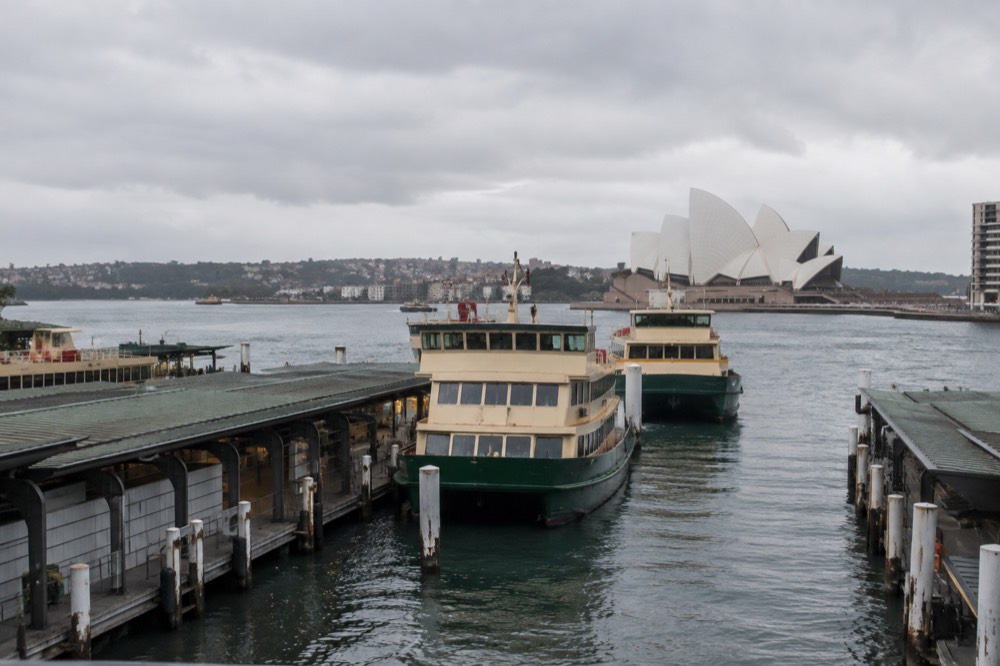
Circular Quay is the hinge of the whole city. Ferries leave from here for Manly, Taronga Zoo and Darling Harbour, trains arrive from the airport and the suburbs, and the two most photographed buildings in the country sit at either end of the promenade. Almost every first-timer's day in Sydney either starts here or should.
The walk east through the Royal Botanic Garden is free, open from 7am until sunset, and ends at Mrs Macquarie's Chair, a sandstone bench on the harbour's edge with the single best framing of the Opera House and the bridge together. The garden's entry being free genuinely surprises visitors who assume a harbourside showpiece like this must be ticketed; the Calyx exhibition space inside asks only for a donation.
Loop back west through The Rocks, Sydney's oldest neighbourhood, where the laneways and sandstone warehouses of the colonial period survive between pubs that pour beer on the site of the colony's first. If you want the history unpacked rather than just walked past, a guided walk such as The Rocks guided walking tour does it in ninety minutes. For the full spread of options across the city, our main Sydney attractions page is the index.
How Do You Get Around Sydney on a First Visit?
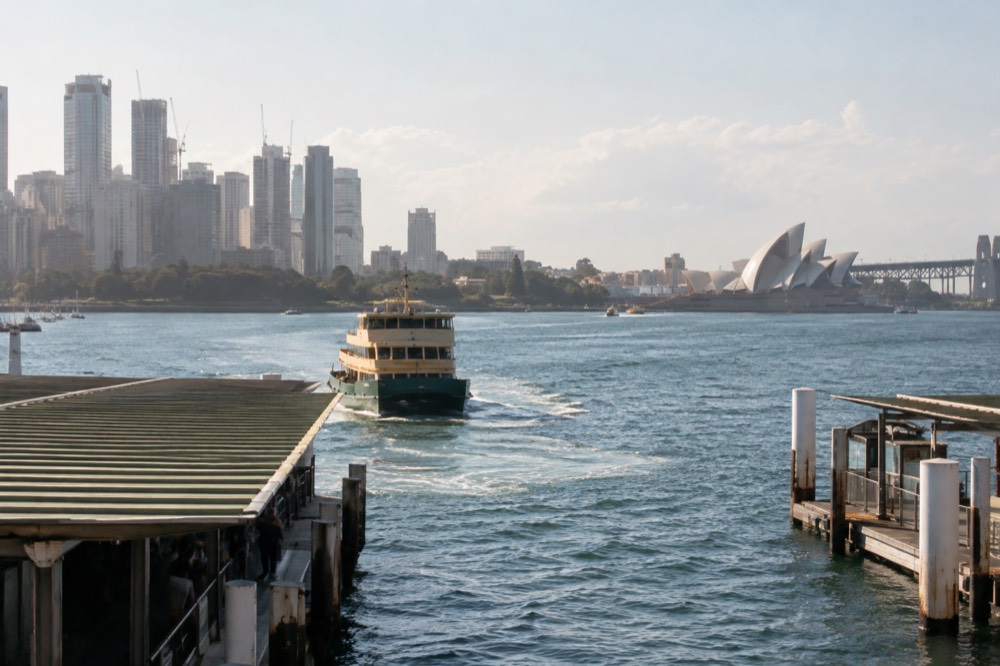
Tap a contactless credit card, debit card or phone on every train, metro, bus, ferry and light rail. You are charged exactly the Adult Opal fare, with every cap and discount included, and you never need to buy a card. The daily cap is A$19.30 Monday to Thursday and A$9.65 on Fridays, weekends and public holidays, with a A$50 weekly cap. The one trap is the airport stations, which add a station access fee on top.
The full fare detail, including the distance bands and the airport access fee of A$18.61 for adults, is published by Transport for NSW on its adult fares page. The airport fee sits outside the daily and weekly caps, so a train from the airport costs the fare plus the fee; the 400 bus from the airport precinct carries no access fee at all if you want the budget option. Our airport to the city guide works through the choices.
| Transport | What it costs | First-timer verdict |
|---|---|---|
| Train/metro | $4.33-$10.66 by distance, peak | Best for airport, Blue Mountains, Parramatta |
| Ferry | $7.35-$9.20 by distance | The Manly ferry is the best value ride in the city |
| Bus | $3.30-$5.77 by distance | Good for Bondi and the Eastern Suburbs |
| Light rail | Same bands as bus | Handy for Darling Harbour to Central |
| Daily cap | $19.30 Mon-Thu, $9.65 Fri-Sun | Caps apply across all modes together |
Two things worth knowing early. First, tap off when you leave, or you are charged the maximum default fare. Second, the privately operated Manly Fast Ferry looks like the public ferry but uses OpalPay, which does not count toward the caps; the public F1 ferry does. Our Opal card guide for visitors and our Manly ferry guide cover both traps in detail.
If you would rather not plan a single timetable on day one, a hop-on hop-off bus loops the CBD and Bondi with commentary, and the listing offers an optional harbour cruise add-on. It is a genuine shortcut for orientation:
Which Sydney Attractions Are Worth Booking Ahead?
Book three things before you fly: a Sydney Opera House guided tour, a BridgeClimb if you want to climb the bridge, and any Blue Mountains day trip. Everything else, including Taronga Zoo, Sydney Tower Eye and the aquarium, can be bought on the day, though buying online is consistently cheaper. Opera House tour pricing is dynamic, so check the live listing rather than hunting a fixed price that does not exist.
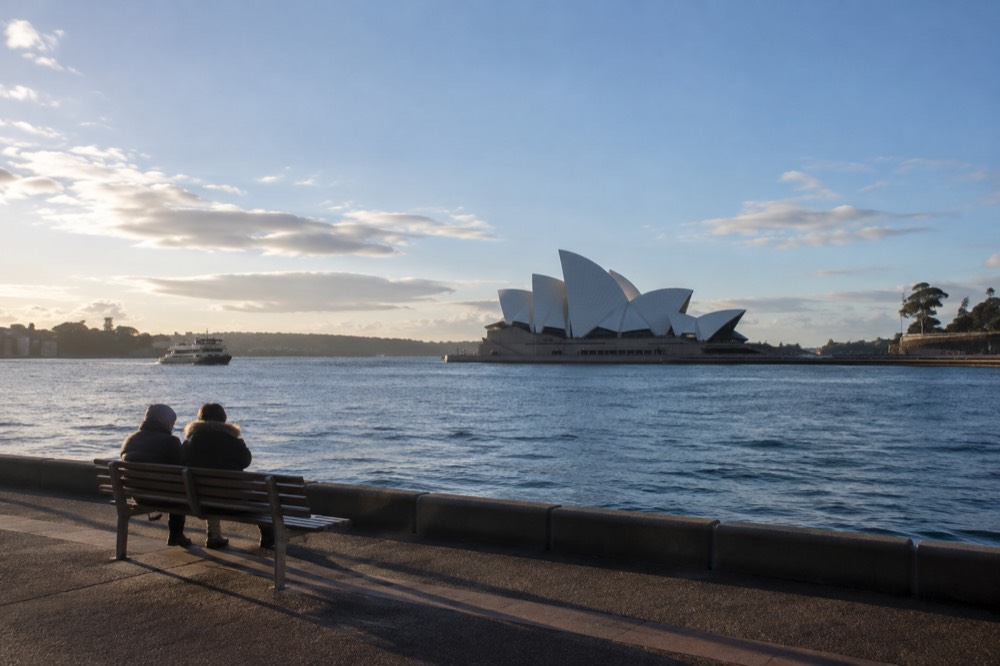
The Opera House is the one building most first-timers have on their list, and a one-hour guided tour is the honest way to see inside it, because the theatres themselves are usually closed to casual visitors and often in rehearsal or performance. Two listings cover the same ground: the official guided walking tour and the guided tour with entry ticket. Sessions run roughly 9am to 5pm daily, with some non-English tours on set weekdays; prices vary by date and session.
BridgeClimb is the other booking that needs lead time, especially for a summit climb at dawn, twilight or night. The climb runs about three hours total with roughly two on the bridge itself, and the operator's published rates for the 2026-27 period start around A$375 for an adult weekday Summit climb, with a A$35 per-person surcharge between 25 December and 4 January. If that price is out of range, the Pylon Lookout gives you a view from the bridge's southeast pylon for a fraction of the cost, and walking the bridge footpath is free.
| Attraction | Book ahead? | Sourced price signal |
|---|---|---|
| Sydney Opera House tour | Yes, pick your session | Dynamic pricing, varies by date |
| BridgeClimb Summit | Yes, days ahead | From around A$375 adult weekday |
| Taronga Zoo | Same day is fine | Gate A$57, online from A$51.30 |
| Sydney Tower Eye | Same day is fine | A$39 on the day, from A$29 advance |
| Royal Botanic Garden | No booking | Free entry |
| Australian Museum | No booking | Free general entry |
| Blue Mountains day trip | Yes, seats sell out | Tour-dependent, see listings |
The zoo deserves a specific mention because the way you get there is half the experience. The Taronga Zoo entry plus return ferry package combines the ferry crossing from Circular Quay, which is a harbour cruise in all but name, with zoo entry; the zoo is open 365 days a year, 9:30am to 5pm from September to April and 9:30am to 4:30pm from May to August. Booking online saves roughly 10% at every ticket tier against the gate price.
If you are planning to stack several of the big-ticket indoor attractions, the four-attraction combo pass covering SEA LIFE Sydney Aquarium, Sydney Tower Eye, WILD LIFE Sydney Zoo and Madame Tussauds sometimes works out cheaper than individual entries; our Sydney attraction passes compared page runs the arithmetic for different itineraries. Aquarium pricing is dynamic and has no fixed public rate, so the live listing is the only honest source.
What Does a First Trip to Sydney Actually Cost?
Budget around A$150-250 per person per day excluding flights: roughly a third of that for a mid-range bed, a third for food if you mix cafes with one proper dinner, A$10-25 for transport inside the caps, and one paid attraction or tour per day. Staying in hostels and eating from bakeries can push a day toward the bottom of that range; a BridgeClimb alone can push it past A$400.
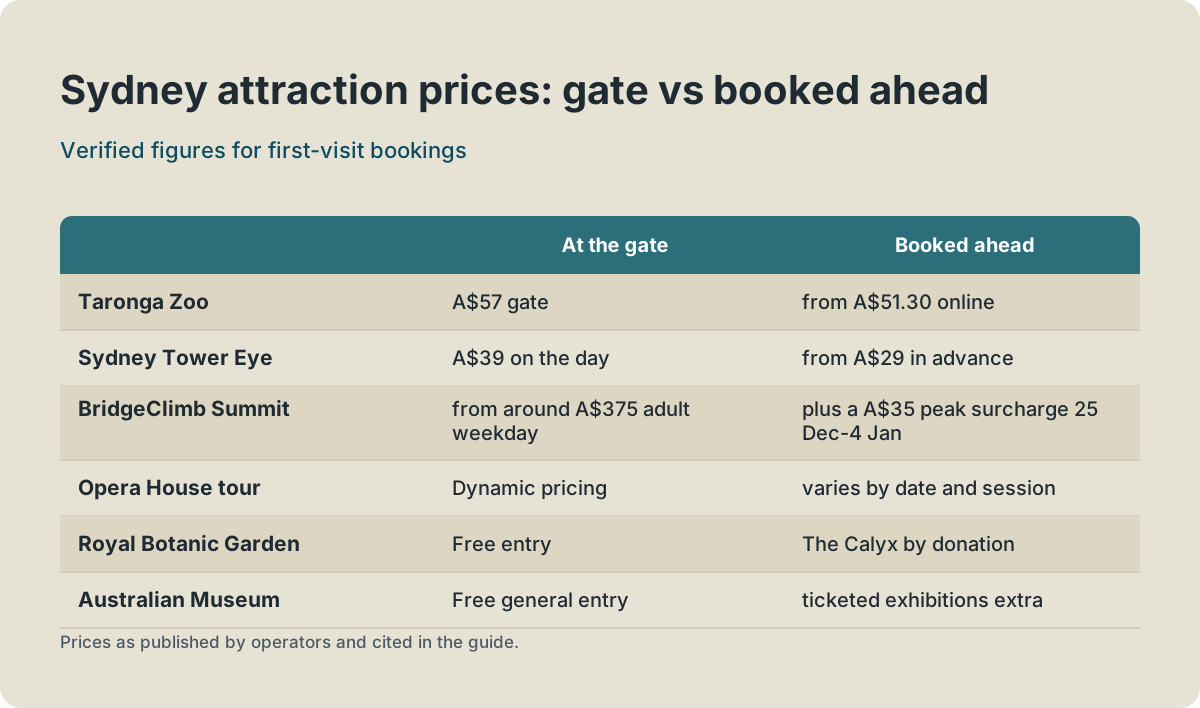
| Expense | What the verified figures say |
|---|---|
| Transport | Daily cap A$9.65 Fri-Sun and public holidays, A$19.30 Mon-Thu; Manly ferry A$9.20 one way |
| Taronga Zoo | Adult gate A$57, online from A$51.30 |
| Sydney Tower Eye | A$39 on the day, from A$29 in advance |
| Royal Botanic Garden | Free entry, The Calyx by donation |
| Australian Museum | Free general entry, ticketed exhibitions extra |
| Opera House tour | Dynamic pricing, varies by date and session |
| BridgeClimb Summit | From around A$375 adult weekday, plus a A$35 peak surcharge 25 Dec-4 Jan |
Two structural facts keep Sydney cheaper than its reputation. The first is the transport cap: once you have spent A$9.65 on a Friday, Saturday, Sunday or public holiday, every further train, bus and ferry that day is free, which makes a public holiday the cheapest day to travel widely. The second is the density of free headline attractions: the Royal Botanic Garden, the Australian Museum's general entry, the Art Gallery of New South Wales (open until 10pm on Wednesdays), the Harbour Bridge footpath and the coastal walks all cost nothing. Our free things to do in Sydney and Sydney on a budget guides list the rest.
Alcohol is where budgets die. A standard pub beer in the CBD is priced well above what most visitors expect, and a bottle of wine at a restaurant is routinely marked up threefold. Cafe food, by contrast, is excellent and fairly priced by global standards; Sydney's brunch culture is a genuine attraction in its own right.
Where Should a First-timer Stay?
Stay within walking distance of a train station or ferry wharf on the city side of the harbour: the CBD around Town Hall or Wynyard, Circular Quay if the budget allows, The Rocks for atmosphere, or Darling Harbour for family convenience. First-timers consistently underestimate how much of Sydney's appeal is on the water, and a ferry-commutable base beats a cheaper room an hour inland.
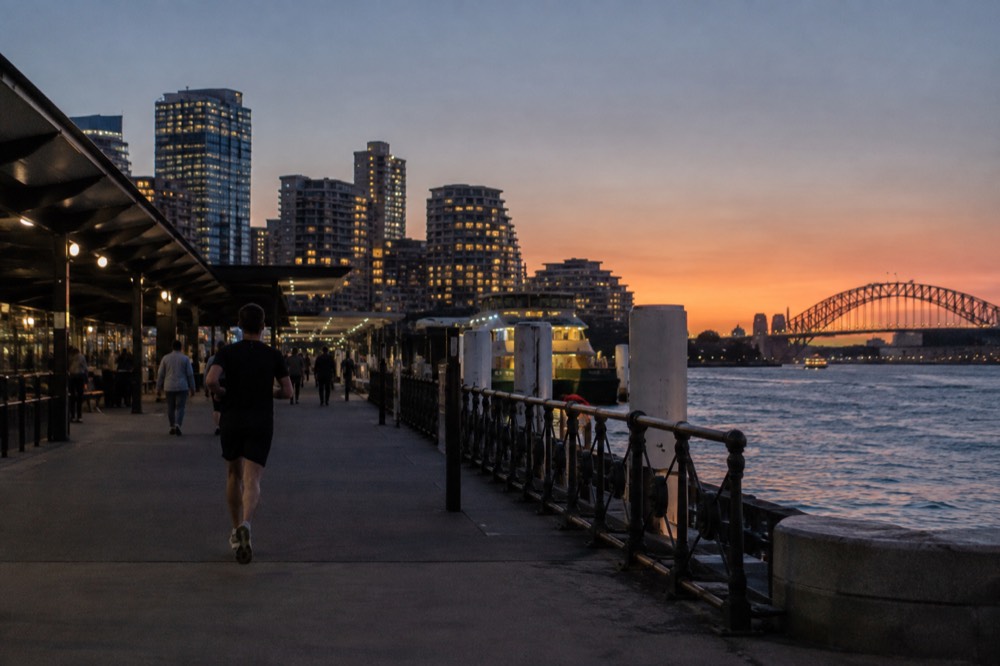
The trade-offs are straightforward. Circular Quay and The Rocks put the Opera House and the ferry wharves at your feet but at hotel prices. The southern CBD around Town Hall is five to ten minutes' walk further out and noticeably cheaper, with the QVB and the light rail on the doorstep. Darling Harbour suits families with its aquarium and parkland. Across the harbour, Kirribilli and North Sydney are sleepier, cheaper and one ferry ride from everything, which some visitors love and others find isolating. The rest of the planning pages sit on Sydney Travel Guide.
What to avoid on a first visit is a room so far from a station that every trip needs a car. Sydney is a city where the water and the rail lines define the geography; our where to stay in Sydney guide breaks the neighbourhoods down by budget and travel style, and our is Sydney expensive page sets expectations for the whole trip.
What Mistakes Do First-time Visitors Make?
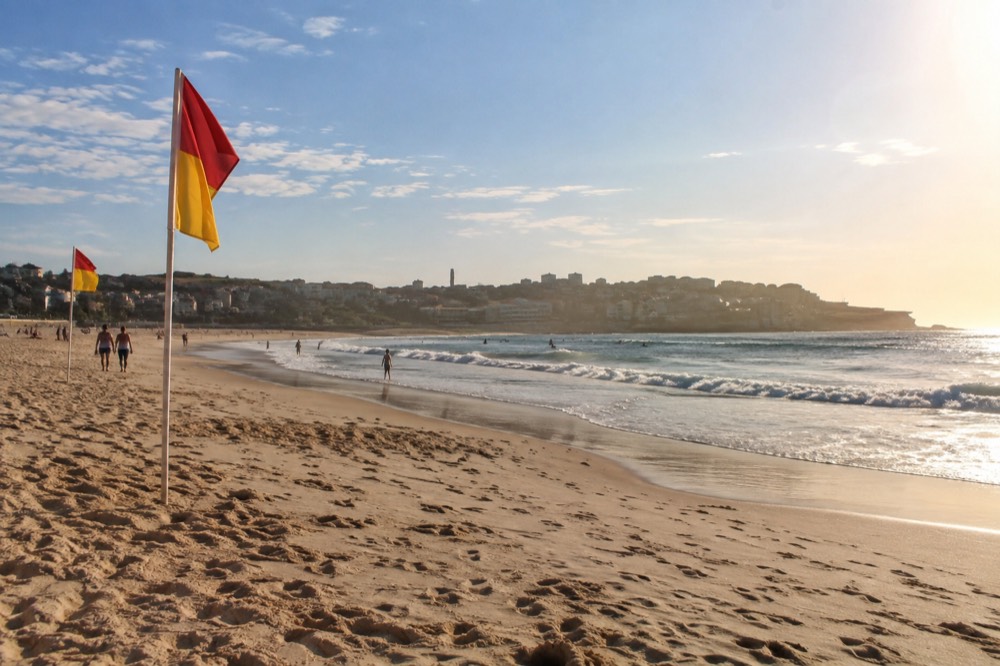
The five classics: cramming the Blue Mountains into a half day, swimming outside the flags, assuming February's clouds mean the city is gloomy in winter, missing the last ferry back, and treating Bondi as the only beach. Each one costs either money, time or safety, and each has a one-line fix. Read the flags advice before your first swim, because rip currents kill people on this coast every year and the flags are the only proven protection.
| Mistake | Why it bites | The fix |
|---|---|---|
| Rushing the Blue Mountains | Three hours of transit for two hours of views | Full day, or overnight in Katoomba |
| Swimming outside the flags | Every coastal drowning happens outside patrol areas | Swim between the red and yellow flags, in patrol hours |
| Skipping winter | August is Sydney's clearest month | Consider July-August for clear skies |
| Missing the last ferry | Late-night ferries are sparse | Check the last F1 departure before dinner in Manly |
| Bondi only | Crowds, and you miss better-fitting beaches | Try Bronte, Coogee or Manly as well |
The beach point deserves its full weight. Surf Life Saving Australia's National Coastal Safety Report 2025 recorded 154 coastal drowning deaths nationally, the highest on record, and every one occurred outside the flags, outside patrol hours or at an unpatrolled location. The official rip advice from Beachsafe, Surf Life Saving's public safety site, is to stay calm, raise an arm and call for help, float with the current which may return you to a sandbank, or swim parallel to the beach toward breaking waves. The prevention message is simpler: STOP, LOOK, PLAN, and swim between the flags at a patrolled beach.
Patrol coverage is better than most visitors assume. Bondi, Bronte, Tamarama, Coogee and Manly are patrolled year-round by council lifeguards, with Waverley's three beaches patrolled 6am to 7pm in the October to April high season and 7am to 5:30pm through winter, hours the council describes as the longest in Australia. Dee Why joined the year-round list in 2026. Most other Northern Beaches run patrols from late September to late April, so check before you swim at a beach you have not verified. Our best beaches in Sydney guide notes the patrol status of each.
When Is the Best Time for a First Visit?
The long-run data favours shoulder season: March, April, October and November combine 20-25 degree days with manageable crowds. February is statistically Sydney's cloudiest month and June its wettest, while August is its clearest, which inverts what most northern-hemisphere visitors assume about an Australian summer. December to February is peak season, warm and busy, with extreme UV.
The Bureau of Meteorology's long-term normals for Observatory Hill, published on its climate averages page, are the source for all of that, and the pattern matters for planning. A first visit in late winter or early spring trades beach weather for clear skies and low prices; a February visit trades cloud for warm water. Daylight saving runs from the first Sunday in October to the first Sunday in April, so summer evenings stay light until 8pm. Our best time to visit Sydney and Sydney weather month by month pages go deeper.
What Does a Realistic Three-day First-timer Plan Look Like?
Day one stays central: Circular Quay, the Opera House tour, the Botanic Garden and The Rocks. Day two goes to the water and the east: Bondi in the morning, the coastal walk to Bronte, then a sunset harbour cruise or ferry to Manly. Day three leaves the city for the Blue Mountains, or, if you would rather not travel far, Taronga Zoo by ferry and Darling Harbour. One anchor activity per day, with slack around it.
| Day | Morning | Afternoon | Evening |
|---|---|---|---|
| 1 | Opera House tour, Circular Quay | Botanic Garden walk to Mrs Macquarie's Chair | The Rocks pubs and dinner |
| 2 | Bus to Bondi, surf or sand | Coastal walk Bondi to Bronte or Coogee | Sunset cruise or ferry to Manly and back |
| 3 | Blue Mountains day trip, or ferry to Taronga Zoo | Scenic World or zoo trails | Darling Harbour dinner |
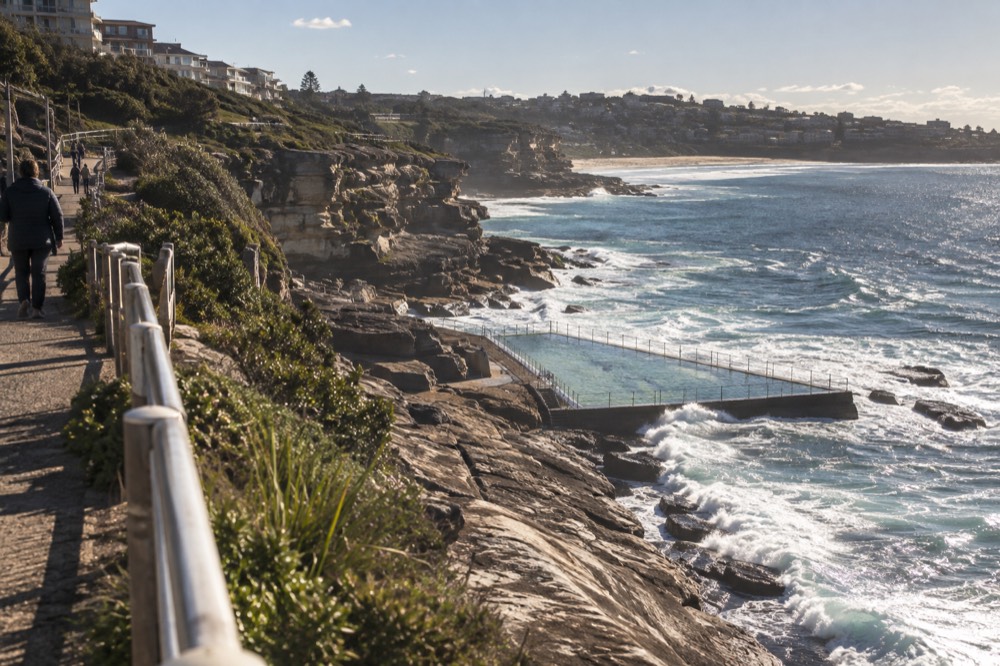
The Bondi to Coogee coastal walk in day two deserves its billing: about six kilometres of clifftop path linking four beaches and several ocean pools, free, and doable in two hours of walking or a full afternoon if you swim on the way. The walk itself is not a bookable product; the only paid options are private guides. If a lesson sounds better than a walk, surfing lessons on Bondi Beach run two hours with boards included.
Day three has two honest versions. The Blue Mountains version is a full day, ten hours door to door on most tours, and worth it for the Three Sisters and Scenic World; our Blue Mountains day trip guide compares the options, and note that the national park itself charges no entry fee except in the Glenbrook area. The gentle version stays on the harbour:
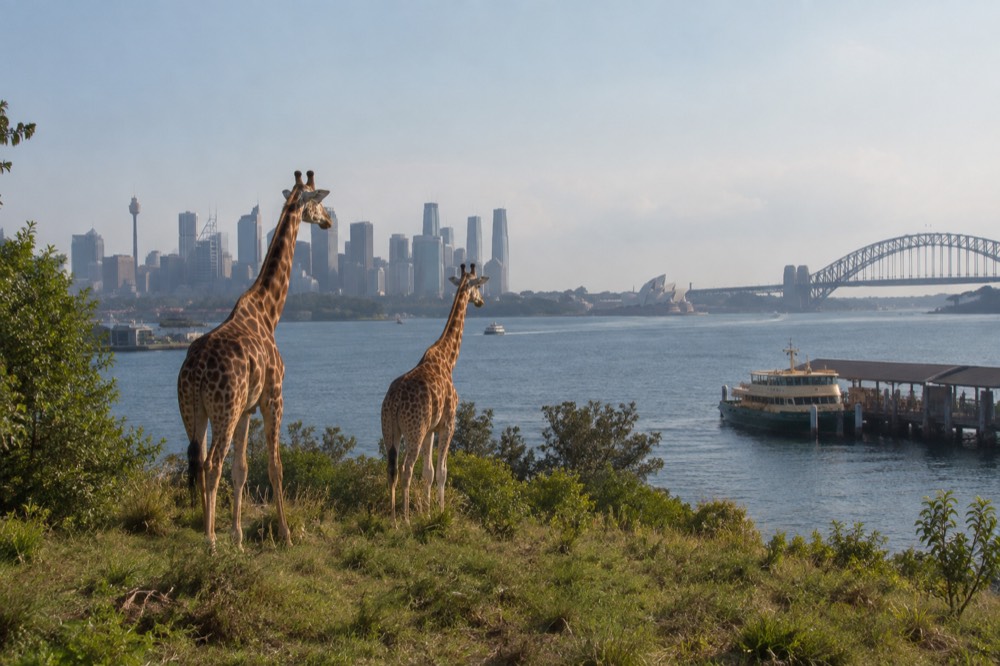
For the evening of any day, a harbour cruise is the highest-yield hour in the city. A basic sightseeing cruise runs 90 minutes from Circular Quay and costs less than a dinner; a sunset catamaran cruise adds golden-hour light on the bridge and sails. Our Sydney harbour cruises guide sorts the whole category by budget and duration.
If three days has turned into five before you noticed, extend rather than compress: add Manly and the Spit to Manly walk, the Hunter Valley or Royal National Park, and a spare day for weather. Slowing down beats compressing, almost every time.
Whichever structure you land on, these three picks cover the first-timer spread: an orientation loop, an attractions bundle and a harbour cruise.
Common Questions About Visiting Sydney for the First Time
How many days do you need in Sydney for a first visit?
Four is the honest minimum for a first trip: one for the harbour and CBD, one for the eastern beaches, one for Manly or the Northern Beaches, and one for the Blue Mountains. Three days works if you drop one of those, but two days forces you to choose between the coast and the mountains, and most first-timers regret cutting the mountains.
Is Sydney walkable for visitors?
The CBD, The Rocks, Circular Quay, the Royal Botanic Garden and Darling Harbour are all walkable and connected. The beaches and the Blue Mountains are not walkable from the centre, but every one of them is reachable by train, bus or ferry with a contactless tap. You do not need a car, and in the CBD a car is a liability.
Can you just walk into the Sydney Opera House?
You can walk the foyers and outside areas for free, but the theatres are working venues and casual access inside is limited. A one-hour guided tour is the standard way in, running roughly 9am to 5pm daily with dynamic pricing, so the live listing is the only reliable price source.
Is the ferry to Manly worth it on a first trip?
Yes, and it is close to mandatory. The F1 ferry costs A$9.20 one way within the Opal caps, takes about 30 minutes, and passes the harbour's best real estate, including the Opera House from the water. It functions as a budget harbour cruise that also happens to deliver you to a surf beach.
What is the cheapest way to get around Sydney?
Tap a contactless card on public transport and let the caps work: A$9.65 covers a Friday, Saturday, Sunday or public holiday of unlimited trains, buses and ferries. Avoid single-trip tickets, which cost more and earn no caps, and avoid the private fast ferries, which do not count toward the caps.
Should first-timers climb the Sydney Harbour Bridge?
If the budget allows, yes: the Summit climb runs about three hours and the operator's indicative rates start around A$375 for an adult weekday climb. If that is out of range, the Pylon Lookout and the free bridge footpath deliver a genuine view of the same harbour for a fraction of the price.