What Is the Worst Time to Visit Sydney?
The honest answer to Sydney's worst time to visit: June rain, February cloud, peak-season crowds and prices, and the trade-offs most guides skip.
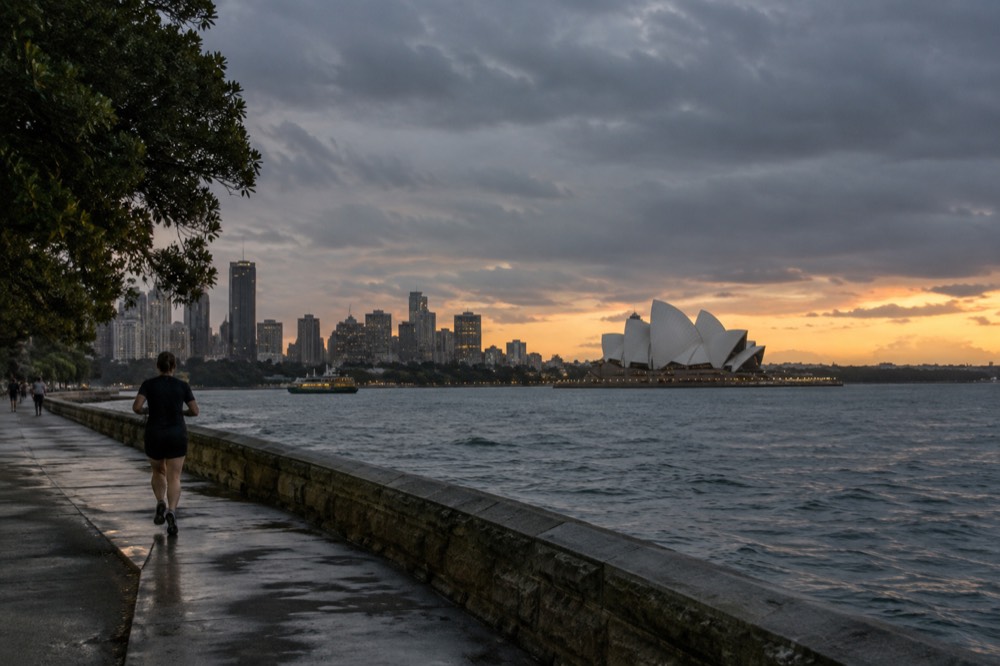
Sydney's climate record contains a fact that surprises almost everyone who plans a trip around an Australian summer: the city's wettest month is June, with a long-run average of 133.1 mm of rain, more than any summer month. February, the heart of peak season, is statistically its cloudiest. The worst time to visit is therefore not a single answer but a trade-off, and this page works through each candidate period with the actual numbers, so you can decide which downside you would rather avoid.
What Is the Worst Time to Visit Sydney?
For most travellers the worst time to visit Sydney is late June through July, when the city records its heaviest rainfall, 133.1 mm on average in June, alongside its shortest days and coolest temperatures, with mean maximums of 16.4 to 17 °C. The second-worst window is peak summer, late December to February, when crowds, accommodation prices and the New Year's Eve crush peak while February is statistically the city's cloudiest month, averaging just 5.3 clear days.
Neither period is a disaster. Sydney's winter is milder than most visitors expect, and its summer rain mostly arrives in short heavy bursts rather than all-day drizzle. But if you are choosing one week and want the best odds of good weather, manageable crowds and fair prices, these are the two windows to think hard about, and for opposite reasons.
The honest framing is that Sydney punishes assumptions. Visitors from the northern hemisphere assume June means summer; here it is winter. Visitors assume an Australian summer beach holiday means blue skies every day; the Bureau of Meteorology's long-run record shows February with fewer clear days than any other month. The site's own month-by-month climate breakdown, including the full table of averages, is in the Sydney weather month by month guide, and the broader planning picture sits in the best time to visit Sydney.
Which Months Bring the Most Rain and the Biggest Crowds?
Rain peaks in June (133.1 mm on average) and stays high through March (131.6 mm) and April (126.5 mm), while crowds and prices peak from late December through February, anchored by New Year's Eve, when up to one million people gather around the harbour foreshore. The worst combination of wet and busy is therefore not one season but two separate windows: autumn-into-winter for rain, and midsummer for people.
The rainfall pattern is the part most guides get wrong or omit. Sydney's rainfall does not peak in summer. The Bureau of Meteorology's 162-year record from Observatory Hill, published in its climate averages for station 066062, shows the wettest months are June (133.1 mm), March (131.6 mm) and April (126.5 mm), with the September average just 68.1 mm. Rain falls on roughly 99.5 days a year across the record, about one day in every four, but the wet days cluster in the first half of the year.
Crowds run on a different clock. Domestic travel drives most of Sydney's visitor economy, and it surges across the December-to-January school holidays, then again at Easter. New Year's Eve is the single most congested night of the year: the City of Sydney's own releases put the harbour foreshore crowd at up to one million people, with free vantage points such as Circular Quay West holding a published capacity of around 16,000 and filling hours before the 9pm family fireworks. If you want the details and the free-viewing tactics, they are all in the Sydney New Year's Eve guide.
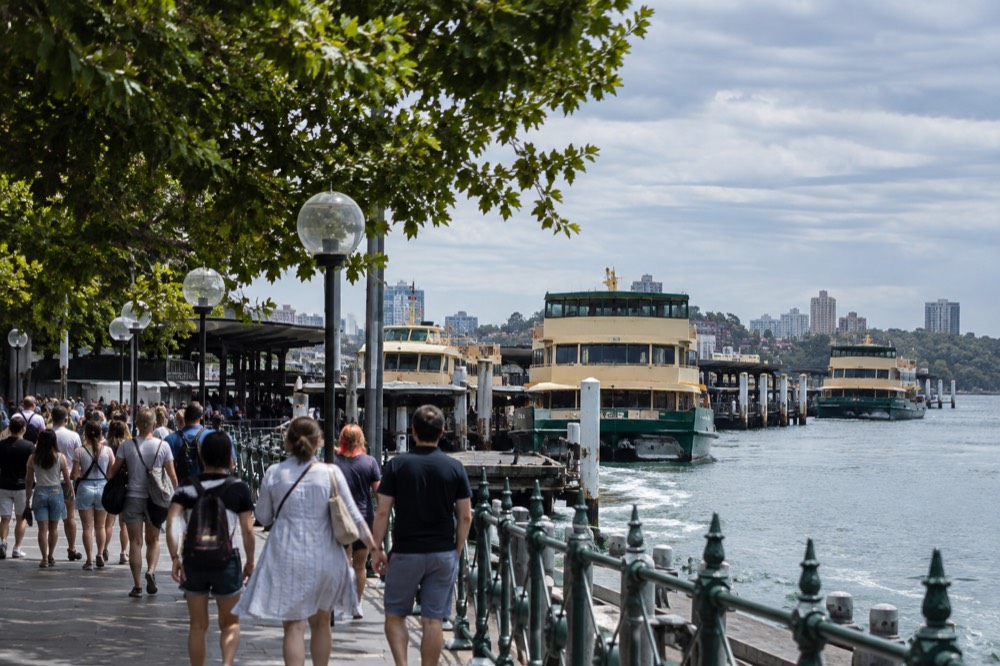
Here is how the candidate "worst" periods stack up against each other:
| Period | Main downside | The numbers | Who should avoid it |
|---|---|---|---|
| Late Dec to Feb | Crowds, prices, cloud | Feb averages 5.3 clear days; NYE crowds up to 1 million | Travellers who hate queues and premium hotel rates |
| June to July | Rain, short days | June averages 133.1 mm rain; July mean max 16.4 °C | Visitors chasing beach and outdoor-only plans |
| March to April | Reliable rain, though warm | 131.6 mm and 126.5 mm monthly averages | Anyone booking a rigid outdoor itinerary |
| Late Oct to early Nov | Nothing severe | Spring averages 68.1 to 83.8 mm rain | Almost nobody; this is close to the sweet spot |
If your trip must sit inside one of the first three rows, the fix is the same: build one or two weatherproof days into the plan and keep the beach days flexible. Sydney has enough indoor depth, museums, galleries, the Queen Victoria Building, a rainy-day itinerary, that a wet day is a lost day only if you planned nothing for it.
Is June Really the Wettest Month in Sydney?
Yes. June is Sydney's wettest month on the long-run record, averaging 133.1 mm of rain across 8.8 rain days, and it is wetter than any summer month despite being winter. June also has the fewest daily sunshine hours of the year, 5.5 on average, simply because the days are short, not because the sky is always grey.
This is the single most counterintuitive fact in Sydney's climate, and it is worth understanding properly because it changes how you read the season. The Bureau of Meteorology's normals, drawn from 162 years of observations at Observatory Hill, put June's mean rainfall above January's 101.2 mm, February's 119.3 mm and March's 131.6 mm. The wettest quarter of the year runs from March through June. The rest of the planning pages sit on Sydney Travel Guide.
The twist is the cloud data. June averages 9.1 clear days, more than January's 6.8, and August is the clearest month of the entire year with 13.4 clear days on average, while February is the cloudiest with 5.3. Winter skies in Sydney are often clearer than summer skies; the days are just shorter and the rain, when it arrives, is heavier. A June trip can absolutely deliver a string of crisp, clear, cold-sunny days. It just carries the highest risk of the year's heaviest soaks.
What that means in practice: June is the worst month only for itineraries that depend on long outdoor days, beaches, coastal walks and afternoon light. It is a perfectly good month for the harbour, museums, the Opera House, and the Blue Mountains in winter, where clear cold air often makes the lookout views sharper than in summer haze. Pack a real rain jacket rather than an umbrella, since Sydney's winter rain often comes with wind.
Should You Avoid New Year's Eve and Peak Summer?
Avoid late December to early January if you dislike extreme crowds and peak pricing: New Year's Eve draws up to a million people to the foreshore, vantage points fill from mid-morning, and hotel rates hit their annual maximum. But the period is not weather-risky, and the fireworks themselves are free to watch from dozens of official vantage points, so the "worst" label depends entirely on your tolerance for crowds.
The peak-season trade-off deserves its own heading because it is the answer most often given and it is only half right. Yes, the city is at its busiest and most expensive between Christmas and the end of January. No, the weather is not reliably at its best then: February averages the fewest clear days of any month, and summer rain, when it comes, is often a violent afternoon storm rather than a ruined week.
If you are in the city across the 31st anyway, the strategy is straightforward: pick an official free vantage point from the City of Sydney's published list, arrive hours early, and treat the day as a harbour picnic rather than a night out. If that sounds like your idea of a good day, peak season is not your worst time at all. If it sounds like purgatory, shift the trip to late October or November, when the weather is warm, the jacarandas are out, and the crowds have thinned.
One more peak-season note worth planning around: NSW public holidays, listed on the NSW Government's public holidays page, change the Opal daily cap to the cheaper weekend rate, so a holiday Monday is actually the cheapest day to travel widely, even while attractions are at their busiest.
When Is Sydney at Its Best Instead?
The best windows are late August through November and March through April: August is the clearest month of the year (13.4 clear days on average), spring warms quickly from a September mean maximum of 20.1 °C, and autumn stays warm with 22.5 °C in April. Shoulder-season prices and thinner crowds make these months the direct answer to every downside listed above.
Late winter into spring is the sleeper pick. August combines the year's clearest skies with mild, dry weather, and by October the mean maximum is back to 22.2 °C with the city's lowest rainfall averages outside winter. The water is at its coldest for swimming, since sea temperatures lag the air, so this window suits walkers, lookouts and harbour days more than beach days. Whale watching runs May to November, with the southern migration passing closer to shore from August, which is another point in late winter's favour.
Autumn, March and April, is warm and green but carries the second-highest rainfall averages of the year, so treat it as a good-but-not-guaranteed window and keep a wet-weather day in reserve. For the full month-by-month picture with every average, see the best time to visit Sydney.
Whatever month you land in, the harbour is the one Sydney experience that works in every weather, and a sightseeing cruise is the cheapest structured way to get out on it. The Rocks walking tour is the same idea on land, and the Tower Eye gives you the whole picture from above when the sky is clear.
A final word on the word "worst". Sydney's genuinely bad weather days are rare in any month, its winter is milder than London's or New York's, and its summer storms pass quickly. The worst time to visit is really the time that worst matches your itinerary: beach plans in June, crowd-avoidance plans across New Year's, and rigid outdoor schedules in March. Pick the shoulder edges of the seasons and you dodge nearly all of it.
Common Questions About the Worst Time to Visit Sydney
What is the worst time to visit Sydney?
Late June through July is the wettest, coolest, shortest-day stretch, averaging 133.1 mm of rain in June alone. Late December to February is the most crowded and expensive window, with New Year's Eve drawing up to a million people and February averaging the fewest clear days of the year. Most travellers should avoid one of those two windows depending on whether they fear rain or crowds.
Is Sydney's winter a bad time to visit?
No, with caveats. Mean maximums sit at 16.4 to 17.9 °C in July and August, August is the clearest month of the year, and attractions run at low-season prices. It is a poor time for beach itineraries and long outdoor days, and June in particular carries the year's heaviest rainfall.
Is February a bad month in Sydney?
It is the cloudiest month on the long-run record, averaging 5.3 clear days, and it sits inside peak season with peak prices. Rain tends to arrive as short heavy storms rather than all-day rain, so it is not a write-off, but it is the least reliable summer month for continuous blue sky.
When is Sydney cheapest to visit?
Winter outside the June rain peak, especially August, and the shoulder months of late autumn and late winter, bring the lowest [accommodation](https://booking.tpk.ro/ndznHj9h) rates. Public holidays also drop the Opal daily cap to the cheaper weekend rate, which helps on the ground.
Does it rain all day in Sydney when it rains?
Usually not. Sydney averages about 99.5 rain days a year, roughly one day in four, and summer rain often falls as brief afternoon storms. June's rain is the exception that can settle in, which is why it tops the wettest-month table.