What Is the Main Clubbing Street in Sydney?
Oxford Street is Sydney's main clubbing street, running through Darlinghurst toward Kings Cross. Here is what to expect on a night out, plus where locals actually go.
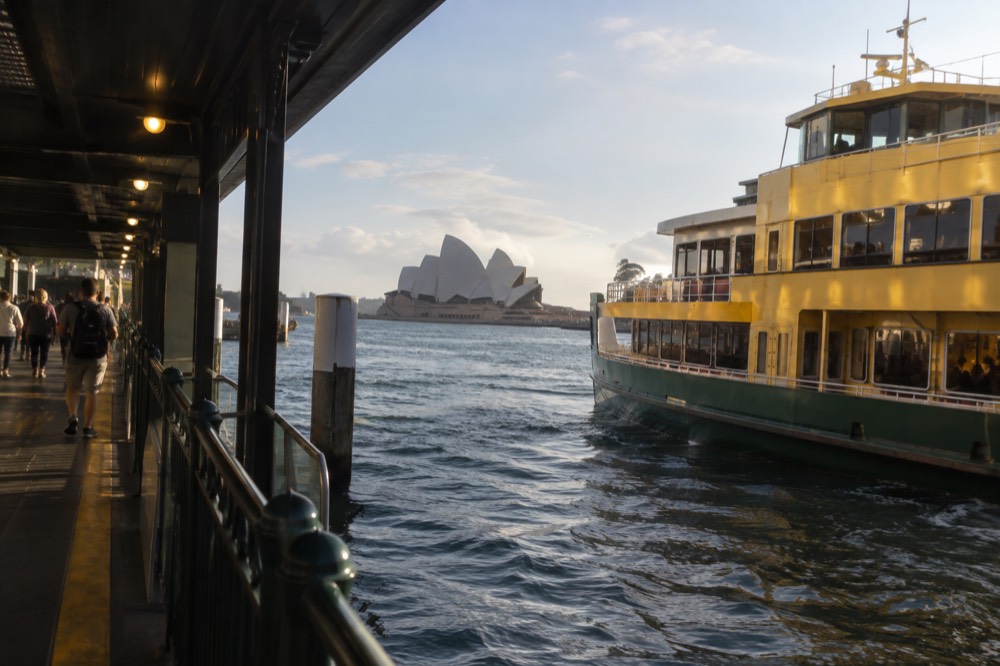
Oxford Street is the street most people mean when they ask about clubbing in Sydney. It runs from Hyde Park in the city up through Darlinghurst toward Kings Cross, and the stretch between Taylor Square and Darlinghurst Road carries the densest run of bars, dance floors and late licences in the city. It is also the historical home of Sydney's LGBTQIA+ nightlife, anchored each year by the Sydney Mardi Gras parade, which travels straight down it.
That said, calling one street the clubbing street undersells how the city actually parties now. Oxford Street remains the flagship, but the Cross has its own cluster, Newtown runs a scruffier pub scene, and Darling Harbour pulls the after-dark tourist crowd. This page answers the question directly, then covers the precincts, the hours, the dress codes and the getting-home problem, because that last one is where most visitors come unstuck.
What Is the Main Clubbing Street in Sydney?
Oxford Street is Sydney's main clubbing street. The roughly two-kilometre strip runs from Hyde Park at the city end through Darlinghurst to Kings Cross, and the blocks around Taylor Square hold the city's densest concentration of bars, clubs and late-night venues. It is also the centre of Sydney's LGBTQIA+ nightlife and the route of the annual Mardi Gras parade each February or March.
The street's identity as a night-life strip is not a recent development. Oxford Street became the city's gay nightlife heartland from the 1970s onward, and that history still shapes the venue mix today: a blend of dedicated dance clubs, cocktail bars, drag venues and pubs that fill up after the sun goes down. The Mardi Gras parade, which finished on Oxford Street for decades and still runs through the precinct, is the most visible expression of it, and the 2027 parade is scheduled for Saturday 6 March 2027.
Geographically, the useful thing to understand is that Oxford Street is not one homogeneous strip. The city end, near Hyde Park and the Darlinghurst edge, leans cocktail bars and smaller venues. Taylor Square is the symbolic centre, where the strip's energy concentrates. Further along, the street meets Darlinghurst Road at the Kings Cross junction, and the two precincts bleed into each other. If a venue lists itself as "Oxford Street", it could sit anywhere along that run, so check the exact address before you assume it is walkable from your hotel.
For a first night out, the practical advice is simple: start at the Taylor Square end and walk. The strip is compact, venues sit door to door, and you can gauge the room from the footpath before committing. Weekends are busiest, Thursdays are the local student night in many parts of the city, and Sundays have their own slower, bar-driven scene.
Where Else Do People Go Clubbing in Sydney?
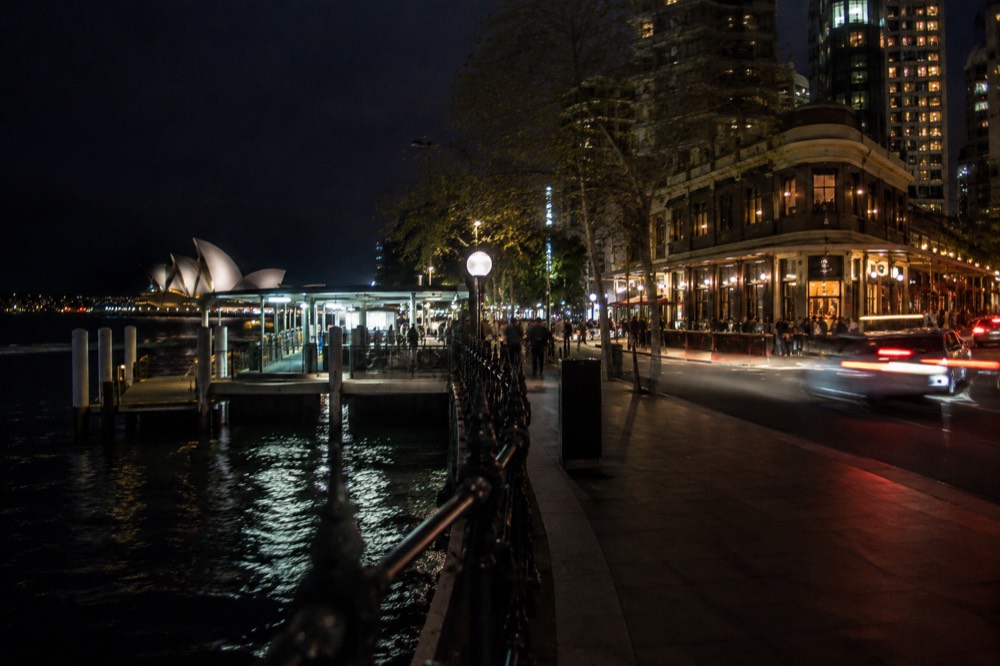
Beyond Oxford Street, Sydney's nightlife splits into four main precincts: Kings Cross for the densest late-night cluster, Darling Harbour for large-scale clubs and the casino precinct, Newtown for pub bands and a grungier crowd, and the CBD itself for cocktail bars and basements. Bondi has a smaller beachside scene that peaks in summer. Each has a different crowd, price level and closing rhythm, so the precinct choice matters as much as the venue.
Kings Cross deserves its own explanation, because the question "what is the main clubbing street" was once answered with the Cross alone. Through the 1990s and 2000s it was the city's red-lit party capital, and while the 2014 lockout laws gutted much of it and the laws were later repealed, the precinct is now a mix of late bars, pubs and venues that sits at the top of Oxford Street. It is best treated as the northern end of the same night out rather than a separate destination.
The Sydney nightlife scene as a whole has widened in the years since the lockout era. Newtown, along King Street, runs on live music and pub courtyards rather than dance floors. Surry Hills and Darlinghurst share small bars with a strong local following. Darling Harbour and the casino precinct at Pyrmont hold the big-format clubs that host touring DJs. And Bondi's scene is seasonal, peaking from December through February when the beach crowd is at its largest.
The comparison below is the honest version: no single precinct wins, they just do different jobs.
| Precinct | Vibe | Best for | Getting there |
|---|---|---|---|
| Oxford Street, Darlinghurst | Historic clubbing strip, LGBTQIA+ heartland | Dance floors, drag shows, bar-hopping | Walk from the CBD, or buses along Oxford Street |
| Kings Cross | Late-night cluster, pubs and late bars | The tail end of a big night | Train to Kings Cross station, or walk from Oxford Street |
| Darling Harbour / Pyrmont | Big-format clubs, waterfront bars | Touring DJs, large venues | Light rail or a short walk from Town Hall |
| Newtown | Live music, pub bands, relaxed | A cheaper, louder, less dressy night | Train to Newtown station, or buses along King Street |
| Bondi | Beachside pubs and small bars | Summer nights, Sunday sessions | Bus from the CBD, or a bus along Bondi Road |
If you are planning a full night rather than a single venue, the classic route still works: dinner and early drinks in Surry Hills or Darlinghurst, the main event on Oxford Street, and a late finish in the Cross. It is all walkable, which is unusual for a city this spread out.
Is Kings Cross Still Sydney's Party Precinct?
Partly. Kings Cross is no longer the standalone party capital it was before the 2014 lockout laws, but it has rebuilt as a denser, more varied late-night precinct at the top of Oxford Street. Its train station, its concentration of licensed venues and its 24-hour food make it still the natural endpoint of a big night out. The lockout laws were repealed in 2020, and the precinct has been recovering since.
The history is worth a sentence because it explains the present. The NSW lockout laws, introduced in 2014 after alcohol-fuelled violence, required venues in the CBD and Kings Cross to refuse entry after 1:30am and stop serving after 3am. Foot traffic collapsed, a large share of venues closed, and the city's late-night culture shifted to Oxford Street and Newtown, which sat outside the lockout zone. The laws were lifted for most of the city in 2020, and the Cross has spent the years since re-filling with bars and late venues, though it is a different, less frenetic precinct than the one older guides describe.
What that means for a visitor tonight: the Cross works best as a destination rather than a crawl. Pick a venue, arrive after 10pm when the strip is warm, and use the fact that Kings Cross station drops you right in the middle of it. The area also has the city's best late-night food, which matters more than it sounds at 2am.
The Rocks, by contrast, is not a clubbing precinct at all. It is the historic quarter at the harbour end of the city, and its after-dark life runs on heritage pubs rather than dance floors. But it is where Sydney's drinking culture began, and a daytime walk through its laneways gives you the pub history that the Oxford Street strip never will. The Rocks Guided Walking Tour covers exactly that ground, about an hour and a half of colonial pubs, sandstone lanes and harbour stories, and it makes a genuinely good afternoon warm-up for a night out elsewhere.
If history is your angle, the tour pairs well with an evening at one of the heritage pubs the guide points out. If dancing is the mission, leave The Rocks after the walk and head straight to Oxford Street.
What Time Do Sydney Clubs and Bars Actually Close?
Sydney's licensed venues set their own hours, and the practical pattern is: pubs quieten after 10pm, small bars close around midnight to 1am, and dedicated clubs on Oxford Street and in Kings Cross run to 3am or later on Friday and Saturday nights. Weeknight hours are much shorter, and many venues close by midnight from Sunday to Thursday. Always check the venue's own listing for the specific night you are going.
The lockout legacy still shapes this. Even after the laws' repeal, many venues kept tighter hours than they once ran, and licensing in NSW is venue-by-venue, so there is no single city-wide closing time the way some cities have one. The reliable rule of thumb is that a venue calling itself a club will run later than one calling itself a bar, and that Friday and Saturday are the only nights the full late scene reliably operates. More of these guides are collected on Sydney Travel Guide.
Season and events matter too. During Vivid Sydney, which ran 22 May to 13 June in 2026 and is scheduled for 28 May to 19 June in 2027, the city stays busy and some venues extend hours. On New Year's Eve the whole harbour foreshore becomes the venue, and around Mardi Gras in late February and early March, Oxford Street runs its biggest nights of the year, with the 2027 parade set for Saturday 6 March.
One planning note that catches visitors out: daylight saving. Sydney observes AEDT from the first Sunday in October to the first Sunday in April, so in summer it is still light at 8pm and the night out starts later than you expect. In winter, the strip fills earlier and empties earlier.
How Do You Get Home After Midnight in Sydney?
Plan for the fact that trains stop running in the early hours and late-night buses take over. An adult Opal day cap is A$19.30 from Monday to Thursday and A$9.65 from Friday to Sunday and on public holidays, and a contactless card is charged exactly the same as an Opal card. Taxi and rideshare are widely available around Oxford Street and Kings Cross but cost far more than the capped public transport. The Friday-to-Sunday cap makes weekend nights the cheapest to travel widely.
The transport authority, Transport for NSW, publishes the fare and cap details on its adult fares page, and its guidance for visitors confirms that tapping a contactless credit card, debit card or phone earns every Opal benefit, including the caps. That means most visitors never need to buy an Opal card for a night out at all: tap on with what is already in your wallet. The one trap worth knowing is that you must tap off, or you are charged the default maximum fare.
| Option | Rough availability after midnight | Cost shape | Watch out for |
|---|---|---|---|
| Train | Until the early hours, then services stop | Capped by Opal daily cap | Check the last service before you commit to a far-flung suburb |
| Night buses | Replace trains in the late hours on core routes | Same Opal caps apply | Slower, and stops differ from daytime routes |
| Taxi | Widely available in nightlife precincts | Metered, plus late-night surcharge | Ranks on Oxford Street and in the Cross get long queues near closing |
| Rideshare | Widely available | Surge pricing near peak times | Prices spike sharply around closing time |
| Walk | Oxford Street to the CBD is walkable | Free | The Cross to the CBD is a longer walk than it looks on a map |
The honest advice for a big night: stay somewhere within a short ride of the strip, or accept the late-night bus. Kings Cross station sits at the top of Oxford Street, Museum station sits near the bottom, and both keep you on the rail network for the parts of the night it runs. If your [accommodation](https://booking.tpk.ro/ndznHj9h) is in Bondi or Newtown, check the last service before your second drink, not after your last.
What Should You Know Before a Night on Oxford Street?
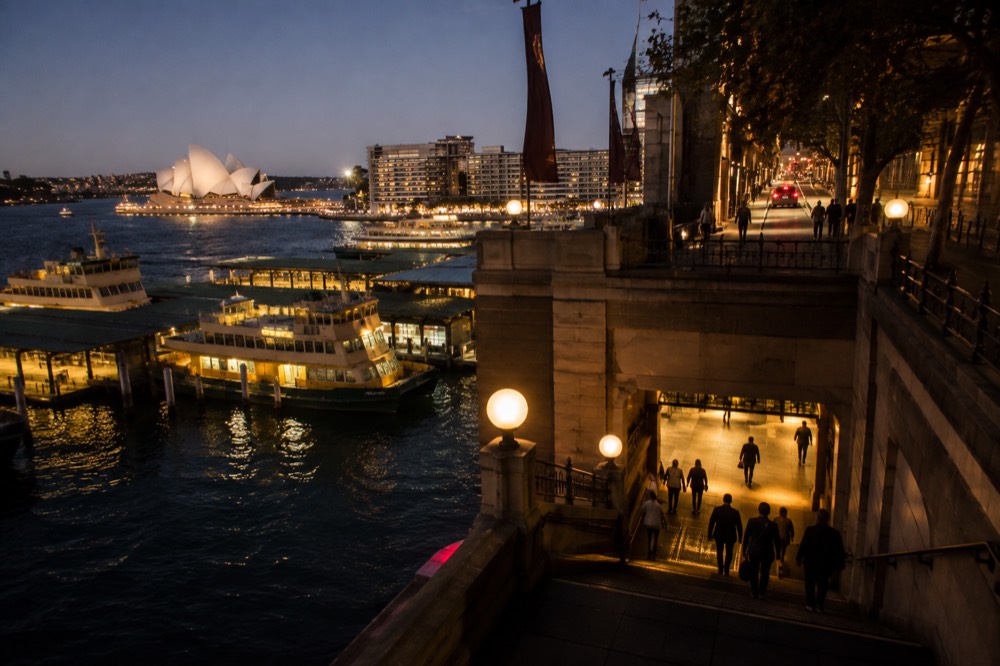
Dress codes are real at the bigger clubs, ID is checked everywhere regardless of your age, and smoking and vaping rules are strict: enclosed public areas are smoke-free, nicotine vapes are pharmacy-only in Australia, and private e-scooters are illegal on NSW roads and footpaths. None of this is onerous, but each of the three catches visitors every week, and the vape rule in particular catches travellers who bring one from overseas.
Start with ID. Licensed venues in NSW must refuse entry to anyone without acceptable identification, and "acceptable" means a passport or an Australian driver licence for most venues. An overseas licence is often rejected. If you are travelling, carry your passport, or a photo of it will not do: venues want the physical document for anyone who looks under 25.
Dress codes vary by venue rather than by law. The dedicated dance clubs on Oxford Street and in the Cross generally want closed shoes and no sports gear; small bars rarely care. The safest uniform is dark shoes and whatever you would wear to a nice bar in any city. Thongs, in the Australian sense of the word, will end your night at the door of most clubs.
The substance rules are the ones with legal teeth. NSW smoke-free law covers enclosed public areas, outdoor dining areas, playgrounds and transport stops, and since the national reforms nicotine vapes are available only through pharmacies, with strict limits on what a traveller can bring into the country. Private e-scooters remain illegal on NSW roads, footpaths, shared paths and bike lanes, so the scooter you rode in another city cannot legally carry you home here. Transport for NSW sets out the e-scooter rules on its road safety pages.
Finally, pace the night the way locals do. Dinner first, bars through the evening, clubs from around 11pm, and the walk up to the Cross after 1am. Turning up to a Sydney club at 9pm means standing in an empty room, and no amount of enthusiasm fixes that.
A Final Word on the Clubbing Question
The short answer stands: Oxford Street is the main clubbing street in Sydney, and it has earned the title across five decades of the city's night-life history. The longer answer is that the best night out uses the street as a spine and branches out, into Surry Hills for dinner, up to the Cross for the late hours, or across to Newtown for a completely different mood. The city is walkable in a way that surprises visitors, the weekend transport cap is genuinely cheap, and the precincts sit within a short ride of each other.
If you want to anchor the night in the city's history rather than just its present, the Rocks walking tour earlier in the day is the best preparation on offer, and the food tour makes a strong dinner-first option before the bars fill up. The Blue Mountains day trip, by contrast, belongs on a different day entirely, and no amount of enthusiasm makes an 10-hour mountain hike compatible with a 3am finish.
Whichever night you pick, book the venue's guestlist or ticket ahead where it offers one, carry physical ID, and check the last train before the first drink. Sydney's clubbing street will still be there next trip; the missed last bus is far less forgiving.
Common Questions About Clubbing in Sydney
What is the main clubbing street in Sydney?
Oxford Street. The strip runs from Hyde Park through Darlinghurst to Kings Cross, with the densest cluster of clubs and late bars around Taylor Square. It is also the heart of the city's LGBTQIA+ nightlife and the route of the Mardi Gras parade each February or March.
Is Kings Cross still good for a night out?
Yes, but as the late-night end of an Oxford Street night rather than a separate destination. The 2014 lockout laws hollowed the precinct out, the laws were repealed in 2020, and the Cross has rebuilt as a denser mix of bars and late venues with the city's best late-night food.
What time do Sydney clubs close?
Hours are venue-by-venue, not city-wide. Dedicated clubs typically run to 3am or later on Friday and Saturday nights, small bars close around midnight to 1am, and weeknights finish much earlier. Check the venue's own listing for the specific night.
Do I need an Opal card for a night out?
No. A contactless credit card, debit card or phone is charged exactly the same as an Adult Opal card and receives every cap and discount, including the A$9.65 Friday-to-Sunday daily cap. Just remember to tap off, or you are charged the default maximum fare.
What ID do Sydney clubs accept?
A passport or an Australian driver licence. Overseas licences are often rejected, and a photo on your phone does not count. Venues check ID on anyone who looks under 25, regardless of your actual age.
Can you walk from Kings Cross to the city centre at night?
Yes, the walk down Oxford Street from the Cross to Hyde Park is around two kilometres and passes through the lit, busy strip the whole way. It is one of the few late-night walks in Sydney that stays on main streets the entire route.