What Is the Cheapest Month to Go to Sydney?
The cheapest months to visit Sydney are May and August, when hotel demand drops, winter weather is milder than visitors expect, and the city's best attractions stay open.
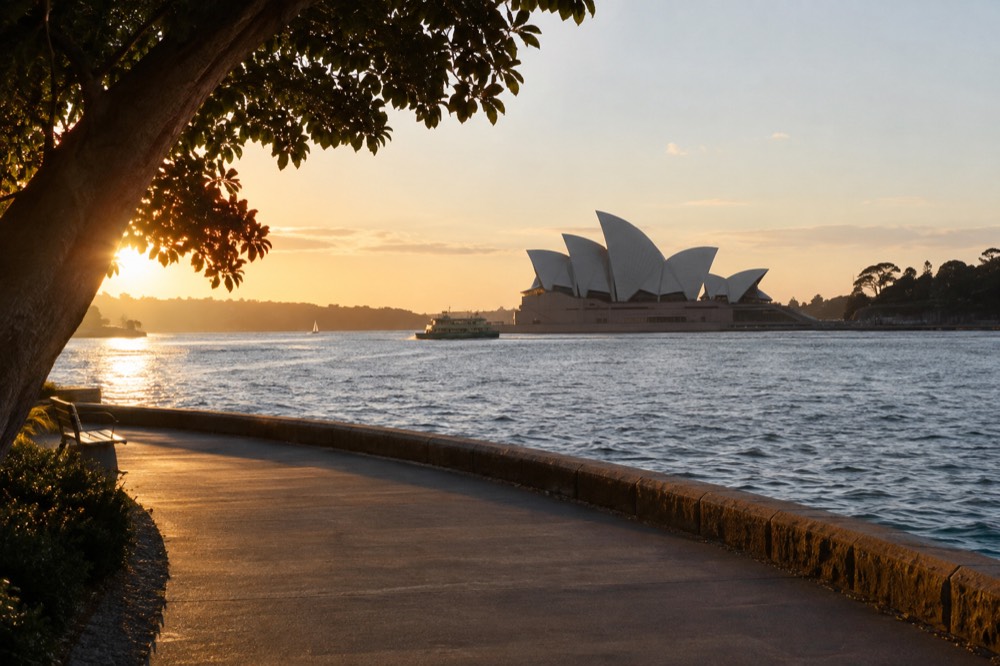
Sydney has two price seasons, and the expensive one is not summer. December to February brings peak crowds, peak hotel rates and, according to the Bureau of Meteorology's long-term record, the cloudiest skies of the year. The cheap window sits in the shoulder and winter months, and one of them, August, is statistically the clearest month Sydney has. Anyone planning a budget trip should read the calendar before the weather app.
What Is the Cheapest Month to Go to Sydney?
May and August are the cheapest months to visit Sydney. Hotel demand, tour demand and airfare demand all sag in the May-to-August corridor outside event weeks, and the city's paid attractions keep full winter opening hours. August is the better of the two: Bureau of Meteorology records show it averages 13.4 clear days, the most of any month, with a mean maximum of 17.9 °C. Avoid late May to mid June, when Vivid Sydney pushes harbour-side rates back up.
That is the short version. The longer version is that "cheapest" depends on which costs dominate your trip. A long-haul flight is usually the single biggest line, and airlines price Sydney seats on Australian school holidays and the December-to-February summer peak, not on rainfall. Accommodation follows the same curve, with an added spike around major events. The months where both dip at once are the low-season months, and the biggest of those dips sit in May, before the Vivid window, and in August, after it.
June is the one low-season month to treat carefully. It is Sydney's wettest month on the long-term averages, at 133.1 mm of rain, and the first three weeks of Vivid Sydney (22 May to 13 June in 2026) overlap it, which lifts harbour-front room rates precisely when the weather is least reliable. July sits between the two: drier than June, colder at night, and usually still cheap.
For the wider picture on seasons and crowds, our guide to the Sydney Travel Guide best-time-to-visit breakdown covers the trade-offs month by month, and the Sydney in winter guide explains what actually closes and what does not between June and August. The short answer to that second question: very little closes. Sydney's winter is mild, and its headline attractions run all year.
Which Months Have the Best Weather per Dollar?
August delivers the most sunshine per dollar of any Sydney month. It records 13.4 mean clear days, the highest in the Bureau of Meteorology's 56-year clear-day record, against February's 5.3, the lowest. Its mean maximum of 17.9 °C is cool rather than cold, and rain days average 7.1, fewer than any summer month. Visitors paying low-season rates in August get statistically better skies than visitors paying peak rates in February.
This is the counterintuitive core of the whole question, and it comes straight from the official climate record for Sydney's Observatory Hill station, which the Bureau of Meteorology publishes as long-term averages. February, the middle of peak tourist season, is Sydney's cloudiest month. August, deep in the cheap season, is its clearest. Peak season is statistically the greyest time to be there.
| Month | Mean max °C | Mean rainfall mm | Mean clear days | Price season |
|---|---|---|---|---|
| February | 25.8 | 119.3 | 5.3 | Peak |
| May | 19.5 | 117.4 | 9.5 | Low |
| June | 17.0 | 133.1 | 9.1 | Low, but Vivid |
| July | 16.4 | 96.3 | 12.0 | Low |
| August | 17.9 | 80.2 | 13.4 | Low |
| December | 25.3 | 77.1 | 6.6 | Peak |
Two practical notes on that table. The rainfall figures are long-run averages, not forecasts: any individual week can buck them. And June's rainfall is the highest of the entire year, wetter than any summer month, which is the opposite of what most northern-hemisphere visitors assume about an Australian coastal city.
May deserves its reputation on its own merits. It averages 19.5 °C maximum, nine and a half clear days, and it sits before the Vivid Sydney window, which in 2026 ran 22 May to 13 June. Book early May rather than late May and you get low-season prices without the festival crowd premium. Our best time to visit Sydney guide goes deeper on the shoulder months if you have flexibility on both ends.
What Actually Gets Cheaper in the Low Season?
Hotels, flights and several tour prices drop hardest in May and August, while Sydney's transport and attraction costs barely move. Opal fares are capped at $9.65 a day on Fridays, weekends and public holidays year-round, and the Royal Botanic Garden, Australian Museum and Art Gallery of New South Wales are free in every season. The real saving is on the bed and the flight, which can halve against December rates.
The fixed costs are genuinely fixed. A train from the airport costs the same in August as on New Year's Eve, and the airport station access fee, $18.61 for an adult on top of the train fare, does not take a low-season discount either. What moves is everything priced on demand: rooms, seats and, for some operators, tour pricing. The Sydney on a budget guide lists the free-by-design days out in detail.
| Cost | Peak season (Dec-Feb) | Low season (May, Aug) | Notes |
|---|---|---|---|
| Harbour-view hotel | Highest of the year | Typically the year's lowest | Late May to mid June spikes with Vivid Sydney |
| Long-haul flights | Peak fares | Low-season fares | School holidays create spikes even in winter |
| Opal daily cap | $19.30 Mon-Thu, $9.65 Fri-Sun | Same all year | Public holidays always use the $9.65 cap |
| Royal Botanic Garden | Free | Free | Open 7am to sunset daily |
| Australian Museum | Free general entry | Free general entry | Daily 10am-5pm |
| Taronga Zoo adult ticket | $57 at the gate | $57 at the gate | Booking online saves roughly 10% in every season |
The public-holiday detail is worth planning around: NSW public holidays always trigger the cheaper $9.65 daily Opal cap, so a low-season long weekend with a public holiday Monday is the cheapest possible time to move around the city. The official NSW public holidays list lets you line up the dates. The June King's Birthday and October Labour Day holidays both fall in or near the cheap corridor.
One cost rises in the cheap window: whale watching. The season runs May to November, and the peak, late June through July, sits squarely inside the low-price months. That is a good-news inversion: the cheapest time to be in Sydney is also the only time humpbacks pass its coast in numbers, with an estimated 40,000-plus migrating along NSW each year. Our whale watching in Sydney guide covers the vantage points that cost nothing.
If you are bundling the paid attractions, the combo pass below is the usual way to cut that line of the budget.
The pass makes the most sense in winter, when SEA LIFE Sydney Aquarium and Sydney Tower Eye are at their most appealing and their queues are at their shortest. The hop-on hop-off bus is the other classic low-season buy: it runs year-round, and a grey day is exactly when a covered upper deck beats a long walk between stops.
How Do You Keep Daily Costs Down Once You Arrive?
Budget around the free anchors and the fare caps. The Royal Botanic Garden is free and opens 7am to sunset, the Australian Museum and the Art Gallery of New South Wales are free for general entry, and the Art Gallery stays open until 10pm on Wednesdays. With the $9.65 Opal cap on a Friday, Saturday, Sunday or public holiday, a full day of ferries, trains and buses is cheaper than a single peak-season coffee-and-cake stop.
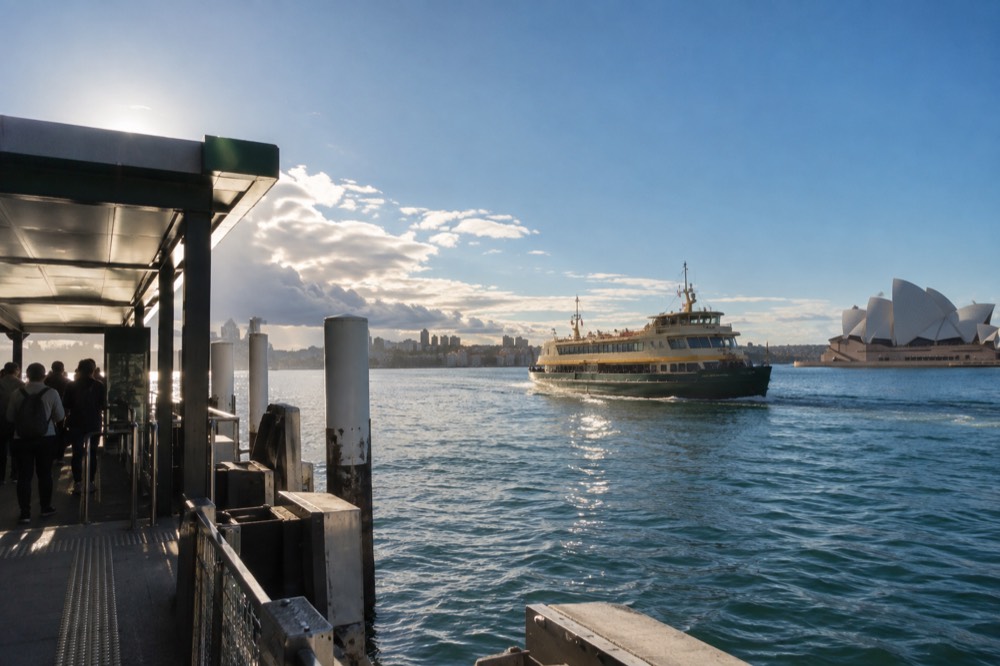
The ferry trick is the best value in the city at any time of year. The Manly ferry is a regular Opal service, $9.20 one way for an adult, and it delivers the same harbour views the paid cruises sell. Our Manly ferry guide and the Sydney ferries guide cover the routes, and the cheapest way to see Sydney answer goes deeper on the caps. None of this changes with the season, which is precisely why the cheap months compound: the fixed costs are already low, and the variable ones drop.
Attraction pricing rewards the same planning. Taronga Zoo charges $57 for an adult at the gate but from $51.30 online, a roughly 10% saving at every tier that applies in August exactly as it does in January. Sydney Tower Eye sells advance adult tickets from $29 against $39 on the day. Neither discount is seasonal, but in the cheap months you are queuing less to use them.
For a day out of the city, the Blue Mountains is the standard low-season choice, and the national park itself is free outside the Glenbrook area, so the tour price is the only entry cost. The Blue Mountains day trip guide covers the train option, which avoids the $8 Glenbrook vehicle fee entirely.
Which Months Should You Avoid on Price?
Avoid December and January, and any event week. December averages just 6.6 clear days while carrying peak hotel rates, and the Christmas to New Year window draws up to a million people to the harbour foreshore for the fireworks. Also避开 the Vivid Sydney window, 22 May to 13 June in 2026, which sits inside the otherwise-cheap season and lifts harbour-side rooms sharply for 23 days.
That Vivid spike is the trap worth knowing about. May looks cheap on every seasonal chart, then the festival's 2.53 million attendees from its 2025 edition turn the last three weeks of May and the first two of June into a peak-rate island. If Vivid is the reason you are coming, book months ahead and treat it as a peak week. If it is not, book early May or August and let the festival-goers have it.
February is the other month that underdelivers per dollar. It is the cloudiest month on the long-term record at 5.3 clear days, it carries peak-season pricing through the Mardi Gras period, and the February 2027 Fair Day and the 6 March 2027 parade land right at its edge. You pay the most and see the least sun of any month in the calendar.
Common Questions About the Cheapest Time to Visit Sydney
What is the cheapest month to go to Sydney?
May and August are the cheapest months. [Hotel and flight](https://trip.tpk.ro/UEDKhJwK) demand sag in the low-season corridor outside event weeks, attractions keep full winter hours, and August is statistically Sydney's clearest month at 13.4 mean clear days. Avoid late May to mid June, when Vivid Sydney briefly restores peak pricing.
Is winter a bad time to visit Sydney on a budget?
No. Sydney's winter is mild, with a July mean maximum of 16.4 °C, and almost nothing closes. Whale season peaks in late June and July, the Art Gallery of New South Wales stays open until 10pm on Wednesdays, and the free harbour ferry views cost the same capped Opal fare as ever.
Does Vivid Sydney make May expensive?
Only for its 23-day window. Vivid Sydney 2026 ran 22 May to 13 June, and harbour-side accommodation spikes for that period. Early May, before the festival opens, keeps low-season rates.
Are Sydney's attractions cheaper in the low season?
Rarely. Gate prices stay flat all year, but online discounts are real and stable: Taronga Zoo saves roughly 10% booked online, and Sydney Tower Eye sells advance adult tickets from $29 against $39 on the day. The savings come from shorter queues, not lower prices.
What is the wettest month in Sydney?
June, at 133.1 mm of mean rainfall on the Bureau of Meteorology's long-term record, wetter than any summer month. August, by contrast, averages only 80.2 mm and is the clearest month of the year.
Do Opal fares get cheaper off-season?
No, but the caps are already generous. The daily cap is $19.30 Monday to Thursday and $9.65 on Fridays, weekends and public holidays, all year round. A low-season public holiday Monday is the cheapest day to travel widely.