What Is Considered the Nicest City in Australia?
Sydney is the city most often named Australia's nicest, and the harbour is the reason. Here is how the verdict breaks down, with Melbourne's case and the real numbers.
Australia has two cities that the rest of the world can name, and they have been rivals for more than a century. Sydney has the harbour, the Opera House and the postcard skyline. Melbourne has the laneway culture, the coffee and the art scene. When people ask which one is nicer, they are usually really asking whether scenery beats atmosphere, and the honest answer depends on which of those you travel for. The numbers, though, lean one way.
What Is Considered the Nicest City in Australia?
Sydney is the city most often considered the nicest in Australia, and it wins on the strength of its natural setting rather than its built one. Its harbour, beaches and climate give it an asset no other Australian capital can match. Melbourne is the consistent runner-up and frequently wins on culture, food and liveability, so the real answer is a two-horse race with Sydney ahead on looks and Melbourne ahead on life.
The verdict comes from a few directions. International visitor behaviour is the bluntest measure: in the year ending March 2026, Sydney recorded 67.5 million visitors and $34.7 billion in visitor expenditure, figures published by Destination NSW. People vote with their itineraries, and Sydney is where the itineraries go. Global liveability and city rankings, which tend to reward Melbourne's transport and healthcare, still place Sydney near the top on the categories travellers actually feel: natural environment, waterfront access and climate.
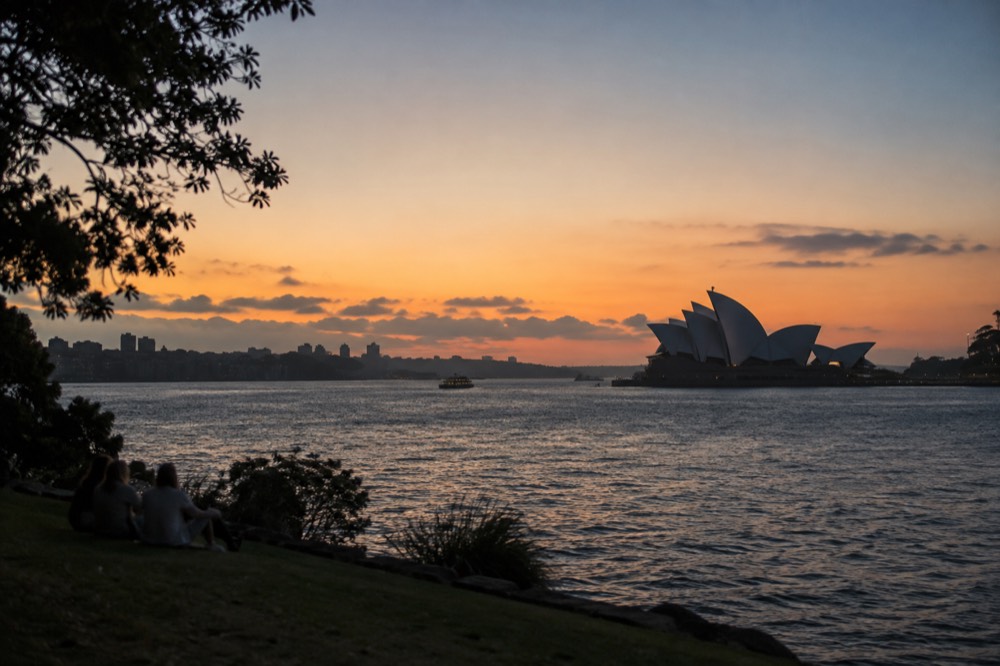
There is also the simple test of what a first-time visitor remembers. The moment a ferry clears Circular Quay and the Opera House turns with the light is the single most recognisable urban view in the country. No ranking invented that. The geography did.
Why Sydney Usually Takes the Title
Sydney wins because its setting is unrepeatable: a drowned river valley that puts a working harbour through the middle of the city, with surf beaches 20 minutes from the centre. Its climate helps too, with an annual mean maximum of 21.8 °C and rain on roughly one day in four. Melbourne's bay is flat and its coast faces away from the ocean swell that makes Sydney's beaches famous.
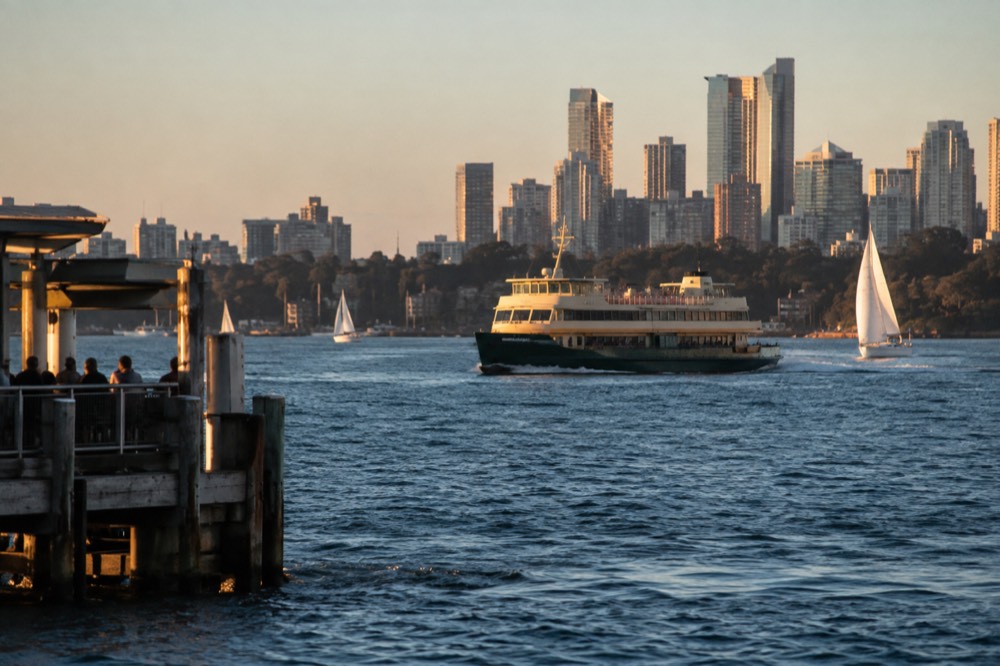
Start with the harbour, because everything else follows from it. Sydney Harbour shapes the city's transport (ferries are a real commuting option), its real estate, its walking routes and its postcards. The harbour cruise is not a tourist gimmick here; it is the fastest way to understand the city's geography, and it costs less than most city tours elsewhere. The eastern and northern shorelines are stitched with bushland reserves that sit inside a metropolitan area of millions.
The beaches do work that Melbourne's cannot. Bondi, Manly and the Northern Beaches chain are ocean beaches with real surf, reachable by public transport. Melbourne's Port Phillip Bay beaches are calm, shallow and pleasant, but they are not what an international visitor pictures when they say "Australia". Our guide to Sydney's best beaches covers which of them are patrolled year-round, which is a detail that matters more than most guidebooks admit.
Then there is the climate, which the Bureau of Meteorology's long-run record for Observatory Hill measures precisely. The annual mean maximum is 21.8 °C, the annual mean minimum 13.8 °C, and the long-term averages by month look like this:
| Month | Mean max °C | Mean min °C | Mean rainfall mm | Rain days ≥1 mm |
|---|---|---|---|---|
| Jan | 26.0 | 18.8 | 101.2 | 8.6 |
| Feb | 25.8 | 18.9 | 119.3 | 9.0 |
| Mar | 24.8 | 17.6 | 131.6 | 9.9 |
| Apr | 22.5 | 14.8 | 126.5 | 8.9 |
| May | 19.5 | 11.6 | 117.4 | 8.6 |
| Jun | 17.0 | 9.3 | 133.1 | 8.8 |
| Jul | 16.4 | 8.1 | 96.3 | 7.4 |
| Aug | 17.9 | 9.0 | 80.2 | 7.1 |
| Sep | 20.1 | 11.1 | 68.1 | 7.1 |
| Oct | 22.2 | 13.6 | 76.7 | 7.9 |
| Nov | 23.7 | 15.7 | 83.8 | 8.3 |
| Dec | 25.3 | 17.6 | 77.1 | 7.9 |
Those figures come from the Bureau of Meteorology's climate averages for station 066062, with a record stretching back to the 1850s. They are long-term averages, not forecasts, and they hide the detail most visitors get wrong: June is actually Sydney's wettest month at 133.1 mm on average, wetter than any summer month, while August is its clearest. Peak season is not peak sunshine.
What Melbourne Does Better
Melbourne wins on culture, food and the texture of daily life: laneway bars, a coffee scene taken seriously, the country's densest concentration of galleries and live music, and a street grid that rewards wandering. It also outperforms Sydney on most liveability metrics that measure services rather than scenery. If your holiday is about evenings rather than views, Melbourne is the nicer city.
The cultural case is real, not just civic pride. Melbourne's laneways, its theatre district and its music venue density give it more reasons to be outside at night than Sydney has, and Sydney's own nightlife has spent years recovering from licensing laws that hollowed it out. The food argument is closer than either city admits, but Melbourne's spread of cheap, excellent, unpretentious eating is broader at the low end, which is the end travellers actually eat at. The wider set of guides lives on Sydney Travel Guide.
None of that changes the water. Melbourne sits on a bay, and its waterfront is a flat, calm, pleasant thing you look at. Sydney's waterfront is a thing you use: ferries, kayaks at sunrise, ocean pools at Bondi and Bronte, surf lessons that run year-round. That distinction, scenery you consume versus scenery you inhabit, is the crux of the whole argument.
How the Other Capitals Compare
Brisbane, Adelaide and Perth each win a niche but none contests the overall title. Perth has the best climate statistics and the most isolation, Adelaide the most festivals per capita and the nearest wine region, Brisbane the best winter weather and the fastest growth. Hobart and Darwin are genuinely distinct and lovable but too small and too seasonal to be considered the country's nicest city by any broad measure.
Brisbane's pitch is sunshine in winter and a river city that has spent a decade investing in itself. Its winter mean maximums sit in the low twenties while Sydney's sit in the high teens, which matters if you are travelling in July. Adelaide's pitch is accessibility: the Adelaide Hills and Barossa are under an hour away, and the city is compact enough to see in two days. Perth's pitch is distance, which cuts both ways; it is the sunniest of the capitals and the hardest to reach.
What none of them has is a single view that functions as a national symbol. Sydney has the most photographed building in the country standing on the most photographed harbour, and that concentration of iconography is what keeps it at the top of the "nicest" question even for people who prefer Melbourne once they arrive.
Which One Should You Actually Visit?
Visit Sydney if this is your first or only trip to Australia, because the harbour, the beaches and the Opera House are the things you cannot see anywhere else. Visit Melbourne if you have already done Sydney, or if you care more about food, art and nightlife than about views. The genuinely nice answer is to do both, and the roughly 800 km between them is an easy three-hour flight or a full day of driving.
The practical tiebreakers help. Sydney is more expensive, particularly for [accommodation](https://booking.tpk.ro/ndznHj9h) with a view, and our cost breakdown shows where the money actually goes. Melbourne is easier to explore on foot because its grid is legible and its attractions cluster. Sydney rewards a transport strategy: the ferry network doubles as sightseeing, and the free-entry big hitters, the Royal Botanic Garden, the Australian Museum and the Art Gallery of New South Wales, are all within a short walk of Circular Quay.
If you do choose Sydney, spend at least one morning on the water, because the harbour is the asset the whole verdict rests on. The sightseeing cruise that runs morning and afternoon departures loops the main harbour in about 90 minutes and is the cheapest structured way to see it; our full first-timers' guide explains where it fits in a first itinerary.
And if the verdict still feels unresolved, take the question the way Australians do: as an invitation to argue, not to settle. The rivalry is the point. A country where the second-nicest city is as good as Melbourne is a country with a pleasant problem.
Common Questions About the Nicest City in Australia
What is considered the nicest city in Australia?
Sydney, in most surveys and in most travellers' itineraries. Its harbour, beaches and climate give it a natural setting no other Australian capital matches, and international visitor numbers back that up. Melbourne runs a close second and wins on culture, food and liveability, so the honest answer is Sydney for scenery and Melbourne for atmosphere.
Is Melbourne nicer than Sydney?
On liveability measures, often yes: Melbourne scores better on culture, dining density, public transport within the grid and nightlife. On natural setting, no: Sydney's harbour and surf beaches are assets Melbourne's bay cannot replicate. If your trip is built around evenings, choose Melbourne; if it is built around views and water, choose Sydney.
Which Australian city has the best weather?
For year-round warmth, Brisbane and Perth both outperform Sydney in winter. Sydney's long-run annual mean maximum is 21.8 °C with rain on about 99.5 days a year, and its wettest month is June, not a summer month. Melbourne is cooler and cloudier on average than all three.
Is Sydney or Melbourne better for a first visit?
Sydney, for most first-time visitors. The Opera House, the Harbour Bridge, Bondi and the ferry network are the sights that define Australia internationally, and they are all reachable without a car. Melbourne makes a better second stop, when you have the time to slow down and enjoy it at its own pace.
What is the most beautiful place in Sydney?
The harbour viewed from the water, at either end of the day. From a ferry deck approaching Circular Quay, the Opera House and the Harbour Bridge sit in one frame with the city towers behind them. Mrs Macquarie's Point on land gives the same composition for free, on a walk through the Royal Botanic Garden, which charges no entry fee.
Is Sydney the nicest city in the world?
It regularly places in the top ten of global city rankings and tops many "most beautiful" lists, but "nicest in the world" depends entirely on what you value. Its harbour is genuinely world-class and its climate is mild by global standards. What it costs in prices and distance, though, keeps cities like Vienna and Copenhagen competitive on the overall title.