Sea Cliff Bridge and Wollongong: The Coastal Day Trip from Sydney
The Sea Cliff Bridge is the showpiece stretch of the coast road south of Sydney, a bridge that curves out over the open ocean instead of clinging to the cliff face. Here is how to reach it, when to go and how to fold it into a Wollongong day trip.
Short answer
The Sea Cliff Bridge sits on the coast between Sydney and Wollongong, about an hour to 90 minutes south of the city by car, and it is free to drive or walk. Trains run from Central to Wollongong on the South Coast line, and whales pass the cliffs below the bridge from May to November. Most visitors pair the bridge with Wollongong's harbour, beaches and lookouts in a single day.
The Sea Cliff Bridge is the one piece of Sydney-area road that people travel specifically to drive. Most of the route south to Wollongong is ordinary coastal highway, but at Clifton the road stops hugging the sandstone and swings out over the open ocean on a curved viaduct, waves breaking underneath. You can walk it, park beside it, and watch for whales from the cliffs either end. This guide covers how to get there, when to go, and how to build a full Wollongong day around it.
What Is the Sea Cliff Bridge?
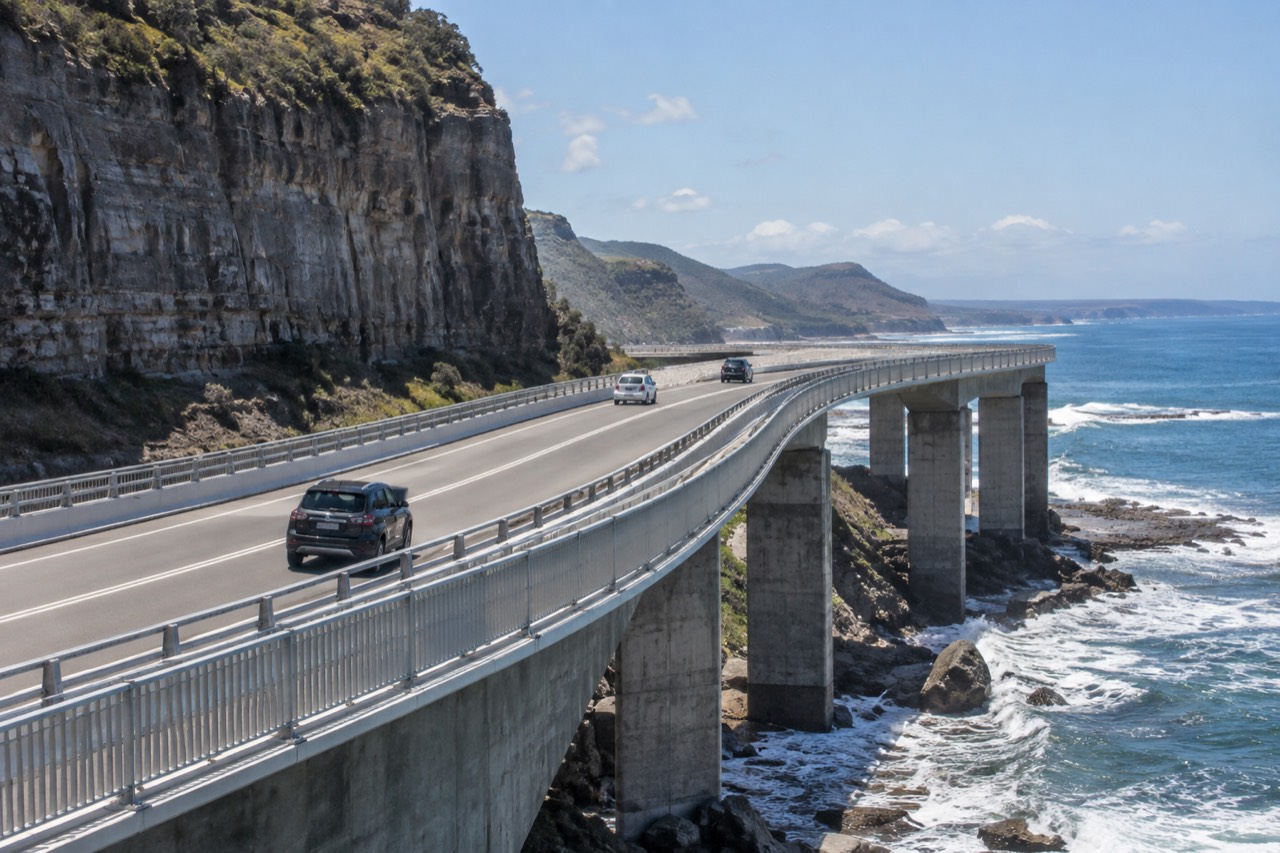
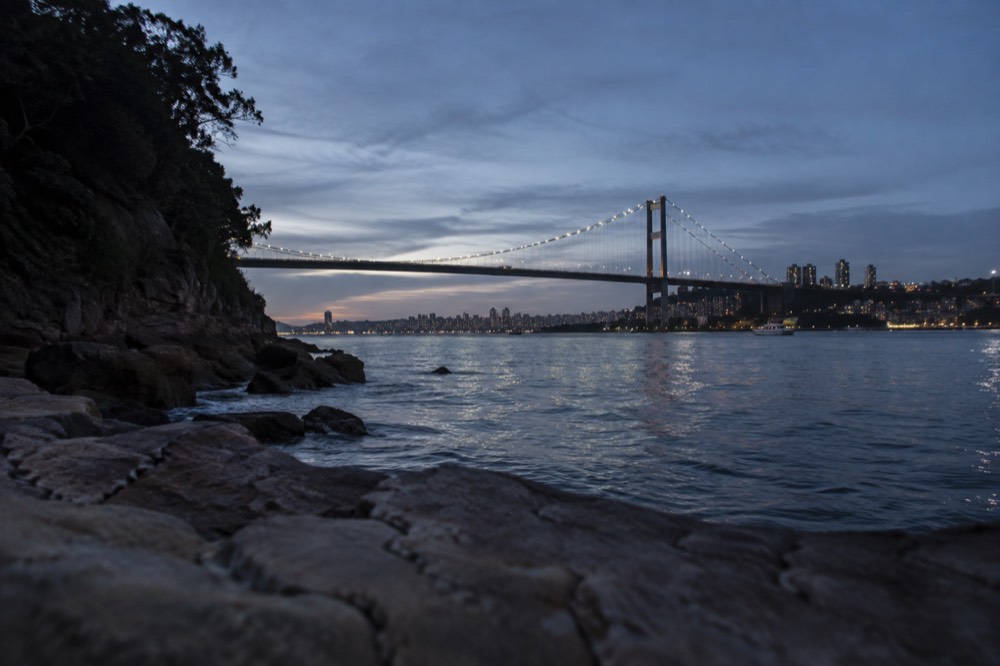
The Sea Cliff Bridge is a curved section of coastal road between the villages of Clifton and Coalcliff, roughly an hour to 90 minutes south of central Sydney, where the highway leaves the cliff face and runs out over the ocean itself. It is free to drive, free to walk, and open all year. There is no ticket, no gate and no tour required; you simply arrive, park, and step onto the shared walkway beside the traffic lanes. Most people spend 30 minutes to an hour here before continuing south.
The bridge exists because the old road along that stretch of cliff kept being closed by rockfalls. Rather than repairing the cliff face again, engineers moved the road off it, cantilevering the deck out over the water so the traffic and the unstable sandstone never meet. That engineering decision is what makes the visit: instead of a road squeezed against rock, you get a slow curve with ocean on both sides of you.
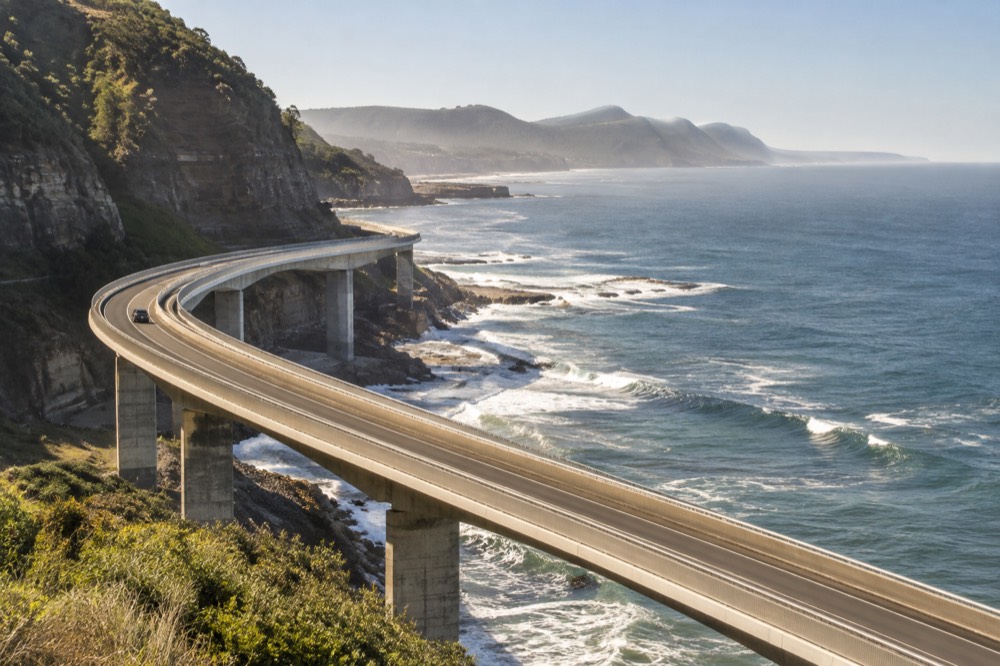
Walking the bridge is the better way to experience it. There is a shared pedestrian and cycling path along the seaward side, separated from the traffic lanes, and the curve means the view changes the whole way along. Go early: parking at Clifton is limited and fills quickly on weekends, and the light is better before mid-morning anyway. If you want the classic photograph, the elevated lookouts near the northern end give you the full curve of the deck against the water.
The bridge is also a genuine whale-watching vantage point in season. NSW National Parks notes that land-based whale watching spots sit all along this coast, and the cliffs above Clifton look straight down onto the migration corridor. Humpbacks travel north roughly May to July and return south with calves roughly August to November, with the peak around late June and July. An estimated 40,000-plus humpbacks migrate along the NSW coast each year, though a sighting is never guaranteed. Our full guide to whale watching in Sydney covers the season in detail.
How Do You Get to the Sea Cliff Bridge from Sydney?
Driving is the flexible option: the bridge is roughly an hour to 90 minutes from central Sydney via the Princes Highway or the M1, and you can stop at Stanwell Tops and the Royal National Park on the way. Without a car, take a South Coast line train from Central to Wollongong, then a local bus or taxi north to Clifton, or walk sections of the coast track. Either way, allow a full day; the bridge alone does not justify the trip, but the coast either side of it does.
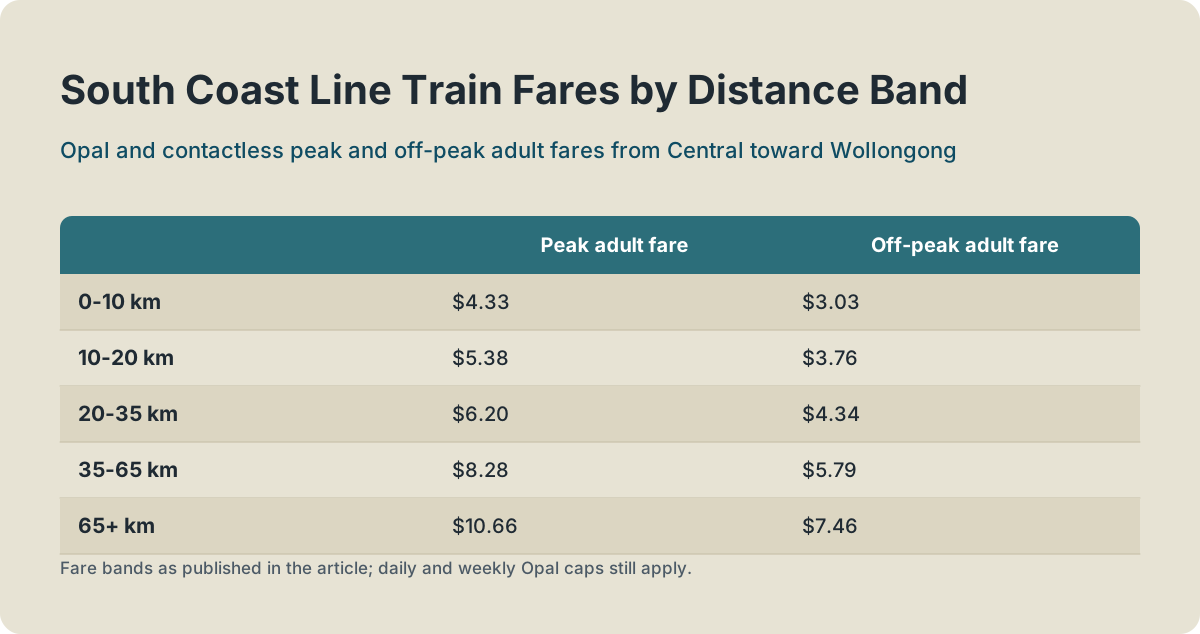
The train is the stress-free answer. South Coast line trains run from Central toward Wollongong and beyond, and Opal or contactless payment covers the whole journey with the usual caps: $19.30 a day Monday to Thursday, $9.65 on Fridays, weekends and public holidays, and $50 for the week. Fares are distance-banded, so a long trip south costs more than a hop to the suburbs, but the daily cap still applies, which makes a big day of train-plus-ferry-plus-train in Sydney surprisingly cheap. Transport for NSW publishes the full adult fare and cap table, and its Trip Planner gives the exact fare for any specific journey.
| Distance band (train/metro) | Peak adult fare | Off-peak adult fare |
|---|---|---|
| 0-10 km | $4.33 | $3.03 |
| 10-20 km | $5.38 | $3.76 |
| 20-35 km | $6.20 | $4.34 |
| 35-65 km | $8.28 | $5.79 |
| 65+ km | $10.66 | $7.46 |
The catch with the train is the last leg. Clifton is a small village, and the bridge is a few minutes' drive or a stiff walk from the nearest station at Coalcliff, where trains stop only infrequently. Most car-free visitors take the train straight to Wollongong, spend the day there, and treat the bridge as a drive-by or bus stop on a tour day instead. If the bridge is the whole point of your trip, a car or a small-group day tour is the practical choice.
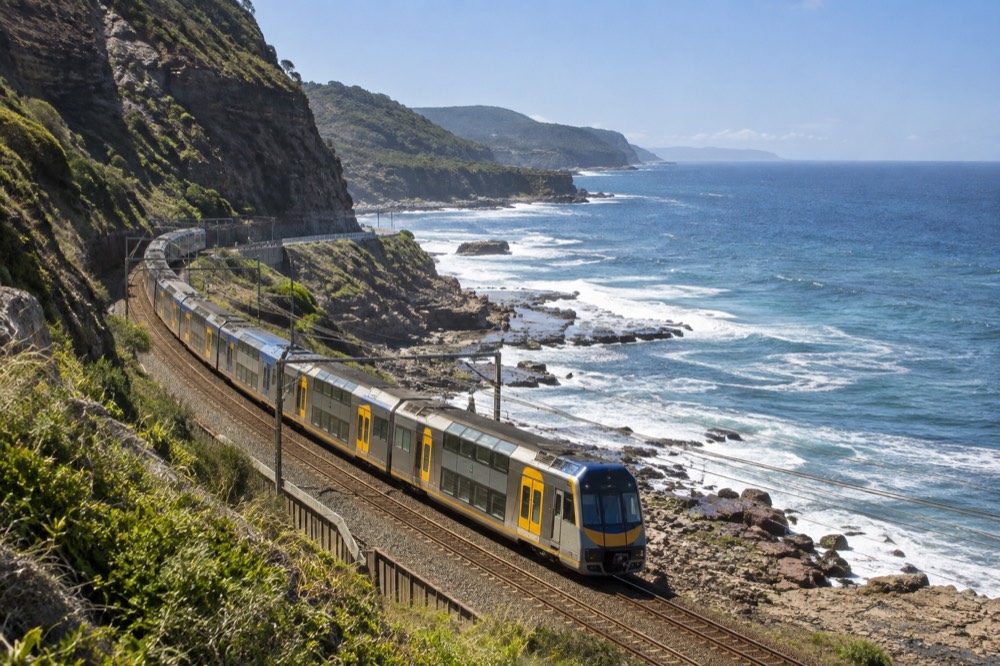
If you drive, the classic approach is the Grand Pacific Drive route: leave Sydney through the Royal National Park, drop down the escarpment to the sea at Stanwell Park, and hit the bridge at Clifton with the ocean already in view. The Royal National Park charges $12 per vehicle per day, and that fee applies whether you stop for an hour or the afternoon. Our Royal National Park guide covers the park side of the drive, and the wider day trips from Sydney roundup places this route among the other options.
One thing worth deciding early: is this a driving day or a Wollongong day? A driving day strings together Stanwell Tops, the bridge, Seacliff and the northern suburbs with stops every few minutes. A Wollongong day goes straight down the highway, spends the morning in the city, and saves the bridge for the return leg along the coast road. Both work; the second is easier with kids.
What Does a Good Sea Cliff Bridge and Wollongong Day Look Like?
Start early and drive the coast road south, stopping at Stanwell Tops for the paragliders and the view, then walk the Sea Cliff Bridge at Clifton before the weekend crowds arrive. Continue to Wollongong for lunch on the harbour, an afternoon at North Wollongong Beach or the lighthouse, and the drive back to Sydney via the motorway, which takes about 90 minutes. Flip the order on a train day: Wollongong first, bridge by bus or taxi, city last.
Here is a timing framework that has the driving day built in. Treat the hours as a guide rather than a schedule; the whole point of this coast is that the stops are short and the driving between them is the scenery.
| Time | Stop | What you do there |
|---|---|---|
| 8:00am | Leave Sydney via the Royal National Park | Coast drive, park fee $12 per vehicle |
| 9:00am | Stanwell Tops lookout | Escarpment view over the ocean, paragliders when conditions suit |
| 9:45am | Sea Cliff Bridge, Clifton | Walk the shared path, photographs from the northern end |
| 11:00am | Coalcliff or Austinmer beach | Coffee, short beach stop if the flags are up |
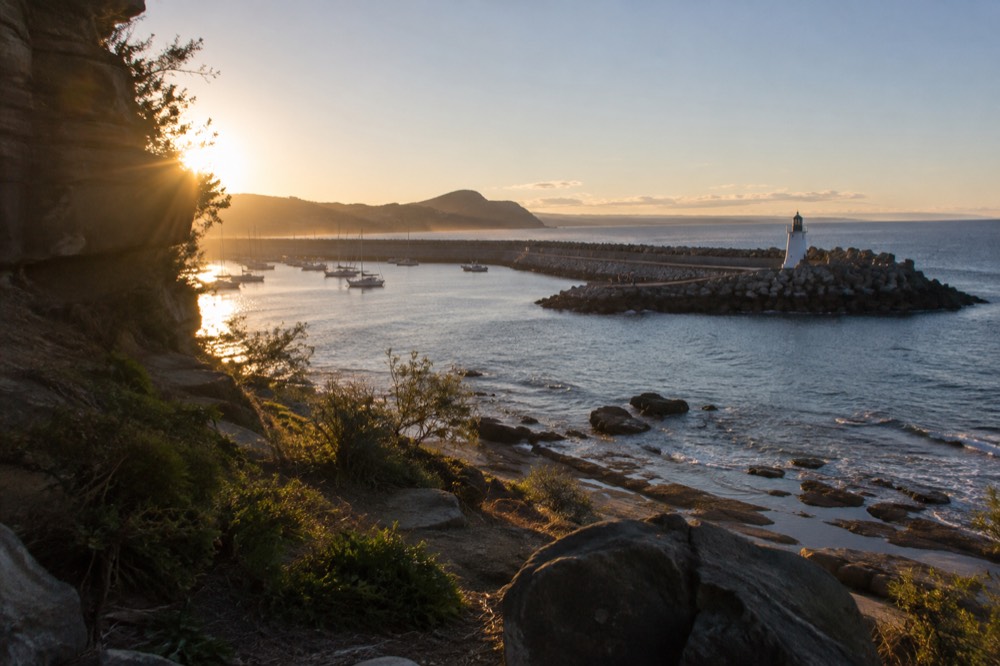
| 12:30pm | Wollongong harbour | Lunch, harbour walk, lighthouse at the breakwater |
| 2:30pm | North Wollongong Beach or Flagstaff Hill | Swim at a patrolled beach, or the hill lookout |
| 4:00pm | Head north | Motorway back, about 90 minutes without stops |
Two safety notes that matter on this itinerary. First, swim only at patrolled beaches and only between the red and yellow flags; patrol seasons and hours vary by beach, and this stretch of coast has unpatrolled stretches that look inviting and are not. The official rip-current advice from Surf Life Saving's Beachsafe program is to stay calm, raise an arm and call for help, float with the current, or swim parallel to the beach toward breaking waves. Second, if there has been heavy rain, stay out of the ocean for up to a day afterwards at ocean beaches and up to three days at harbour and estuarine swim sites; the Beachwatch program grades every swim site and posts daily updates.
If you would rather leave the driving to someone else, small-group day tours from Sydney cover the south coast and the Blue Mountains escarpment country, and the harbour itself has its own high-adrenaline options. A Sydney Harbour scenic helicopter flight gives you the same coastline from a few hundred metres up, and it pairs well with a morning on the South Coast if your day allows a city finish instead.
That said, a helicopter is a 20-minute experience, not a day out, and it does nothing for the part of this trip most people remember: standing on a bridge with the ocean moving underneath. If the south coast day leaves you wanting a Sydney experience with the same kind of drop-away view but a slower heartbeat, the harbour's own elevated options are worth weighing before you book anything.
When Is the Best Time of Year to Visit?
Winter and spring are the surprise answer. June through August brings the clearest skies of the year on the long-run record, the whale migration is passing the cliffs from May to November, and the crowds are thin. Summer, December to February, brings the warmest water and the busiest roads, and February is statistically the cloudiest month of the year. Aim for August to October if you want whales, clear skies and manageable parking all at once.
The climate record for Sydney, an hour north, is the best proxy for this coast, and it upends what most visitors assume. June is the wettest month on average at 133.1 mm, wetter than any summer month, but August records the most clear days of the year at 13.4. February, the heart of the tourist season, records the fewest at 5.3. Winter days here are short but often brilliantly clear, and the escarpment and ocean look their sharpest in that light.
| Month | Mean max °C | Mean rainfall mm | Clear days | Why go then |
|---|---|---|---|---|
| Feb | 25.8 | 119.3 | 5.3 | Warmest water, cloudiest skies, busiest roads |
| May | 19.5 | 117.4 | 9.5 | Whales heading north begin passing the coast |
| Jun | 17.0 | 133.1 | 9.1 | Wettest month, but peak whale numbers late-month |
| Aug | 17.9 | 80.2 | 13.4 | Clearest skies of the year, whales returning south |
| Oct | 22.2 | 76.7 | 8.1 | Warm, drier, southern migration with calves |
| Dec | 25.3 | 77.1 | 6.6 | Summer beach weather, holiday traffic |
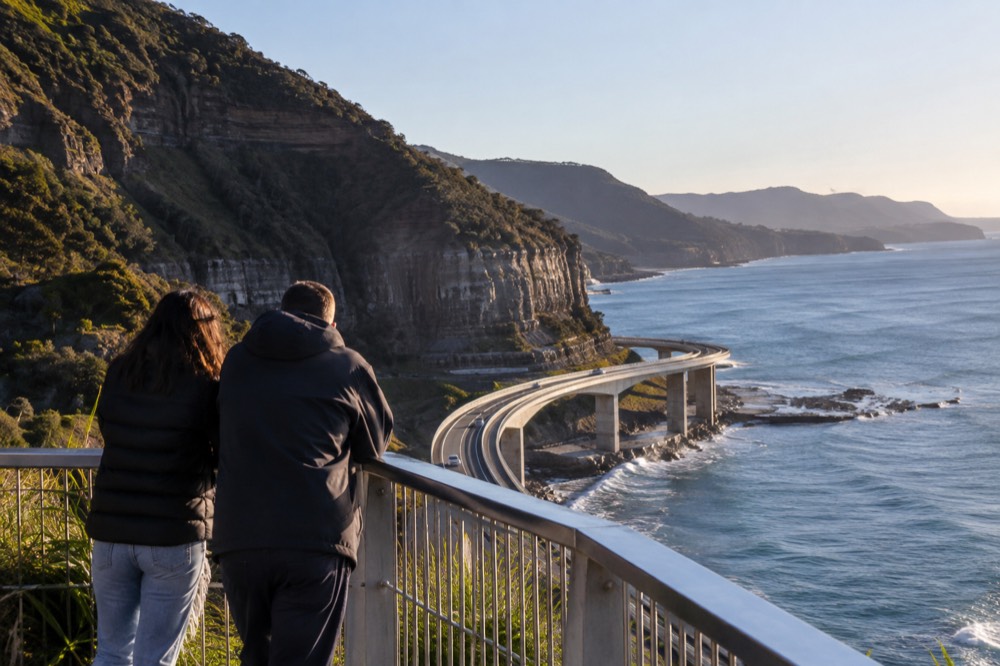
Whale timing deserves its own line in your planning. The northern migration runs roughly May to July, the southern migration with calves roughly August to November, and the peak around late June and July. From the cliffs at either end of the Sea Cliff Bridge you are looking straight down onto the corridor the whales use, which is why NPWS lists this coast among its land-based watching spots. A dedicated whale cruise out of Sydney is the higher-probability option if seeing one up close matters to you; the season runs May to November only, and no operator can promise a sighting.
Where Do You Eat on the Wollongong Leg?
Wollongong's eating clusters around the harbour and the city centre, with lunch on the waterfront being the obvious move after a morning on the coast road. Clifton and Coalcliff have only a couple of cafes and a bakery, so treat the northern stops as coffee stops and plan a real lunch in Wollongong itself. Expect cafe prices broadly in line with Sydney, since the city is a university town with a large resident population, not a tourist pricing bubble.
The practical pattern: coffee at one of the small villages near the bridge, lunch in Wollongong, and either an afternoon ice cream on the harbour walk or a bakery stop on the drive north. North Wollongong, near the beach, has the densest strip of cafes and casual dining. The harbour precinct puts you next to the lighthouse and the breakwater, so lunch there doubles as sightseeing.
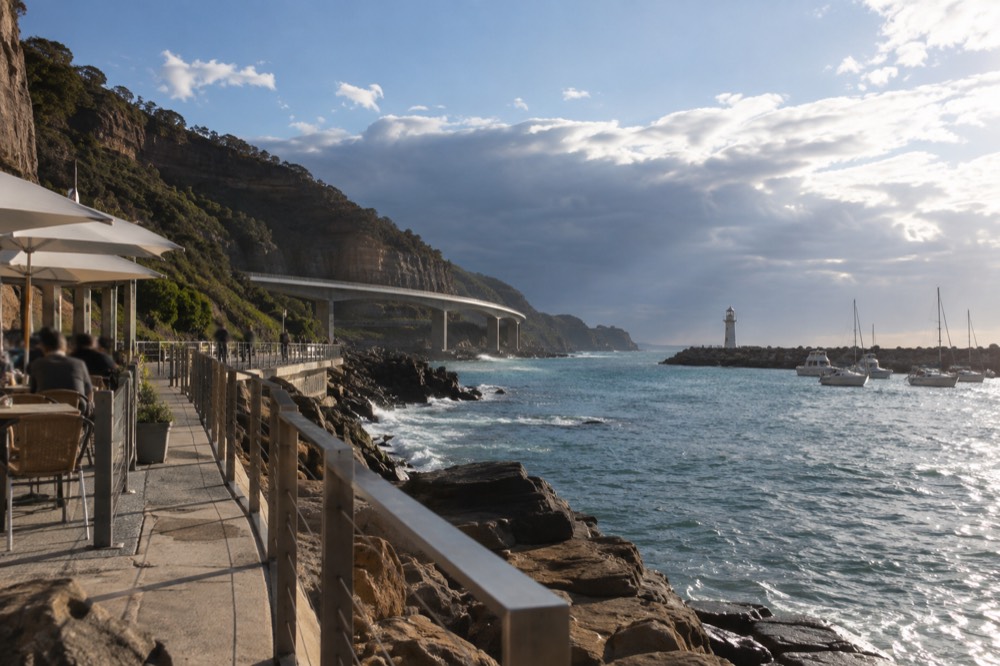
If you are on the train, everything you need is walkable from Wollongong station: the city centre is five minutes, the harbour ten, and the beach fifteen. That walkability is one of Wollongong's quiet advantages over other day-trip destinations, and it is worth reading our is Sydney a walkable city piece if pedestrian-friendliness shapes how you travel. For the drive home, resist the motorway for the first stretch and take the coast road as far as Stanwell Tops; the escarpment at dusk, with the paragliders gone and the car parks empty, is a different place to the one you passed at 9am.
Is the Sea Cliff Bridge Worth the Trip from Sydney?
Yes, if you treat it as the anchor of a full coast day rather than a destination on its own. The bridge itself is a 30 to 60 minute stop, free and spectacular, but the value is the string it hangs from: the Royal National Park drive, Stanwell Tops, the northern beaches and Wollongong's harbour. As a pure out-and-back for the bridge alone it is a long way for a short stop; as the centrepiece of a south coast day it earns its reputation completely.
The honest comparison is against Sydney's other big day trips. The Blue Mountains deliver escarpment, forest and lookouts; this coast delivers ocean, cliff and road. The Blue Mountains National Park charges no entry fee outside the Glenbrook area, while the Royal National Park on this route charges $12 per vehicle, so the cost difference between the two days is negligible. NSW National Parks publishes the current fee list for all parks, and both parks are per-vehicle charges, which means arriving by train or on foot avoids them entirely.
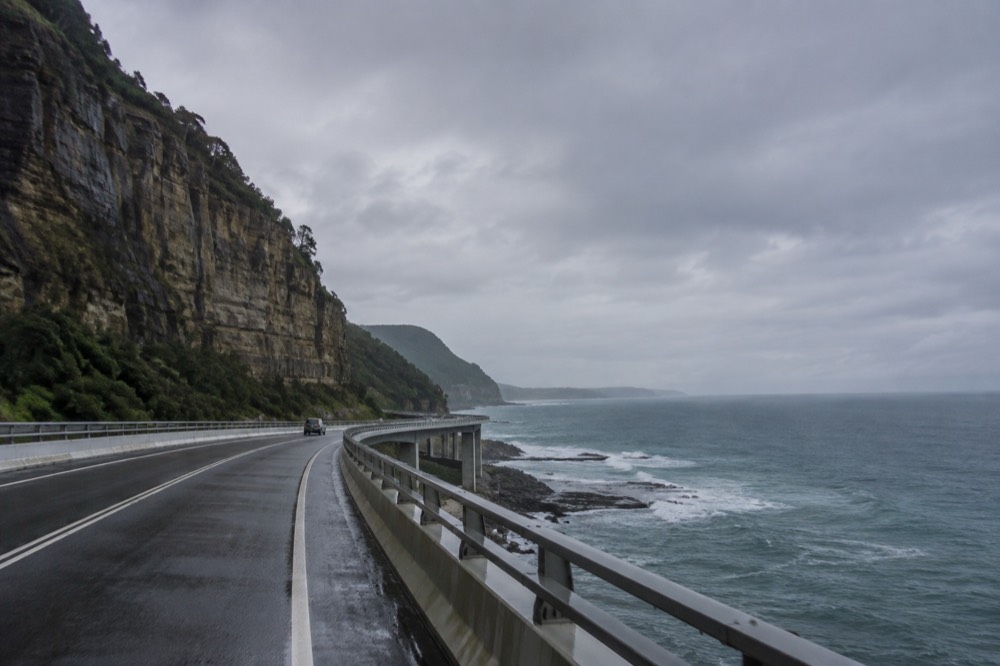
What this trip does that the Blue Mountains cannot is put you over the water. Sydney's harbour experiences, ferries, kayaks, sails, are all inside the protected harbour; the Sea Cliff Bridge is one of the few places in a Sydney day trip where you stand directly above open ocean swell. If that appeals, the harbour's own water options are worth a look too: a sunset catamaran cruise makes a gentle finish to a day that started on a cliff, and our Sydney Harbour cruises guide compares the full range.
One more consideration for the drive home. If your Sydney base is the northern side of the harbour, the Sea Cliff Bridge day ends with a harbour crossing anyway, and the Sydney Harbour Bridge is the natural route. Walking its eastern footpath is free, and the Pylon Lookout is the paid option with the view. Some visitors finish the coast day with a climb instead; the summit climb runs about three hours, roughly two of them on the bridge itself, with dawn, day, twilight and night departures, and our BridgeClimb guide covers what to expect, pricing and how far ahead to book.
For everything this site covers in one place, from transport to neighbourhoods to itineraries, start with Sydney Travel Guide and work outward from there.
Common Questions About the Sea Cliff Bridge and Wollongong
Can you walk across the Sea Cliff Bridge?
Yes. A shared pedestrian and cycling path runs along the seaward side of the bridge, separated from the traffic lanes. It is free, open all year, and takes most people 20 to 40 minutes at a sightseeing pace. Go early for parking and light.
How far is the Sea Cliff Bridge from Sydney?
Roughly an hour to 90 minutes' drive south of central Sydney, depending on the route and traffic. By train, the South Coast line from Central reaches Wollongong in about 90 minutes, with the bridge a short bus or taxi trip further north at Clifton.
Is the Sea Cliff Bridge free?
Yes. There is no toll, ticket or gate. The only charge on the classic driving route is the $12 per vehicle per day Royal National Park entry fee, which applies to the park, not the bridge.
Can you see whales from the Sea Cliff Bridge?
Sometimes, in season. Whales pass this coast from May to November, heading north roughly May to July and returning with calves roughly August to November, and the cliffs at either end of the bridge look down onto the migration corridor. Sightings are never guaranteed.
Is it better to drive or take the train to Wollongong?
Drive if the bridge and the coast stops are the point, because public transport to Clifton is thin. Take the train if Wollongong itself is the destination: the city centre, harbour and beaches are all walkable from the station, and Opal caps keep the fare predictable.
What is the best month to visit?
August to October. The long-run climate record shows August as Sydney's clearest month, the southern whale migration is passing with calves close to shore, and the summer weekend traffic has not yet arrived. June is the wettest month on average, though it also brings peak whale numbers.