Shelly Beach Manly: Snorkelling, Swimming and How to Get There
Shelly Beach is the small, sheltered cove at the end of Manly's beachfront walk, and it is one of the few places in Sydney where calm, clear, swimmable water sits a flat 15 minute stroll from a major ferry terminal.
Short answer
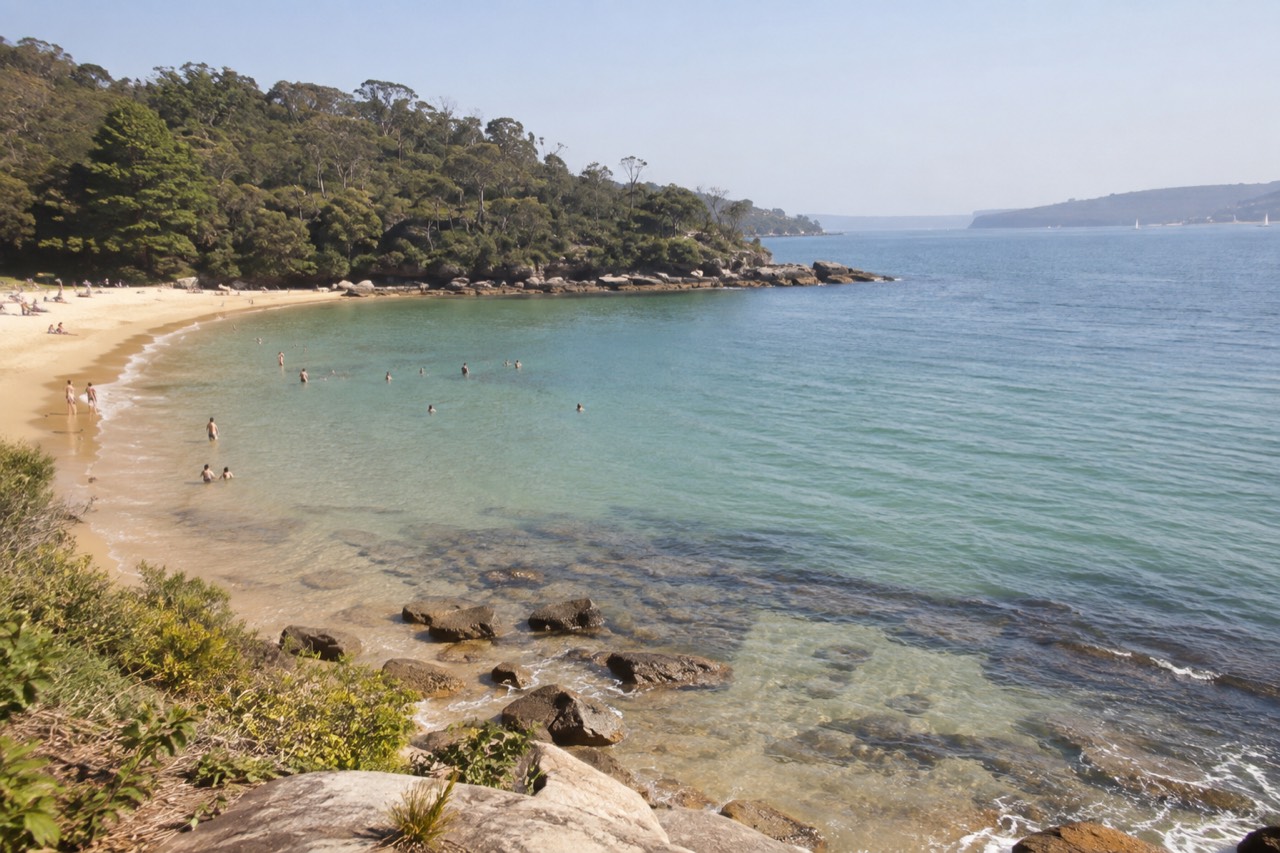
Shelly Beach is a 15 minute flat walk south of Manly Wharf, inside the Cabbage Tree Bay Aquatic Reserve. It is one of Sydney's safest swimming beaches, with calm water, no surf and free barbecues. The Manly ferry from Circular Quay costs $9.20 one way and takes about 30 minutes, making Shelly Beach an easy half day from the city centre.
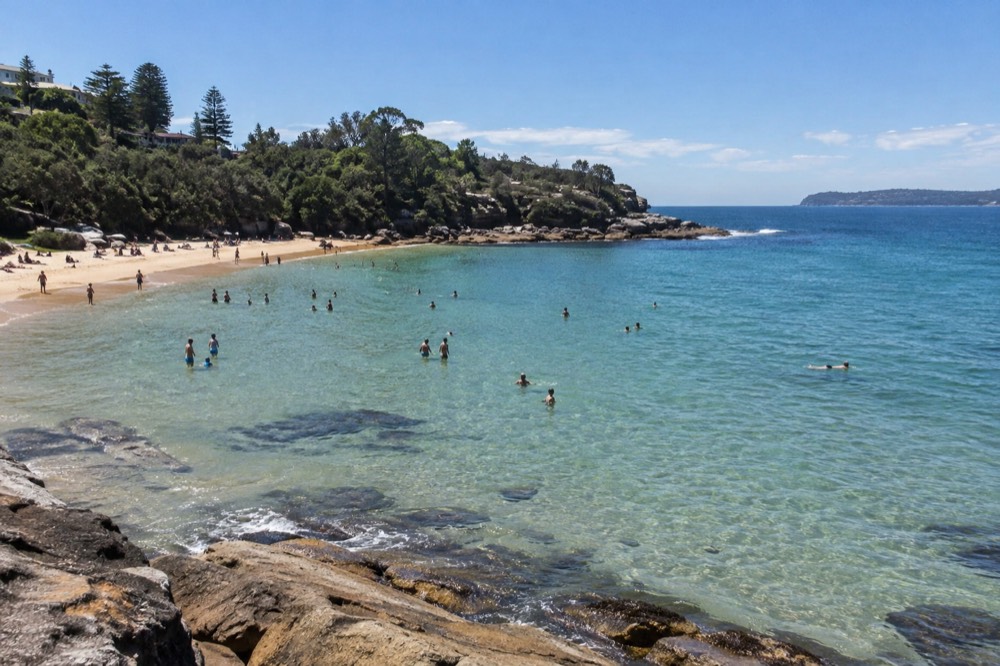
Shelly Beach sits at the southern end of Manly's beachfront, tucked behind a low headland and facing west into the shelter of Cabbage Tree Bay. That west-facing aspect is the whole story of the place: while Manly's main beach takes the rolling surf of the Pacific, Shelly Beach sits in flat, glassy water that barely moves on most days. It is the only west-facing beach on the whole of Sydney's Northern Beaches, and that single geographic quirk is why families, snorkellers and people who cannot swim well all gather here.
The beach is inside the Cabbage Tree Bay Aquatic Reserve, which means the fish, the weed beds and the rays are protected rather than fished. Snorkellers share the water with blue gropers, old wives, port jackson sharks in the cooler months and eagle rays that sweep across the sand in the shallows. The walk from Manly Wharf is flat, paved and stroller-friendly, passing Fairy Bower and its ocean pool along the way. This guide covers how to get there, where to swim safely, what lives in the water, and the small details that make the difference between a good visit and a wasted one.
Where Is Shelly Beach and How Do You Get There from Sydney?
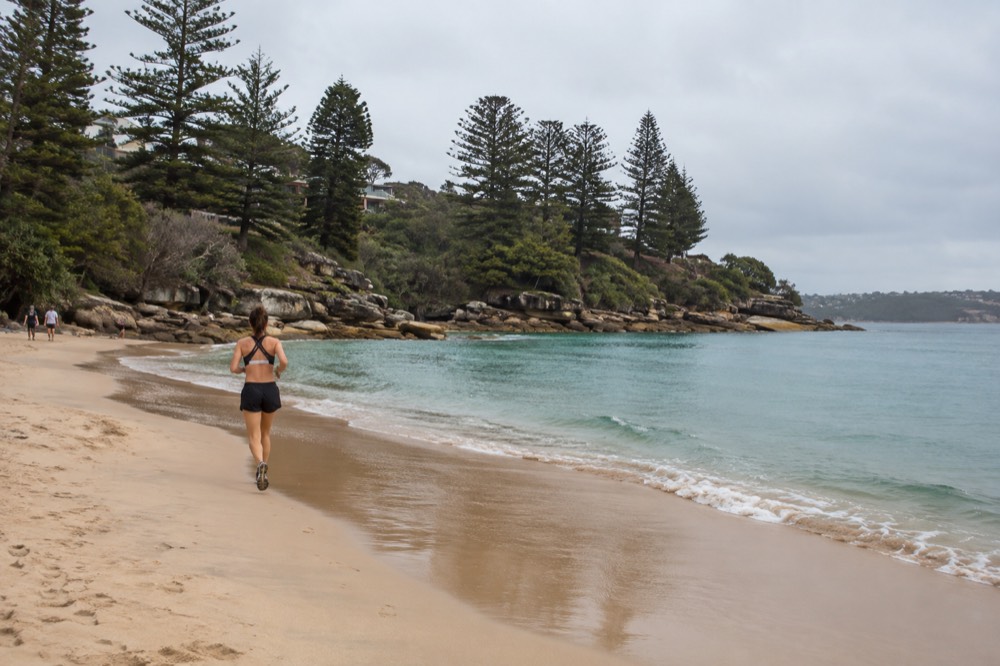
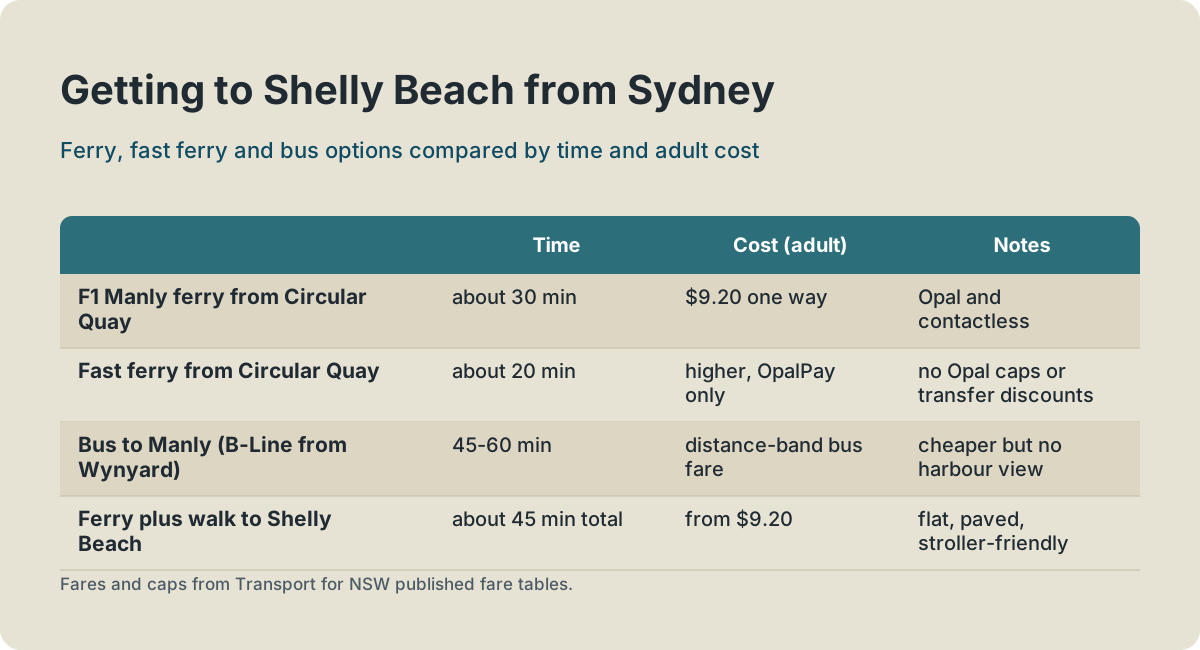
Shelly Beach is at the southern end of Manly, a flat 15 minute paved walk from Manly Wharf along the Fairy Bower promenade. From Sydney's city centre you take the F1 ferry from Circular Quay, about 30 minutes on the water, and the adult fare is $9.20 one way. A contactless card or an Opal card works at the wharf, and the Friday to Sunday daily cap is $9.65, so a weekend return ferry trip costs barely more than a single fare.
The ferry is the obvious way to arrive and it is genuinely part of the attraction: the F1 crosses the harbour with the Opera House and the Harbour Bridge behind you and the heads opening ahead. The Manly ferry guide covers timetables and the fast-ferry trap in detail, but the short version is that the public F1 ferry accepts Opal with full benefits, while the privately operated fast ferry uses OpalPay, where fares differ and the daily caps do not apply. Check the wharf signage before you board, because the two services leave from different berths at Manly.
| Option | Where from | Time | Cost (adult) | Notes |
|---|---|---|---|---|
| F1 Manly ferry | Circular Quay | about 30 min | $9.20 one way | Opal and contactless accepted, caps apply |
| Fast ferry | Circular Quay | about 20 min | higher, OpalPay only | no Opal caps or transfer discounts |
| Bus to Manly | Wynyard (B-Line) | 45-60 min | distance-band bus fare | cheaper but no harbour view |
| Ferry plus walk | Circular Quay to Shelly Beach | about 45 min total | from $9.20 | flat, paved, stroller-friendly |
Fares and caps come from Transport for NSW's published fare tables, and a public holiday is the cheapest day to make this trip, because the daily cap drops to $9.65 on those days too. Tap on and tap off every time; if you forget to tap off you are charged the default maximum fare.
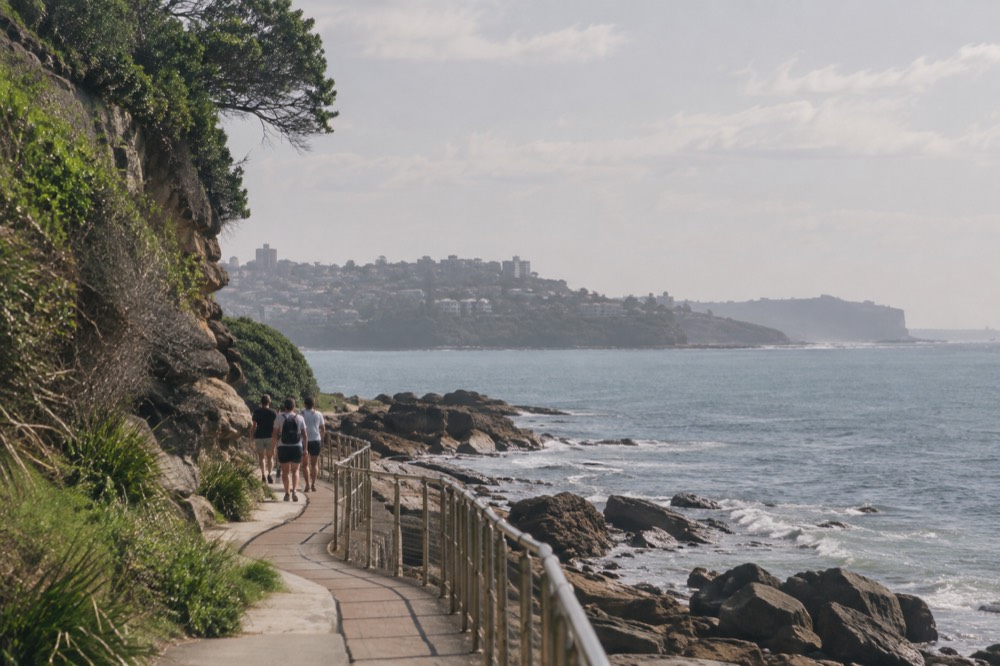
Once off the ferry at Manly Wharf, the route is simple: walk south along The Corso to the main beach, turn right onto the beachfront promenade, and follow it past Fairy Bower to the cove at the end. There are no stairs anywhere on the route, which is why Shelly Beach works for prams, wheelchairs and people who do not want a hill at the start of their swim. The Manly Beach guide covers the main beach and the surf side if you want the full picture of the area.
Can You Swim and Snorkel at Shelly Beach?
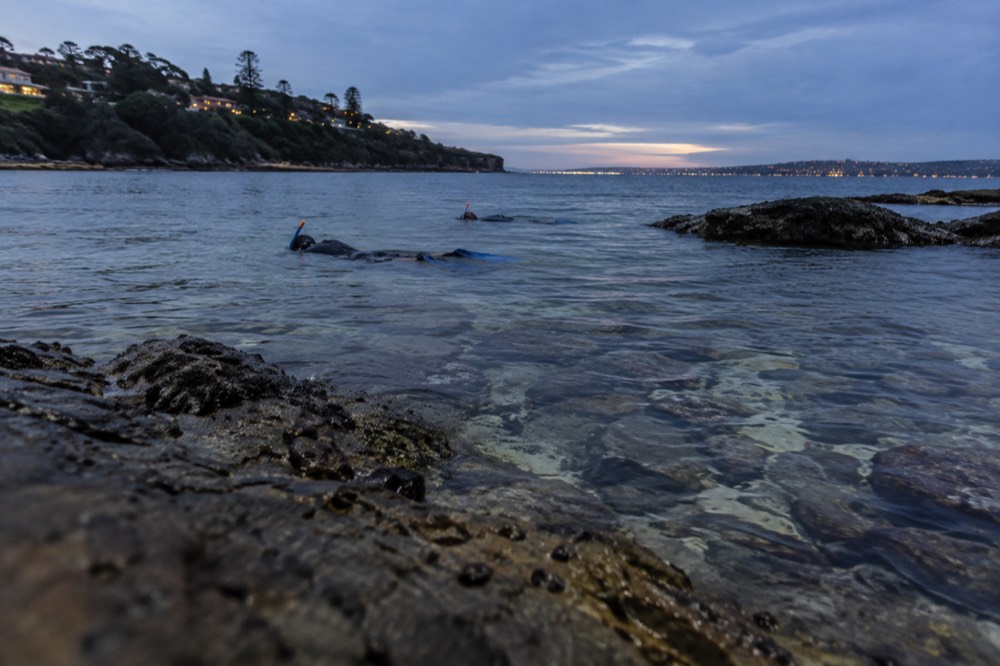
Yes, and it is one of the best places in Sydney to do either. The water inside Cabbage Tree Bay is calm on most days because the headland blocks the swell, and the aquatic reserve means fish are abundant and approachable. Snorkelling is best along the rocky edges and the weed beds at either end of the beach, where blue gropers and rays congregate, rather than in the middle of the sand. The water is clearest in the morning before wind lifts sediment.
The snorkelling here is unusually accessible for a capital-city beach. You can walk in from the sand, stand up most of the way out, and still see protected marine life close to the shore. The reserve prohibits fishing and collecting, so the animals are calm around swimmers in a way that fished waters never are. A guided tour is worth considering if you do not have your own gear: the Manly and Shelly Beach snorkelling tour supplies equipment and a guide who knows where the gropers are sitting this week.
If you are doing it yourself, enter near the rocks at the southern end and drift north along the edge. Visibility is best early, and after heavy rain it drops badly, which brings us to the one water-quality rule every Sydney swimmer should know.
Beachwatch, the NSW Government's water quality program, grades swim sites from Very Good to Very Poor and publishes daily updates. Its post-rain advice is the part worth memorising: stay out for up to one day after heavy rain at ocean beaches, and up to three days at harbour and estuarine sites. Shelly Beach sits in a bay rather than open ocean, so the conservative read is to treat it like the harbour rule after a big storm. You can check the current grade on the Beachwatch site before you leave.
Is Shelly Beach Safe for Families and Weak Swimmers?
On most days, yes, it is one of the safest swimming spots on the Northern Beaches: the headland blocks the surf, the water is shallow and gradual, and there are no rips of the kind that make Sydney's ocean beaches dangerous. But it is still open water, conditions change, and it is not a swimming pool. Check for posted signs, swim where others are swimming, and never assume any Sydney beach is patrolled at the moment you arrive, because patrol hours vary and are seasonal.
The safety comparison with Sydney's surf beaches is real and worth understanding. Beachsafe, Surf Life Saving Australia's public beach safety site, identifies rip currents as the number one coastal hazard, and the official national advice is blunt: swim between the red and yellow flags at a patrolled beach during patrol hours. Surf beaches like Bondi and Manly's main beach carry that risk. Shelly Beach's geometry removes most of it, which is exactly why local families favour it, but calm water is not the same as supervised water. If there are flags up, swim between them; if there are not, treat the water as unpatrolled and stay close to shore.
Two seasonal notes matter. Bluebottles are common in NSW waters in the warmer months and after onshore winds; do not touch them on the sand or in the water, and if someone is stung, the official advice is to leave the water, remove tentacles with seawater rather than bare hands, and immerse the area in hot water around 45 °C for up to 20 minutes. And the NSW shark meshing program runs its nets between Newcastle and Wollongong only from 1 September to 31 March; the nets reduce but do not eliminate risk and are not a barrier, so the sensible habit is simply to swim where others swim.
| Hazard | Risk at Shelly Beach | What to do |
|---|---|---|
| Rip currents | low, headland blocks most surf | still swim between flags if patrol is on |
| Bluebottles | possible in warmer months, after onshore wind | do not touch; hot water immersion for stings |
| Poor visibility after rain | common in the bay | wait 1-3 days after heavy rain, check Beachwatch |
| Boat traffic | low inside the bay, some at the entrance | stay inside the swim area markers |
| Sharp reef on the edges | moderate at either rocky end | wear reef shoes if venturing to the points |
For families, the practical appeal stacks up: free barbecues, shade trees on the grass behind the sand, toilets and outdoor showers, and a kiosk. The Sydney with kids itinerary places Shelly Beach in a full day plan if you want more than a swim stop.
What Is the Cabbage Tree Bay Aquatic Reserve?
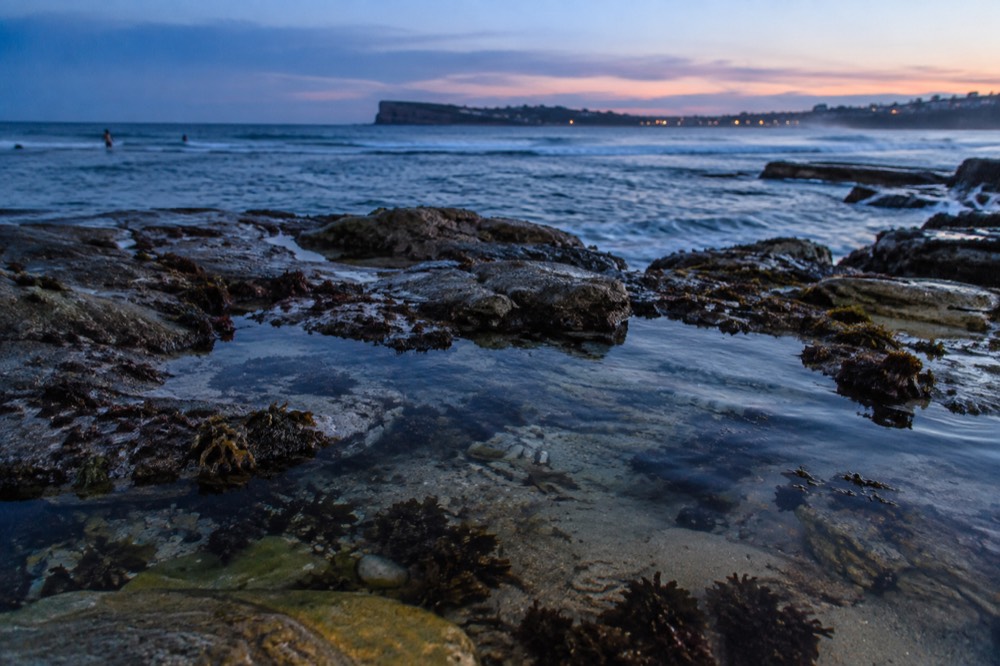
Cabbage Tree Bay is a protected aquatic reserve covering the whole headland and bay between Manly's surf beach and Shelly Beach. Fishing and collecting of any kind are prohibited, which is why the marine life here is unusually dense and unafraid. Snorkellers regularly see blue gropers, eagle rays, octopus, and in the cooler months port jackson sharks, all within a short swim of the sand. The reserve is the reason Shelly Beach's snorkelling outpunches its size.
The reserve was created to protect the reef and weed beds that sit in the bay's shallow water, and the effect on a visitor is immediate: the fish do not scatter. Eastern blue gropers, a large, curious wrasse species that is NSW's state fish, are near-guaranteed along the rocky edges, and they will cruise past snorkellers without much concern. The bay also acts as a nursery, so small baitfish schools move through in clouds, which in turn brings the bigger animals in close. Other pages covering the same trip are gathered on Sydney Travel Guide.
| Marine life | Where in the bay | When you are most likely to see it |
|---|---|---|
| Eastern blue groper | rocky edges, both ends of the beach | year-round, most reliable sighting |
| Eagle and bull rays | sandy shallows mid-bay | year-round, often at high tide |
| Port jackson shark | weed beds and reef | cooler months, May to September |
| Octopus and cuttlefish | reef cracks and ledges | year-round, dawn and dusk |
| Old wives and luderick | near the Fairy Bower rocks | year-round |
The rules are simple and worth repeating: no fishing, no spearfishing, no collecting of shells, weed or animals, and do not chase or touch the wildlife. The reserve is small and heavily visited, and its value depends entirely on visitors leaving it exactly as they found it. Free guided walks of the headland are sometimes run by local councils and volunteer groups; check the Northern Beaches Council listings before your visit if a land-based tour appeals.
What Facilities Does Shelly Beach Have?
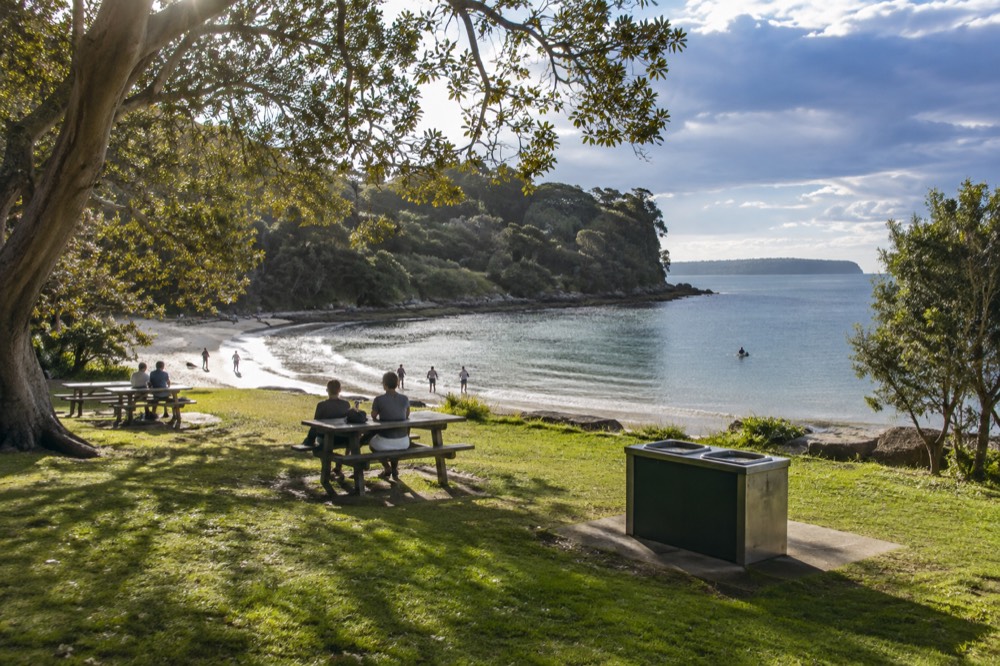
Shelly Beach has free electric barbecues, picnic tables, toilets, outdoor showers, a kiosk, a first-aid point and a grassed area with shade trees directly behind the sand. There is a small paid car park that fills early on weekends, and street parking nearby is time-limited and contested. There are no lockers, so leave valuables at your accommodation or take a dry bag if you are snorkelling from the beach.
The barbecue setup is the quiet star of the facilities list. Free electric barbecues right on the foreshore mean a ferry ride and a supermarket stop in Manly turns into a full afternoon: swim, grill, eat on the grass, swim again. The kiosk sells coffee and basic food but closes in the late afternoon, so if you are planning an evening there, bring what you need. The Sydney picnic spots guide ranks how this foreshore compares with other free barbecue locations around the harbour.
| Facility | Details |
|---|---|
| Barbecues | free electric, on the foreshore, busy on weekends |
| Toilets | at the beach's northern end |
| Showers | outdoor rinse showers near the promenade |
| Kiosk | coffee and light food, closes late afternoon |
| Parking | small paid car park, fills early; street parking time-limited |
| Accessibility | flat paved access the whole way from Manly Wharf |
| Ocean pool | Fairy Bower pool is on the walk, 5 minutes north |
Accessibility is genuinely good rather than token. The entire route from the ferry wharf is flat and paved, the sand area is reachable without crossing dunes or stairs, and the grass behind the beach gives a firm-surface alternative to the sand. The accessible Sydney guide covers which other beaches and ferries work well for wheelchair users and people with limited mobility.
When Is the Best Time to Visit Shelly Beach?
Weekday mornings are the sweet spot: the water is at its clearest before the afternoon breeze, the car park is still viable, and the barbecues are free. For water quality and warmth, the months from December to February are summer, with mean daily maximums around 26 °C in January, but June is Sydney's wettest month on the long-run averages, so late autumn and early winter visits carry the most rain risk. Whale season, May to November, adds a chance of sightings from the headland.
The climate record for Sydney holds a surprise that most visitors never expect: peak summer is not the clearest time of year here. The Bureau of Meteorology's long-term normals for Sydney show February as the city's cloudiest month, with only 5.3 mean clear days, while August is its clearest, with 13.4. June is the wettest month, averaging 133.1 mm, which is wetter than any summer month. In practical terms, a winter visit to Shelly Beach can give you brilliant, sharp light and empty barbecues, and the water, while cool, is often clearer than in February.
Timing within the day matters as much as the month. The prevailing summer breeze builds through the afternoon, and once it is up, the bay's surface turns choppy and visibility for snorkelling drops. Locals swim early. The same logic applies to the ferry: a mid-morning F1 crossing is a pleasant ride, while a 4pm return in January can mean a crowded deck and a hot wharf queue. The best time to visit Sydney guide works through the whole year month by month if your dates are flexible.
| Period | Water and weather | Crowd level | Best for |
|---|---|---|---|
| Dec-Feb (summer) | warmest water, mean max 25.3-26.0 °C, February cloudiest | busiest, weekends packed | swimming, families |
| Mar-May (autumn) | warm sea lingering, fewer crowds | moderate | snorkelling, picnics |
| Jun-Aug (winter) | coolest, June wettest, August clearest skies | quietest | walks, whale watching from the point |
| Sep-Nov (spring) | warming, whales until November | building | snorkelling as water clears |
What Else Is There to Do Around Shelly Beach and Manly?
The walk between Manly and Shelly Beach is itself one of Sydney's best short coastal strolls, passing the Fairy Bower ocean pool and sculpture, and it connects to longer options like the Spit to Manly walk. Manly's surf beach, The Corso's food and shops, and the Quarantine Station side of North Head are all within 30 minutes on foot. If you have a full day, a harbour cruise or a second beach stop turns the ferry trip into a proper day out.
The Fairy Bower stretch of the walk carries the "Ocean Nymphs" sculpture, one of the most photographed pieces of public art on the Northern Beaches, and the ocean pool beside it is a quieter alternative swim than either beach. Extend south past Shelly Beach and the path climbs toward the headland lookout over Cabbage Tree Bay, where humpbacks pass close to shore between May and November on their migration, with the southern, calf-carrying leg from August to November bringing them nearest the coast. The whale watching in Sydney guide covers land-based vantage points and boat tours.
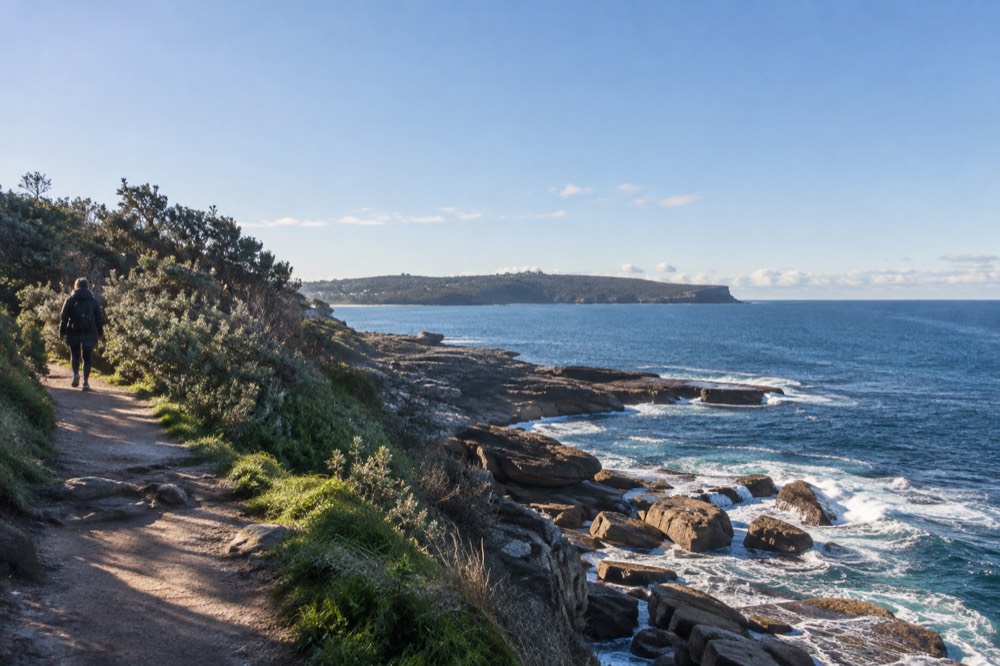
For a longer leg, the Spit to Manly walk finishes at Manly Wharf and can be combined with the Shelly Beach promenade for a full morning of harbour-side walking with a swim at the end. If you would rather be on the water than beside it, a harbour sunset catamaran cruise departs from the city and gives you the skyline from the water after your beach day. Alternatively, the hop-on hop-off ferry pass lets you break up a harbour day with stops at Watsons Bay and Taronga Zoo.
Back on land, Manly rewards slow exploration. The Corso runs from the wharf to the surf beach and is lined with the food options covered in the Sydney food guide, and the Sydney Northern Beaches guide places Manly and Shelly in the wider chain of beaches from Freshwater to Palm Beach if you want to keep going north.
The one mistake visitors make here is treating Manly as a two-hour ferry-and-back excursion. The suburb holds a full day easily: surf beach in the morning, snorkel at Shelly at midday, barbecue in the afternoon and the ferry home at sunset. A second day opens up North Head, the Quarantine Station's history walks and the dive sites further around the point. Plan for more time, not less.
Common Questions About Shelly Beach
How far is Shelly Beach from Manly Wharf?
About a 15 minute flat walk along the paved beachfront promenade past Fairy Bower. There are no stairs, so the route works for prams and wheelchairs.
Is Shelly Beach good for snorkelling?
Yes. It sits inside the Cabbage Tree Bay Aquatic Reserve, where fishing is prohibited, so fish are abundant and unafraid. Blue gropers, rays and octopus are common sightings within a short swim of the sand, and the water is clearest in the morning before the afternoon breeze.
Can you swim at Shelly Beach in winter?
You can, if you do not mind cool water. Winter days in Sydney average a maximum of 16.4 to 17.9 °C from June to August, and August is statistically the city's clearest month. Many locals swim year-round, and the calm bay makes a winter dip far more pleasant than a surf beach.
Is there parking at Shelly Beach?
There is a small paid car park that fills early on weekends, plus time-limited street parking nearby that is heavily contested in summer. The ferry is usually the better option: the F1 from Circular Quay takes about 30 minutes and costs $9.20 one way.
Are there barbecues and toilets at Shelly Beach?
Yes. Free electric barbecues sit on the foreshore, with toilets at the northern end of the beach, outdoor rinse showers, picnic tables and a grassed area with shade trees. A kiosk sells coffee and light food but closes in the late afternoon.
Is Shelly Beach patrolled by lifeguards?
Patrol arrangements vary by season and by beach, so never assume supervision. Manly's main beach is patrolled year-round by council lifeguards, but check for posted signs at Shelly Beach on the day, and swim between the red and yellow flags whenever they are up.