Which City in Australia Is the Safest?
An honest answer to which Australian city is the safest, what the official record actually says, and why Sydney stacks up well for visitors who plan around the real risks.
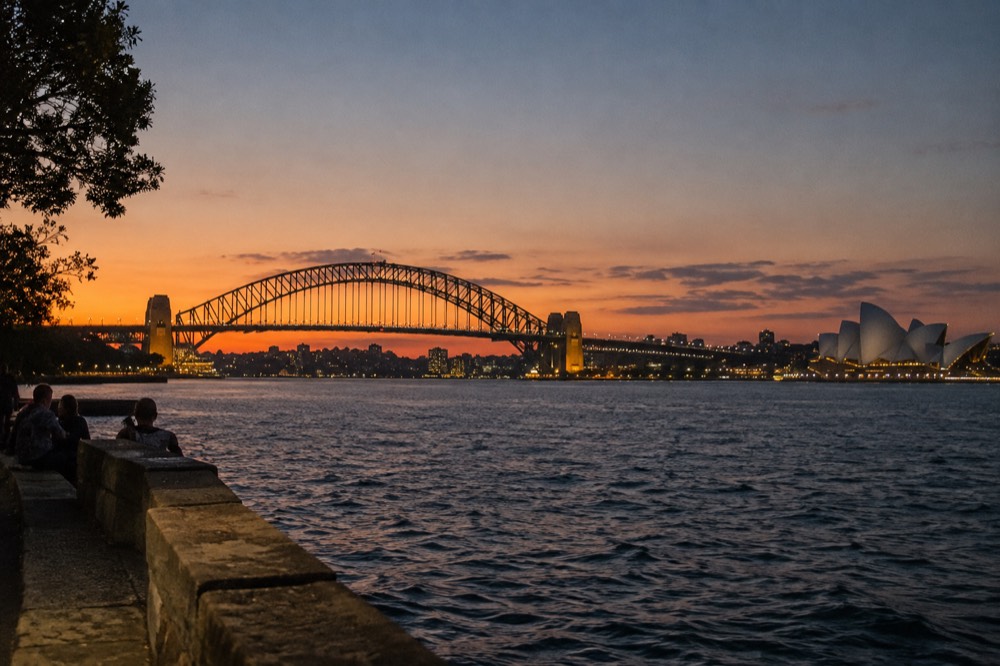
Which City in Australia Is the Safest?
No Australian government agency publishes an official ranking of cities by safety, so any confident answer naming one city is a guess dressed up as a fact. What can be said honestly is that Australia's major cities, Sydney included, sit among the safer urban destinations in the world for visitors, and that the risks a tourist actually faces here are coastal water hazards, sun exposure and traffic, not violent crime. Sydney, as Australia's largest city, is a reasonable pick on every verifiable measure.
The question gets asked constantly, and it gets answered badly almost everywhere. Sites rank Adelaide against Canberra against Sydney using raw crime statistics that were never designed to be compared, because each state police force records and publishes offences differently. A break-in counted one way in New South Wales is counted another way in South Australia. Comparing those numbers and declaring a winner is statistical theatre, and no official body in Australia endorses it.
What the official record does support is a picture of a country where the visitor-facing risks are unusually predictable. The NSW Government confirmed no visitor levy or tourist tax exists in the state, transport runs on a capped, contactless system that removes fare disputes entirely, and the emergency number is 000 everywhere in the country. Destination NSW counted 67.5 million visitors to Sydney in the year ending March 2026, 63.6 million of them domestic, and that volume of people moving through a city without incident is itself evidence of a place that functions.
This site covers Sydney, so that is the city this page can actually verify, claim by claim. If your trip includes Melbourne or Brisbane, the same principles apply: Australian cities share low violent-crime rates by world standards, and the hazards that genuinely hurt travellers in this country are the same in every one of them. For Sydney specifics, the honest companion reading is is Sydney safe at night and the broader is Sydney safe for tourists guide.
Is Sydney Safe at Night?
Yes, Sydney's central areas are considered safe at night by the standards of any major city, with the usual caveats about dark beaches, empty industrial streets and alcohol-fuelled precincts after midnight. The verifiable points are these: public transport runs late and uses capped contactless payment, the main nightlife precincts are busy and policed, and the city's foreshore walkways around Circular Quay and The Rocks are lit and populated well into the evening. Use normal city judgement and the risk stays low.
The practical detail that makes night-time Sydney easy for a visitor is transport. An adult Opal fare is capped at $19.30 a day Monday to Thursday and $9.65 from Friday to Sunday and on public holidays, network-wide across metro, train, bus, ferry and light rail, so getting home never depends on negotiating a fare with a stranger. A contactless credit card or phone is charged exactly the same as an Opal card and earns the same caps, which is verified on the Transport for NSW fares pages. That single fact removes a whole category of late-night risk that exists in cities where cash haggling is the norm.
The areas visitors actually go at night are the areas that handle crowds well. Circular Quay, Darling Harbour and The Rocks are lit foreshore precincts with steady foot traffic, and the things to do in Sydney at night guide covers them in detail. Kings Cross has a reputation from an earlier era; today it is a normalised entertainment precinct, though the standard advice about any nightlife strip after midnight applies there too.
Two genuine night-time cautions are worth naming because they are Sydney-specific. Beaches are not lit, are not patrolled after hours, and should never be swum at night under any circumstances. And the water-quality rule matters after evening storms: NSW Beachwatch advises staying out of the water for up to one day after heavy rain at ocean beaches and up to three days at harbour swim sites, a rule published on the Beachwatch program site.
Is Sydney or Melbourne Safer?
Neither city has a meaningful safety edge over the other on anything a visitor can verify, and any article declaring a winner is comparing incompatible state crime statistics. Both are large, functioning Australian cities with low violent-crime rates by international standards, late-running capped public transport and the same coastal hazards on their respective shorelines. The honest answer is that the choice between them should be made on weather, cost and what you want to see, not on safety.
The comparison question is popular because the Sydney-versus-Melbourne rivalry is a national sport, but the safety framing collapses under inspection. New South Wales and Victoria record crime under different classifications, so the raw numbers are not directly comparable, and no federal agency publishes a harmonised city safety index. Anyone claiming Melbourne is 20 per cent safer, or Sydney is, is doing arithmetic on numbers that were never meant to meet.
What differs between the two cities is climate, and climate affects a visitor's real risk profile more than crime does. Bureau of Meteorology long-term normals for Sydney show August is the city's clearest month, with 13.4 mean clear days, while February, the middle of peak tourist season, is its cloudiest at 5.3. June is Sydney's wettest month on the long-run average at 133.1 mm. A traveller planning around sun exposure and water activities should read the best time to visit Sydney guide rather than a crime table, because UV is the hazard that actually sends Australians to hospital, and protection is advised whenever the UV index reaches 3 or above, which is most of the year in both cities.
The rivalry has its lighter versions too, and plenty of travellers weigh the two cities on food, culture and cost before they ever think about safety. If that is where your head is at, the comparison pieces on this site cover the matchup from every angle, and the after-dark version of the safety question is handled in full in the section above.
What Should Visitors Watch Out for in Sydney?
The three risks that genuinely hurt visitors in Sydney are rip currents at unpatrolled beaches, UV exposure, and post-rain water quality, in that order. Every one of them is avoidable with official, published rules: swim between the red and yellow flags during patrol hours, use sun protection whenever the UV index is 3 or above, and stay out of the water for up to a day after heavy rain at ocean beaches or up to three days at harbour sites. Violent crime does not belong on this list.
The water-safety numbers deserve their own paragraph because they are the sharpest fact on this page. Surf Life Saving Australia's National Coastal Safety Report 2025 recorded 154 coastal drowning deaths nationally, the highest on record, and every single one occurred outside the flags, outside patrol hours, or at an unpatrolled location. The flags rule is not a suggestion. The good news for Sydney specifically is that six of its beaches now have year-round professional lifeguard patrols: Bondi, Bronte, Tamarama, Coogee, Manly, and since around May 2026, Dee Why. The official rip-current advice, published at beachsafe.org.au, is to stay calm, raise an arm and call for help, float with the current which may return you to a sandbank, or swim parallel to the beach toward breaking waves.
| Risk | What the official sources say | How to avoid it |
|---|---|---|
| Rip currents | 154 coastal drownings nationally in the 2025 report year, all outside flags or patrol times | Swim between the red and yellow flags at a patrolled beach, in patrol hours |
| UV exposure | Protection advised whenever the UV index reaches 3 or above; Sydney exceeds 3 most of the year and hits extreme levels of 11+ in summer | Slip, Slop, Slap, Seek, Slide from mid-morning onwards |
| Water quality after rain | Stay out up to 1 day after heavy rain at ocean beaches, up to 3 days at harbour swim sites | Check the Beachwatch site before swimming, especially near stormwater outlets |
| Beach patrols | Bondi, Bronte, Tamarama, Coogee, Manly and Dee Why are patrolled year-round; most other Sydney beaches patrol late September to late April | Choose a year-round patrolled beach if visiting outside summer |
| Marine stingers | Bluebottles common in warmer months and after onshore winds; stings are painful but rarely dangerous | Do not touch them on the sand or in the water; seek a lifeguard if stung |
Two more Sydney-specific notes round out the picture. Shark nets, 51 of them between Newcastle and Wollongong, are installed seasonally from 1 September to 31 March, and the NSW Government's own framing is that they reduce but do not eliminate risk and are not a barrier, which is exactly how a visitor should treat them. And the city's free ocean pools are the genuinely safer alternative for nervous swimmers: Bronte Ocean Pool and the North Bondi Children's Pool are council-maintained and free, while Bondi Icebergs is a separate club-managed 50m pool with access fees, and all of them can close in big swell.
For a first-time visitor, the Sydney Travel Guide hub and the Sydney for first timers guide cover the practical orientation questions, and the do's and don'ts in Sydney piece collects the etiquette rules in one place.
Which Practical Choices Make a Sydney Trip Safer?
Choose a patrolled beach over a quiet one, stay near a train or ferry line, and put your daylight hours where the weather statistics say they belong. Book the harbour and lookout experiences for the clearer months, swim inside the flags in the warmer season, and use the capped contactless transport system rather than walking long distances late at night. None of these cost extra, and together they remove most of the risk a Sydney trip carries.
The timing detail most visitors get backwards is worth repeating: Sydney's long-run climate record shows August as its clearest month and February, peak season, as its cloudiest, while June is its wettest. That inverts the northern-hemisphere instinct that summer equals clear skies. It also means a winter trip, June to August, is a perfectly rational choice for outdoor sightseeing, and the Sydney in winter guide makes that case in full. Whale watching runs May to November, with the southern migration passing closer to shore from August to November, so the clearer months and the better whale months overlap neatly.
The tours that suit a safety-conscious traveller are the ones that hand the logistics to an operator. A guided harbour cruise keeps you on the water without any swimming involved, and the Rocks guided walking tour keeps you in a group with a local in a lit, central precinct. If this page has settled the safety question for you, the guided walking options across the city are compared in this site's walking tours overview, and they are a sound first move for anyone who prefers not to navigate alone.
The harbour sightseeing cruise deserves its own mention because it is the single easiest product to recommend to a cautious traveller: a morning or afternoon departure, an hour and a half on the water, and no decisions to make once you are aboard. It is also the natural companion to a first day in the city, since it passes most of the landmarks a one-day walking itinerary covers on foot.
Between the cruise, the Rocks walk and the observation deck, a cautious first-time visitor can see the harbour, the historic quarter and the whole city skyline without ever being far from a group, a guide or a capped public transport line. That trio covers the classic Sydney experience, and each one runs multiple times a day, so a change of plan never costs the day.
Common Questions About the Safest City in Australia
Which city in Australia is the safest?
No official ranking exists, because state crime statistics are not directly comparable. On every measure a visitor can verify, Sydney, Melbourne, Brisbane, Adelaide and Perth are all low-risk major cities by world standards, and Sydney is a reasonable pick as the largest and most-visited of them.
Is Sydney safe for tourists?
Yes. Sydney welcomed 67.5 million visitors in the year ending March 2026, and the risks that genuinely affect travellers are coastal water hazards, sun exposure and post-rain water quality, not violent crime. Swim at patrolled beaches between the flags and the trip is statistically very safe.
Is Sydney safe at night?
The central precincts, Circular Quay, The Rocks and Darling Harbour, are lit, busy and considered safe at night. Public transport runs late with capped contactless fares. Avoid unlit beaches after dark and apply normal big-city judgement in nightlife precincts after midnight.
Is Melbourne safer than Sydney?
There is no verifiable safety difference between the two cities. Their state police forces record crime under different classifications, so the raw numbers cannot be compared honestly. Both cities share the same visitor risks: rips, UV and traffic.
What is the biggest safety risk in Sydney?
Rip currents at unpatrolled beaches, by a wide margin. Surf Life Saving Australia's 2025 report recorded 154 coastal drowning deaths nationally, every one outside the flags or patrol hours. Swim between the red and yellow flags at one of Sydney's six year-round patrolled beaches.
Are Sydney beaches safe to swim at?
Yes, at patrolled beaches during patrol hours, between the red and yellow flags. Bondi, Bronte, Tamarama, Coogee, Manly and Dee Why have year-round professional lifeguard patrols. Stay out of the water for up to a day after heavy rain at ocean beaches and up to three days at harbour swim sites.