What's the Cheapest Way to Get Around Sydney?
The cheapest way to get around Sydney is a contactless card or Opal card on public transport, with daily caps of $9.65 on Fridays, weekends and public holidays and $19.30 Monday to Thursday, plus free walks and free-entry attractions between rides.
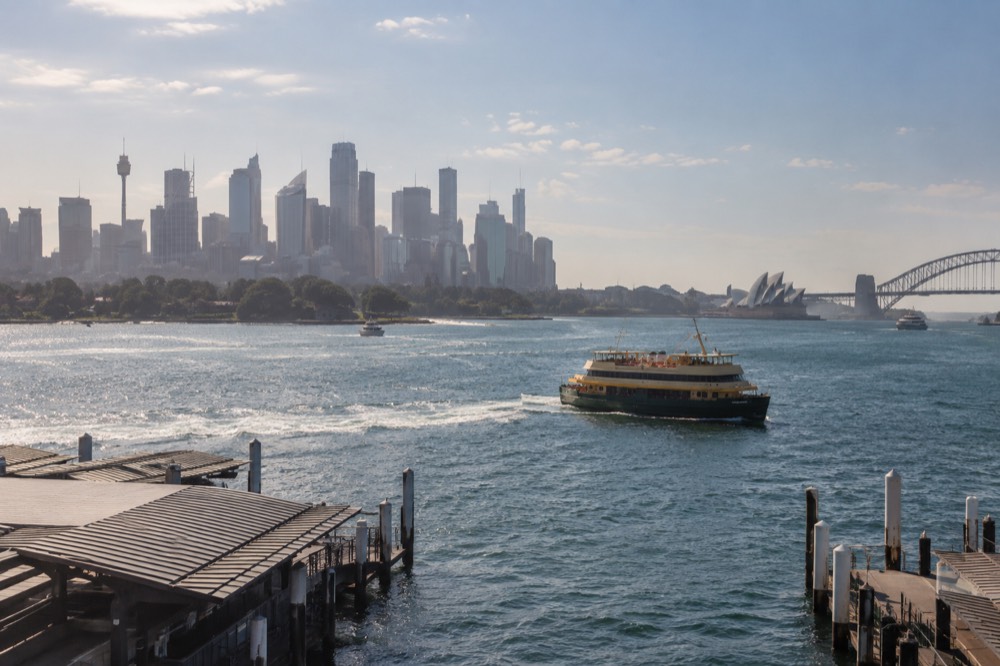
What's the Cheapest Way to Get Around Sydney?
The cheapest way to get around Sydney is a contactless bank card or an Opal card on public transport, walking everywhere the city lets you walk for free. Daily fares cap at $9.65 on Fridays, weekends and public holidays, and $19.30 Monday to Thursday, so a full day of trains, buses, ferries and light rail can never cost more than that. Add free-entry sights like the Royal Botanic Garden and the Australian Museum between rides and a day out can cost less than a single airport coffee.
Sydney is unusual among big cities in how much of it you can see without spending a cent on top of the fare. The Opera House forecourt, the Harbour Bridge pedestrian walkway, the Royal Botanic Garden Sydney and the Art Gallery of New South Wales are all free and all sit within a 20-minute walk of Circular Quay. The expensive mistakes are the ones that bypass the cap system: single-trip Opal tickets, the private Manly Fast Ferry, and taxis for trips a train covers in minutes.
The other half of the answer is timing. Transport for NSW prices public transport by distance, but the caps and the 30% off-peak discount do the real work. Travel on a Sunday or a public holiday and the whole network costs you $9.65 for the day, no matter how far you ride. That single fact reshapes a budget itinerary: save the Manly ferry and the long train rides for the cheap days.
How Much Does an Opal Card or Contactless Card Cost per Day?
A contactless Visa, Mastercard or Amex card, or an adult Opal card, is charged identically and capped at $19.30 per day Monday to Thursday and $9.65 per day on Fridays, weekends and public holidays, with a weekly cap of $50. A 30% off-peak discount applies to metro, train, bus and light rail on Fridays, weekends, public holidays and outside weekday peak times, though never to ferries. Single-trip Opal tickets cost more and get none of these benefits, so avoid them.
The caps are the whole game. Once you have spent $9.65 on a Saturday, every further tap that day is free, including the $9.20 Manly ferry. A visitor who plans a ferry-heavy day on a weekend effectively rides the harbour for pocket change after the first two trips. The weekly cap of $50 runs Monday to Sunday, so a week of heavy sightseeing tops out around $7 a day.
| Cost element | Monday to Thursday | Friday to Sunday and public holidays |
|---|---|---|
| Daily cap, all public transport | $19.30 | $9.65 |
| Off-peak discount, metro/train/bus/light rail | Outside peak times only | Applies all day |
| Ferry off-peak discount | None | None |
| Weekly cap | $50 | $50 |
One trap catches visitors weekly: the privately operated Manly Fast Ferry accepts Opal through OpalPay, but its fares are different and the Opal caps and transfer discounts do not apply. The public F1 ferry from Circular Quay to Manly, by contrast, is fully inside the caps. If you are choosing between the two, the slower public ferry is nearly always the cheaper one once the cap kicks in. The details are published on the Transport for NSW fares page, which also confirms that contactless cards receive every Opal benefit, including caps: adult Opal and contactless fares.
If you are weighing a dedicated card against tapping your own, the mechanics are identical, and our guide to the Opal card for visitors covers where to buy one and how balances work. For most short trips, though, the answer is simpler: the card already in your wallet.
Is the Ferry or the Bus Cheaper for Getting Around Sydney?
The bus is usually cheaper per ride, but the ferry can be cheaper per day. A bus or light rail trip costs from $3.30 peak for a short hop, while the ferry charges a flat $7.35 for trips under 9 km and $9.20 for longer ones such as Manly. Because both feed the same daily cap, a day that mixes them stops mattering for cost once you hit $9.65, which happens after two ferry rides.
Ferries have no off-peak discount, so their pricing is flat and predictable: $7.35 for the 0-9 km band, $9.20 beyond it. Buses and light rail start at $3.30 for trips under 3 km and top out at $5.77 for 8 km or more, with the 30% off-peak discount slicing that further on weekends. For a single short trip the bus wins outright. For a day built around the harbour, the ferry's higher fares simply reach the cap faster, and everything after is free.
The practical rule: use buses and trains for function, ferries for pleasure, and put the pleasure on a Friday, Saturday or Sunday. The F1 Manly ferry is the classic example. It is a 30-minute harbour cruise that doubles as transport, it costs $9.20 one way, and on a capped day it is effectively the last thing you pay for. Our guide to Sydney's ferries maps the routes worth riding, and the question of whether the Manly ferry is free gets a full answer elsewhere on the site.
Walking, of course, beats both. Circular Quay to The Rocks is five minutes on foot, Darling Harbour to Barangaroo is ten, and the ferry wharves at Circular Quay all sit within a two-minute walk of each other. A visitor who taps only for the genuinely long legs of a day often spends under $10 across a whole weekend.
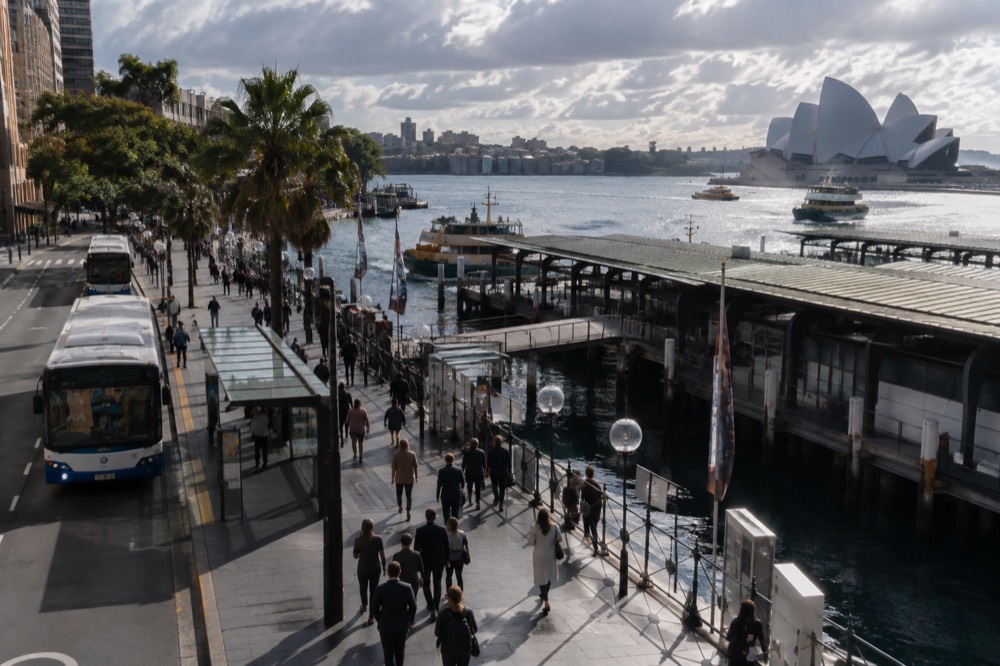
What Is the Cheapest Way to Get from Sydney Airport to the City?
The 400 bus is the cheapest airport transfer, because it carries no station access fee. The train is faster but adds an airport station access fee of $18.61 each way on top of the normal fare, and that fee sits outside the daily and weekly caps, though it has its own weekly cap of $37.75. A taxi or rideshare costs more again, and none of these options is free.
The airport stations at Domestic and International are part of the train network, but they charge a private access fee on top of the fare, and the current verified figure is $18.61 for an adult with Opal or contactless. That fee is excluded from the $19.30 and $9.65 daily caps, which is why a train trip that looks capped on paper costs closer to $25 in practice. The fee is published on the official airport transport page: getting to and from Sydney Airport.
| Airport transfer | Rough cost per adult | Notes |
|---|---|---|
| 400 bus | Standard bus fare only | No station access fee; slower, runs via suburbs |
| Train plus access fee | Fare plus $18.61 | Access fee outside daily caps; own weekly cap $37.75 |
| Taxi or rideshare | Higher, plus airport levies | Fixed ranks at both terminals |
For one person with time, the bus wins. For two or more people arriving with luggage at night, a rideshare split between passengers often lands close to the train's real cost, and our breakdown of Sydney [Airport to the city](https://kiwitaxi.tpk.ro/TtV4BOjc) compares every option in detail, including the question of whether a free airport bus exists. It does not, despite the rumours.
Do the Sydney Attraction Passes or Hop-on Hop-off Buses Save Money?
Only if you would otherwise buy the components separately. The four-attraction combo pass covering SEA LIFE Sydney Aquarium, Sydney Tower Eye, WILD LIFE Zoo and Madame Tussauds starts from US$35.84, which undercuts individual tickets if you visit two or more. The hop-on hop-off bus starts from US$54.86 and is a convenience purchase, not a saving, because public transport covers the same stops for a fraction of the price.
Run the arithmetic before you tap. A single adult Sydney Tower Eye observation deck ticket bought on the day is $39, and SEA LIFE's dynamic timed-entry pricing frequently lands above the pass's entire from-price. If your itinerary includes the aquarium and the tower, the pass pays for itself immediately; if it includes only one, it does not. The Big Bus loop, by contrast, costs more than a full capped day of public transport and travels routes the $9.65 cap already covers, so treat it as a sightseeing product rather than transport.
The genuinely cheap version of sightseeing does not involve a pass at all. The Royal Botanic Garden Sydney is free to enter and open from 7am to sunset, the Australian Museum is free on general entry, and the Art Gallery of New South Wales stays open until 10pm on Wednesdays at no charge. A day built around those three plus a capped Sunday of ferries is close to the floor price of seeing Sydney. Our free things to do in Sydney guide lists dozens more, and the budget Sydney guide builds whole days around them.
What Does a Cheap Day of Getting Around Sydney Actually Look Like?
A realistic budget day costs under $10 in transport: a capped Sunday or public holiday of one train, one bus and two ferry taps totals $9.65, and walking fills the gaps. A midweek version costs up to $19.30. The cheapest full-day pattern is a long walk east or north, a ferry back, and the free gardens and galleries in between, with the paid sights saved for a pass.
Here is the pattern that works. Start early at Circular Quay, walk the Harbour Bridge walkway and The Rocks for free, then walk through the Royal Botanic Garden to the Art Gallery of New South Wales, also free. Tap on for a ferry to Manly, spend an hour on the beach and the Corso, and ferry back. On a Sunday that is two ferry taps and perhaps one bus, and the day's transport bill is $9.65 total. Midweek, the same day costs at most $19.30.
| Day pattern | Transport taps | Likely daily cost |
|---|---|---|
| Walking day, one ferry return | 2 ferry taps | $9.20-$14.70 |
| Capped weekend sightseeing day | Train, bus, two ferries | $9.65 |
| Capped midweek day | Mixed, peak times | Up to $19.30 |
| Airport arrival day, by 400 bus | Bus plus one train | Under $10 |
Two footnotes keep the total honest. First, public holidays get the $9.65 cap, not the weekday one, so a holiday Monday is the cheapest wide-ranging day of the week. Second, the Blue Mountains, the most popular day trip from the city, sits inside the train network's distance bands, and the national park itself charges no vehicle fee outside the Glenbrook area, per the official NPWS fee list. Arriving by train avoids the fee entirely. That makes a mountains day one of the best-value escapes from the city, and our Blue Mountains day trip guide shows how to do it without a car.
For everything the caps do not cover, from night buses to light rail quirks, the getting around Sydney guide is the full reference, and this site's Sydney Travel Guide hub links every transport page in one place.
Common Questions About Getting Around Sydney Cheaply
What's the cheapest way to get around Sydney?
Tap a contactless bank card or Opal card on public transport and walk between the free sights. Daily fares cap at $9.65 on Fridays, weekends and public holidays and $19.30 Monday to Thursday, with a $50 weekly cap, so heavy sightseeing days cost a fixed, small amount.
Is a contactless card really the same price as an Opal card?
Yes. Contactless Visa, Mastercard and Amex cards are charged identically to an adult Opal card and receive every benefit, including the daily and weekly caps, the transfer discount and the off-peak discount. Single-trip Opal tickets cost more and get none of these.
Is the Manly ferry included in the daily cap?
The public F1 Manly ferry is. It costs $9.20 one way and counts fully toward the daily cap, so on a capped day it is effectively free after your first couple of taps. The private Manly Fast Ferry uses OpalPay, where fares differ and the caps do not apply.
Why does the airport train cost more than the cap suggests?
Both airport stations charge a station access fee of $18.61 per adult on top of the train fare, and that fee sits outside the daily and weekly caps. The 400 bus carries no access fee and is the cheapest transfer, though it is slower.
Are Sydney's hop-on hop-off buses a cheap way to get around?
Not really. The Big Bus loop starts from US$54.86, while the public network covers the same stops for a capped $9.65 a day on weekends. Treat the sightseeing bus as a tour, and use it only if you value the commentary over the saving.