What Is the Best Way to See the Blue Mountains?
The best way to see the Blue Mountains depends on your time and budget: a small-group day tour covers the most ground, the train is the cheapest route, and a car gives the most freedom.
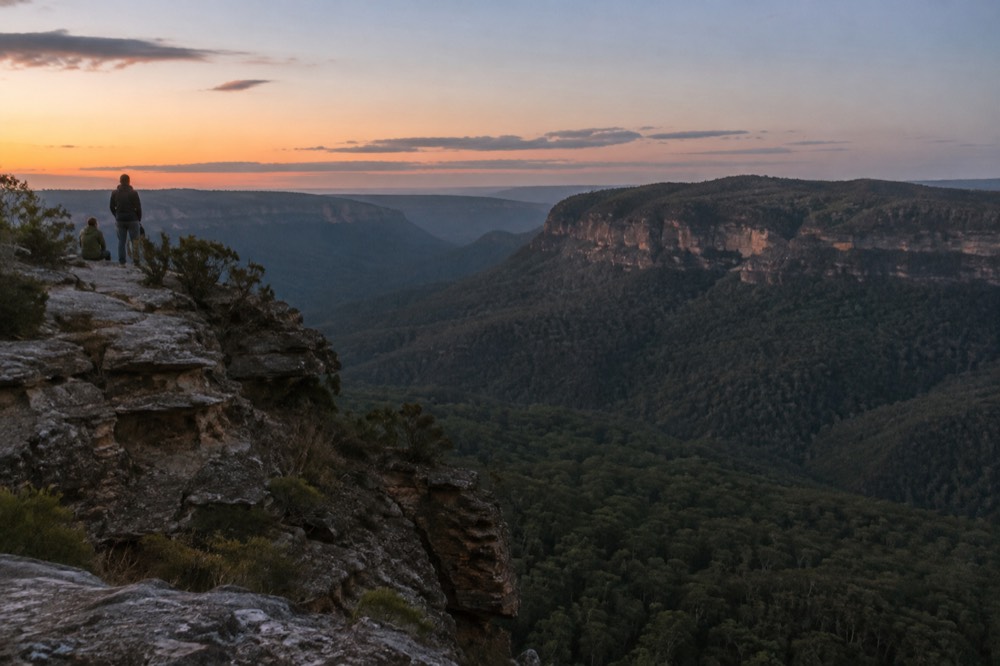
The Blue Mountains sit about 100 kilometres west of Sydney, and almost every visitor asks the same question within a day of arriving: should I take a tour, drive myself, or catch the train? The honest answer is that all three work, and the best one depends on how much time you have, whether you want to drive on the left, and how much of the region you want to pack into a single day. This site, Sydney Travel Guide, compares them below with real fares, real fees and real walking times.
What Is the Best Way to See the Blue Mountains?
For most first-time visitors, a small-group day tour is the best way to see the Blue Mountains: it covers the Three Sisters, Scenic World and a wildlife stop in one organised day, roughly 10 hours door to door, without the stress of left-side driving or reading a timetable. If your budget is tight, the train from Central to Katoomba costs well under $10 each way with an Opal card and gets you to the same lookouts.
The trade-off is control. A tour decides where you stop and for how long. The train and your own two feet decide nothing for you, which is exactly the point: Katoomba's main lookouts are walkable from the station, and the town itself is compact enough that plenty of travellers do the whole day without a car at all. A [self-drive](https://discovercars.tpk.ro/FvKIyzXW) day gives you the most freedom, especially if you want the quieter northern villages such as Blackheath or the walks beyond the shuttle bus routes, but it costs you a driver who cannot enjoy the view.
Here is how the three main approaches genuinely compare:
| Approach | Best for | Rough cost per adult | Time commitment | Main drawback |
|---|---|---|---|---|
| Guided day tour | First-timers, one-day trips | From US$167-190 via a booked tour | About 10 hours | Fixed itinerary |
| Train plus walking | Budget travellers, flexible days | Under A$10 each way on Opal | Your own schedule | No Scenic World transport between sites |
| Rental car | Walks beyond Katoomba, Blackheath | Car hire plus fuel | Your own schedule | You drive, on the left |
One thing that should not factor into your decision is a park entry fee. The Blue Mountains National Park charges nothing at Katoomba, Blackheath or Wentworth Falls; the only place a fee applies is the Glenbrook entrance at the foot of the mountains, at $8 per vehicle per day, as listed on the NSW National Parks fee page. Arriving by train avoids even that.
Is the Train or a Tour the Better Way to Get There?
The train is the better option if you value money and flexibility; a tour is better if you value coverage. The train from Sydney Central to Katoomba takes about two hours and falls in the 35-65 km Opal band, so an adult pays $8.28 peak or $5.79 off-peak each way. A tour costs far more but delivers you to Scenic World, Echo Point and a wildlife park in one day, which the train alone cannot do.
The train's weakness is distance between sights. Katoomba station to Echo Point is a 3-kilometre walk or a hop-on bus ride, and Scenic World sits another 2 kilometres down the cliff road. If your Blue Mountains day is one of several on a short Sydney trip and you want the headline views with zero logistics, the tour wins outright. The Blue Mountains All-Inclusive Day Trip with a Local Guide is the strongest of the bookable options: it runs about 10 hours, carries a 4.9 rating across a very large review base, and bundles the lookouts, Scenic World and a wildlife stop into a single price.
If you would rather move at your own pace, the train is genuinely good, not just cheap. The line climbs through the lower mountains and the window view from the top deck of the B-double-set carriages is part of the experience. Off-peak travel saves you 30 percent on weekdays outside peak, and the off-peak discount applies all day Friday, Saturday and Sunday, per Transport for NSW's fare rules. Check the train guide to the Blue Mountains for the full timetable picture.
A third option sits between the two: drive up, then walk. The Great Western Highway and the Bells Line of Road both cross the range, and having a car lets you reach lookouts the shuttle buses skip, such as Govetts Leap at Blackheath, which many locals rate above Echo Point. The cost is concentration: mountain roads are winding, parking at Echo Point fills by mid-morning in peak season, and the driver watches the road instead of the valley.
What Should You Actually See Once You Arrive?
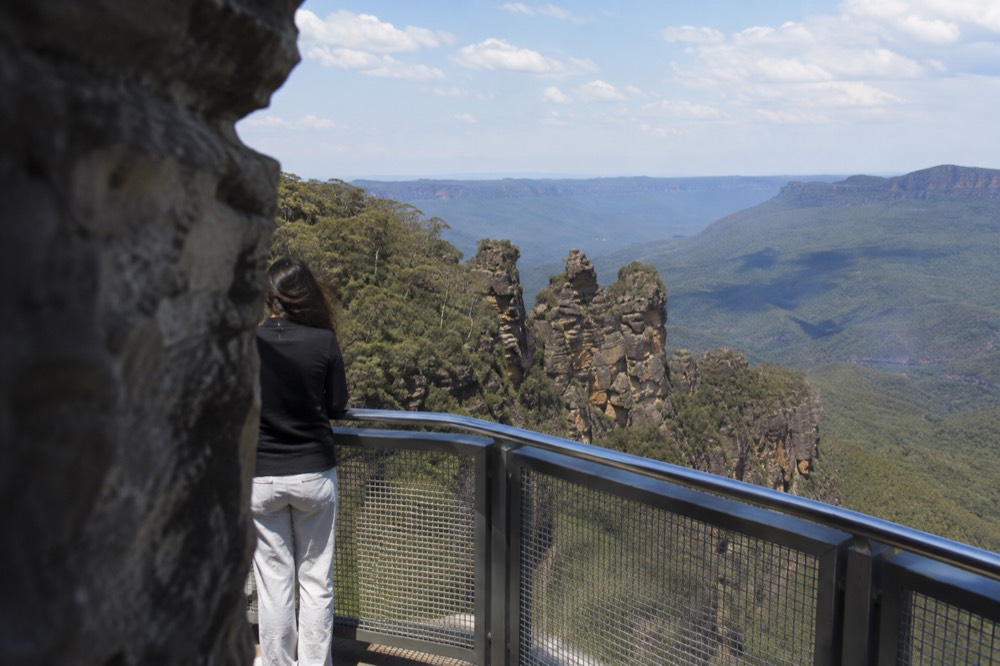
See the Three Sisters from Echo Point, ride the Scenic World railway and cableway, and walk at least one section of the cliff-top path between them. Those three experiences are the core of a Blue Mountains day, and all three sit within a few kilometres of Katoomba. If you have extra time, Govetts Leap at Blackheath and the Wentworth Falls track reward the effort with fewer crowds.
Echo Point is free, open all day and the postcard view, but it is also the busiest spot in the mountains, so early morning or late afternoon changes the experience completely. Scenic World is the paid anchor: its railway descends into the Jamison Valley and its cableway and skyway give you the valley from above and below. Pricing there is dynamic and not published as a fixed public figure, so the live listing or the operator's own site is the honest source. The Scenic World guide covers what each ride actually delivers.
The walking between the viewpoints is what most day-trippers skip and most return visitors remember. The Prince Henry Cliff Walk links Echo Point with the Scenic World area along the cliff top, roughly 3 kilometres one way, and can be shortened at multiple points. If you are planning a fuller trip rather than a single day, the Katoomba and Three Sisters guide maps the walking network in detail.
Can You See the Blue Mountains Without a Car?
Yes, easily. Katoomba is one of the most walkable mountain towns in Australia: the station, the main street, Echo Point and Scenic World are all connected by footpaths and a local bus, and the train from Sydney arrives directly in the middle of it. A car-free day is entirely realistic, and in peak season it is often faster than circling for parking.
The practical car-free plan is simple. Train to Katoomba, walk or bus to Echo Point, walk the cliff path toward Scenic World, ride what you want to ride, then bus or walk back to the station. On many days a hop-on hop-off bus circles the main sights, and local buses run the Katoomba Street route year-round. The only things you genuinely cannot reach without a car are the northern villages and the longer trailheads, which is where a small-group tour or a rental enters the picture.
The all-inclusive guided day trip solves the no-car problem from the Sydney end, which is why it suits travellers staying in the CBD without a vehicle. It picks up centrally, drives the mountains for you and returns you in the evening.
How Much Time Do You Need, and When Should You Go?
One long day is enough for Echo Point, Scenic World and one short walk. Two days let you add Blackheath, Wentworth Falls or a valley hike without rushing. For timing, avoid June if you hate rain: it is Sydney's wettest month on the long-run average at 133.1 mm, while August is the clearest month of the entire year with 13.4 mean clear days, according to Bureau of Meteorology normals.
That weather pattern surprises almost everyone. Peak tourist season in the mountains is summer, December to February, but February is statistically the cloudiest month in the Sydney region, with just 5.3 mean clear days, and summer haze often softens the famous blue distance. Late winter, July and August, delivers the crispest air and clearest skies of the year, with cold nights around 8-9 °C and daytime maxima near 17-18 °C. If your goal is that postcard view down the Jamison Valley, a clear August morning beats a humid February afternoon.
| Season | Months | Typical daytime max | What it means for the view |
|---|---|---|---|
| Summer | December-February | 25-26 °C | Warmest but haziest; busiest trails |
| Autumn | March-May | 19-22 °C | Reliable, mild, good colours in April |
| Winter | June-August | 16-18 °C | Clearest skies; cold mornings, occasional fog |
| Spring | September-November | 20-24 °C | Wildflowers, warming fast, increasing crowds |
Timing within the day matters as much as timing within the year. Day tours arrive at Echo Point mid-morning, right as the carparks fill; independent travellers who reach the lookout by 8am often have the railings nearly to themselves. Sunset from Govetts Leap is the locals' favourite, and in winter the sun sets early enough to do it and still be back in Katoomba for dinner.
Common Questions About Seeing the Blue Mountains
What is the best way to see the Blue Mountains?
For most first-time visitors, a small-group day tour of about 10 hours covers the most in one day, including the Three Sisters, Scenic World and a wildlife stop. On a budget, the train to Katoomba plus walking reaches the same headline lookouts for under A$10 each way.
Can you do the Blue Mountains without a car?
Yes. Katoomba's station, town centre, Echo Point and Scenic World are linked by footpaths and local buses, and the train from Sydney Central takes about two hours. A car only becomes useful for the northern villages such as Blackheath and the longer trailheads.
Is one day enough for the Blue Mountains?
One full day is enough for Echo Point, Scenic World and a short cliff-top walk. Two days allow Blackheath, Wentworth Falls or a valley hike at a humane pace, and an overnight in Katoomba or Leura lets you see the lookouts at dawn before the tours arrive.
What is the cheapest way to get to the Blue Mountains?
The train. An adult Opal fare from Central to Katoomba is $8.28 peak or $5.79 off-peak each way and the off-peak discount applies all day Friday, Saturday and Sunday. There is no park entry fee at the Katoomba side of the national park.
When is the clearest time of year to visit?
August. Bureau of Meteorology long-run normals show it as Sydney's clearest month with 13.4 mean clear days, ahead of July at 12.0. February, the middle of summer, is the cloudiest at 5.3, so winter mornings often give the sharpest valley views.