Is Sydney Opera House 7 Wonders of the World?
No, the Sydney Opera House is not one of the New7Wonders of the World, but it is a UNESCO World Heritage Site and one of the most recognisable buildings on earth. Here is what that actually means.
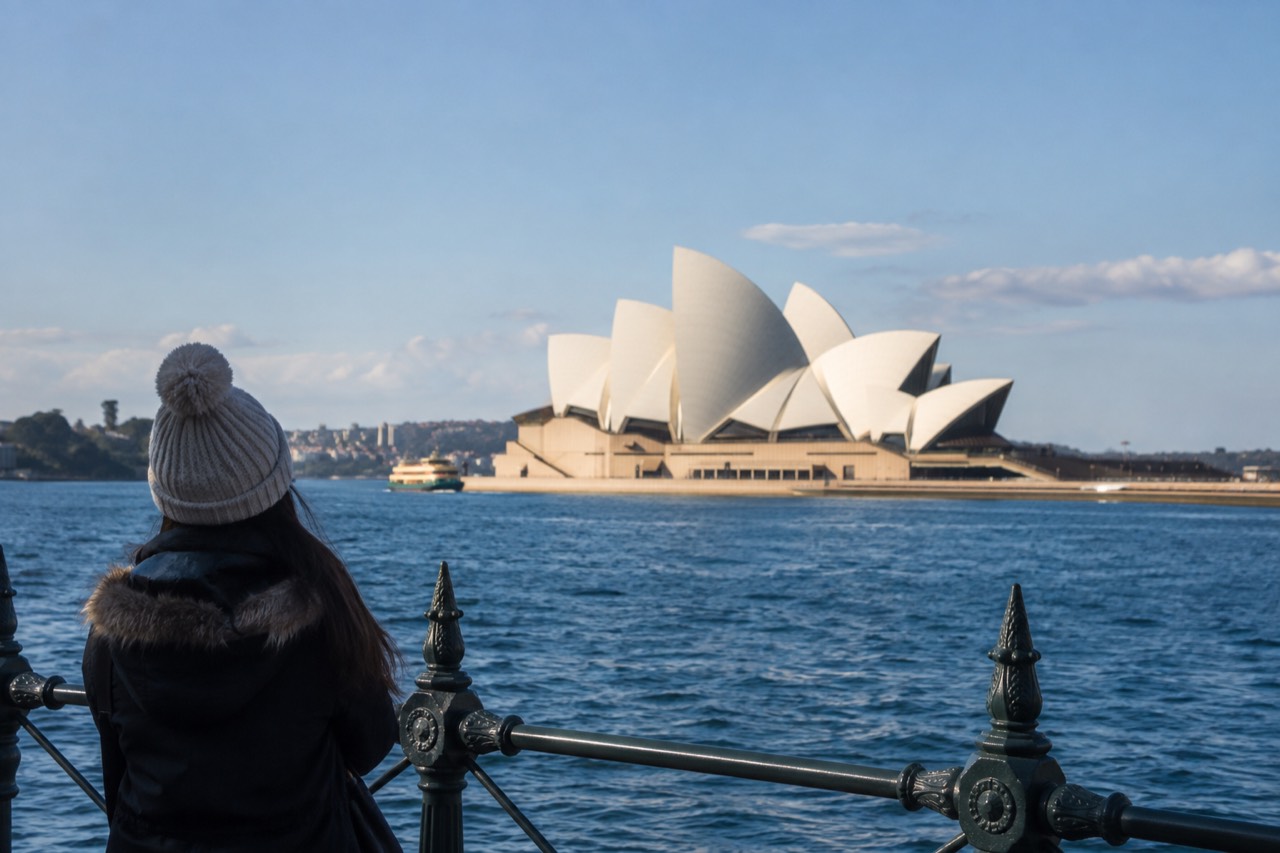
The Sydney Opera House is one of the most photographed buildings on the planet, and the internet has spent years telling people it is a "wonder of the world". The claim gets repeated in listicles, hotel brochures and half-remembered trivia nights, usually without anyone checking which list it belongs to. There are actually several competing "seven wonders" lists, and the Opera House appears on some of them and not on the one people usually mean.
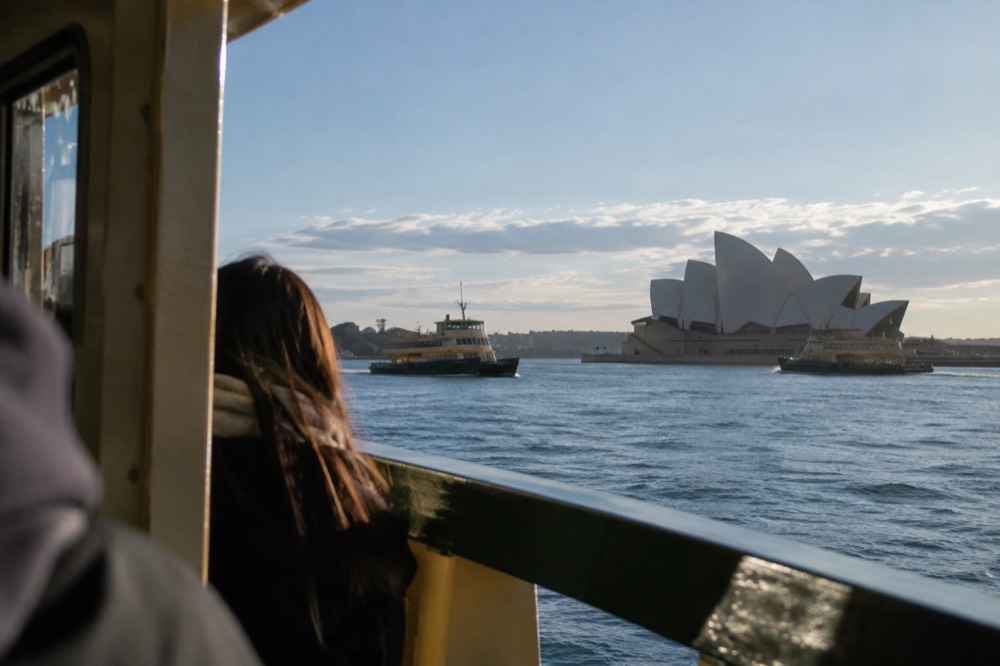
Is Sydney Opera House 7 Wonders of the World?
No, the Sydney Opera House is not one of the New7Wonders of the World. It was a finalist in the global New7Wonders public vote but did not make the final seven. It is, however, a UNESCO World Heritage Site, which is a different and arguably stricter honour, and it is the youngest cultural site on that list at the time of its inscription. So the honest answer is: not a "wonder of the world" by the popular vote, but a World Heritage building recognised for exactly that status.
The confusion comes from two separate things sharing the word "wonders". The ancient world had its seven wonders, all of which except the Great Pyramid of Giza are gone. In the 2000s a Swiss-based campaign ran a worldwide public vote to name a "New7Wonders of the World", and the Sydney Opera House made the shortlist of finalists alongside more than twenty other famous landmarks. When the final seven were announced, the Opera House was not among them. The winners were the Great Wall of China, Petra in Jordan, the Christ the Redeemer statue in Rio de Janeiro, Machu Picchu in Peru, Chichen Itza in Mexico, the Colosseum in Rome and the Taj Mahal in India.
That result surprises people who have stood in front of the sails at Circular Quay, and it is worth being precise about why. The New7Wonders vote was a popularity contest, not a heritage assessment. It measured marketing reach and national mobilisation as much as architectural significance. India, Brazil and China ran enormous campaigns to get their landmarks over the line. Australia did not mount anything comparable for the Opera House, and the building missed out.
The UNESCO listing tells a different story. The World Heritage Committee inscribed the Sydney Opera House as a cultural site, describing it as a masterpiece of human creative genius and a great architectural work of the 20th century that brings together multiple strands of creativity in both form and structural design. It sits on the list alongside the Great Wall, the Taj Mahal and the Acropolis. Very few buildings receive that inscription, and fewer still receive it while their architect is still a live subject of debate and the building is barely a generation old at listing.
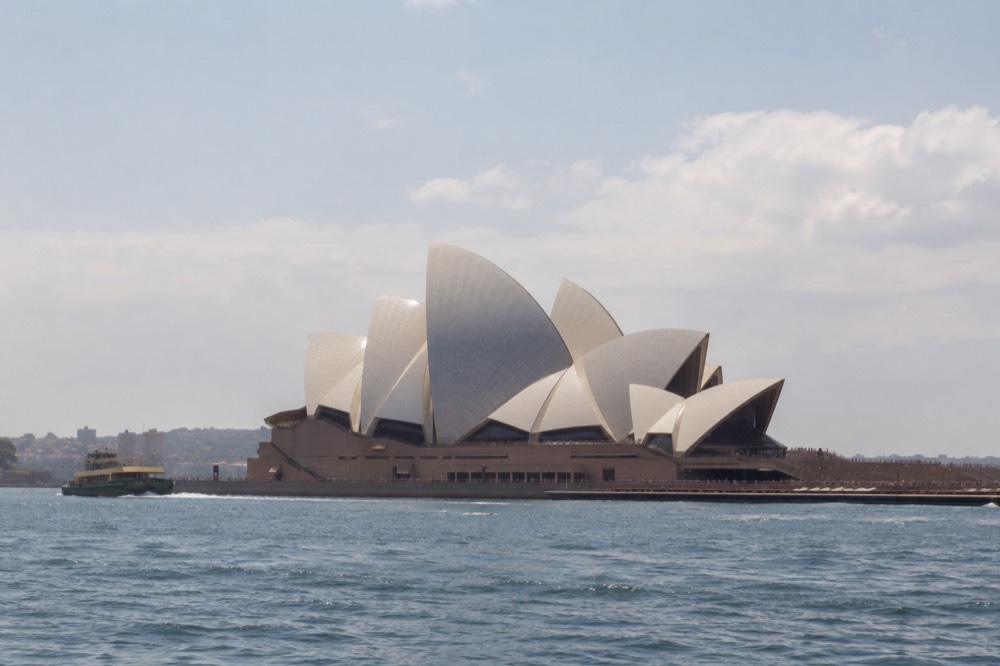
What Is the Sydney Opera House Actually Recognised For?
UNESCO World Heritage status is the Opera House's headline recognition, granted for its architectural and structural achievement rather than its age or rarity. The committee cited it as a masterpiece of human creative genius and a great architectural work of the 20th century. It is one of the few World Heritage sites inscribed while still in everyday use as a working performance venue, which is a large part of why the listing is unusual: the building is protected globally while hosting over a thousand performances a year.
Here is the comparison in plain terms:
| Recognition | Does the Opera House hold it? | What it actually means |
|---|---|---|
| New7Wonders of the World | No, finalist only | A public vote outcome, decided by global campaign mobilisation |
| UNESCO World Heritage Site | Yes | Formal heritage assessment of outstanding universal value |
| One of the world's most photographed buildings | Yes, by common description | Cultural shorthand, not an official listing |
| National heritage listing (Australia) | Yes | Protected at federal level under Australian heritage law |
The World Heritage inscription is the fact worth remembering, because it is the one backed by a formal evaluation rather than a vote. The building shares the list with the Great Barrier Reef and Uluru-Kata Tjuta, which means Australia has three World Heritage sites and one of them is a concert hall with a box office. The official tours page on the Opera House's own site is the primary source for what you can actually visit inside, and it confirms tours run roughly 9am to 5pm daily in about an hour, with some scheduled non-English language sessions.
The building's story is part of the recognition. Its architect, Jørn Utzon, resigned from the project mid-construction after a bitter dispute with the state government, and never returned to Sydney to see the finished building. The interiors were completed by other hands after his departure. That history of conflict and compromise is written into the World Heritage citation itself, which is rare: most inscribed buildings are celebrated as finished visions, while the Opera House is celebrated partly as a survivor of its own construction.
Can You Walk Inside the Sydney Opera House?
Yes, you can enter the Opera House without a ticket to a performance or a tour. The ground-level foyers, the box office area, the Opera Bar and the surrounding boardwalk are all publicly accessible, and the building's exterior walkways are free to wander at any hour. What you cannot do for free is see the theatres themselves: the Concert Hall, the Joan Sutherland Theatre and the rehearsal spaces are only visible on a guided tour or with a show ticket.
This is one of the most common misunderstandings among first-time visitors, who often assume the building is either fully open or fully ticketed. The reality sits in between. You can walk in off the forecourt, buy a coffee, sit in the foyer and look at the harbour through the glass walls without paying anything or booking anything. The foyers host free exhibitions and visitor information, and the building's western and northern boardwalks give you the closest public views of the tiled shells.
The theatres are the part most people actually want to see, and that is where a tour earns its place. A guided tour takes you inside the performance spaces, explains the acoustics, the engineering and the politics of the build, and lets you stand on stages that are otherwise closed to the public on performance days. For visitors deciding whether the interior is worth the entry, the Sydney Opera House guide on this site covers the building in full, and there is a separate answer on whether there is a free tour of the Sydney Opera House for anyone budgeting carefully.
The three experiences above are the ones most visitors pair with an Opera House visit: the tour itself, a Blue Mountains day trip for the nature side of a Sydney stay, and the BridgeClimb for the other half of the harbour skyline. They solve different problems, and most travellers end up doing at least one of them.
Which Tours Are Worth Booking at the Opera House?
The standard one-hour guided tour is the one most visitors should book, because it is the only way into the theatres and it runs daily from mid-morning to late afternoon. A tour-plus-meal package adds a fixed dining element, and the building's own tours page lists the full range including language-specific sessions. Prices vary by date and session, so treat any figure you see as a starting point rather than a fixed price.
The tour landscape breaks down like this:
| Experience | What you get | Who it suits |
|---|---|---|
| Free foyer visit | Foyers, boardwalk, Opera Bar, no theatres | Anyone short on time or money |
| Standard guided tour, entry included | All major theatres with a guide, about 1 hour | First-time visitors who want the interior |
| Tour plus dine package | Guided tour plus a set meal | Visitors turning the visit into an occasion |
| Performance ticket | A show in a working theatre | Anyone who wants the building doing its actual job |
The guided tour with entry included is the workhorse option. It moves through the building's major venues with a guide who covers the architecture, the Utzon story and the acoustic design, and it fits comfortably into a morning at Circular Quay. Travellers weighing it against the alternatives can read a full comparison in is the Sydney Opera House tour worth the money, which works through the value question in detail.
The tour-plus-dine option suits visitors celebrating something, and the performance ticket suits everyone else: this is a working arts venue, and the cheapest way to see the Concert Hall as it was designed to be seen is to buy a seat for something. Check the building's own what's-on listings for the current season. The full index of guides sits on Sydney Travel Guide.
How Do You Fit the Opera House Into a Sydney Visit?
Plan on two to three hours at the Opera House itself: an hour for the guided tour, plus time for the foyers, the boardwalk and a drink at Opera Bar. It sits at Circular Quay, the transport hub where trains, buses and ferries converge, so it slots naturally into the first day of most itineraries alongside The Rocks and the Royal Botanic Garden. Most visitors combine it with a harbour walk rather than treating it as a standalone stop.
The building's position is its greatest practical asset. It sits at the northern tip of the CBD, with The Rocks immediately west, the Royal Botanic Garden wrapping around the eastern side, and the ferry wharves at its feet. A natural first-day loop runs: Opera House tour in the morning, a walk south through the Royal Botanic Garden Sydney toward Mrs Macquarie's Point, then back through The Rocks in the afternoon. The garden's entry is free, which makes the pairing one of the best value halves of any Sydney day.
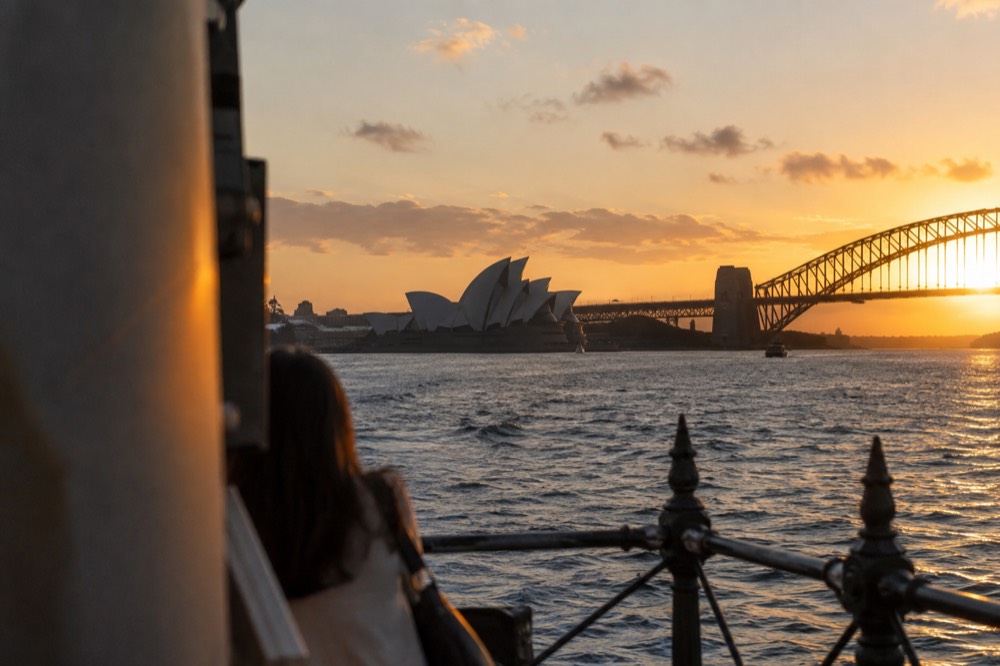
The building also photographs differently through the day, which matters to a lot of visitors. Morning light hits the sails from the east and is the softest for portraits. Late afternoon and sunset light the western side and pair the shells with the Harbour Bridge in one frame, best seen from the Circular Quay ferry terminal side or from on the water. The best lookouts in Sydney guide lists the vantage points that frame both icons together.
Getting there is simple. Circular Quay station is a short walk from the forecourt, and the ferry routes that fan out from the adjacent wharves, including the Manly ferry, mean many visitors arrive by water, which is the approach Utzon himself designed the building to be seen from. The getting around Sydney guide covers the Opal card and fare caps if you are planning wider travel.
Why Does the "Wonder" Claim Keep Circulating?
The claim survives because it is half true and highly shareable: the Opera House was a New7Wonders finalist, it is a UNESCO World Heritage Site, and "wonder of the world" is a phrase with no legal owner. Hotels, tour operators and social media posts repeat it because it sounds impressive and nobody is technically lying. The distinction only matters if you care about accuracy, which is presumably why you searched the question.
The pattern is common with famous landmarks. The Eiffel Tower gets the same treatment, as does the Panama Canal, and for the same reason: a building can be objectively world-significant without appearing on any particular list of seven. The "seven" framing comes from the ancient Greek world, where the original list was a travel guide's selection of Mediterranean monuments, not a formal designation. Every modern "seven wonders" list, including the New7Wonders campaign and various engineering and architectural lists, is a curated editorial product rather than an official status.
The Opera House does appear on some of those editorial lists. It is frequently named among the most significant buildings of the 20th century in architectural writing, and it anchors most "most recognisable buildings" roundups. Those are descriptions, not designations. The formal honours are the World Heritage inscription and the Australian national heritage listing, and both are verifiable on official registers rather than in a vote.
For a site that publishes verified Sydney facts rather than shareable myths, this question is a good example of why this site exists at all. The honest version of the answer, that the building missed a popularity vote but holds a stricter heritage listing, is more interesting than the myth, and it is the version you can defend in an argument.
Whether or not the building carries a "wonders" title, seeing the inside is the part of the visit people remember, and the tour above is the standard way to do it.
Common Questions About the Sydney Opera House
Is Sydney Opera House 7 Wonders of the World?
No. It was a finalist in the New7Wonders of the World public vote but did not make the final seven. It is a UNESCO World Heritage Site, which is a formal heritage designation rather than a popularity vote.
Is the Sydney Opera House a UNESCO World Heritage Site?
Yes. It is inscribed on the World Heritage List as a cultural site, recognised as a masterpiece of human creative genius and a great architectural work of the 20th century. It is one of the few such sites that is also a working performance venue.
What are the actual New7Wonders of the World?
The Great Wall of China, Petra, Christ the Redeemer, Machu Picchu, Chichen Itza, the Colosseum and the Taj Mahal. The Sydney Opera House was a finalist but was not selected in the final vote.
Can you go inside the Sydney Opera House for free?
Partly. The foyers, box office area and surrounding boardwalk are free to enter, and Opera Bar is open to the public. The theatres themselves require either a guided tour ticket or a performance ticket.
How long does an Opera House tour take?
The standard guided tour runs about one hour, with sessions roughly 9am to 5pm daily and some scheduled non-English language tours. Tours run subject to venue operations, so check the official tours page for current times.
Why is the Sydney Opera House famous if it is not a wonder?
Its architecture, its harbour setting and its World Heritage status. A public vote is not the measure of a building's significance: the Opera House holds a stricter formal listing than several of the New7Wonders winners.