Can I Bring a Water Bottle Into Sydney Opera House?
A practical answer to whether you can carry a water bottle into the Sydney Opera House, covering the theatre rules, the guided tours, and what to expect on a visit.
Can I Bring a Water Bottle Into Sydney Opera House?
Yes, you can carry a water bottle into the Sydney Opera House, including on the guided tours. The one place it has to stay behind is inside the theatres themselves: the Opera House is a working performing arts centre, and its venues follow the same rule as theatres everywhere, with food and drink kept out of the auditoriums. Carry the bottle through the foyers, the tour meeting point and the public walkways without a problem, and simply finish or pocket it before you step into a performance space.
That distinction, between the building and its stages, is what trips most visitors up. The Opera House is not a museum with a single entry gate and one uniform rule. It is a cluster of venues wrapped in foyers, stairs, bars and boardwalks, and the rules shift as you move through it. In the public areas you are just a person with a bottle on the harbour. At the doors of the Concert Hall, the Joan Sutherland Theatre, the Drama Theatre or the Playhouse, you are a patron entering a working stage, and the standard theatre expectation applies.
The guided tours are the grey area people ask about, and the answer there is straightforward. Tours take in the foyers and, when performance schedules allow, auditorium interiors, and a sealed or closed bottle in a bag is normal on any of them. Tours run roughly 9am to 5pm daily and last about an hour, according to the Opera House's own tours page, and they are walking tours through a busy building, so having water with you is sensible rather than forbidden. Guides will say when a venue needs to be kept clear of drinks, and those moments are brief.
Sydney's climate makes the question more practical than it sounds. The city's long-run average maximum is 21.8 °C, but summer days, December through February, average around 26 °C and regularly run hotter, and the Bureau of Meteorology's UV guidance means a midday walk around Circular Quay is genuinely dehydrating. Visitors arriving by ferry or train often have a bottle in a backpack before they even reach the forecourt. Nobody wants to throw away a full bottle at the door of a building they have travelled halfway around the world to see.
The honest summary: bring the bottle, use it everywhere except inside an auditorium, and do not plan a visit around the assumption that you will be stopped at the door. If you are seeing a show, finish your drink in the foyer bar area and buy or carry what you need for intermission, the way you would at any theatre at home.
What Are the Rules Inside the Theatres and on the Tours?
Inside the performance venues, food and drink, including water, stay in the foyer, which is the standard rule at working theatres and applies across the Opera House's venues. On the guided tours, a bottle in a bag is fine and you will be told if a particular auditorium moment needs it stowed. The foyers, stairs, bars and outside boardwalk have no such restriction. The practical pattern is simple: sip between venues, not inside them.
The theatre rule is not an Opera House quirk, and it is worth understanding why it exists. Auditoriums are tuned spaces with expensive seating, staged flooring and, in the Concert Hall, a rebuilt acoustic that the organisation protects carefully. Spilled liquid on a stage or in a raked stall is a hazard and a repair bill, so every working theatre keeps drinks to the front-of-house areas. The Opera House runs hundreds of performances a year across its venues, and the rule is enforced by front-of-house staff at venue doors rather than by security at the building's entrances.
That means the building's public layer behaves more like a shopping centre than a fortress. You walk in off the forecourt, through the box office foyers, past the bars and tour desks, with whatever you are carrying. The restrictions begin at the auditorium doors, not the front steps. Visitors coming from venues with airport-style screening sometimes expect the worst and are surprised by how open the place is. If you want a fuller picture of how accessible the building is day to day, our piece on walking into the Opera House without a ticket covers the free-to-wander areas in detail.
For tour takers, the sequence of a visit explains where the bottle fits. You check in at the tour desk in the foyer, meet your guide, and move through a mix of public corridors and venue interiors for about an hour. Some sessions run in languages other than English on set weekdays, per the official tours page, but the format is the same. There are stairs, standing stretches and harbour-side walkways, and water along the way is a comfort, not a contraband item. The table below shows how the three main tour products on our roster handle a visit.
| Tour product | Duration | What it covers | Bottle in practice |
|---|---|---|---|
| Opera House Tour, Entry Included | 1 hour | Foyers and principal venues with a guide, entry ticket included | Carry it in a bag; stow it when the guide asks inside auditoriums |
| Official Opera House Walking Tour | 1 hour | The standard guided circuit of the building's public and venue spaces | Same pattern, foyer to venue to foyer |
| Opera House Tour & Dine Experience | 2 hours | The guided tour plus a meal at a venue restaurant | Bottle on tour, then dine with table service instead |
The meal-included option is worth flagging for anyone planning a long visit, because it removes the need to juggle snacks and bottles altogether. The building's dining venues have had their own changes recently, which we cover further down, and a sit-down break between the tour and the rest of your day is the most civilised way to handle food and drink in a working theatre building.
If a tour is on your list, these are the three Sydney products we would put in front of you first, the Opera House tour itself, a Blue Mountains day trip for the day after, and the BridgeClimb if the harbour view from the top is on your mind.
Is the Guided Tour Worth Doing If You Are Carrying a Bag?
Yes, and a bottle is the least of what you will be carrying. The one-hour guided tour is a walking route through stairs, corridors and venue interiors, so travel light, but a small bag with water is normal and manageable. The tour gives you access to auditorium interiors you cannot otherwise see without a performance ticket, which is the entire point of paying for it. Book a morning session if you want the calmest walk.
The tour's real value is the interiors. Anyone can see the sails from the outside, and the foyers are free to wander, but the Concert Hall and the Joan Sutherland Theatre from the inside are what a ticket buys you, along with the stories a guide tells about how the building works. Performance schedules close venues on some days, which is why the tour description always hedges on exactly which auditoriums you will enter. That is a scheduling reality, not a marketing trick. Other pages covering the same trip are gathered on Sydney Travel Guide.
Our related pick is the Opera House Tour, Entry Included, which pairs the guided circuit with an entry ticket and runs about an hour. It suits a first visit better than any other product on our roster because it answers the questions this article cannot, such as what the venues look like from the stalls and how the building's spaces connect.
One practical note on timing: because tours run roughly 9am to 5pm daily, the late-morning and early-afternoon sessions are the busiest, and a 9am or early-afternoon weekday session gives you the most room to move. If you are pairing the tour with a ferry ride or a walk around Circular Quay, do the tour first, then hydrate at leisure on the quay, where the views are free and the rules are your own.
What Else Should You Know Before Your Visit?
Plan around the building's changes rather than its rules. The Opera House is mid-way through a staged, multi-year infrastructure programme, some dining venues have closed for renovation through 2026, and tours run daily from morning to late afternoon. None of this affects a water bottle, but all of it affects where you eat, drink and linger. Check the official tours page for session times before you lock in a day.
The dining changes matter for this question more than they first appear. If your plan was to buy water or a coffee at a venue inside the building, renovation closures mean the options have shifted, and the safest assumption is that the nearest reliable refreshment is on the Circular Quay side. The quay itself is a five-minute walk from the forecourt, with food halls, kiosks and harbour views, and it is where most visitors end up between a tour and a ferry.
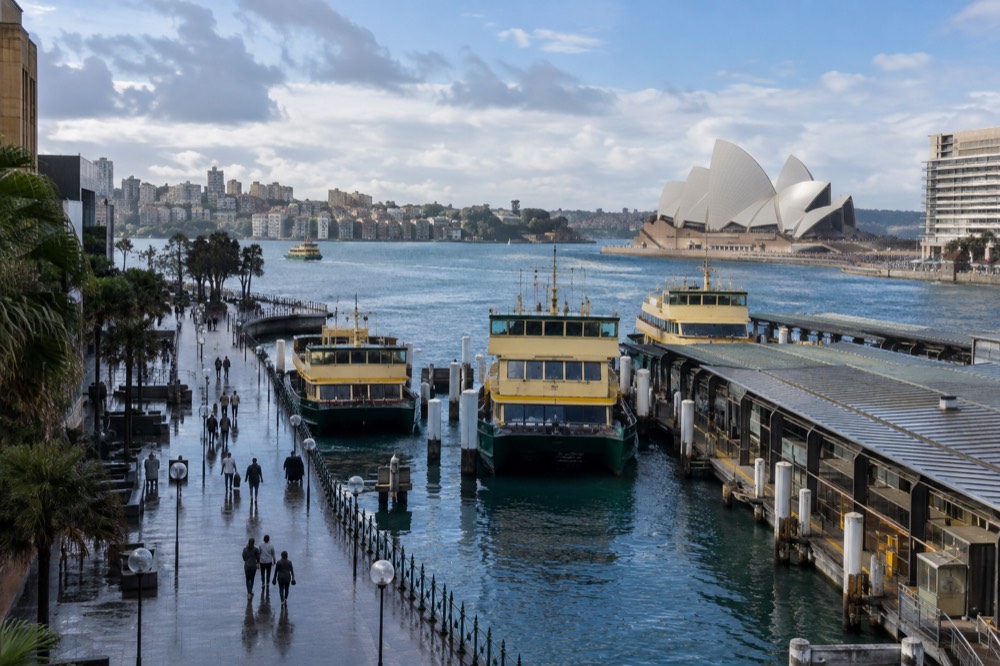
Getting there is cheap and simple, which helps when you are planning hydration stops around a visit. The Opera House sits at the top of the Circular Quay transport hub, where trains, the light rail and the ferries all converge, and an adult Opal daily journey is capped at $19.30 Monday to Thursday and $9.65 on Friday, Saturday, Sunday and public holidays, per Transport for NSW's fare pages. A visitor arriving by ferry from Manly or the eastern suburbs can be on the forecourt within minutes of stepping off the boat. Our guide to [getting around Sydney with an Opal card](/guides/getting-around-sydney/) has the full fare picture.
Weather is the last planning variable, and Sydney's is counterintuitive. June is the city's wettest month on the long-run averages, at 133.1 mm of rain, wetter than any summer month, while August has the most clear days of any month at 13.4. February, the middle of peak season, is statistically the cloudiest. What that means for a bottle is simple: carry it in every season, because a summer harbour walk dehydrates you and a winter one still dries you out in the wind, and the Opera House's exposed boardwalk has very little shade in the middle of the day.
Do Tour Times and Session Choices Matter?
They matter more than the bottle does. Tours run roughly 9am to 5pm daily in about an hour, and the session you pick shapes the whole visit: morning sessions are quieter, midday ones collide with lunch crowds, and late-afternoon ones pair well with a sunset drink on the quay. Non-English sessions run on set weekdays, so check the official tours page if language matters to your group.
A good pattern for a half-day at the building looks like this: arrive mid-morning by ferry so the approach is across the water, take an 11am-ish tour while the venues are at their calmest, then spend the early afternoon on the boardwalk and the Royal Botanic Garden next door, which is free to enter and open from 7am to sunset. That route gives you a natural drink stop every hour without ever needing to break a venue rule. The garden's free entry surprises many visitors, and our Royal Botanic Garden guide explains what to see in it.
For a fuller account of the building itself, its venues, its tours and how to choose between them, see our main Sydney Opera House guide. It goes deeper on everything this article touches only in passing, including which tour suits which kind of visitor and how the venue schedule shapes what you will actually see inside.
Whether your day is one hour at the Opera House or one week in Sydney, these three products cover the visits travellers book most: the Opera House tour, the Blue Mountains all-inclusive day trip, and the BridgeClimb.
Common Questions About Water Bottles at Sydney Opera House
Can I bring a water bottle into Sydney Opera House?
Yes. A bottle is fine in the foyers, public walkways and on the guided tours. The only restriction is inside the theatres themselves, where the standard working-theatre rule keeps food and drink, water included, out of the auditoriums. Finish or stow it at the venue doors and collect it in the foyer afterwards.
Can you just walk into the Sydney Opera House without a ticket?
Yes, the foyers, box office areas and outside boardwalk are open to wander without any ticket. What a ticket buys is the guided access to venue interiors and, separately, entry to performances. A bottle carried through the public areas is nobody's business but yours.
How long does the guided tour take?
About an hour for the standard tour, with tours running daily from roughly 9am to 5pm. The tour-and-dine version runs about two hours because it adds a meal. Both are walking tours, so wear comfortable shoes and carry water for the stairs.
Are there food and drink options inside the building?
Yes, but they have been in flux. The House Canteen closed for renovation from around March to June 2026, and Opera Bar began renovations from June 2026, while a staged $120 million infrastructure programme runs from 2027. Check what is open on the day, and treat Circular Quay, five minutes away, as the reliable backup for food and bottles of water.
Is the Opera House tour worth the money?
For most first-time visitors, yes, because the interiors are what you cannot otherwise see. Performance schedules close some venues on some days, so the exact auditoriums vary, but the tour is the only way into the principal venues without a show ticket. Book a morning session for the calmest walk.
What is the best way to get to the Opera House?
Circular Quay is the nearest hub, with trains, light rail and ferries all within a few minutes' walk. Adult Opal travel is capped at $19.30 a day Monday to Thursday and $9.65 on Friday, Saturday, Sunday and public holidays, so a ferry-and-tour day is cheap to reach. Arriving by ferry also gives you the best first view of the sails.